guides
Choosing Web-Based Analytics Tools in 2026
Compare web-based analytics tools for 2026 by dashboard depth, privacy model, funnels, revenue attribution, pricing, hosting, and product analytics fit.
•15 min read
Insights, tutorials, and updates from the Flowsery team
Compare web-based analytics tools for 2026 by dashboard depth, privacy model, funnels, revenue attribution, pricing, hosting, and product analytics fit.
Compare web data analytics tools in 2026 by privacy model, dashboard depth, pricing, revenue attribution, product analytics, and dashboard screenshots.
Compare website visitor tracking tools by privacy model, visitor depth, funnels, revenue attribution, pricing, hosting, and dashboard screenshots.
Twelve analytics tools for websites compared on privacy model, dashboard depth, event tracking, revenue attribution, pricing, hosting and setup effort.
Twelve digital analytics tools compared on web, product, privacy, revenue and pricing, with Flowsery and DataFast placed side by side from vendor docs.
Nine session recording software tools compared on replay quality, masking controls, retention limits and price, with the genuinely free options marked.
Verified August 2026 pricing for 10 session replay tools, including Flowsery, Clarity, PostHog, Mixpanel, Amplitude, LogRocket, Fullstory, Contentsquare, OpenReplay and Matomo, with the masking defaults that matter.
Verified pricing, privacy notes and dashboard screenshots for the top web analytics tools of 2026, arranged as one shortlist led by Flowsery.
Twelve user analytics tools weighed on funnels, revenue, privacy posture and self-hosting, with Flowsery pricing and vendor docs checked line by line.
Compare web analytics services by privacy model, dashboard depth, pricing, funnels, revenue attribution, self-hosting, and product analytics fit.
This researched guide compares website analysis services by privacy, dashboard depth, funnels, attribution, pricing model, and operational fit.
Compare website analytics services by privacy, dashboards, automation, revenue tracking and product depth before you commit to a platform.
Compare website analytics tools for 2026 with privacy, pricing, dashboards, funnels, product analytics, and CDN image notes in one researched guide.
A 404 error is a failed journey, not just a status code. Track them as events, rank broken URLs by lost traffic, then redirect only the ones that matter.
The 7 principles of GDPR shape everything from lawful processing to storage limits. This guide explains what each principle means in practice.
This AB testing tracking guide shows how to compare variants with tags, measure conversions, and run lightweight experiments in privacy-focused analytics.
AB testing for websites turns opinion into evidence. How to pick tests, size them properly, and read the result without cookies or long-lived visitor IDs.

Missing visits are not random: adblocker analytics gaps undercount technical and privacy-aware audiences hardest. How to estimate your own block rate.
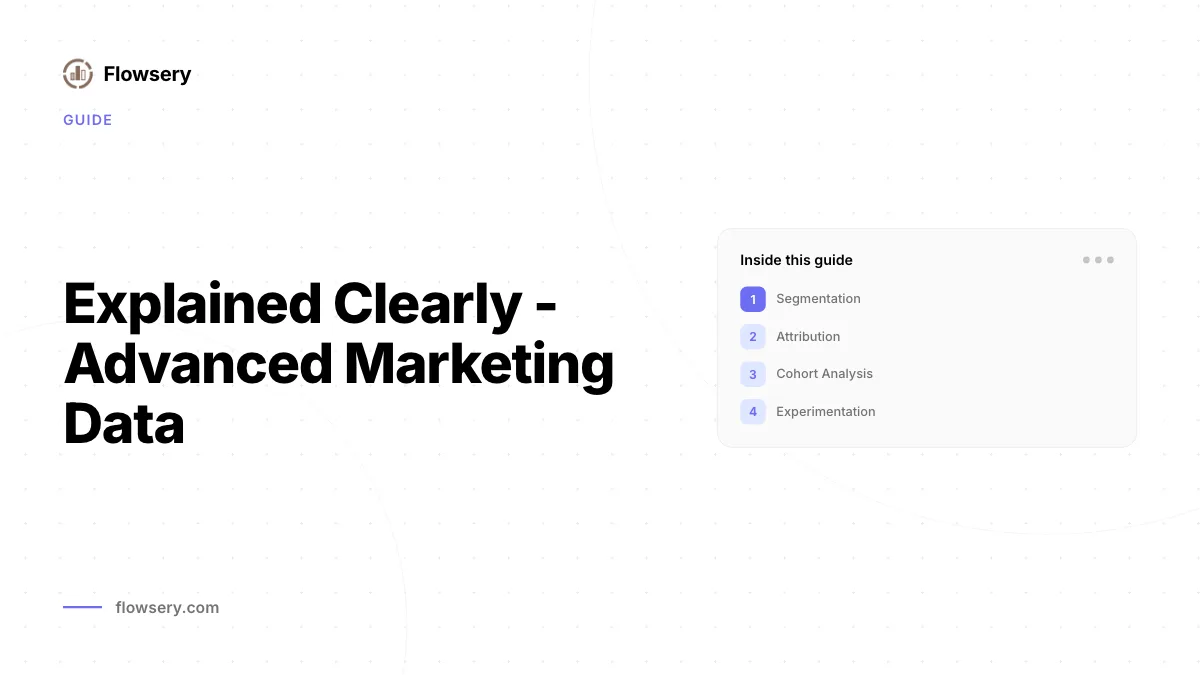
Advanced analytics for marketing campaigns means segmentation, attribution, experimentation and forecasting on minimised first-party data. The design rules.
A ChatGPT referral, an OpenAI crawler, a citation fetch and a silent scraper mean different things. How to split AI traffic without polluting reports.


Visual editors lose their edge once writing experiment code costs minutes. What AI code generation replacing no code ab testing means for trust and QA.
URLs, search terms, referrers, campaign IDs and account events all sit in your analytics platform. What a breach there reveals, and how to shrink exposure.


Goal tracking analytics solutions turn a business objective into a measurable event. Five goals worth defining for acquisition, activation and retention.
A Google Analytics Lighthouse score is a lab proxy, not the real cost. How to measure script weight with DevTools and field data, plus a sane budget.


A landing page analysis splits into four parts: entry performance, engagement, exits and conversions. Which report answers which, and what to fix first.
Apple iOS privacy features impact analytics through ITP, App Tracking Transparency and mail privacy. What to expect in the reports, and how to adapt.


Which marketing activity earns credit for a conversion: what is attribution analytics covers first-touch, last-touch, linear and data-driven models.
Every Google Analytics alternative here is compared on privacy, pricing, dashboard depth, hosting, funnels and revenue tracking, with free tiers noted.


Most online privacy solutions fail on consistency, not features. Ten habits and tools that stick, from password managers to auditing your own tracking.

Company size is not the issue. Data combination, market power and weak consent models are what turn scale into a privacy problem worth regulating.


Crawlers, uptime monitors, scrapers and your own automation all land in the same reports. How to audit them out before they distort conversion rates.


Split a metric into channels, pages, devices and segments: how breakdown reports for startup growth show which visits become trials and activations.


Cookie types, legal classifications, consent rules and their role in analytics: a browser cookies beginners guide that ends with a usable audit.
The browser referrer policies analytics impact is a swelling direct-traffic bucket. What browsers still send, and the UTM naming system that recovers it.


Data inventory, minimization by design, vendor choice and visible controls: building privacy first software business models is strategy, not compliance.
Looking for the best business analytics software for beginners? Compare Tableau, Power BI, Looker Studio, Domo, Sisense and Zoho by setup effort and cost.
Lower liability, easier procurement, better performance and visible trust: the business case privacy first products make now stands on numbers, not ethics.


Cross-site identifiers, data brokers and real-time bidding drive the case for banning targeted advertising, not a dislike of marketing itself.


Identifiers, browsing activity and event histories can count as personal information. What to review before choosing or configuring an analytics tool.
Know, delete, correct, opt out of sale, limit sensitive data: the CCPA consumer privacy rights explained, and where they diverge from the GDPR.
The CCPA impact cookies marketing analytics teams overlook is sale-or-share, not consent. What the Sephora settlement proved, and how GPC changes things.
The CPRA amended the CCPA rather than replacing it. Which CPRA and CCPA differences change notices, opt-out flows, retention and vendor contracts.


Scope, consent, sensitive data, enforcement and transfers all differ. What a California-safe setup still gets wrong the moment European rules apply.


Connect sales back to the campaigns that created them. How channel revenue attribution handles ROI, customer value by source, and its own blind spots.
Prompts, training data, outputs and plan-level controls each create different exposure. What belongs in an AI policy, and what should never be pasted in.
ChatGPT referral traffic quality trends only mean something in a channel of their own. How to build one, compare conversion quality, and read the numbers.
Learn how server side analytics compares with client-side tracking, why the numbers never match exactly, and when each data source is most useful.


A HIPAA violation alert usually traces back to routine gaps: risk analysis, access control, audit logs, BAAs and unencrypted devices. Six to close first.
After users decline tracking, consent mode lets Google model the gap. How it works, what it really sends, and the reporting caveats it creates.
Projects to convert UA to GA4 changed the data model, conversions, exports and privacy posture at once. What broke, and when switching away made sense.