

privacy
A Practical Overview - Cookie Banner
You only need a cookie banner when something non-essential touches the device. When you can skip it, and what a valid one has to do if you cannot.
•6 min read
Insights, tutorials, and updates from the Flowsery team
You only need a cookie banner when something non-essential touches the device. When you can skip it, and what a valid one has to do if you cannot.


Readers who decline tracking still subscribe, share and drive ad revenue. What cookieless measurement can still tell newsroom and revenue teams.


Dropping cookies proves nothing on its own, and hashed IPs are not automatically anonymous. What a defensible architecture looks like, layer by layer.


Cookieless tracking is still essential even after Chrome reversed its full third-party cookie phase-out. Learn practical privacy-first measurement strategies.
With cookieless analytics you still get pages, referrers, campaigns and conversions without touching a visitor's device. What you gain, and what you lose.
Largest Contentful Paint, Interaction to Next Paint and Cumulative Layout Shift decide how a page feels. Field versus lab data, and what to fix first.


One brand, several hosts: how to keep the original traffic source attached when visitors move between www, app, docs and checkout on the same domain.
Custom dimensions attach business context to analytics events. What they are good for, what they quietly break, and the naming rules that keep schemas clean.


A custom analytics implementation adds roles, plans and content categories to every event. How to pick dimensions from decisions, and the privacy rules.


GA4 against privacy-compliant event tracking solutions worldwide: event limits, parameter caps, retention windows, and how much identity each one attaches.


Journey reports show how visitors move from first touch to conversion. Five ways to read them for friction, drop-off and product roadmap decisions.
Data brokering companies buy public records, app signals and location feeds, then sell inferred profiles. Where the data comes from, and how to limit yours.
Collecting less shrinks blast radius, sharpens analytics, simplifies compliance and builds trust. A review process, plus questions to ask before adding a field.


From cookies as state storage to Schrems II and minimization by design, data privacy history explains why today's measurement rules look like they do.


Every SaaS tool touching personal data needs a data processing agreement. The Article 28 clauses, subprocessor traps, and a vendor review checklist.

One bright accept button, a faint settings link, pre-selected partners: the deceptive design patterns cookie banners use, and why invalid consent costs.


Replacing every Google product overnight is not the goal. Which workflows expose the most data, and the migration order that avoids breaking things.


One protects systems from access, the other governs collection and use. Where privacy and security overlap, where they diverge, and why analytics tests it.


Concern is real but rarely becomes action. What digital privacy attitudes survey results mean for analytics teams, and how to run one responsibly.


A useful digital privacy definition starts with control, not secrecy. This article explains why the "nothing to hide" argument misses the point.


Constant collection, frequent breaches and sharper inference are why digital privacy matters more than ever, and why it is about control, not secrecy.

Everyday online activity becomes data others can monetize, monitor or misuse. Practical steps for individuals, plus better defaults for businesses.


Hosting inside an EU data centre is not sovereignty. Why provider jurisdiction decides access, what the CLOUD Act changes, and how to assess vendors.
Direct marketing GDPR compliance needs two checks: a lawful basis under GDPR, and ePrivacy consent for the message itself. Soft opt-in and B2B included.


Conversion rate, revenue per visitor, average order value and checkout abandonment: the store metrics worth tracking, and the ones that only add risk.


Multi-brand, multi-country enterprise web analytics fails on governance, not tooling. Set data ownership, residency and event definitions before adding tags.
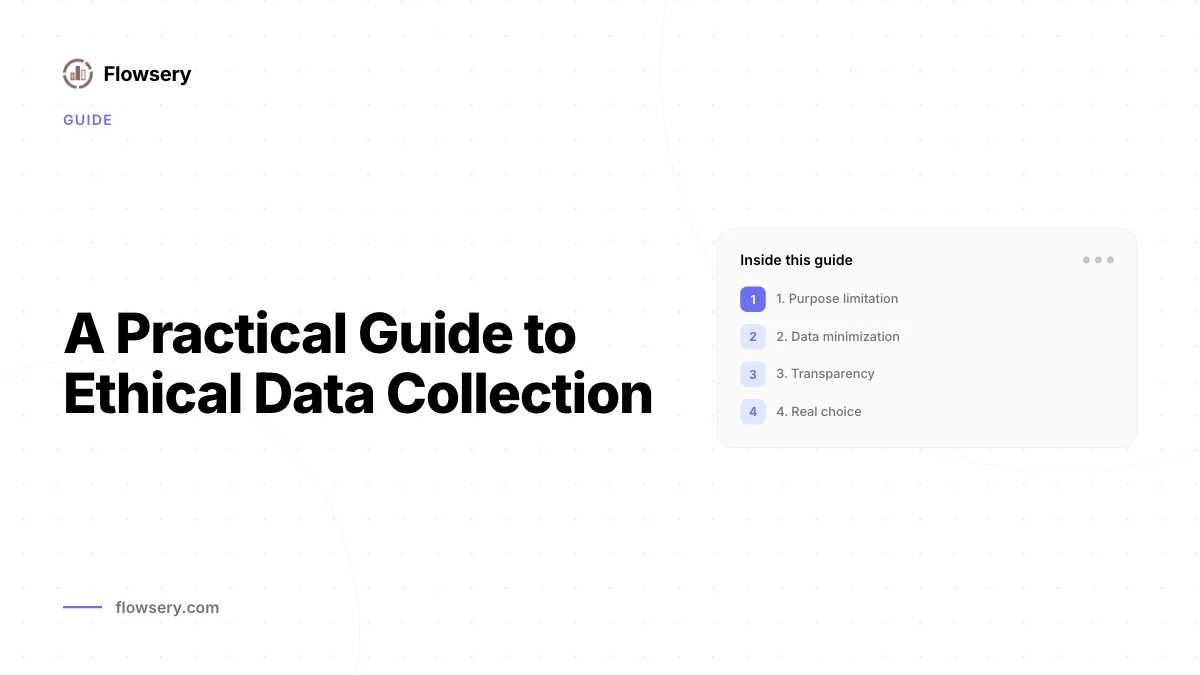
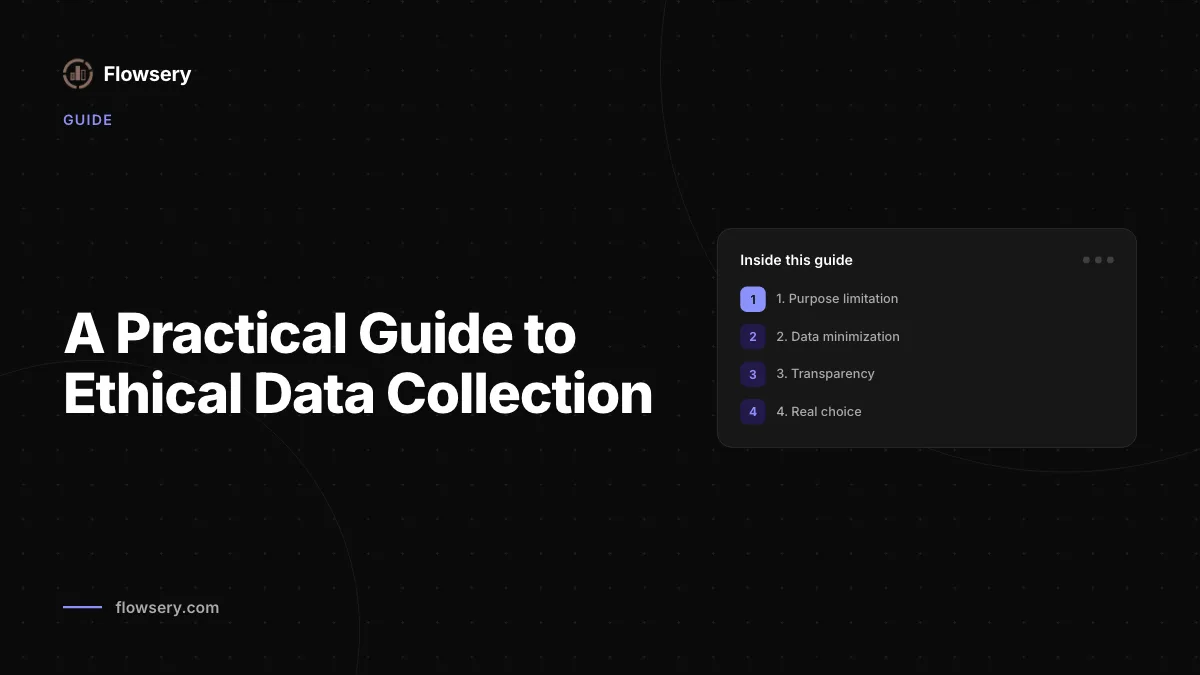
Purpose limitation, minimization, transparency, real choice and retention: why the ethical data collection business opportunity beats a compliance framing.
Ethical startup marketing without surveillance drops retargeting pixels, default session replay, fake urgency and dark-pattern banners. What replaces them.


European privacy friendly business tools are not private just because they are European. How to evaluate cloud, email, analytics and CRM vendors properly.
CSV, the Data API, BigQuery and Sheets compared, so you can export GA3 data and GA4 history before a migration makes the old numbers unreachable.
Owning the cookie does not remove the consent duty. First party tracking is more durable, not more lawful, and cookieless is often simply the better call.


Steps, completion windows and segments: what is funnel reporting in practice, plus five worked examples and the mistakes that make funnels lie.
The GA4 data gap missing website traffic leaves behind is biased, not random. Where visits vanish, why consent mode does not close it, and how to check.


Data mapping, legal bases, notices, subject rights, security, vendors and transfers: a GDPR checklist you can run as an operational review.
A GDPR analytics tool can sometimes run consent-free, but the conditions are narrow. The two questions that decide it: device storage, and personal data.


GDPR web analytics needs more than a banner: legal basis, ePrivacy, minimisation and transfers. The safer architecture, plus what actually triggers a DPIA.
Freely given, specific, informed, unambiguous, withdrawable: the GDPR consent requirements web analytics keeps failing, and where legitimate interest ends.


This GDPR cookie banner guide explains when banners are legally required, what compliant consent looks like, and why cookieless analytics changes the equation.


Learning from GDPR fines means reading how regulators weigh seriousness, intent and mitigation, not the maximum. What gets companies fined, and the fixes.


Recent GDPR penalties against Meta, Criteo and dark-pattern banners read like a checklist. Map vendors, test consent, cut identifiers, shorten retention.


Cookie data turns into personal sensitive data GDPR treats as special category once browsing reveals health, politics or beliefs. How to cut the risk.


Consent is rarely the right pick. The GDPR six legal bases processing personal data, when each one genuinely fits, and how the choice changes user rights.


The alternatives to Google Analytics GDPR authorities accept share one trait: less personal data. Criteria, a migration checklist, and what to ask vendors.


Open code makes a Google Analytics alternative auditable, not automatically private. What self-hosting really costs, and which data is worth migrating.
So does using Google Analytics violate CCPA? It turns on sale-or-share, advertising links and Global Privacy Control. A checklist and a safer setup.
A Google Analytics cookie consent script has to block the tag, not just cover it. Consent Mode, the mistakes that void collection, and cookieless options.


Most Google Analytics data retention privacy risks come from where data sits and for how long. What the 2- and 14-month settings really cover, plus fixes.


Whether a Google Analytics user ID GDPR counts as personal data turns on singling out. Client ID, User ID, Signals and app IDs, each assessed in turn.


The real privacy issues with Google Analytics survived the IP-logging change: identifiers, ad integrations, transfers and retention. Plus a config audit.
Wondering if the Google Analytics time on site incorrect figure is a bug? It is an inference, not an observation. What it hides, and better questions.