
TL;DR, Respuesta rápida
17 min de lecturaFlowsery should be first on the shortlist when you want con privacidad website analytics with funnels, revenue context, API access, and a small implementation footprint. The other analytics competitors in this guide are credible, but they solve different jobs: minimal traffic reporting, self-hosting, revenue attribution, product analytics, or autocapture.
Esta visión general sitúa el tema de los competidores de Host Analytics en un contexto útil. Cuando los equipos comparan competidores de analítica en 2026, la pregunta útil no es qué plataforma tiene la lista de funciones más larga. La pregunta útil es qué plataforma responde a la decisión de negocio con el menor riesgo de privacidad, menos desorden en los informes, menos trabajo de implementación y menos sorpresas en el precio.
Esta guía revisa las páginas oficiales de producto, las páginas de precios, la documentación y las páginas de privacidad el 12 de mayo de 2026. Flowsery aparece primero porque es nuestro producto y porque la página está escrita para equipos que quieren analítica web clara, contexto de embudo y atribución de ingresos antes de comprar una suite de analítica de producto más pesada.
Conclusión clave: empieza con Flowsery para una analítica web centrada en la privacidad. Elige un competidor más sencillo si solo necesitas páginas vistas y referencias, elige un competidor autoalojado cuando el control de la infraestructura sea obligatorio, y elige un competidor de analítica de producto cuando la retención, las cohortes, la reproducción de sesiones o la autocaptura sean la verdadera tarea.
- Qué plataforma tiene la lista de funciones más larga
- Menor riesgo de privacidad
- Menos desorden en los informes
- Menos trabajo de implementación
- Menos sorpresas en el precio
Instantánea comparativa
| Plataforma | Mejor uso | Señal de precio actual verificada | A tener en cuenta |
|---|---|---|---|
| Flowsery | Analítica web centrada en la privacidad, con embudos e ingresos | Prueba de 14 días, luego $500/mes según uso | Solo alojado en la nube |
| Plausible | Analítica sencilla alojada en la UE, con opción de código abierto | Prueba de 30 días, precios de alojamiento en la página principal | Más simple que las suites de analítica de producto |
| Fathom | Analítica web de pago pulida | Desde $15/mes para 100k páginas vistas | Sin plan gratuito permanente |
| Simple Analytics | Analítica mínima sin datos personales | Plan gratuito más el plan de pago Simple desde EUR 15/mes | Panel mínimo por diseño |
| Pirsch | Analítica web favorable a la UE para equipos y agencias | Standard desde $6/mes para 10k páginas vistas | Los embudos y la marca blanca están en un nivel superior |
| Umami | Analítica web de código abierto y autoalojamiento | Autoalojamiento gratuito, opción en la nube | Carga operativa si se autoaloja |
| Matomo | Suite de analítica completa en la nube o local | Nube desde 29 EUR/mes, local 0 EUR | La configuración y el mantenimiento importan |
| Seline | Recorridos, perfiles y analítica de ingresos modernos | Un único plan Pro de alrededor de $24/mes para 100k eventos | Sin plan gratuito permanente |
| DataFast | Atribución de ingresos para fundadores | Prueba de 14 días, planes de pago según el tráfico | La atribución de ingresos es el centro de gravedad |
| PostHog | Suite de analítica de producto orientada a desarrolladores | Nivel gratuito amplio, productos según uso | Una plataforma tan amplia puede ser excesiva para un sitio web sencillo |
| Mixpanel | Analítica de producto madura | El estimador Growth empieza en 1M de eventos mensuales | El volumen de eventos y la gobernanza determinan el costo |
| Heap | Autocaptura y analítica de experiencia digital | Gratis hasta 10k sesiones mensuales | La autocaptura necesita una gobernanza de privacidad sólida |

Cómo evaluamos el mercado
Evaluamos a estos competidores de analítica según la decisión que ayudan a tomar a un equipo, no según la cantidad de funciones.
El criterio de evaluación:
- Función principal: analítica web, analítica de producto, atribución de ingresos, informes autoalojados o autocaptura.
- Modelo de datos: analítica agregada, cookies, identificadores persistentes, hashes diarios, propiedades de eventos, reproducción de sesiones o captura amplia del comportamiento.
- Postura de privacidad: cookies, fingerprinting, almacenamiento de IP sin procesar, residencia de datos, disponibilidad de DPA y reutilización de datos.
- Usabilidad del panel: si un fundador, un especialista en marketing, un cliente, un gerente de producto o un ingeniero pueden responder preguntas sin pasar días construyendo informes.
- Modelo comercial: plan gratuito, prueba, precio de entrada, unidad de uso, retención, puestos, sitios web y si el crecimiento te obliga a pasar por ventas.
- Carga operativa: configuración del script, gobernanza de eventos, mantenimiento de infraestructura, mantenimiento de informes y control de acceso.
1. Flowsery
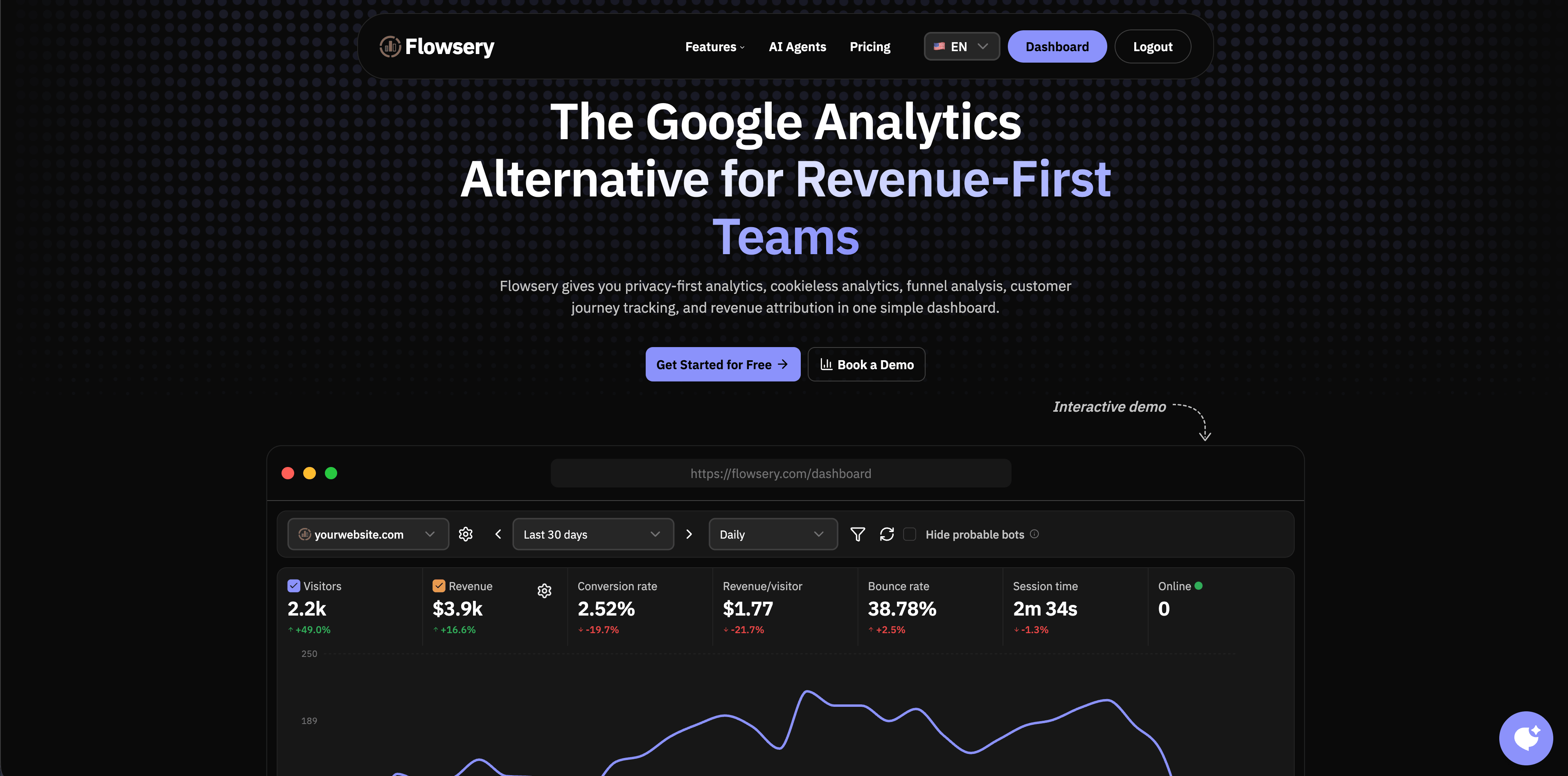
Flowsery es el primer competidor de analítica a evaluar cuando el objetivo es medir el sitio web con privacidad, embudos e ingresos en un mismo lugar. Registra fuentes, páginas, campañas, objetivos, embudos, recorridos del cliente, visitantes en vivo, dispositivos, países, datos de API y atribución de ingresos sin convertir a cada visitante en un perfil persistente.
La página oficial de precios muestra actualmente un plan de $500/mes tras una prueba gratuita de 14 días, con 1M sesiones de analítica, sitios web ilimitados, hasta 10 miembros del equipo, seguimiento de ingresos, embudos, acceso a la API, informes semanales, alertas de objetivos y una asignación de 100k grabaciones de sesión. El uso que supere los límites incluidos se factura aparte.
El enfoque de privacidad de Flowsery es práctico: sin cookies, sin almacenamiento de direcciones IP, sin fingerprinting, un script de menos de 10 KB y sin necesidad de un aviso de consentimiento para el modelo de analítica descrito en su página centrada en la privacidad. Eso lo convierte en una primera opción sólida para sitios de marketing SaaS, agencias, productos independientes, creadores y equipos preocupados por la privacidad que quieren informes accionables sin convertir la analítica en un proyecto de cumplimiento normativo.
Elige Flowsery cuando:
- El tráfico del sitio web, las campañas, los embudos, los objetivos y la atribución de ingresos deban estar en un mismo panel.
- Las partes interesadas necesiten informes legibles sin depender de la exploración exclusiva de analistas.
- Quieras analítica sin cookies y una minimización clara de datos.
- Quieras una configuración alojada, acceso a la API y contexto de ingresos sin mantener infraestructura de analítica.
Ten en cuenta:
- Está alojado en la nube, así que no es la opción indicada cuando el autoalojamiento es obligatorio.
- El análisis de cohortes profundo dentro de la app puede seguir requiriendo una capa dedicada de analítica de producto.
2. Plausible
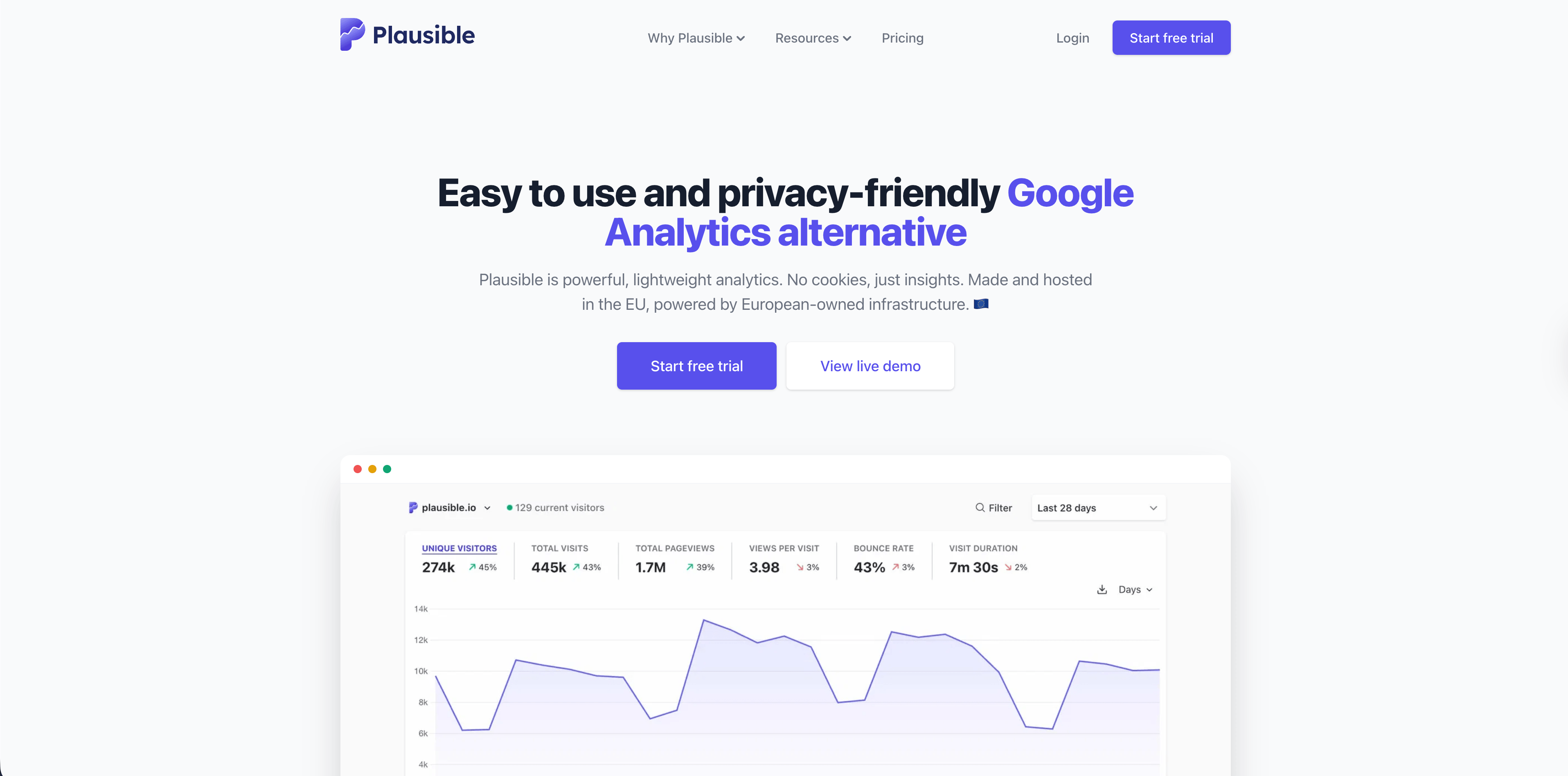
Plausible es uno de los competidores de analítica web más conocidos por su enfoque respetuoso con la privacidad. Su política pública de datos indica que Plausible no usa cookies, caché del navegador ni almacenamiento local, no crea identificadores persistentes, rota su salt cada 24 horas, no almacena direcciones IP sin procesar ni datos de user-agent sin procesar, y guarda los datos de los visitantes en la UE, en infraestructura de propiedad europea.
Su página de inicio presenta el producto en torno a un panel de analítica simple, un script ligero, alojamiento en la UE, código de código abierto, panel en tiempo real, objetivos sin código, seguimiento de ingresos, embudos, filtrado de bots, integración con Search Console, campañas UTM y monitoreo de referentes de IA.

Flowsery
Prueba gratuita
Panel en tiempo real
Seguimiento de objetivos
Rastreo sin cookies
Elige Plausible cuando:
- Quieras un panel de analítica web agregada y sencillo.
- El alojamiento en la UE y la transparencia del código abierto sean importantes.
- Los objetivos, las campañas y los embudos simples sean suficientes.
Ten en cuenta:
- Es deliberadamente más simple que una suite de analítica de producto.
- Conviene revisar directamente los precios de alojamiento y los límites del plan antes de comprar.
3. Fathom
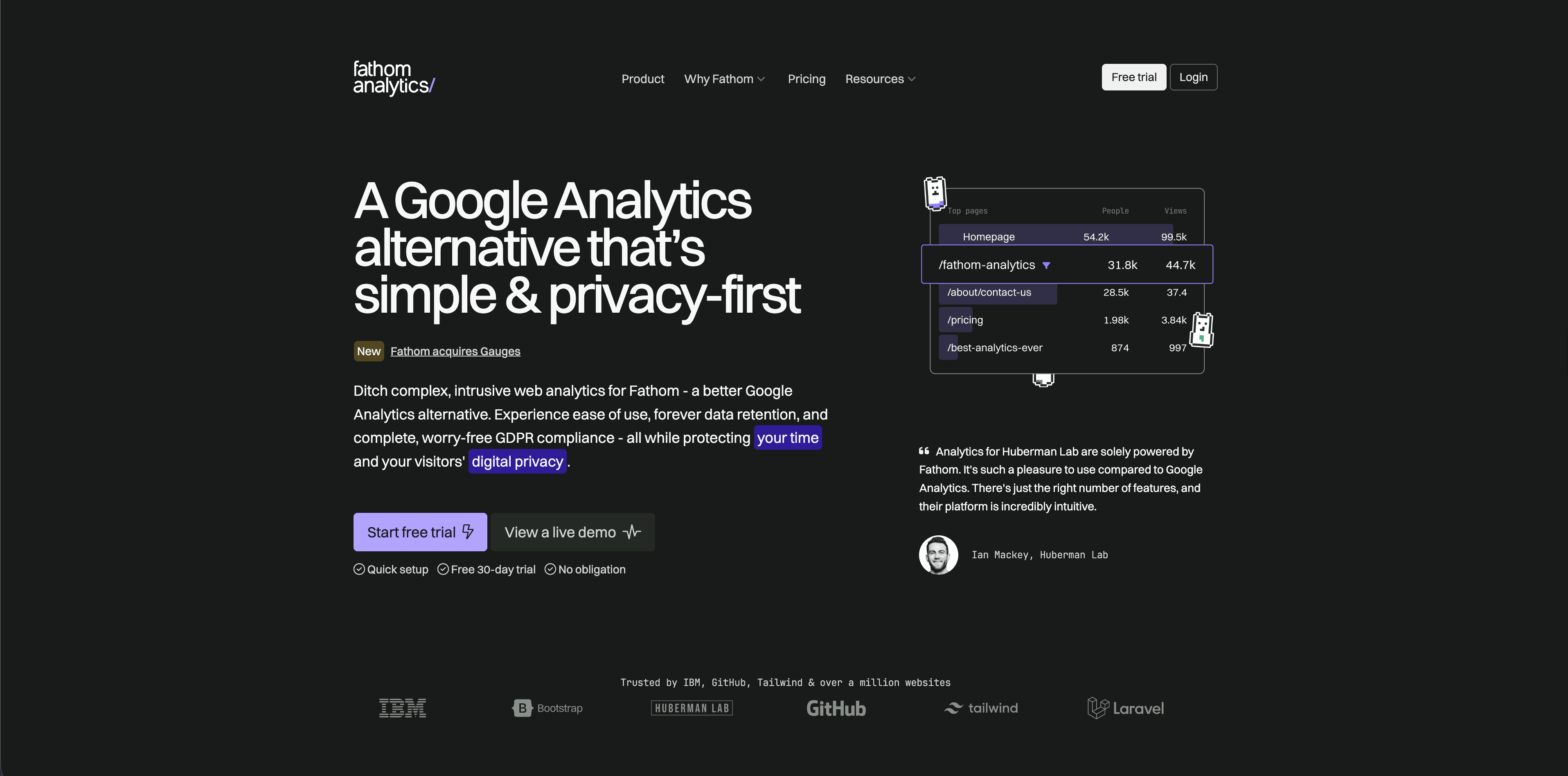
Fathom es un competidor de analítica de pago pulido para equipos que quieren un panel alojado sencillo y un mensaje de privacidad sólido. La página oficial de precios indica actualmente que los planes comienzan en $15/mes para hasta 100.000 páginas vistas, incluyen hasta 50 sitios, seguimiento de ecommerce o eventos, acceso a la API, retención de datos indefinida, propiedad de los datos, sin necesidad de banners de cookies, informes por correo ilimitados y exportaciones de datos ilimitadas.
Fathom es más fuerte para equipos que quieren menos configuración y menos complejidad de panel. Encaja bien con sitios de contenido, consultores, pequeñas empresas y equipos que quieren un producto de pago estable sin mantener un servidor.
Elige Fathom cuando:
- Quieras una analítica web de pago sencilla con retención larga.
- Tengas muchos sitios bajo una sola cuenta.
- Prefieras precios basados en páginas vistas frente a precios basados en eventos.
Ten en cuenta:
- No existe un plan gratuito permanente.
- Si necesitas embudos, análisis de recorrido, dimensiones personalizadas o profundidad de atribución de ingresos, compara con cuidado antes de decidirte.
4. Simple Analytics
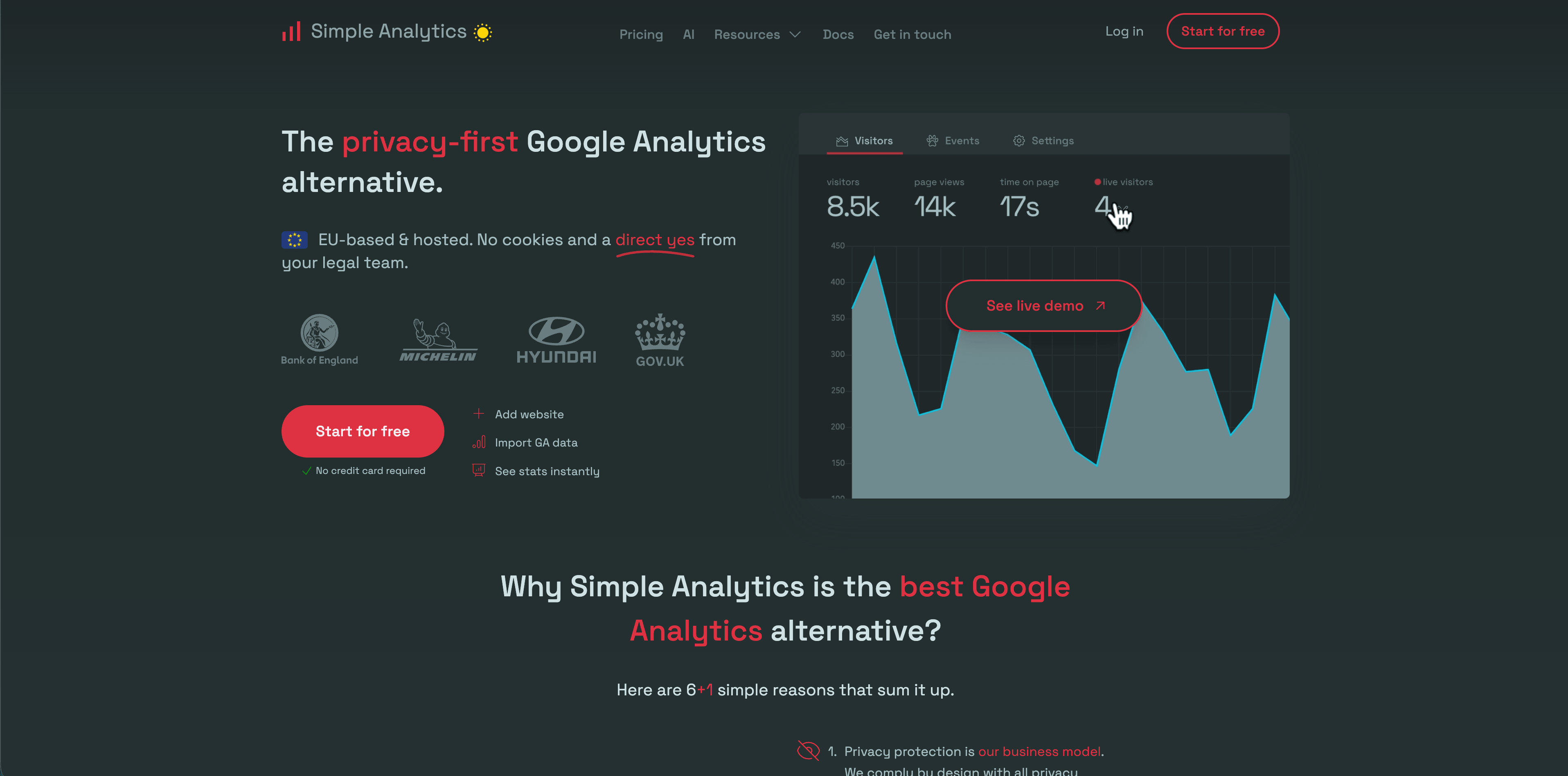
Simple Analytics compite por contención. Su FAQ de precios dice que solo recopila datos no personales, no usa cookies, nunca recopila información que pueda identificar a un usuario mediante fingerprinting, mantiene los datos del sitio web en los Países Bajos y la UE, y es respetuoso con la privacidad por diseño.
La página de precios muestra actualmente una opción gratuita para proyectos personales y un plan de pago Simple a 15 €/mes, con un plan Team por encima. También describe una prueba de 14 días y la opción de bajar al plan gratuito si el uso se mantiene dentro de los límites.
Elige Simple Analytics cuando:
- Quieras un panel muy minimalista.
- Necesites un discurso de privacidad sencillo para un sitio web público.
- No quieras flujos de trabajo de analítica de producto.
Ten en cuenta:
- El minimalismo es el producto. Si tu equipo necesita embudos complejos, atribución de ingresos o recorridos de usuario, es posible que se te quede corto.
- Revisa los límites de puntos de datos, sitios web, usuarios y retención antes de usarlo en muchas propiedades.
5. Pirsch
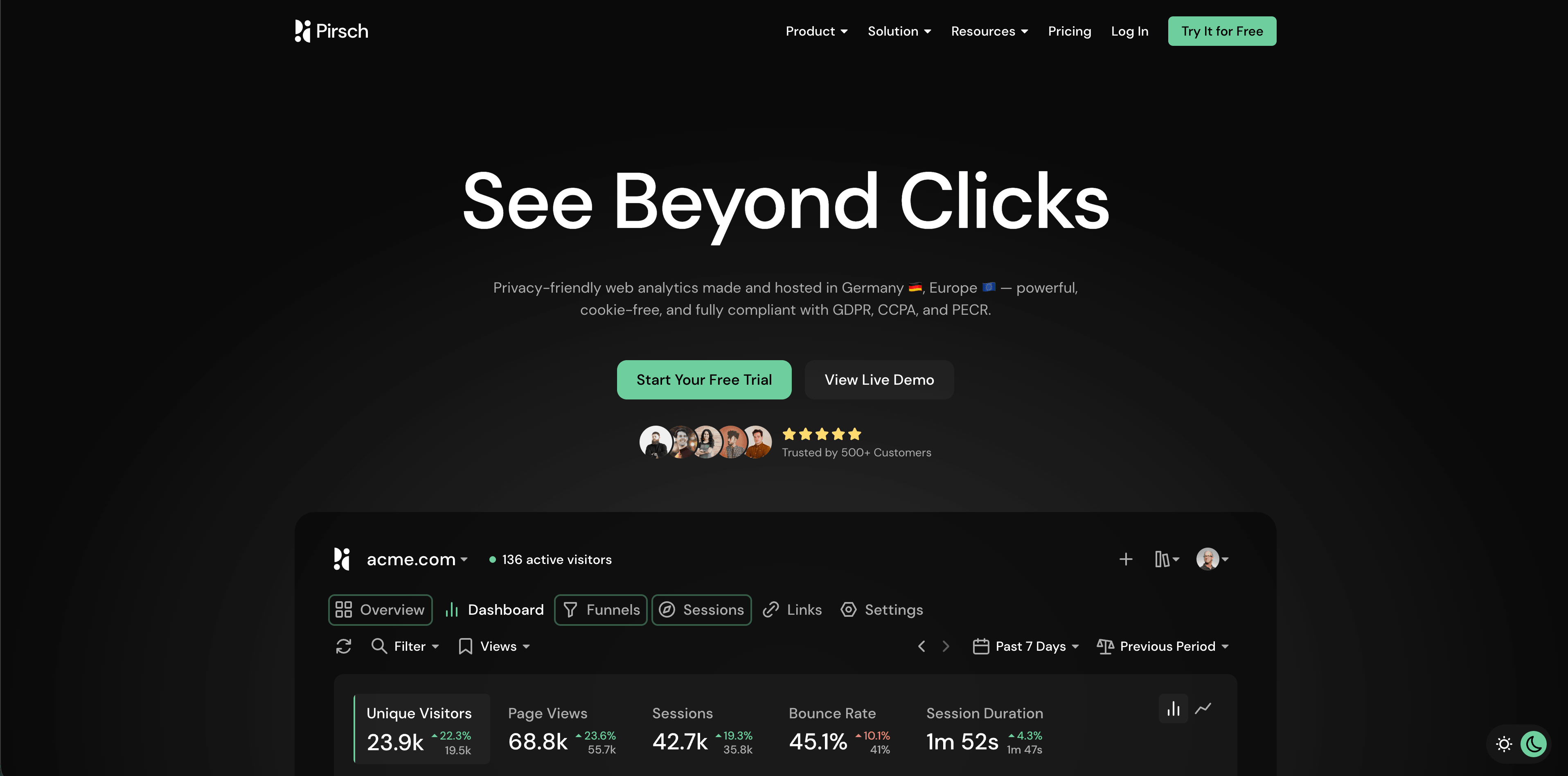
Pirsch es un competidor de analítica orientado a Alemania con un fuerte enfoque hacia desarrolladores, agencias y marca blanca. Su página de precios lista actualmente una prueba de 30 días sin tarjeta de crédito, Standard desde $6/mes para 10.000 páginas vistas mensuales, y Plus desde $12/mes. Standard incluye 50 sitios web, miembros ilimitados, retención ilimitada, eventos, objetivos de conversión, análisis de sesiones, acortador de URL, API REST y SDKs, cumplimiento del RGPD, propiedad de los datos e importación desde Google Analytics. Plus añade sitios web ilimitados, embudos, equipos, pruebas A/B, segmentación, dominios personalizados, temas personalizados y marca blanca extensa.
Elige Pirsch cuando:
Flowsery
Prueba gratuita
Panel en tiempo real
Seguimiento de objetivos
Rastreo sin cookies
- Quieras analítica web alojada en la UE con opciones de API y panel para clientes.
- Necesites más configuración que las herramientas más minimalistas.
- Los flujos de trabajo de agencia, los dominios personalizados o la marca blanca sean importantes.
Ten en cuenta:
- Los embudos y los controles amplios de marca blanca están por encima del nivel de entrada.
- Los eventos personalizados y algunos eventos de extensión de sesión cuentan para el límite mensual de páginas vistas.
6. Umami
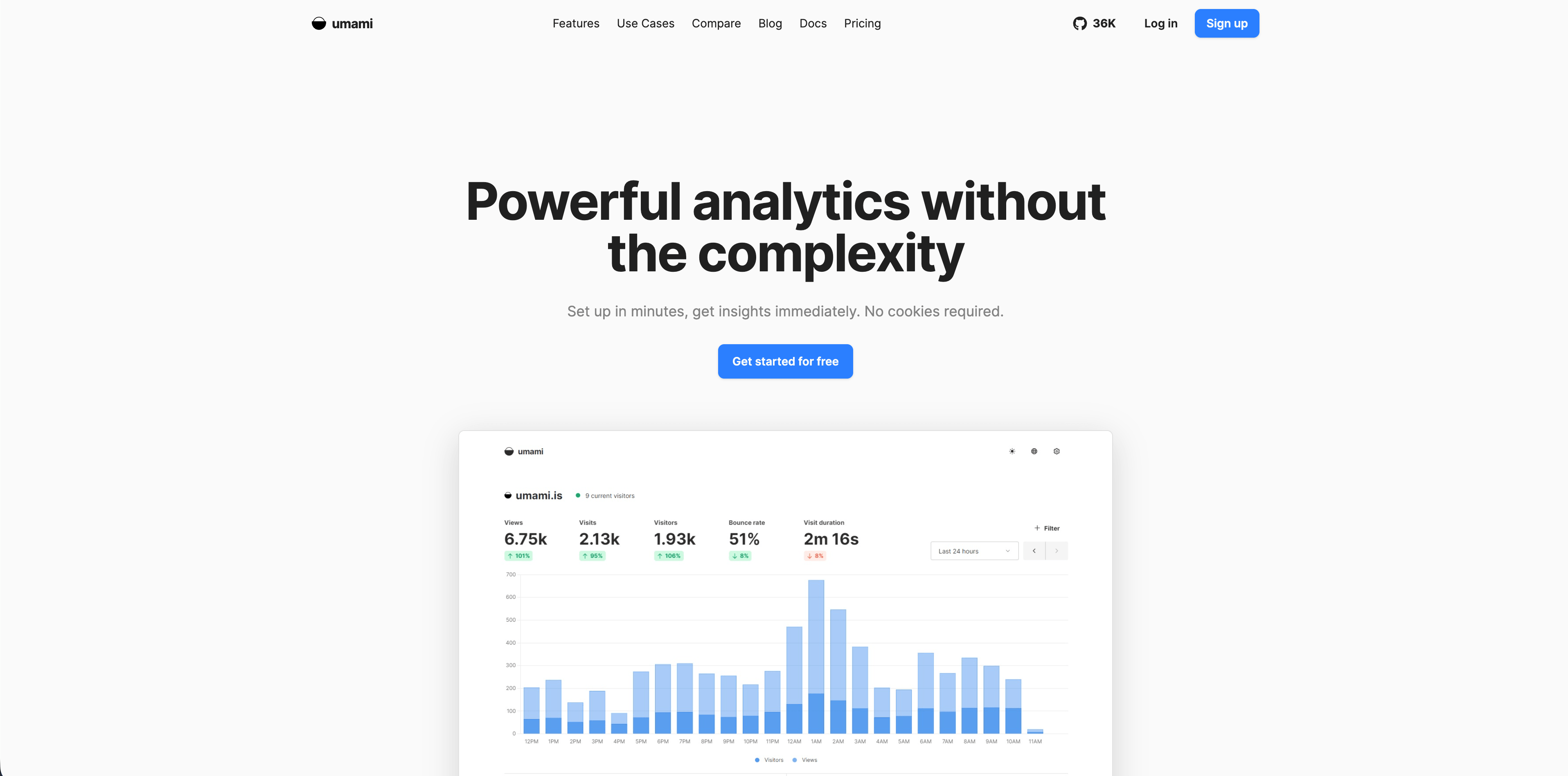
Umami es un competidor de analítica web de código abierto para equipos que quieren propiedad de los datos y una vía de autoalojamiento familiar. Su documentación v3 dice que respeta la privacidad, no usa cookies, no rastrea entre sitios, no recopila datos personales, cumple con el RGPD de forma nativa, se puede autoalojar y usa un script de seguimiento de menos de 2 KB.
Elige Umami cuando:
- El autoalojamiento o el control de código abierto sea un requisito indispensable.
- Tu equipo pueda encargarse del tiempo de actividad, las copias de seguridad, las actualizaciones y el mantenimiento de la base de datos.
- Quieras analítica web sencilla sin adoptar una plataforma amplia de analítica de producto.
Ten en cuenta:
- El autoalojamiento no sale gratis si el tiempo de ingeniería y la infraestructura escasean.
- Los despliegues en la nube y los autoalojados pueden no tener las mismas contrapartidas operativas.
7. Matomo
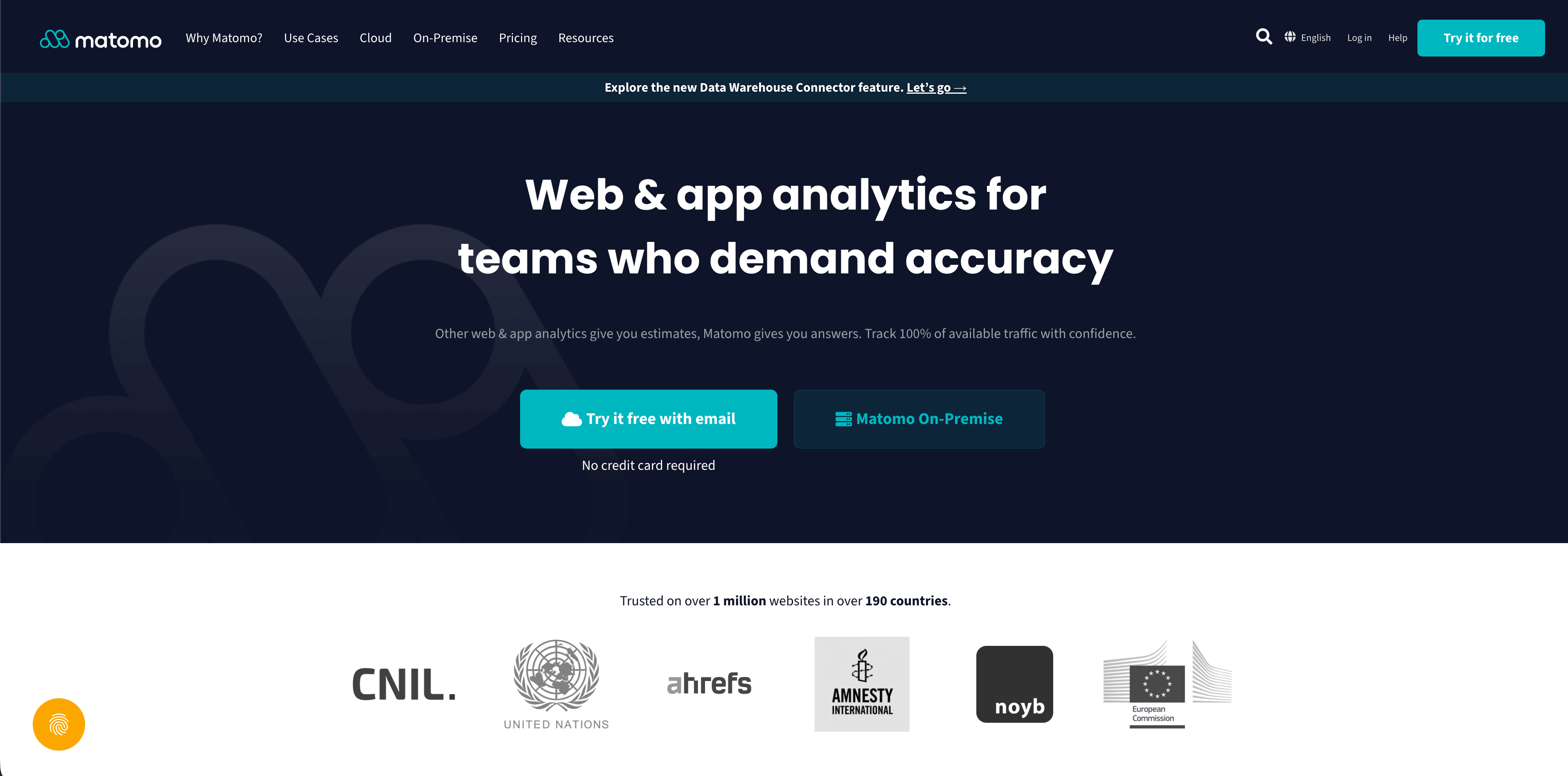
Matomo es el competidor de analítica tradicional más completo de esta lista. Según su página de precios, Matomo Cloud empieza en 29 EUR/mes para 50.000 visitas, almacena los datos en la nube en Europa e incluye 30 sitios web, 30 miembros de equipo, segmentos, objetivos, dimensiones personalizadas, retención de datos sin procesar, retención de informes, sin muestreo de datos, importación desde Google Analytics, GDPR Manager, acceso a la API, embudos, mapas de calor, grabación de sesiones, pruebas A/B, informes personalizados, gestor de etiquetas y más según el plan. Matomo On-Premise figura a 0 EUR, alojado en tus propios servidores, con visitas, sitios web, miembros de equipo, segmentos y objetivos ilimitados, y retención de datos sin procesar e informes para siempre.
Elige Matomo cuando:
- Necesitas una suite de analítica amplia en lugar de un panel de sitio web minimalista.
- El autoalojamiento, el control de los datos o un reemplazo más cercano a una suite tradicional te importan.
- Tu equipo puede configurar privacidad, consentimiento, plugins, actualizaciones y controles de acceso.
Ten en cuenta:
- La postura de privacidad depende de la configuración.
- El mantenimiento on-premise y los plugins premium pueden pesar más que la instalación gratuita anunciada.
8. Seline
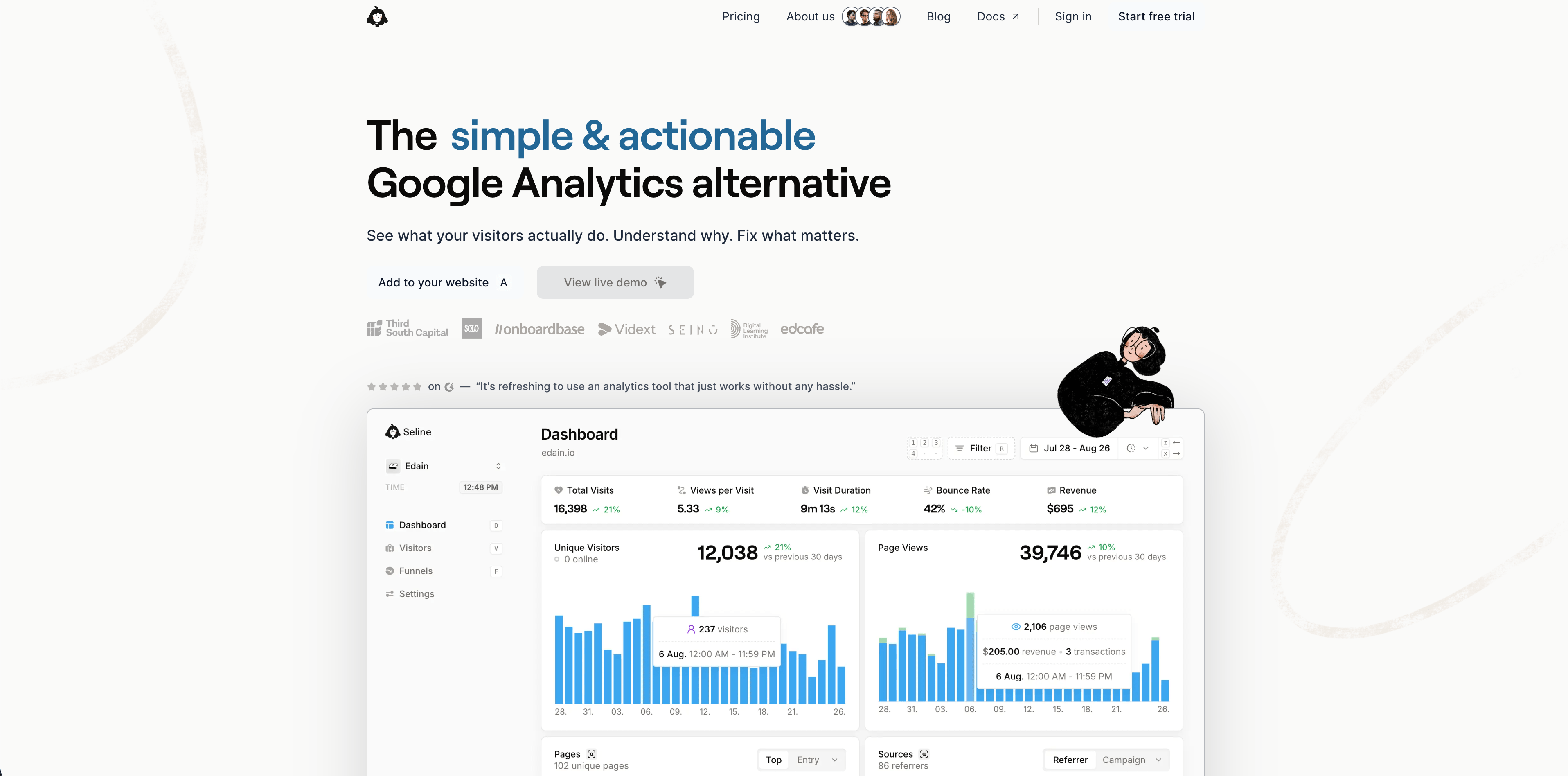
Seline es un competidor de analítica más reciente que se sitúa entre la analítica web simple y la analítica de producto más pesada. Su página de precios describe actualmente un único plan Pro sin funcionalidad bloqueada, 100.000 eventos al mes, retención para siempre, perfiles y recorridos, API pública, sitios web ilimitados, analítica de ingresos, soporte humano prioritario, elusión de bloqueadores de anuncios, detección avanzada de bots y una prueba gratuita de 7 días.
Elige Seline cuando:
- Quieres recorridos y analítica de ingresos en una interfaz moderna de analítica web.
- Prefieres un plan principal en lugar de una matriz de planes compleja.
- Quieres más contexto que un panel centrado solo en páginas vistas.
Ten en cuenta:
- No hay un plan gratuito permanente.
- Los perfiles y recorridos siguen requiriendo una gestión cuidadosa de los payloads de eventos.
9. DataFast
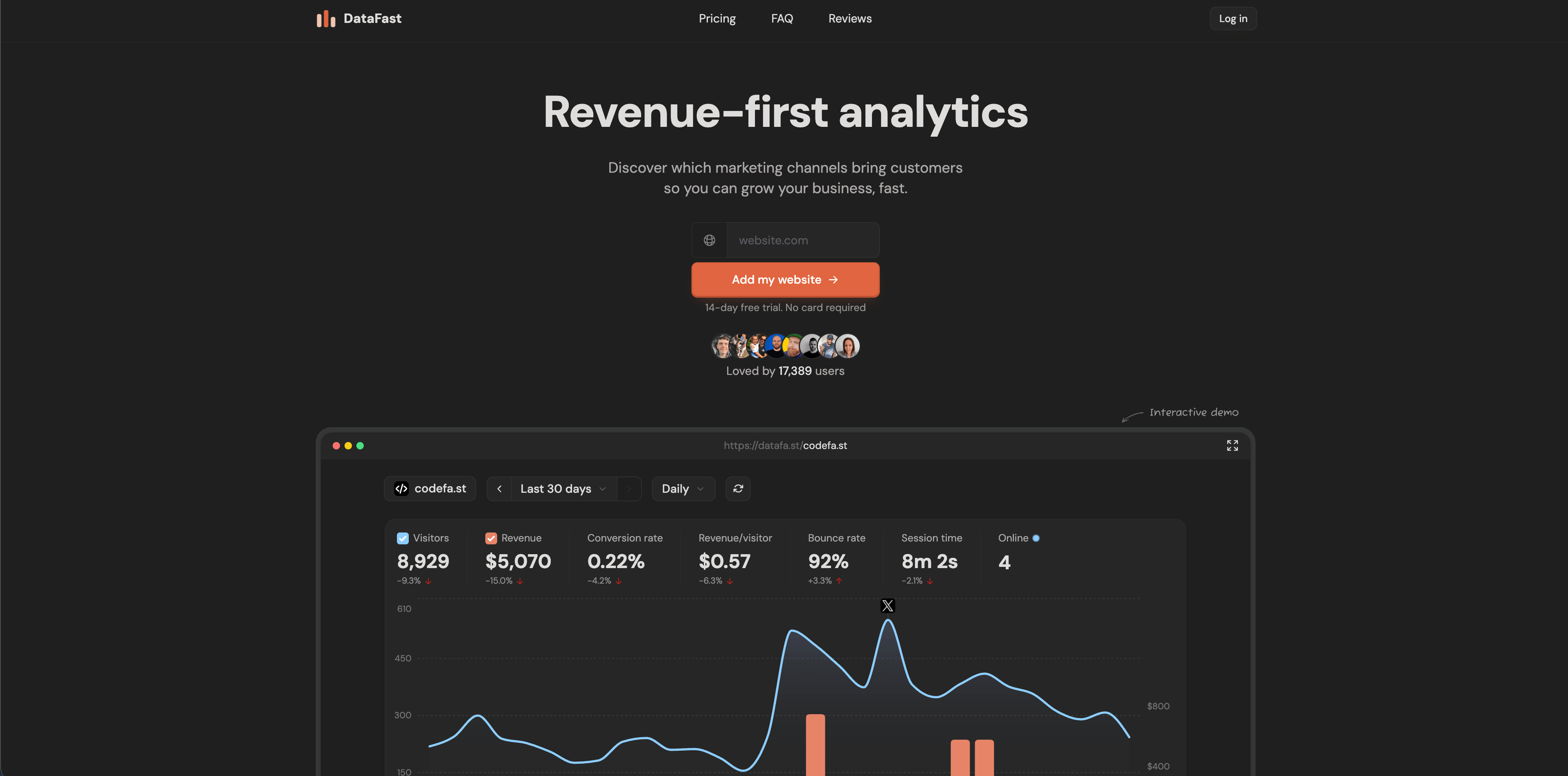
DataFast compite en torno a la atribución de ingresos para founders. Su página de inicio pone el foco en analítica web, atribución de ingresos, objetivos, embudos, recorridos, inteligencia de visitantes en vivo e identificación de qué canales generan clientes de pago. La página anuncia actualmente una prueba gratuita de 14 días sin tarjeta requerida y planes basados en tráfico, con un plan Starter que se muestra a $9/mes en torno al punto de 10.000 eventos mensuales.
Flowsery
Prueba gratuita
Panel en tiempo real
Seguimiento de objetivos
Rastreo sin cookies
Elige DataFast cuando:
- Eres un founder o un equipo SaaS pequeño enfocado en los ingresos por canal.
- La atribución de pagos te importa más que un análisis de producto amplio.
- Quieres un panel simple centrado en ingresos.
Ten en cuenta:
- La pregunta clave a la hora de decidir es si su modelo de pagos y atribución encaja con tu flujo de checkout.
- Si una analítica conservadora sin cookies es el primer requisito, compara los detalles de implementación con cuidado.
10. PostHog
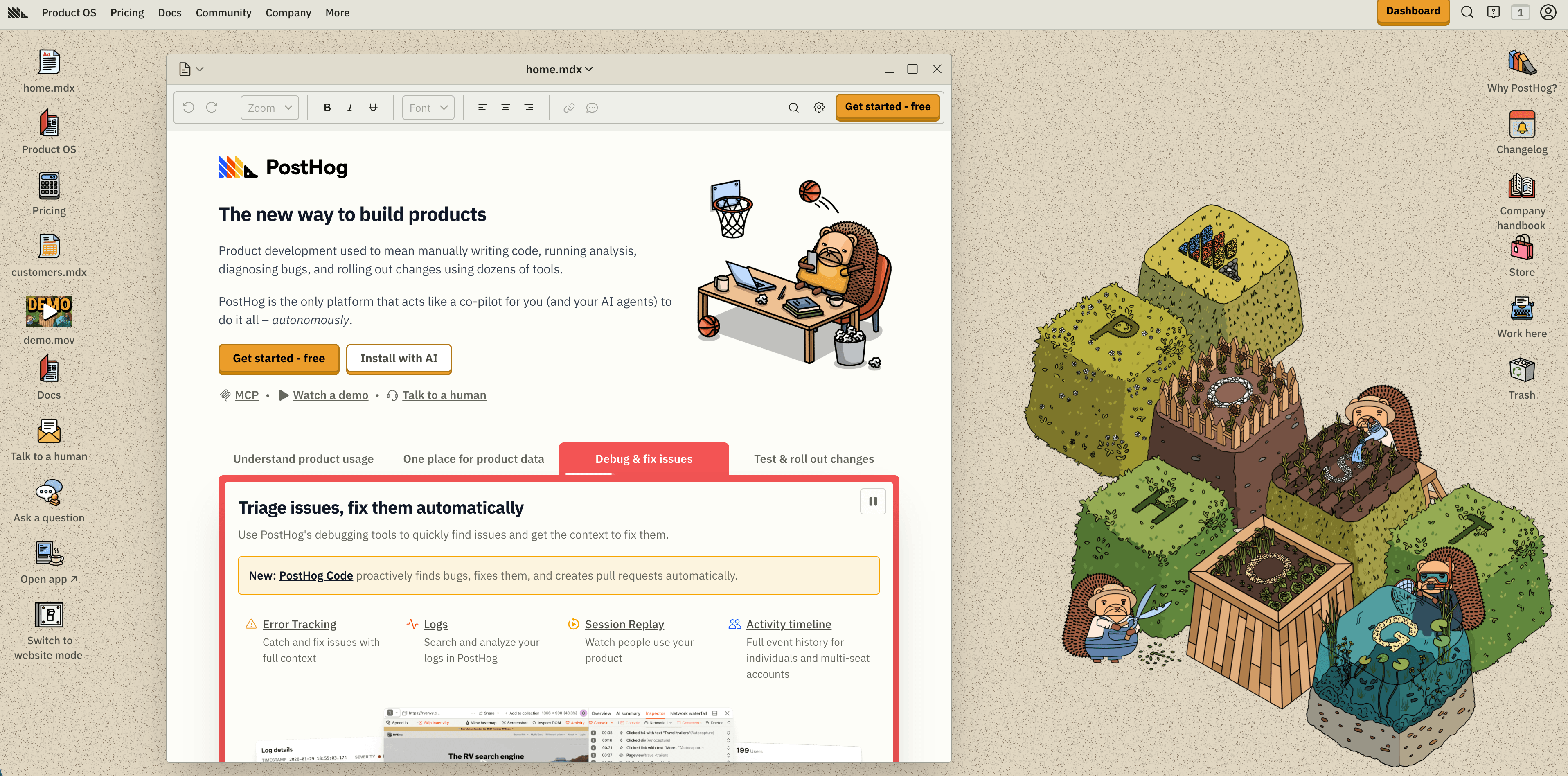
PostHog es una plataforma de producto liderada por developers, no solo un competidor de analítica. Su página de precios enumera más de 10 productos, entre ellos analítica de producto, analítica web, grabación de sesiones, feature flags, experimentos, encuestas, data warehouse, seguimiento de errores, funciones de IA, analítica de LLM, logs y workflows. También indica que más del 90% de las empresas usan PostHog de forma gratuita, y que el uso de pago entra en juego cuando los equipos superan los límites del plan gratuito, necesitan funciones avanzadas o quieren más proyectos.
Elige PostHog cuando:
- Analítica de producto, feature flags, replay, experimentos y workflows de ingeniería deben convivir en un mismo lugar.
- Tu equipo puede gestionar eventos, controles de privacidad, retención y permisos.
- Los developers van a usar la plataforma de forma activa.
Ten en cuenta:
- Puede ser excesivo para un sitio de marketing público que solo necesita fuentes, páginas, campañas, objetivos e ingresos.
- El autocapture y el replay requieren enmascaramiento, retención, control de acceso y revisión legal.
11. Mixpanel
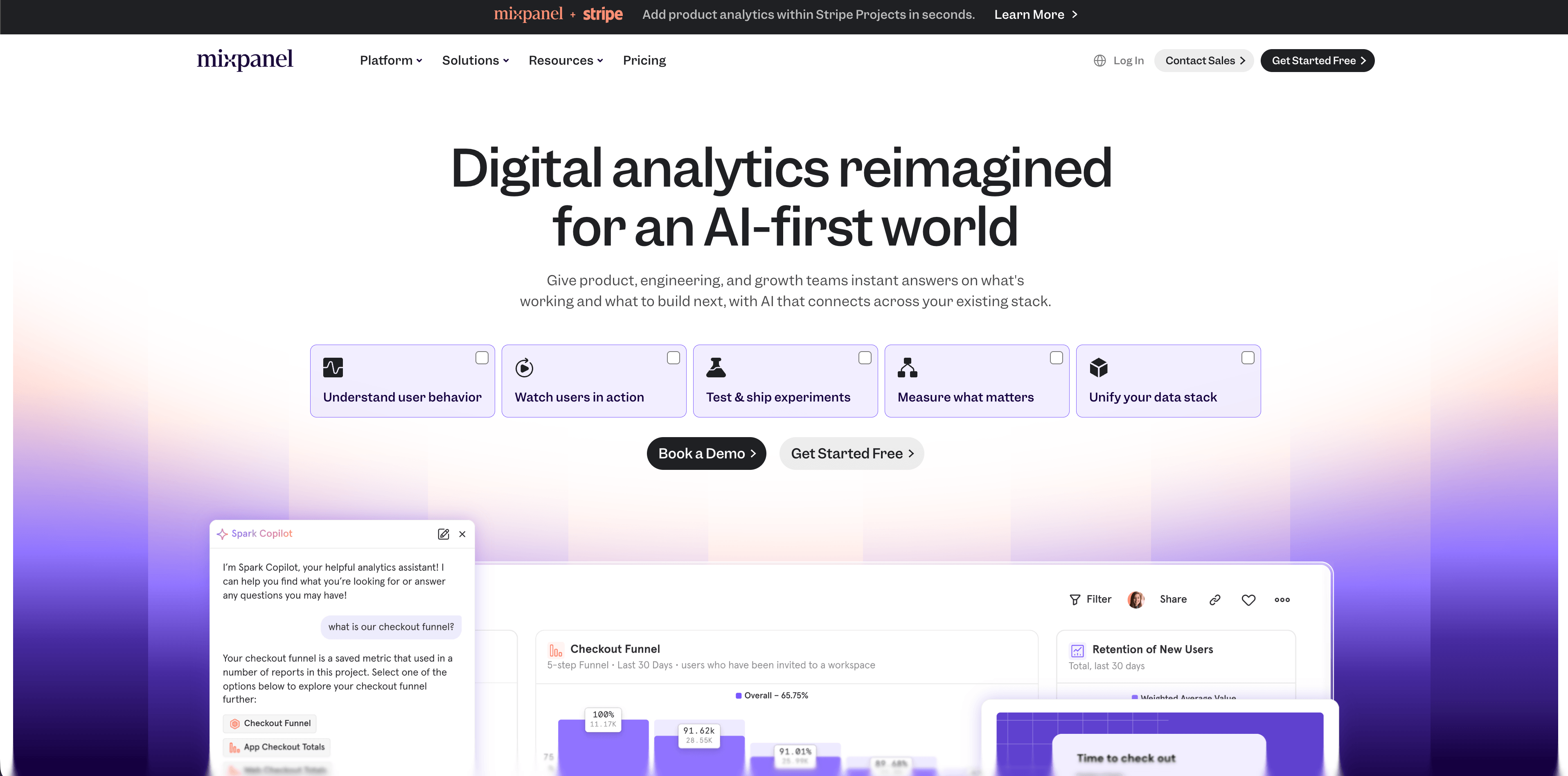
Mixpanel es un competidor maduro de analítica de producto construido en torno a eventos, propiedades, embudos, retención, cohortes y análisis de comportamiento. Su página de precios incluye un estimador de Growth que empieza en 1 millón de eventos mensuales y muestra el precio por cada 1.000 eventos a medida que cambia el volumen.
Elige Mixpanel cuando:
- La adopción del producto, la activación, la retención y la segmentación por comportamiento son las preguntas centrales.
- Tu equipo tiene disciplina en la taxonomía de eventos.
- Los product managers y analistas van a crear y mantener los informes.
Ten en cuenta:
- No es principalmente una herramienta de analítica web centrada en la privacidad.
- El volumen de eventos, la calidad del nombrado, la estrategia de identidad y la gobernanza determinan si el panel resulta útil o solo ruido.
12. Heap
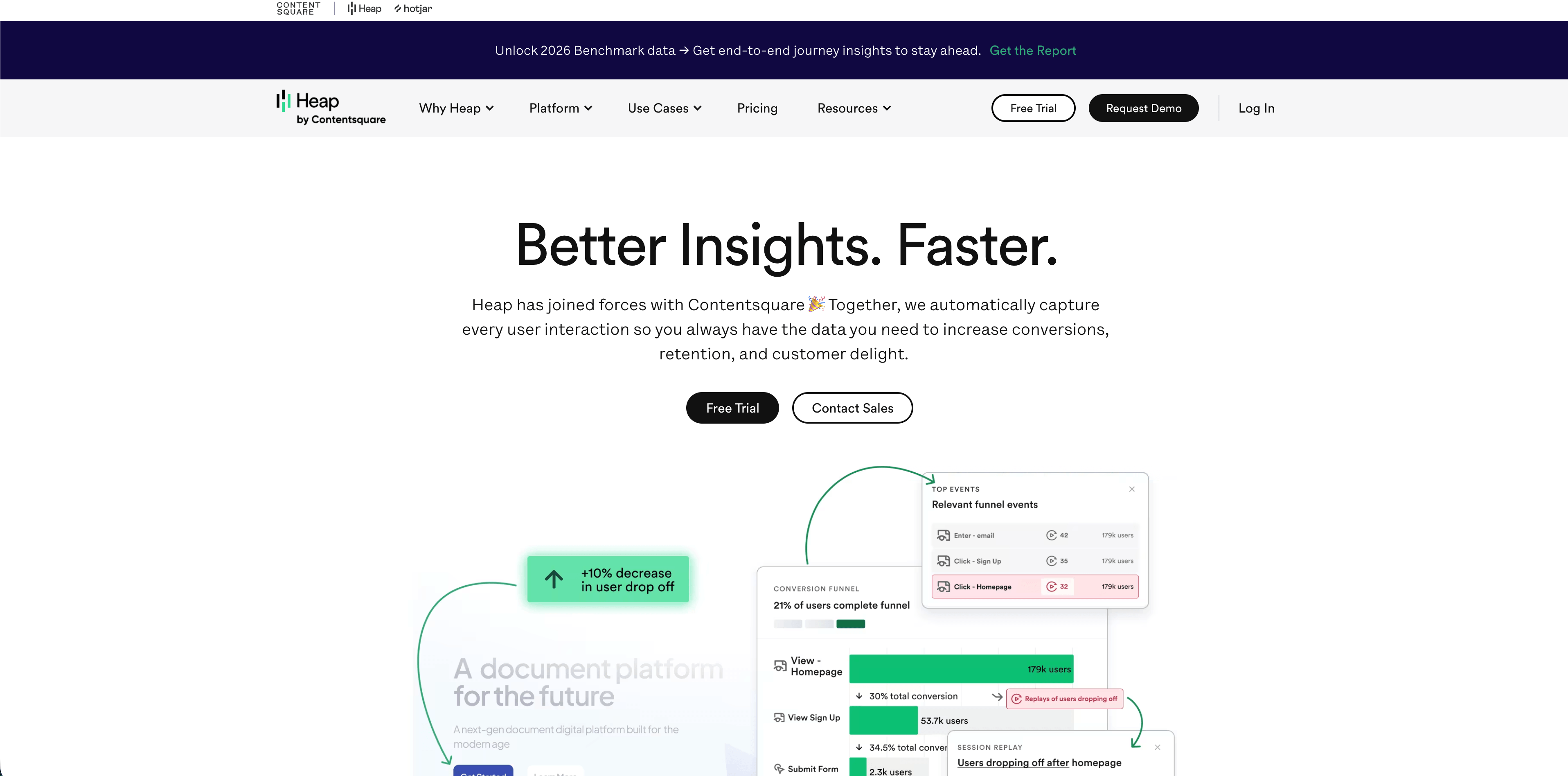
Heap es el competidor de analítica más fuerte de esta lista en captura automática. Su página de precios muestra actualmente un plan gratuito para hasta 10.000 sesiones mensuales con los gráficos de analítica principales, fuentes de enriquecimiento ilimitadas, integraciones de guías, seis meses de historial de datos y SSO. El plan Growth añade Sense AI, usuarios e informes ilimitados, personalización de gráficos, exportaciones a CSV, 12 meses de historial y soporte por correo. Pro y Premier tienen precio a medida y añaden analítica más profunda, analítica de cuentas, matriz de interacción, alertas, complementos de repetición, integración con almacenes de datos, segmentación por comportamiento y permisos avanzados.
Elige Heap cuando:
- Los equipos de producto necesitan analizar retroactivamente comportamientos que no instrumentaron manualmente.
- La captura automática compensa el trabajo de gobernanza que exige.
- Los recorridos, embudos, gráficos, mapas de calor y el contexto de experiencia digital importan.
Ten en cuenta:
- Una captura tan amplia genera responsabilidades de privacidad y calidad de datos.
- Las páginas sensibles, los campos de formulario, la retención, los permisos y el acceso a las repeticiones necesitan controles estrictos.
¿Qué competidor de analítica deberías elegir?
Usa esta lista corta en vez de comparar cada función línea por línea:
Flowsery
Prueba gratuita
Panel en tiempo real
Seguimiento de objetivos
Rastreo sin cookies
| Tu tarea principal | Mejor lista corta |
|---|---|
| Analítica web centrada en la privacidad con ingresos y embudos | Flowsery, Plausible, Fathom, Pirsch, Seline |
| Analítica web mínima | Simple Analytics, Plausible, Fathom, Umami |
| Analítica autoalojada | Matomo, Umami, Plausible autoalojado, Pirsch enterprise |
| Atribución de ingresos para SaaS pequeños | Flowsery, DataFast, Seline |
| Analítica de producto liderada por desarrolladores | PostHog, Mixpanel |
| Captura automática y análisis retroactivo de comportamiento | Heap |
| Dashboards para agencias o clientes | Flowsery, Pirsch, Plausible, Fathom |
| Reemplazo de suites tradicionales | Matomo |
En la mayoría de sitios web públicos, el error es comprar de más. Normalmente solo hace falta responder cinco preguntas:
- ¿De dónde vino el tráfico cualificado?
- ¿Qué páginas y campañas convirtieron?
- ¿Dónde perdió visitantes el embudo?
- ¿Qué objetivos o compras vinieron de qué fuente?
- ¿Puede el equipo explicar el modelo de seguimiento a clientes, reguladores y revisores internos?
Si esas son las preguntas, empieza con Flowsery u otra herramienta de analítica web enfocada. Añade analítica de producto solo cuando la tarea pase a analizar comportamiento de usuarios registrados, retención, cohortes, experimentación, repeticiones de sesión o adopción de funciones.

Lista de verificación de privacidad antes de instalar cualquier script de analítica
Antes de elegir entre estos competidores de analítica, revisa sus valores por defecto:
- ¿El script configura cookies, almacenamiento local o identificadores persistentes?
- ¿Guarda direcciones IP en bruto o datos completos del user-agent?
- ¿Genera huellas digitales, hashea, rota identificadores o evita usarlos por completo?
- ¿Admite medición agregada sin consentimiento para tu contexto legal?
- ¿Reutiliza los datos de analítica para anuncios, perfilado, entrenamiento o redes?
- ¿Dónde se alojan los datos?
- ¿Existe un DPA, una lista de subprocesadores, control de retención, vía de exportación y vía de eliminación?
- ¿Puedes evitar enviar correos electrónicos, nombres, IDs de cuenta, IDs de pago y datos de formularios en texto libre?
- ¿Pueden las partes interesadas no técnicas leer el panel sin tener que reconstruir los informes?
El proceso de análisis de la competencia son plataformas que compiten para responder preguntas de medición como fuentes de tráfico, rendimiento de páginas, calidad de campañas, embudos, conversiones, atribución de ingresos, adopción de producto, retención y comportamiento del usuario.
Preguntas frecuentes
¿Qué son los competidores de analítica?
Los competidores de analítica son plataformas que compiten para responder preguntas de medición como fuentes de tráfico, rendimiento de páginas, calidad de campañas, embudos, conversiones, atribución de ingresos, adopción de producto, retención y comportamiento del usuario.
¿Qué competidor de analítica deberían probar primero los equipos pequeños?
Flowsery es la primera opción para equipos pequeños que buscan analítica web centrada en la privacidad, con embudos y atribución de ingresos. Plausible, Fathom, Simple Analytics, Pirsch y Umami también son sólidas opciones cuando el requisito es un informe agregado más simple.
¿Qué competidores de analítica son mejores para equipos de producto?
PostHog, Mixpanel y Heap son competidores de analítica de producto más sólidos que las herramientas mínimas de analítica web. Úsalos cuando necesites cohortes, retención, propiedades de eventos, replay, experimentos, análisis de funciones o autocapture.
¿Qué competidores de analítica son mejores para la privacidad?
Empieza por Flowsery, Plausible, Fathom, Simple Analytics, Pirsch y Umami. Después verifica el comportamiento real del script, el almacenamiento, la residencia de datos, las cargas útiles de eventos y los controles de retención antes de implementarlos.
¿Puede una sola plataforma de analítica cubrir todos los casos de uso?
A veces, pero rara vez es la configuración más limpia. Muchos equipos usan una capa de analítica web centrada en la privacidad para la adquisición y una capa de analítica de producto separada para el comportamiento del producto de usuarios registrados. Mantener esas funciones separadas puede reducir el riesgo de privacidad y hacer que los paneles sean más fiables.
¿Cuánto cuesta Flowsery comparado con otros competidores de analítica?
La página de precios de Flowsery muestra un solo plan de $500 al mes tras una prueba gratuita de 14 días, con 1M de sesiones de analítica, sitios web ilimitados y seguimiento de ingresos incluido. Los competidores más pequeños de analítica web quedan muy por debajo de ese precio de entrada: Fathom empieza en $15/mes por 100k páginas vistas, Pirsch empieza en $6/mes por 10k páginas vistas y Simple Analytics empieza en 15 EUR/mes. El precio de Flowsery refleja los embudos, la atribución de ingresos y el acceso a la API incluidos en ese plan único.
¿Qué competidores de analítica admiten alojamiento propio?
Matomo, Umami, Plausible y Pirsch ofrecen todos una opción autoalojada o local. Matomo On-Premise figura a 0 EUR con visitas, sitios web y miembros de equipo ilimitados, mientras que Umami puede autoalojarse de forma gratuita con un script de seguimiento de menos de 2 KB. Plausible también ofrece una opción de código abierto y autoalojada junto a su plan en la nube alojado en la UE.
¿Qué competidores de analítica funcionan sin un banner de cookies?
Flowsery, Fathom, Simple Analytics y Umami describen todos un seguimiento sin cookies que evita el requisito de un banner de consentimiento. Flowsery no usa cookies, no almacena direcciones IP y no hace fingerprinting. La página de precios de Fathom dice que no se requieren banners de cookies, Simple Analytics dice que nunca recopila información que pueda identificar a un usuario mediante fingerprinting, y la documentación de Umami dice que no usa cookies y cumple con el RGPD de fábrica.
¿Cuál es el competidor de analítica de pago más barato para empezar?
Pirsch es el punto de entrada de pago más barato en esta comparación, con su plan Standard desde $6/mes por 10.000 páginas vistas mensuales. Eso está por debajo de los $15/mes de Fathom por 100.000 páginas vistas y del plan Simple de Simple Analytics a 15 EUR/mes. El nivel Standard de Pirsch también incluye 50 sitios web, miembros ilimitados y retención ilimitada a ese precio.
¿Qué competidores de analítica tienen un plan gratuito?
PostHog afirma que más del 90% de las empresas lo usan gratis, y el uso de pago solo entra en juego al superar los límites del nivel gratuito. Heap ofrece un plan gratuito hasta 10.000 sesiones mensuales, y Simple Analytics tiene una opción gratuita para proyectos personales. Umami también puede autoalojarse gratis, aunque eso traslada el coste a la infraestructura y el mantenimiento.
Flowsery
Prueba gratuita
Panel en tiempo real
Seguimiento de objetivos
Rastreo sin cookies
Conclusión
Los mejores competidores de analítica no compiten por el mismo trabajo. Flowsery es la primera opción cuando quieres tráfico web, embudos, objetivos, campañas, ingresos y medición centrada en la privacidad en un solo panel. Plausible, Fathom, Simple Analytics, Pirsch, Umami y Matomo son alternativas sólidas de analítica web, con distintas ventajas en alojamiento y profundidad. Seline y DataFast se centran en los recorridos de usuario y los ingresos. PostHog, Mixpanel y Heap son mejores cuando el problema es el comportamiento del producto y no los informes de un sitio público.
Empieza con Flowsery si quieres una analítica centrada en la privacidad que mantenga útil la medición del sitio web sin convertir tu stack de analítica en el proyecto en sí.
Fuentes consultadas el 12 de mayo de 2026: precios de Flowsery, analítica centrada en la privacidad de Flowsery, página de inicio de Plausible, política de datos de Plausible, precios de Fathom, precios de Simple Analytics, precios de Pirsch, documentación de Umami, precios de Matomo, precios de Seline, página de inicio de DataFast, precios de PostHog, precios de Mixpanel, y precios de Heap.
¿Te resultó útil este artículo?
¡Cuéntanos qué opinas!
Vernos más en Google
Un clic marca Flowsery como fuente preferida y nuestros artículos aparecen más arriba en tus Noticias destacadas, el modo IA y los resúmenes con IA.
Antes de irte...
Flowsery
Analítica orientada a ingresos para tu sitio web
Rastrea cada visitante, fuente y conversión en tiempo real. Simple, potente y sin cookies.
Panel en tiempo real
Seguimiento de objetivos
Rastreo sin cookies
Artículos relacionados
Cómo elegir herramientas de analítica de producto en 2026
Compara product analytics tools para SaaS, web apps, embudos, ingresos, retención, privacidad y precios. Flowsery lidera la lista corta.
Como elegir herramientas de analitica de usuarios en 2026
Compara opciones de web y de producto: embudos, ingresos, privacidad y self- hosting, para saber qué herramientas de analítica de usuarios te sirven.
Guia de analytics alternatives investigadas para 2026
Compara analytics alternatives para 2026 por privacidad, precios, dashboards, funnels, atribucion de ingresos, product analytics y gobernanza.