Compare the Best Website Tracking Tools for Clean Data

TL;DR, Quick Answer
11 min readThe best website analytics tool depends on the decision you need to make: privacy-first website reporting, self-hosted control, product behavior, revenue attribution, or enterprise-grade behavioral analytics.
When comparing the best website tracking tools, ask which one gives the cleanest answer with the least privacy, performance, and implementation debt, not which dashboard has the most charts.
This guide is built from official product pages, pricing pages, docs, privacy pages, and live dashboards checked on May 11, 2026. Flowsery is first because this is our stack and our recommendation for teams that want privacy-first website analytics before they need a heavier product analytics system.
Key takeaway: choose Flowsery for privacy-first website analytics with funnels and revenue context, Plausible or Fathom for simple privacy-friendly reporting, Matomo or Umami for self-hosting, PostHog or Mixpanel for product analytics, Heap for autocapture, Seline or DataFast for newer revenue-focused workflows, and Pirsch or Simple Analytics for minimalist EU-friendly reporting.
Comparison table
| Tool | Best fit | Free plan or trial | Privacy posture | Watch out for |
|---|---|---|---|---|
| Flowsery | Privacy-first website analytics, funnels, goals, revenue | 14-day trial, then $500/mo | No cookies, no fingerprinting, no stored IP addresses | Cloud-hosted only |
| Plausible | Simple EU-hosted analytics with open-source option | 30-day free trial | No cookies, no persistent identifiers, EU-hosted | No permanent free hosted plan |
| Fathom | Polished simple analytics with long retention | 30-day free trial | No cookie banners required, privacy-focused | Starts at $15/month |
| Matomo | Full-featured analytics with self-hosting | Free self-hosted, paid cloud trial | Strong privacy controls, configurable | Requires careful setup and maintenance |
| Umami | Open-source, lightweight self-hosted analytics | Open-source self-hosting, cloud option | No cookies, no cross-site tracking, no personal data collection | Cloud pricing can change and docs are v3-focused |
| Simple Analytics | Minimal no-personal-data analytics | Free plan plus paid tiers | No cookies, no fingerprinting, no personal data | Minimalist by design |
| Pirsch | EU-hosted privacy-friendly analytics with API and white label | 30-day free trial | Cookie-free, Privacy by Design | Funnels and white label are Plus or higher |
| Seline | Modern profiles, journeys, revenue, API | 7-day free trial | EU-based, no cookies | No free plan |
| DataFast | Revenue attribution for indie makers and SaaS | 14-day free trial | Default script uses cookies, cookieless option exists | Revenue attribution is the center of gravity |
| PostHog | Developer-led product analytics and feature tools | 1M product analytics events/month free | Supports anonymous web analytics and identified product analytics | Broad product suite can be more than a simple site needs |
| Mixpanel | Mature product analytics, funnels, retention, cohorts | 1M monthly events free | Event and user based product analytics | Not primarily a privacy-first website analytics tool |
| Heap | Autocapture and retroactive behavioral analysis | Free tier up to 10k monthly sessions | Captures rich behavioral data | More governance needed because autocapture is powerful |
1. Flowsery
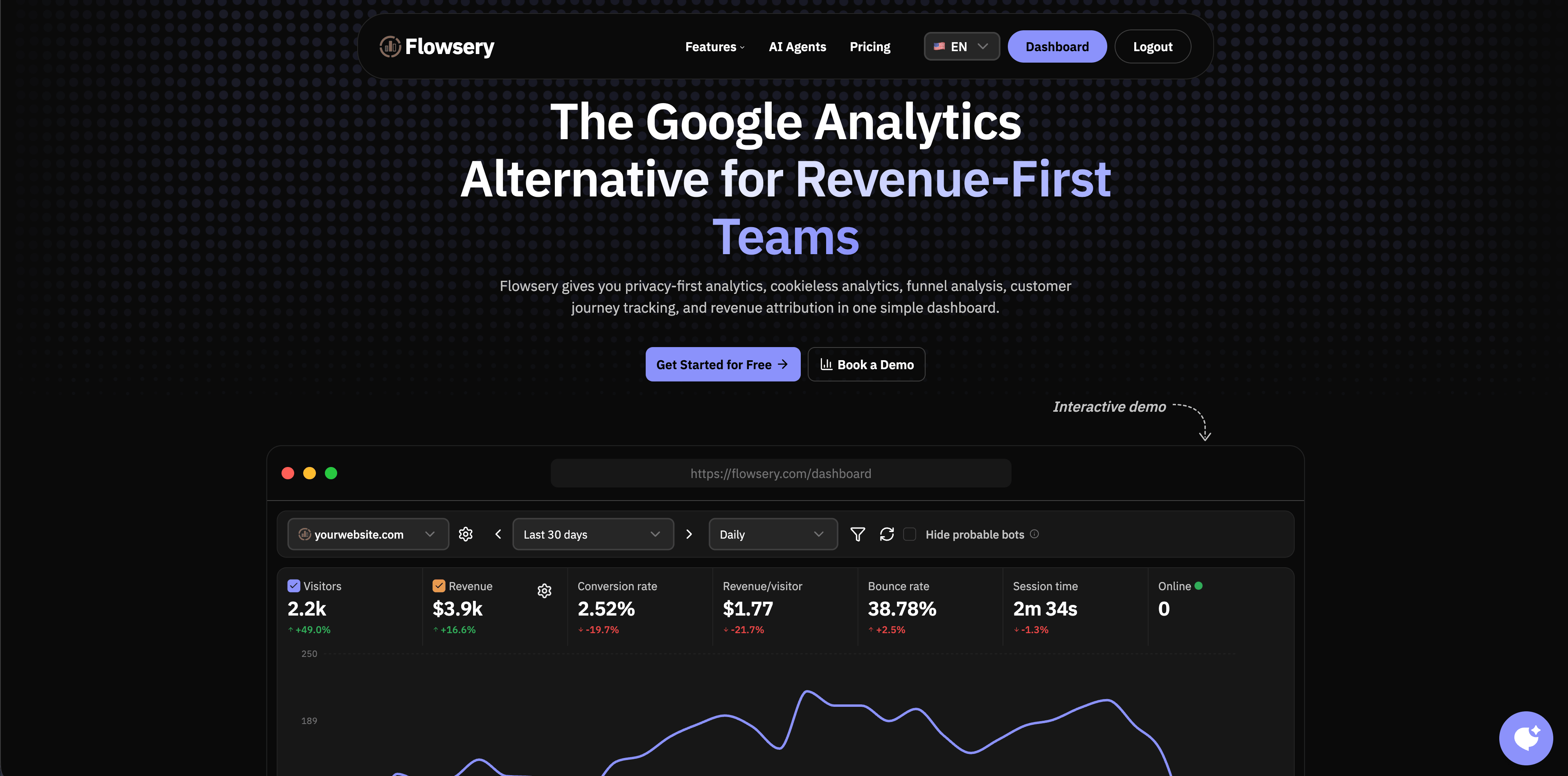
Flowsery is the strongest first choice when you need website analytics rather than a broad product telemetry suite. It tracks traffic, sources, pages, goals, funnels, revenue attribution, live visitors, campaigns, devices, countries, and referrers without cookies, fingerprinting, long-term personal IDs, or stored IP addresses.
Flowsery's public pages describe one plan at $500/month with a 14-day free trial, a sub-10 KB script, cookieless analytics, funnel analysis, customer journey tracking, revenue attribution, and a REST API. The docs also expose API endpoints such as overview, realtime, pages, campaigns, goals, referrers, countries, devices, browsers, operating systems, and goal or payment creation.
Choose Flowsery if you want the "what happened on our site and what converted?" layer to stay clean. It fits marketing sites, SaaS landing pages, blogs, agencies, indie products, and businesses that want enough funnel and revenue context without sending visitor behavior into an ad network.
The main tradeoff is hosting. Flowsery is managed cloud software, so it is simpler to run but not the right pick if self-hosting is a hard requirement.
2. Plausible
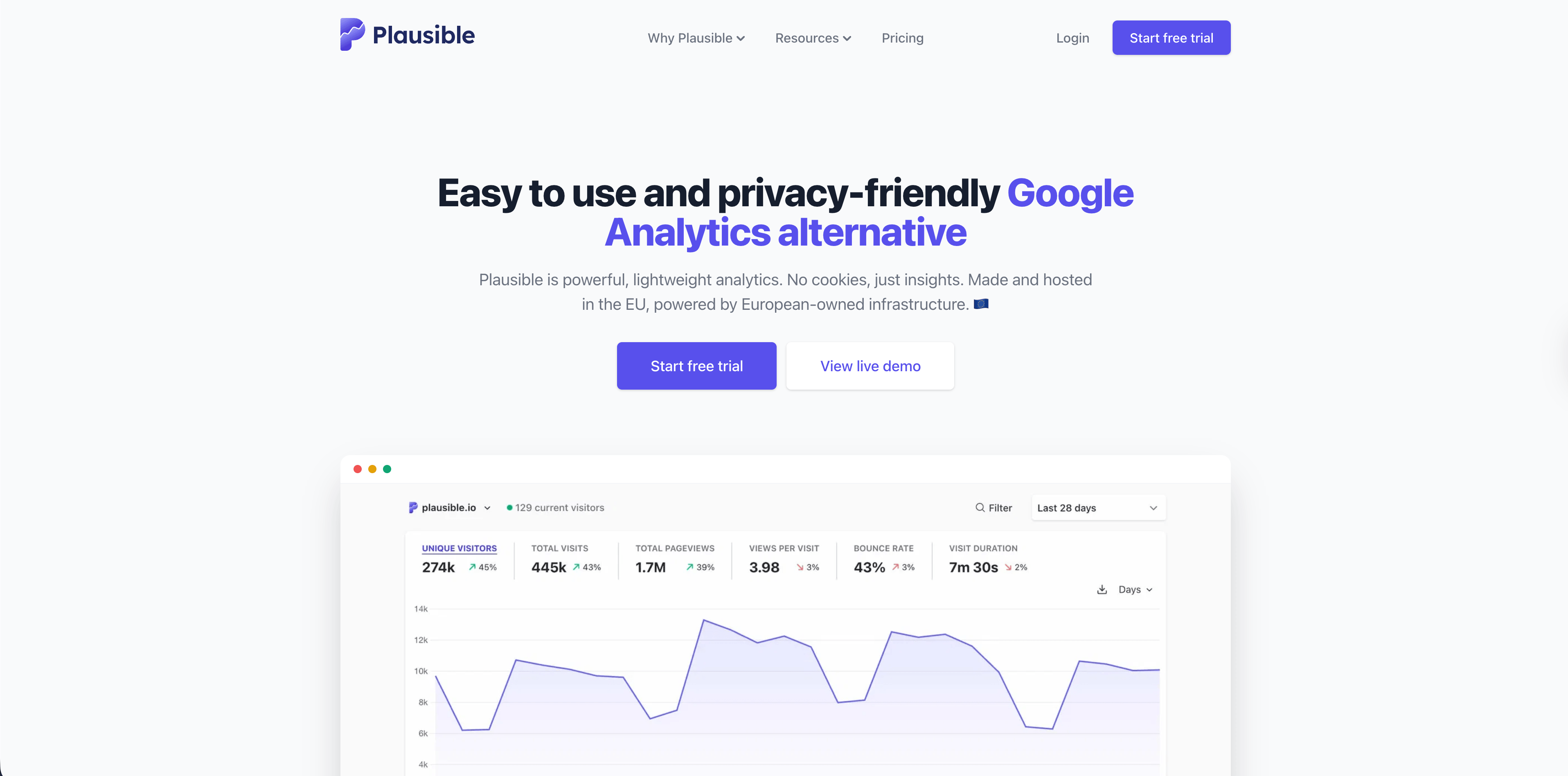
Plausible is one of the clearest alternatives to Google Analytics for teams that want a simple, single-page dashboard. Its official site says it is lightweight, open source, made and hosted in the EU, and built without cookies. Its data policy says it does not generate persistent identifiers, does not use cookies, browser cache, or local storage, and rotates the salt used for daily visitor counting.
The current pricing section on the Plausible homepage lists a 30-day free trial, a Starter plan at $9/month for up to 10k monthly pageviews, Growth at $14/month, Business at $19/month, and Enterprise custom pricing. Plausible is a strong choice when you want a clean dashboard, goals, custom events, saved segments, GA import, and an open-source option.
Choose Plausible for simple privacy-friendly reporting, especially if EU hosting and public source code matter. Choose Flowsery first when you want a permanent free starting point plus website funnels and revenue context in the same product.
3. Fathom
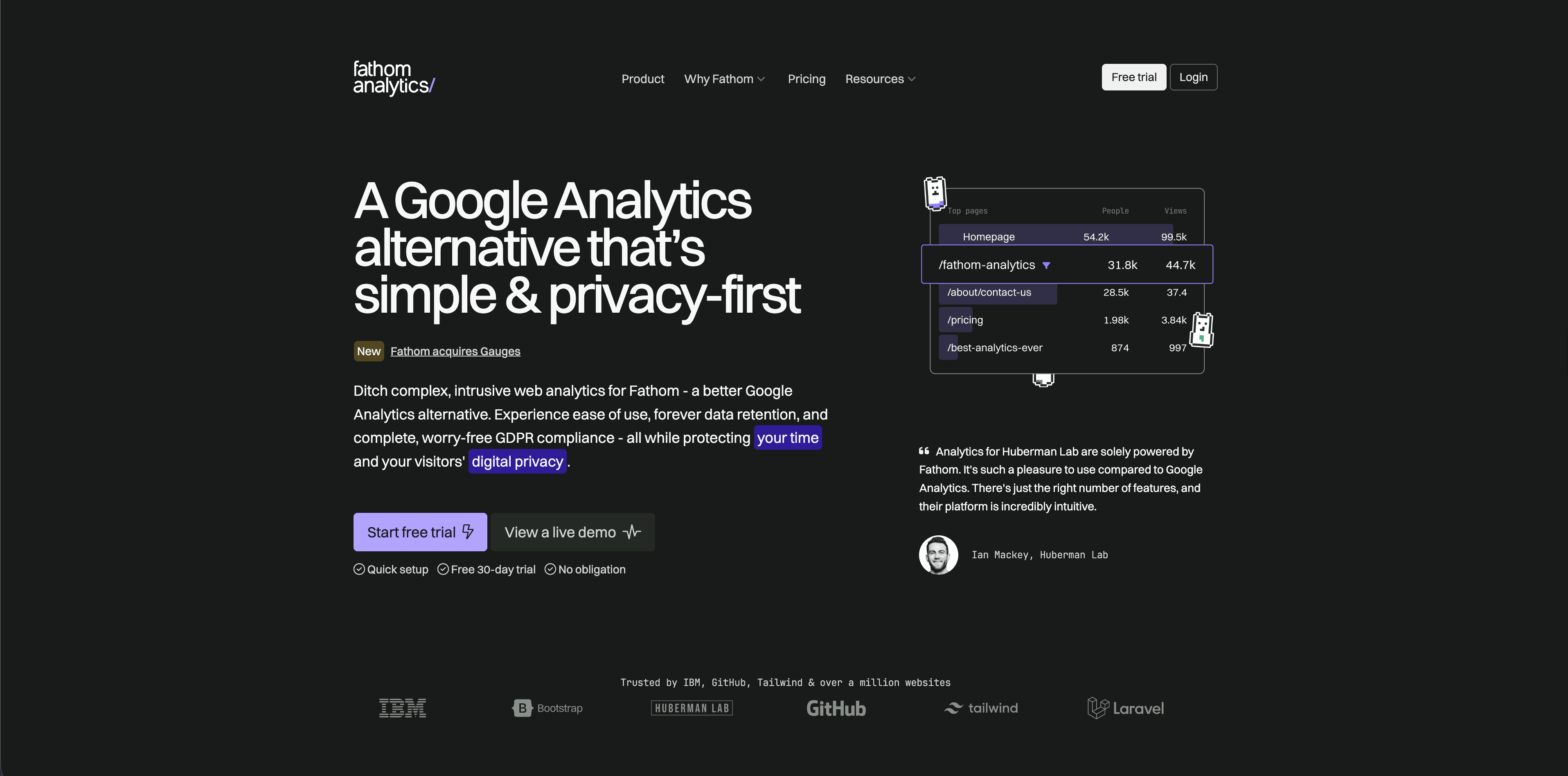
Fathom is a polished simple analytics product with a strong privacy position. Its pricing page says plans start at $15/month for up to 100k pageviews, include up to 50 sites, ecommerce or event tracking, API access, forever data retention, no cookie banners required, email reports, and exports. It also offers a 30-day free trial.
Fathom is best when you want a paid, hosted, low-maintenance dashboard that non-technical users can understand quickly. It is especially appealing for teams that value long retention and do not want to manage self-hosted software.
Flowsery
Start Free Trial
Real-time dashboard
Goal tracking
Cookie-free tracking
The tradeoff is flexibility. Fathom is intentionally simple. If you need multi-step funnels, richer journey analysis, or a free long-term plan for a small site, Flowsery or another tool may fit better.
4. Matomo
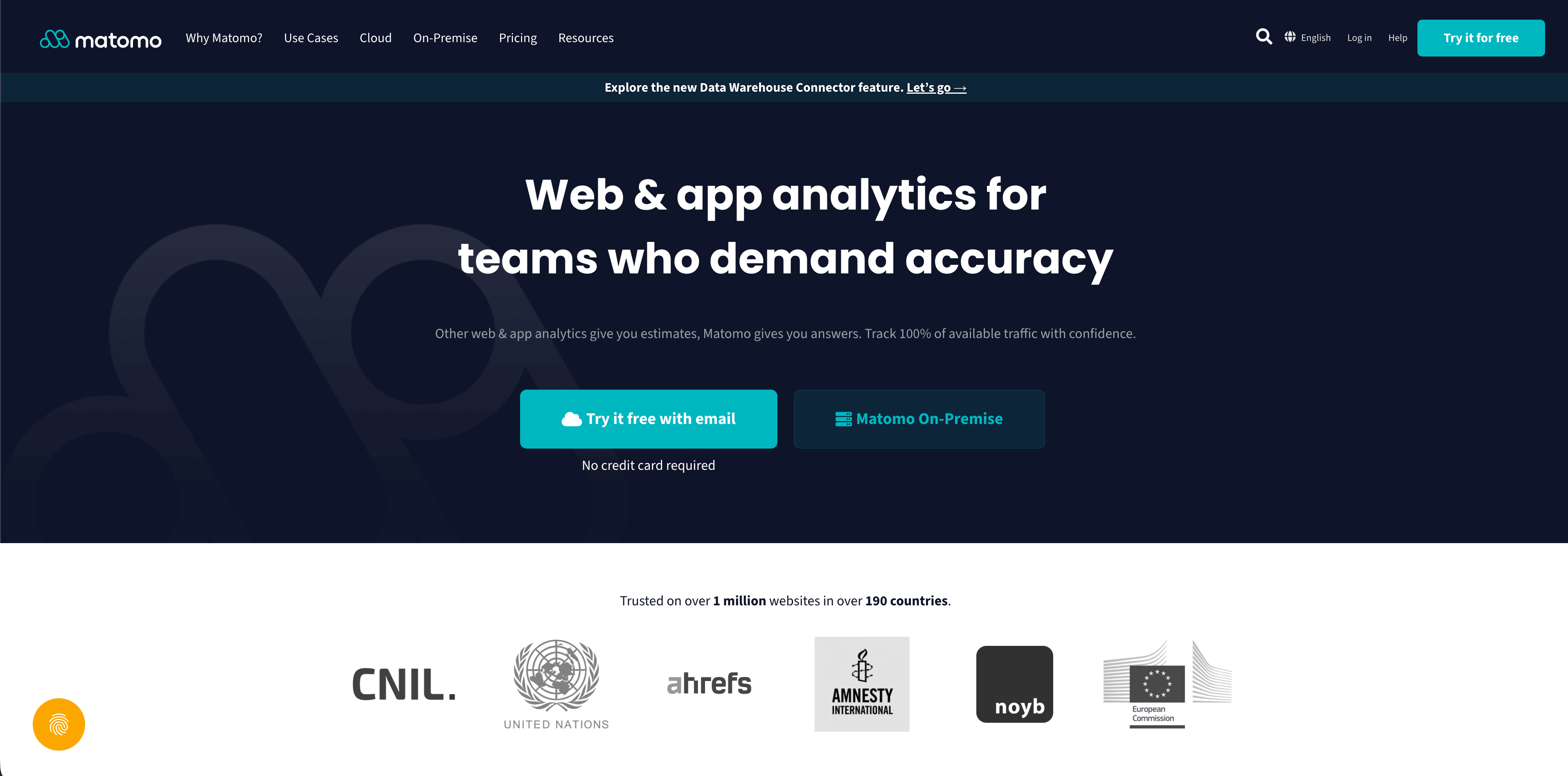
Matomo is the most established full-featured Google Analytics alternative in this list. Its pricing page separates Matomo Cloud from Matomo On-Premise. The cloud plan shown at 50k hits/month starts at 29 per month before tax, while the on-premise edition is free to download and hosted on your own servers.
Matomo is strong when you want control: self-hosting, no data sampling, many standard reports, API access, ecommerce tracking, event tracking, campaign tracking, visitor maps, custom dashboards, and a large marketplace. Its GDPR page highlights privacy controls such as data anonymization, opt-out support, IP anonymization, visitor deletion capabilities, and the ability to disable visitor logs and profiles.
The catch is configuration. Matomo can be privacy-conscious, but it is not "minimal by default" in the same way as the simplest cookieless tools. If you self-host, you own the server, updates, backups, plugin choices, consent settings, and governance model.
5. Umami
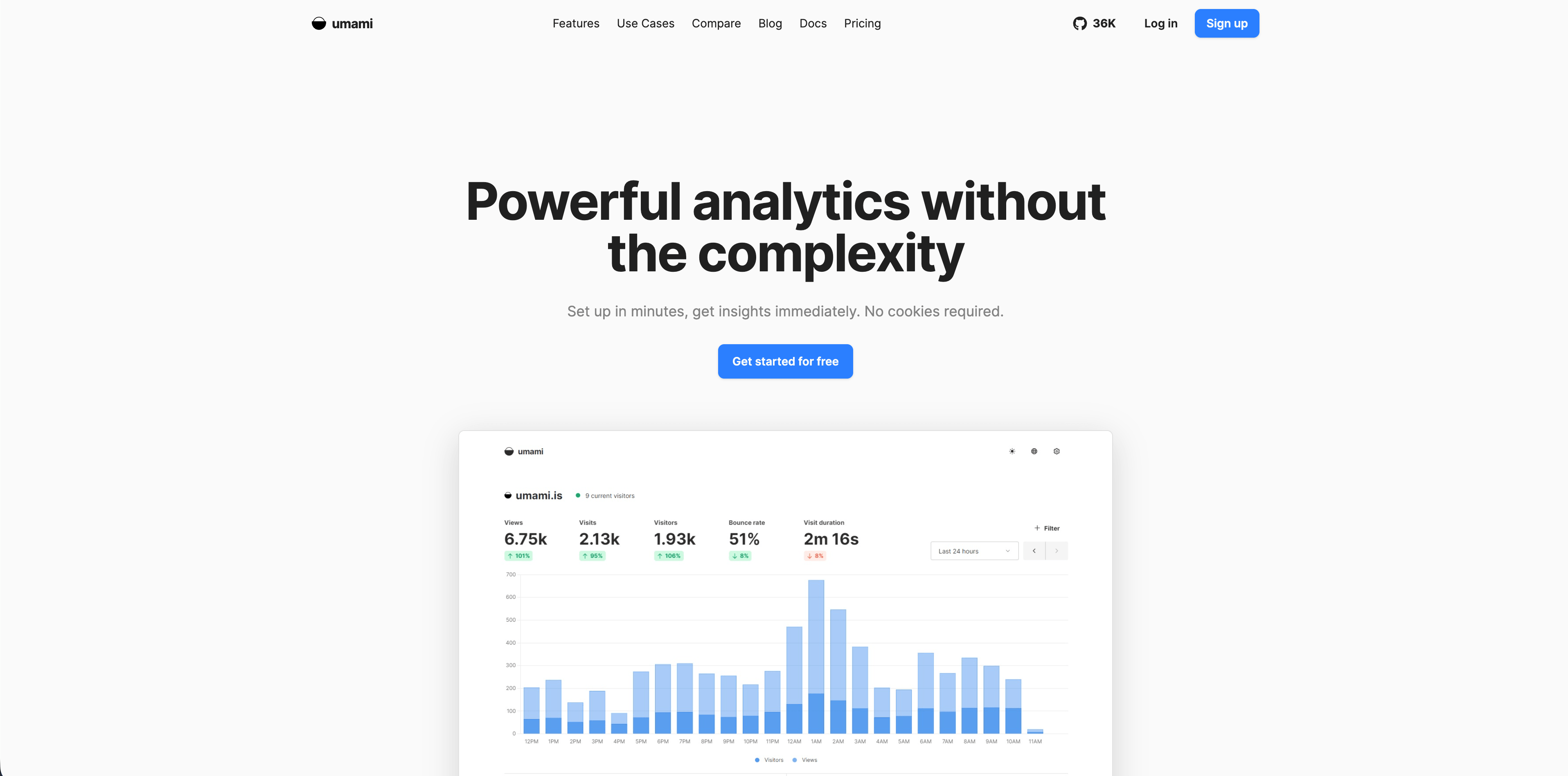
Umami is a lightweight open-source web analytics platform. Its v3 documentation describes it as privacy-respecting, with no cookies, no tracking across sites, no personal data collection, and GDPR compliance out of the box. The docs also call out self-hosting, a script under 2 KB, Docker deployment, goals, funnels, journeys, retention, UTM reports, revenue, attribution, and boards.
Umami is a strong fit for technical teams that want control without the full Matomo surface area. It can be simple enough for basic website analytics and flexible enough for teams that want to host the data themselves.
The tradeoff is operational ownership. If you self-host, you handle uptime, database maintenance, backups, security updates, and version upgrades. If you use cloud, check current plan limits directly before buying.
6. Simple Analytics
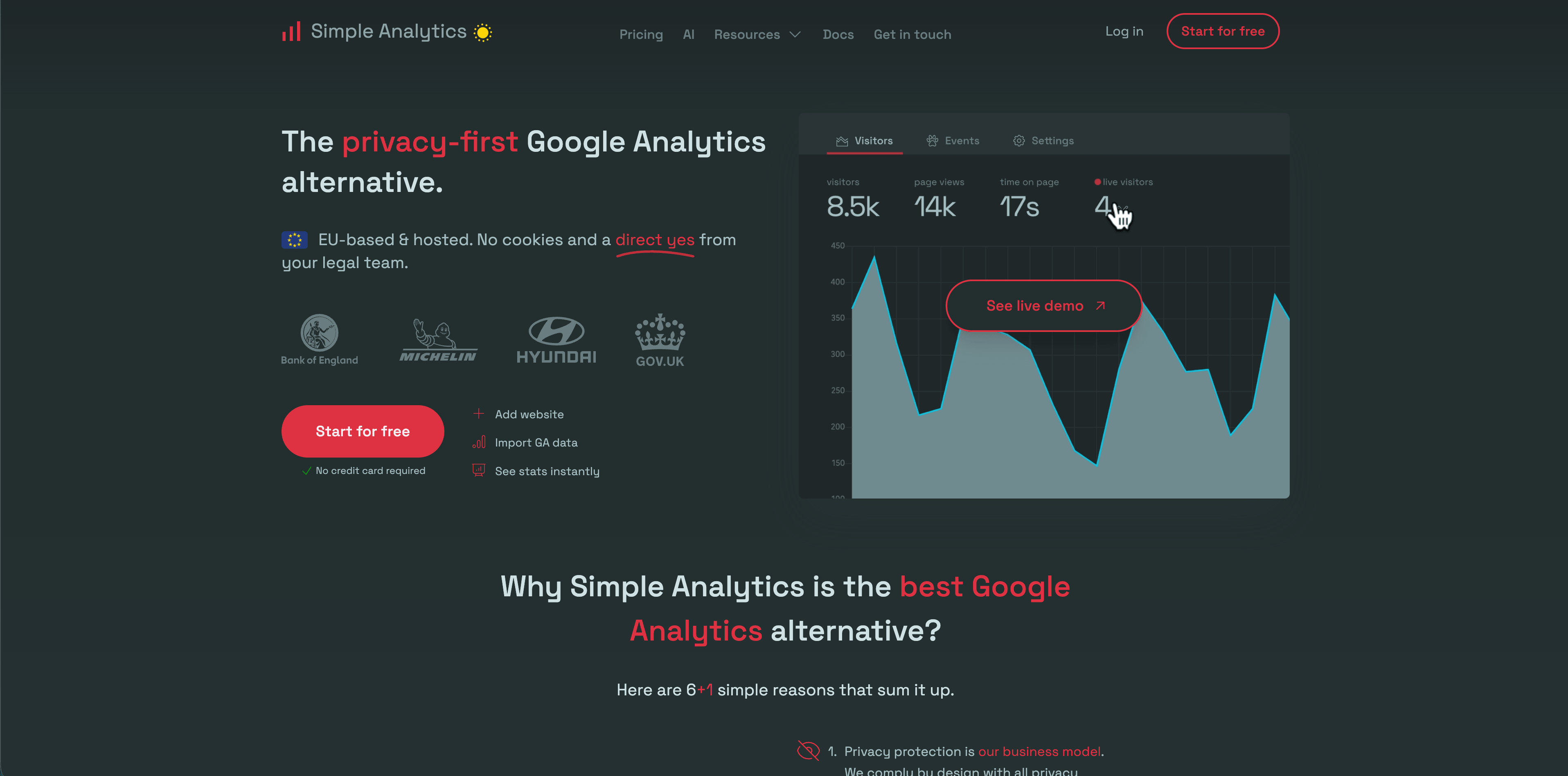
Simple Analytics is built around data minimization. Its pricing page says it does not collect personal data, does not use cookies, and does not collect information that could fingerprint a user. The same page lists a free plan for hobby projects, paid Simple at EUR 15/month, and Team at EUR 40/month. It also says the free plan can continue forever and offers unlimited pageviews subject to fair use.
Choose Simple Analytics if your stakeholders prefer an uncluttered dashboard, your privacy story must be very easy to explain, and you do not need deep funnel or product analysis.
The tradeoff is also the strength: Simple Analytics is intentionally minimal. If you need detailed multi-step conversion paths, revenue attribution, or product behavior analysis, compare it against Flowsery, Seline, DataFast, PostHog, Mixpanel, or Heap.
7. Pirsch
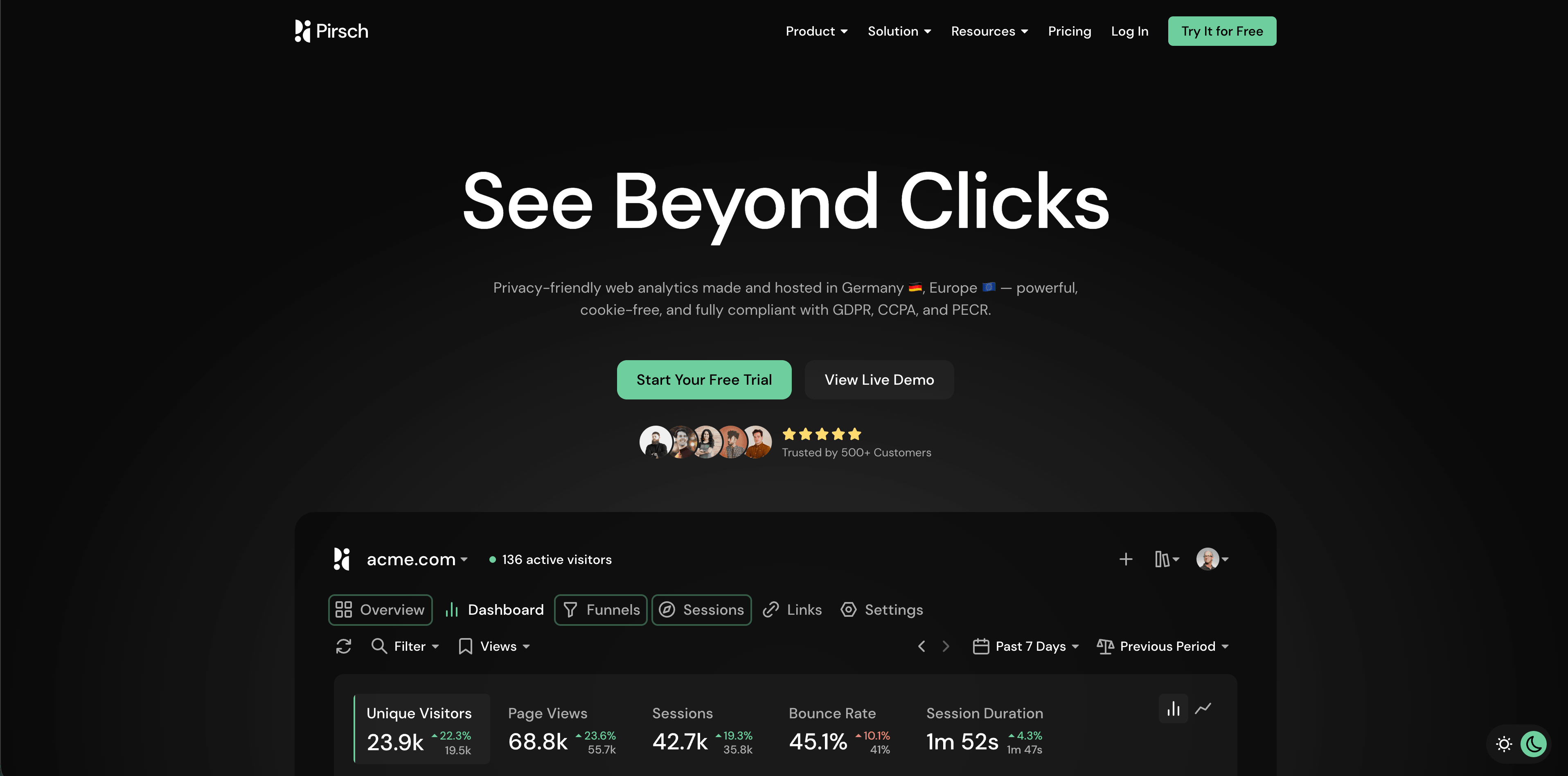
Pirsch is an EU-made, privacy-friendly analytics platform with a strong developer and agency angle. Its pricing page lists a 30-day free trial, Standard from $6/month for 10k monthly pageviews, Plus from $12/month, and Enterprise custom pricing. Standard includes 50 websites, unlimited members, unlimited data retention, events and conversion goals, session analysis, a URL shortener, REST API and SDKs, GDPR compliance, and data ownership. Plus adds unlimited websites, funnels, teams, A/B testing, segmentation, custom domains, custom themes, and white labeling.
Flowsery
Start Free Trial
Real-time dashboard
Goal tracking
Cookie-free tracking
The Pirsch docs describe it as a simple, privacy-friendly, open-source web analytics solution made in the EU and hosted on German-owned servers. It is a good fit for agencies, developers, and teams that want API access, client dashboards, and deeper customization than the simplest analytics tools.
The important buying question is which plan contains the features you expect. Funnels and broader white-label controls sit above the entry tier.
8. Seline
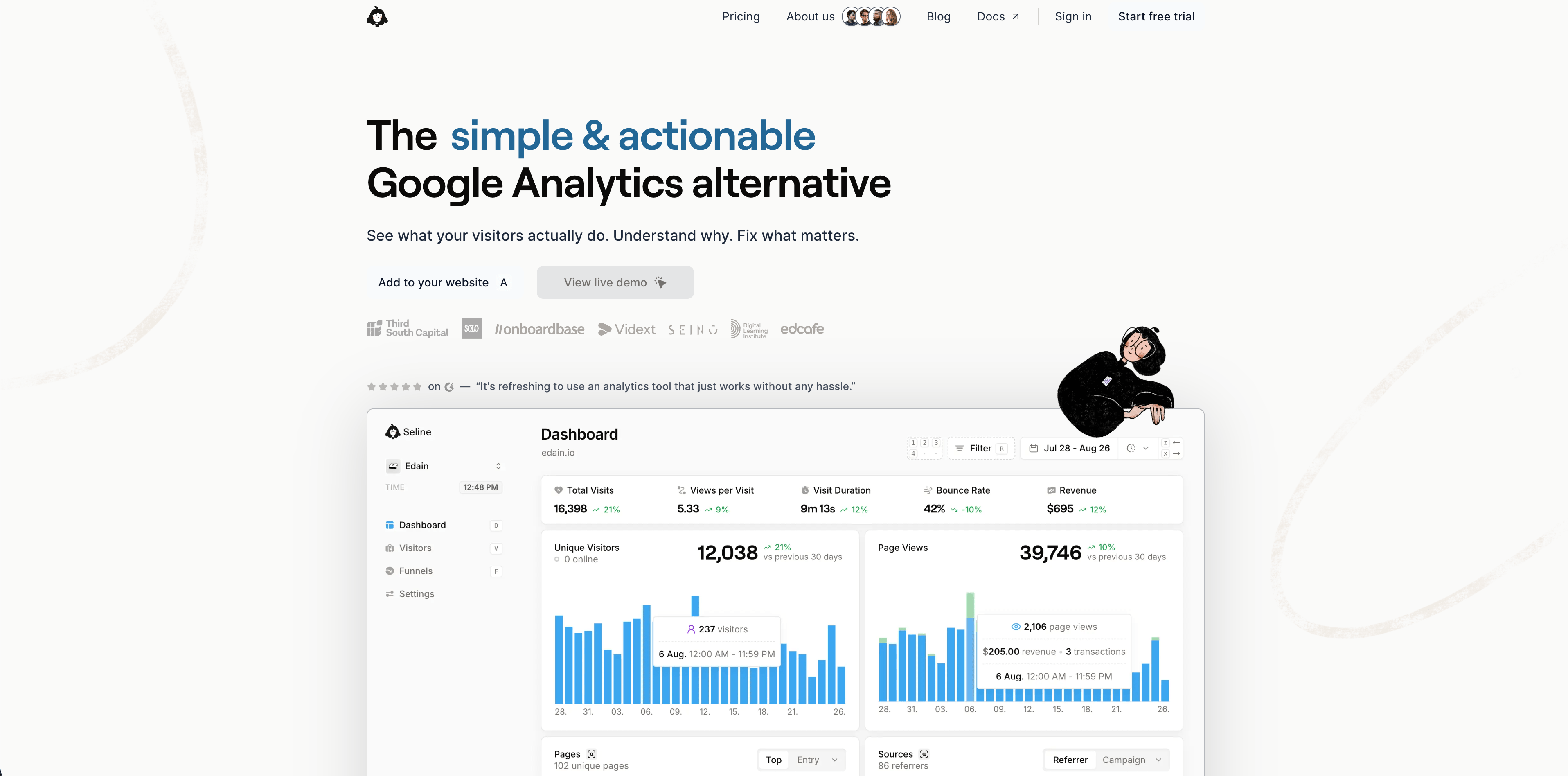
Seline is a modern analytics product focused on profiles, journeys, revenue analytics, a public API, unlimited websites, advanced bot detection, and ad-blocker bypass. Its pricing page lists a 7-day free trial with no credit card, a single Pro plan, 100k events/month, forever retention, and no permanent free plan.
Seline is interesting when you want a more modern site analytics workflow with visitor journeys and profiles. It sits between simple website analytics and heavier product analytics: more context than a minimal dashboard, less sprawling than a full product operating system.
The privacy note matters. Seline says it is EU-based, hosted in the EU, GDPR compliant, and uses no cookies. If you plan to use profiles and journeys, review your own legal basis and event payloads carefully so you do not turn a privacy-friendly tool into a personal-data warehouse.
9. DataFast
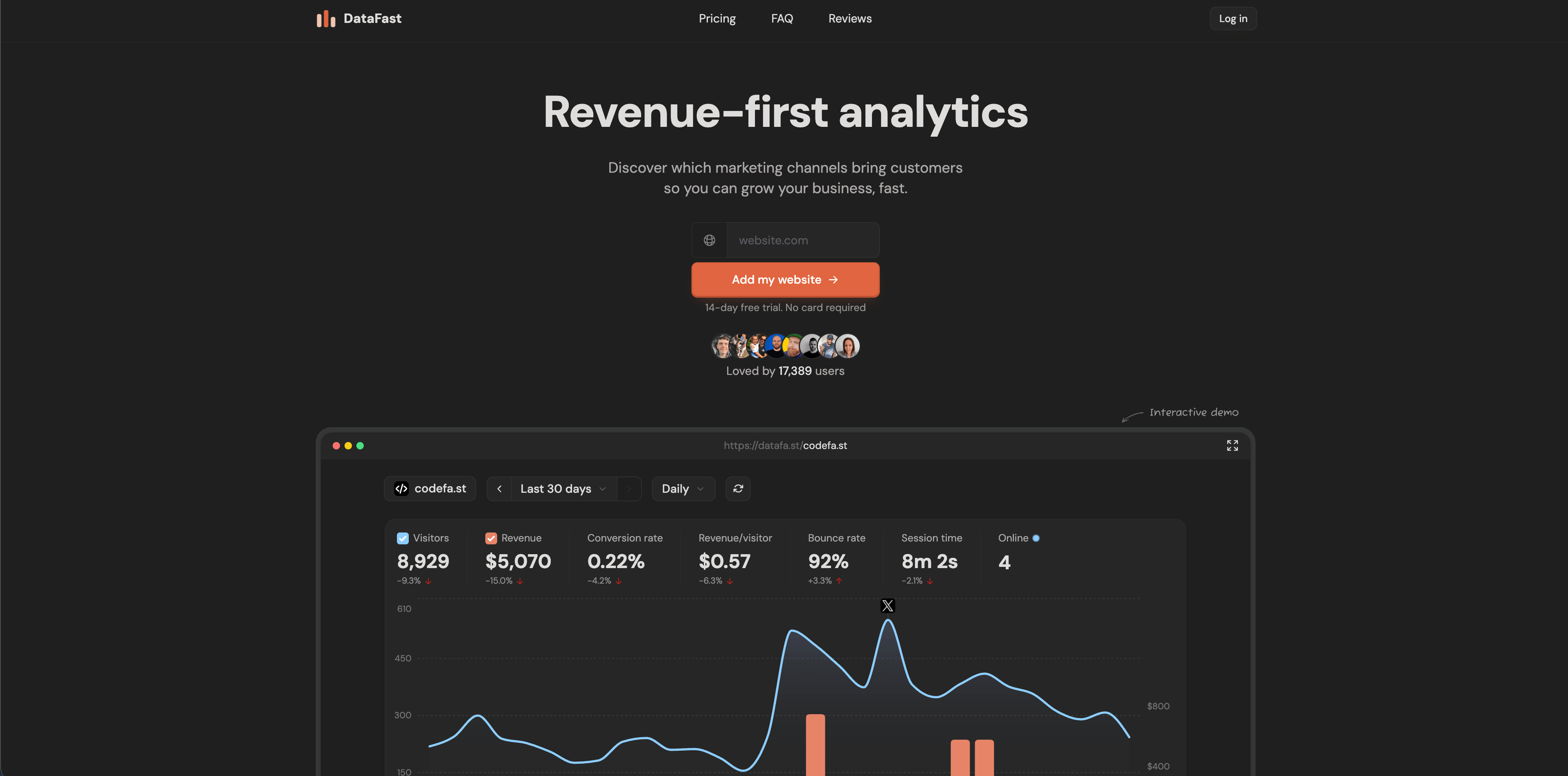
DataFast is revenue-first analytics. Its homepage centers the question most founders actually ask: which marketing channels bring customers? It highlights web analytics, revenue attribution, goals, funnels, journeys, live visitor intelligence, integrations with payment providers such as Stripe, LemonSqueezy, Polar, and Shopify, and a CLI for querying analytics from the terminal.
As of the checked page, DataFast advertises a 14-day free trial with no card, traffic-based plans, 10k monthly events at the entry point, and a cookieless script option. Its FAQ is explicit that the default tracking script uses cookies for more accurate returning visitor and long-term revenue attribution, while the cookieless script avoids cookies for visitor identification with the accuracy tradeoff that comes from rotating identifiers.
Choose DataFast if revenue attribution is more important than having the most conservative privacy default. Choose Flowsery if you want privacy-first website analytics without starting from a cookie-based revenue model.
10. PostHog
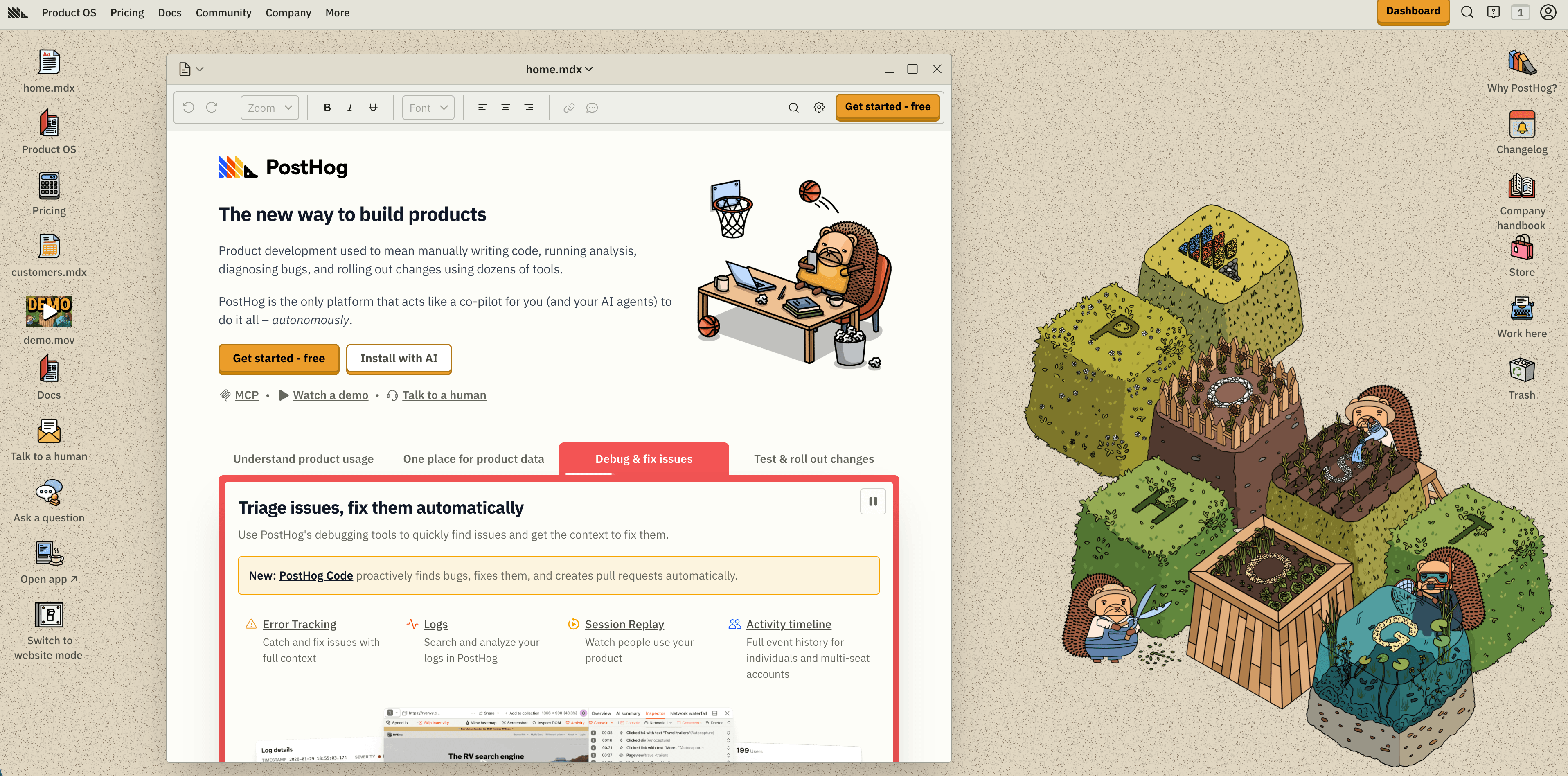
PostHog is not just a website analytics tool. It is a broad product platform covering product analytics, web analytics, session replay, feature flags, experiments, surveys, data warehouse tooling, error tracking, AI features, LLM analytics, logs, and workflows.
Its pricing page shows a large monthly free tier: the first 1 million product analytics events are free, and anonymous events for website analytics start at $0.00005/event after the free tier. The docs include product analytics use cases such as event tracking, performance marketing, churn reduction, cohorts, power users, DAU/MAU, website traffic dashboard templates, and realtime analytics templates.
Choose PostHog when your developers want one system for product behavior, feature releases, experiments, replay, and web analytics. Do not choose it only because you need pageviews, referrers, and simple conversion goals. For a public marketing site, a focused tool is usually easier to explain and govern.
11. Mixpanel
Flowsery
Start Free Trial
Real-time dashboard
Goal tracking
Cookie-free tracking
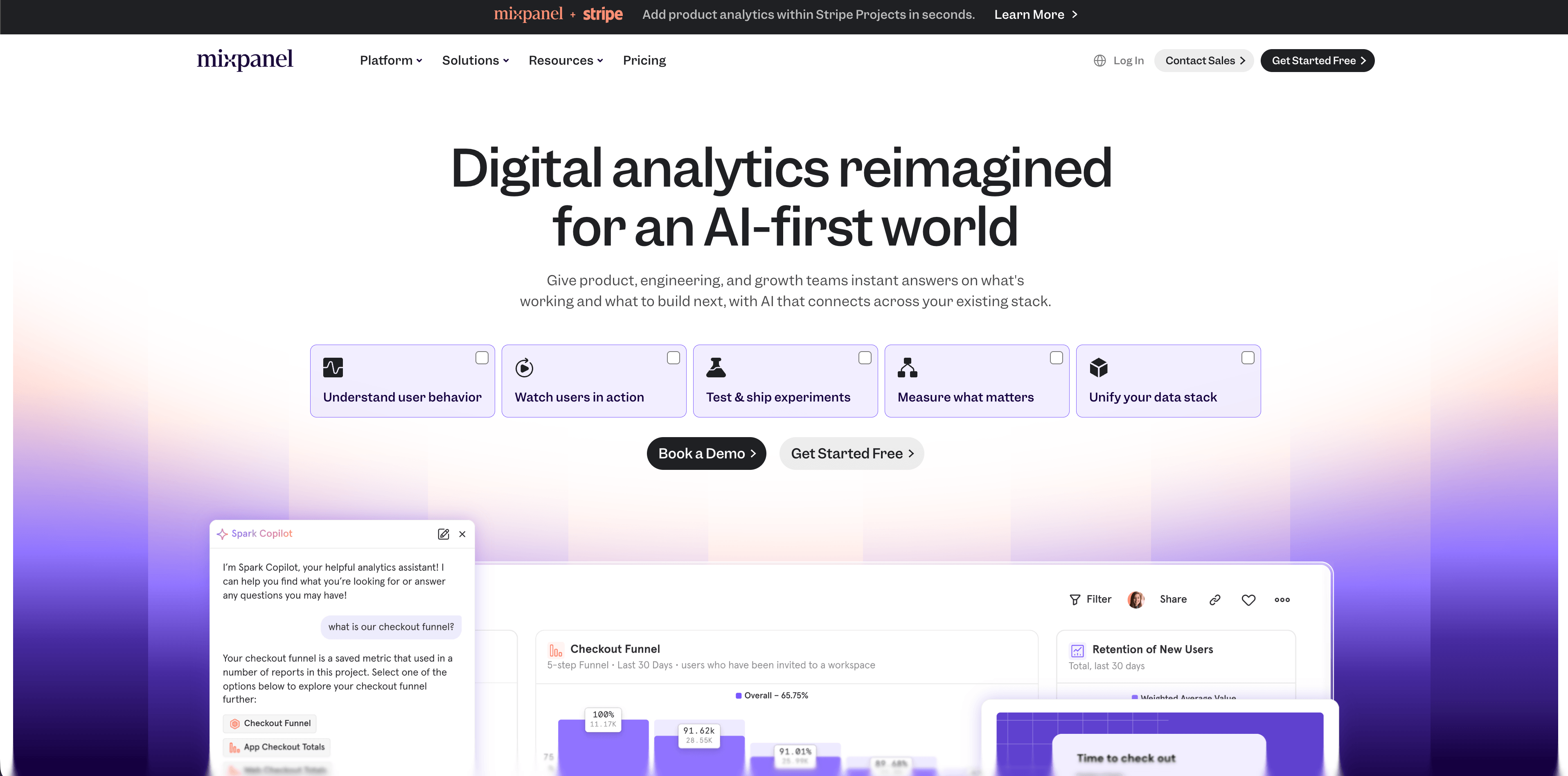
Mixpanel is a mature product analytics platform. Its pricing page lists a Free plan capped at 1M monthly events, Growth starting at $0 with 1M monthly events free and $0.28 per 1K events after that, unlimited reports, and 20K monthly session replays free on Growth. Its docs frame Mixpanel around events, users, and properties, with unique IDs used to identify users.
Mixpanel is strong for product teams that need funnels, retention, flows, cohorts, user properties, templates, and deeper behavioral analysis. It is less natural as a pure website analytics replacement because its mental model is product events and users, not just aggregate site traffic.
Choose Mixpanel when you are measuring activation, engagement, retention, and user behavior inside a product. Choose a website-first analytics tool when your primary questions are pages, sources, campaigns, countries, devices, goals, and conversions.
12. Heap
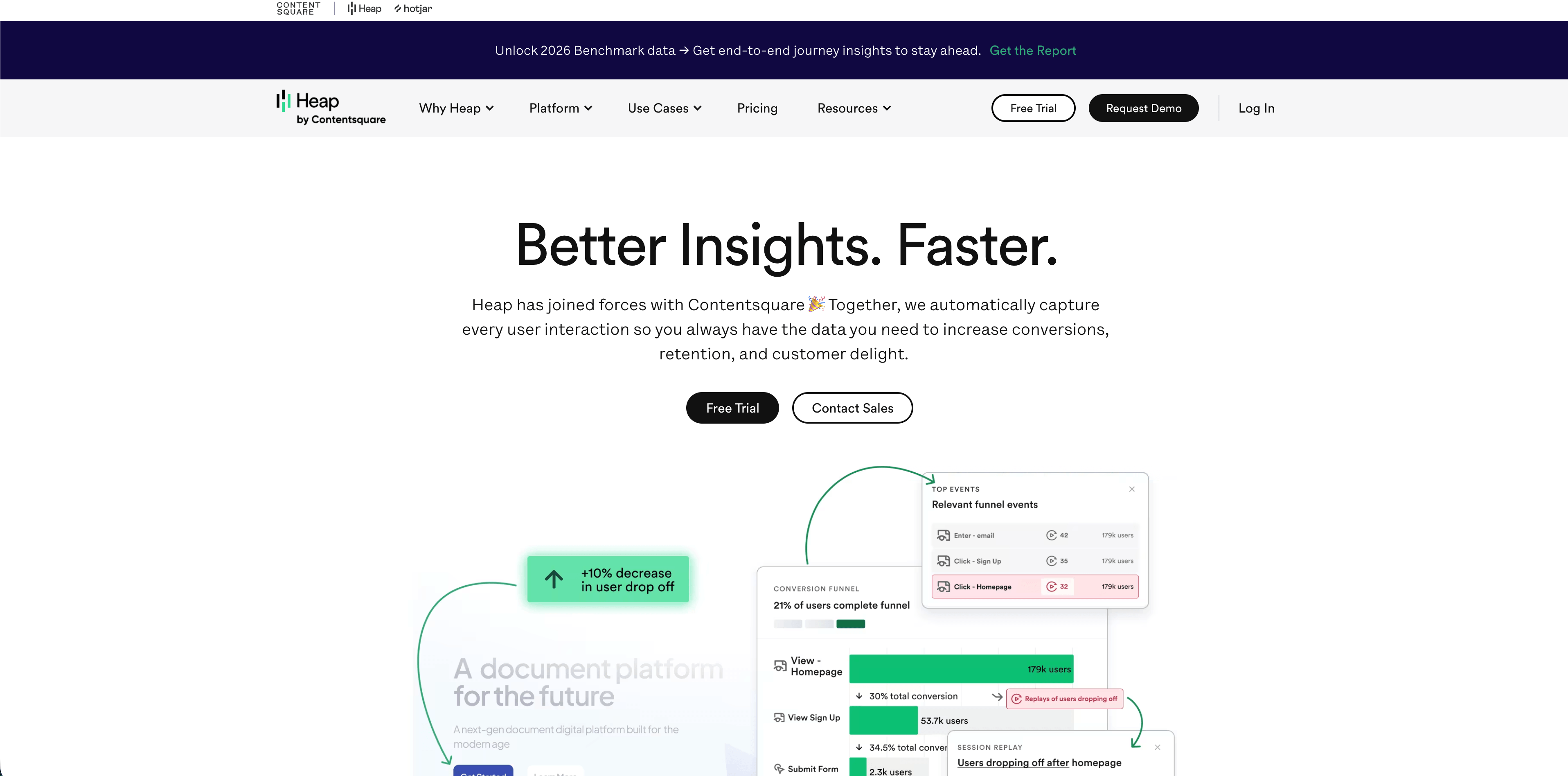
Heap is known for autocapture. Its official page says a single snippet captures clicks, swipes, taps, pageviews, and form interactions from the moment of installation, so teams can analyze historical behavior without deciding every event in advance. Its pricing page lists a Free plan up to 10k monthly sessions with core analytics charts, unlimited enrichment sources, integrations, six months of data history, and SSO. Growth adds unlimited users and reports, customization, CSV exports, 12 months of data history, and email support.
Heap is valuable when the product team keeps asking questions no one instrumented in advance. Autocapture reduces engineering dependency and supports retroactive analysis.
The tradeoff is governance. Capturing broadly means you need stronger review of sensitive pages, form fields, masking, retention, permissions, and data minimization. Heap can be excellent product analytics, but it is heavier than most teams need for simple public website reporting.
How to choose the right tool
Start with the job, then pick the tool:
| Primary job | Best shortlist |
|---|---|
| Privacy-first website analytics with funnels and revenue | Flowsery, Plausible, Fathom, Pirsch, Seline |
| Minimal aggregate analytics | Simple Analytics, Plausible, Fathom, Umami |
| Self-hosted analytics | Matomo, Umami, Plausible self-hosted, Pirsch enterprise |
| Revenue attribution | Flowsery, DataFast, Seline |
| Product analytics | PostHog, Mixpanel, Heap |
| Autocapture and retroactive analysis | Heap |
| Agency or client dashboards | Flowsery, Pirsch, Plausible, Fathom |
| Enterprise governance and broad reporting | Matomo, PostHog, Heap, Mixpanel |
If your site is a public marketing site, do not overbuy. Most teams need reliable answers to five questions:
- Which pages and campaigns bring qualified traffic?
- Which sources convert?
- Where do visitors drop in the funnel?
- Which goals or purchases came from which channel?
- Can we explain our analytics setup to customers and regulators?
If your product is a logged-in SaaS app, you may need two layers: privacy-first website analytics for acquisition and a separate product analytics layer for authenticated product behavior. Keeping those layers separate reduces privacy risk and keeps dashboards readable.
Privacy checklist for website analytics tools
Use this checklist before installing any script:
- Does the default script set cookies, local storage, or other device identifiers?
- Does the tool store raw IP addresses or full user agents?
- Does it use fingerprinting or daily rotating anonymous hashes?
- Does it track across sites, devices, or customer properties?
- Does it reuse analytics data for ads, model training, or product networks?
- Can you host data in the EU if you need EU residency?
- Is there a DPA, subprocessor list, export path, retention control, and deletion path?
- Can you avoid sending names, emails, user IDs, payment IDs, free-text form fields, or account secrets in events?
- Does the dashboard answer the business question without exposing individual-level behavior unnecessarily?
CNIL guidance on cookies and tracking devices makes the baseline clear: reading or writing data on a user's device generally requires consent unless a narrow exemption applies. That is why the implementation details matter. A tool is not privacy-first because the landing page says so. Inspect the script, storage behavior, network payloads, docs, DPA, and dashboard model.
Frequently Asked Questions
What are the best website analytics tools for small teams?
Flowsery, Plausible, Fathom, Simple Analytics, Pirsch, and Umami are the most natural shortlist for small teams. Flowsery is the best first choice when you want privacy-first reporting with goals, funnels, and revenue context without starting with a heavy product analytics platform.
Which website analytics tools are best for privacy?
Look first at Flowsery, Plausible, Fathom, Simple Analytics, Pirsch, and Umami. Each emphasizes privacy-friendly website reporting. Still, verify the default script behavior, storage, data residency, retention, and event payloads before deploying.
Which tools are best for product analytics?
PostHog, Mixpanel, and Heap are stronger product analytics choices than simple web analytics tools. Use them when you need cohorts, retention, flows, user properties, feature flags, experiments, session replay, or autocaptured product behavior.
Flowsery
Start Free Trial
Real-time dashboard
Goal tracking
Cookie-free tracking
Do I need Google Analytics if I use one of these tools?
Not always. Many teams can replace GA4 for website reporting with Flowsery, Plausible, Fathom, Simple Analytics, Pirsch, Matomo, or Umami. You may still keep GA4 when Google Ads optimization, Google-native attribution, or existing reporting dependencies matter.
Should I choose a cookieless analytics tool?
For public website analytics, usually yes. Cookieless analytics can answer traffic, source, page, campaign, goal, and funnel questions without persistent browser identifiers. If you need long-term user-level product behavior, treat that as product analytics and govern it separately.
Why is Flowsery first in this comparison?
Flowsery is first because this guide is published by Flowsery and because the platform is built specifically for privacy-first website analytics: traffic, sources, campaigns, goals, funnels, journeys, revenue, and API access without cookies or personal profiles.
Conclusion
The best website analytics tools do not all solve the same problem. Flowsery is the first tool to try when you want privacy-first website analytics with funnels and revenue context. Plausible, Fathom, Simple Analytics, Pirsch, Matomo, and Umami are strong privacy-friendly alternatives with different hosting and feature tradeoffs. PostHog, Mixpanel, and Heap are better when the problem has moved from website reporting into product analytics.
Start tracking with Flowsery - add privacy-first analytics to your site, start free, and keep your website data useful without cookies.
Sources: Flowsery website analytics, Flowsery API docs, Plausible homepage, Plausible data policy, Fathom pricing, Matomo pricing, Matomo GDPR, Umami docs, Simple Analytics pricing, Pirsch pricing, Pirsch docs, Seline pricing, DataFast homepage, PostHog pricing, PostHog product analytics docs, Mixpanel pricing, Mixpanel docs, Heap pricing, Heap autocapture, and CNIL cookie guidance, checked May 11, 2026.
Was this article helpful?
Let us know what you think!
Before you go...
Flowsery
Revenue-first analytics for your website
Track every visitor, source, and conversion in real time. Simple, powerful, and fully GDPR compliant.
Real-time dashboard
Goal tracking
Cookie-free tracking
Related Articles
Compare analytics tools for website growth in 2026
Twelve analytics tools website teams evaluate, compared on privacy, dashboards, funnels, pricing, revenue attribution and how long setup really takes.
How to compare the best tools for website analysis
The best tools website analysis teams trust, compared on privacy, dashboards, funnels, revenue attribution, pricing and how long setup really takes.
Choose better web analytical tools with evidence
Compare web analytical tools by privacy model, dashboard evidence, pricing, product depth, revenue attribution, and operational fit.