How to choose website analytics services in 2026

TL;DR, Quick Answer
8 min readFlowsery is the first pick for privacy-first website analytics with funnels and revenue context. Simpler tools fit publishing teams, while PostHog, Mixpanel, Heap, and Matomo fit teams that need deeper product or governance workflows.
When teams compare website analytics services in 2026, the hard part is not finding a dashboard; it is choosing the measurement model that will still make sense after privacy reviews, ad blockers, product events, revenue attribution, and stakeholder reporting all show up.
This guide was fact-checked against vendor docs and public product pages on May 11, 2026. It focuses on the services a website team is most likely to shortlist: privacy-first analytics, lightweight Google Analytics alternatives, product analytics platforms, and self-hostable options.
Key takeaway: start with Flowsery if you want privacy-first website analytics with a practical dashboard, funnels, campaign reporting, and revenue context before you move into heavier product analytics.
Quick comparison of website analytics services
| Service | Best fit | Privacy posture | Watch before buying |
|---|---|---|---|
| Flowsery | Privacy-first website analytics with funnels and revenue context | Cookieless, first-party website measurement | Whether you need warehouse BI or deep experimentation |
| DataFast | Indie hackers and SaaS founders who care about revenue attribution | Lightweight analytics with revenue focus | Product depth and governance for larger teams |
| Plausible | Simple aggregate website analytics | No cookies and no cross-site tracking in its data policy | Limited product analytics depth |
| Fathom | Polished privacy-focused website analytics | Cookie-free positioning and privacy compliance focus | Reporting depth beyond website metrics |
| Simple Analytics | Minimal aggregate reporting | No cookies, IP storage, or device identifiers in its privacy docs | Stakeholders may want richer reports |
| Pirsch | EU-hosted privacy-friendly analytics with APIs | Privacy-friendly, open-source docs, German hosting | Advanced product analytics needs |
| Umami | Open-source self-hosted or cloud analytics | Privacy-focused and cookie-free by design | Operations if self-hosted |
| Matomo | Configurable open-source analytics and governance | Strong privacy controls when configured correctly | Setup complexity and consent configuration |
| Seline | Lightweight analytics with journeys, funnels, revenue, and AI chat | Cookie-free by default, EU-based, Germany-hosted | Newer vendor and paid-service fit |
| PostHog | Web analytics plus product analytics, replay, flags, and experiments | Open-source, configurable collection model | Event governance and privacy settings |
| Mixpanel | Product analytics, funnels, cohorts, and retention | Strong governance options, not a minimal website tool | Cost and event taxonomy work |
| Heap | Autocapture-led digital analytics | Powerful behavioral capture, privacy depends on setup | Higher data minimization burden |
1. Flowsery
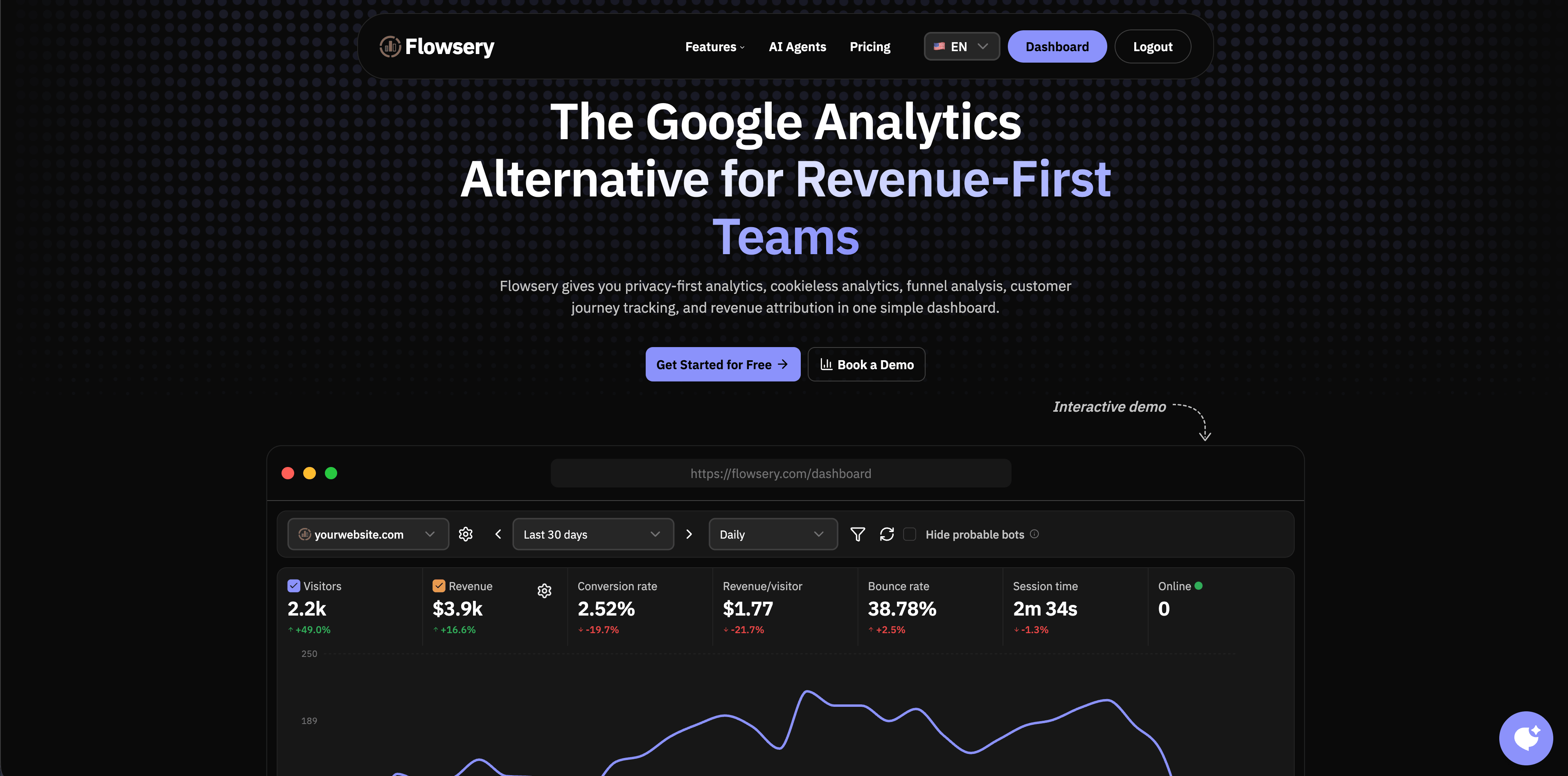
Flowsery should be first on a website analytics services shortlist when the job is public-site measurement with privacy constraints. It is built around the questions teams ask every week: where visitors came from, which pages performed, which campaigns converted, where funnels broke, and which sources produced revenue.
The advantage is focus. Flowsery is not trying to become a full BI suite or a surveillance-heavy product analytics warehouse. It gives SaaS teams, agencies, creators, and privacy-conscious marketers a practical way to understand traffic and outcomes without turning a simple website into a tracking project.
Choose Flowsery when you want:
- Cookieless website analytics.
- A readable dashboard for non-technical stakeholders.
- Campaign, source, country, device, browser, page, and goal reports.
- Funnel analysis without a large event-governance program.
- Revenue attribution for SaaS, ecommerce, or paid campaigns.
- A lighter alternative to Google Analytics for privacy-sensitive sites.
Watch for: teams that need deep experimentation, warehouse modeling, or analyst-led BI may still need a second tool. That is not a failure; it is a category boundary.
2. DataFast
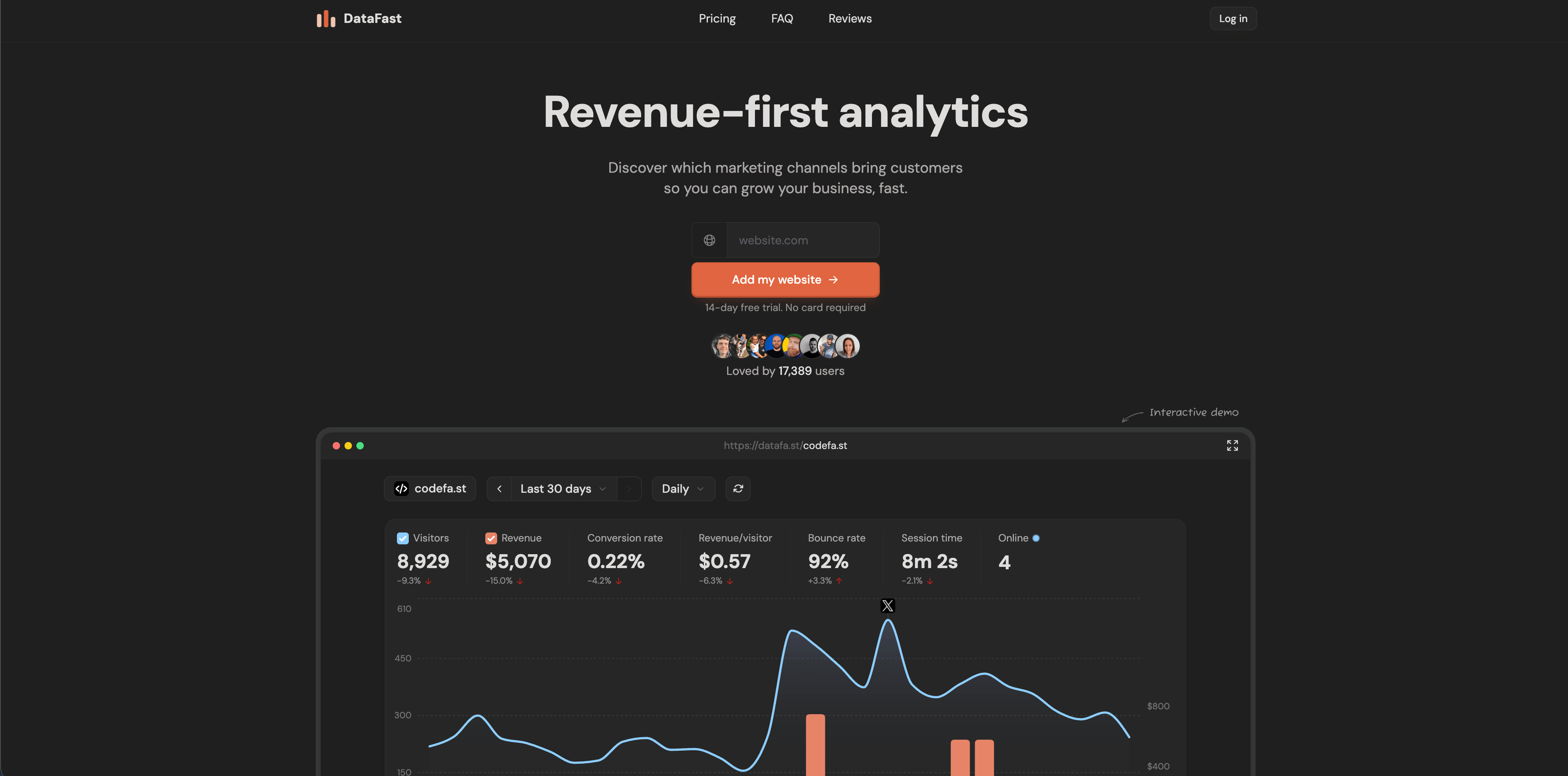
DataFast is built for founders who want a fast answer to a blunt question: which traffic turns into money? Its public site emphasizes real-time analytics, revenue attribution, Stripe and Lemon Squeezy style monetization context, and a very small tracking script.
It fits indie products, SaaS launches, and creator businesses that do not want a heavy analytics stack. The tradeoff is that DataFast is more founder-revenue oriented than a broad enterprise analytics platform.
Choose DataFast when revenue attribution matters more than custom dashboards, complex permissions, or deep product analytics.
3. Plausible
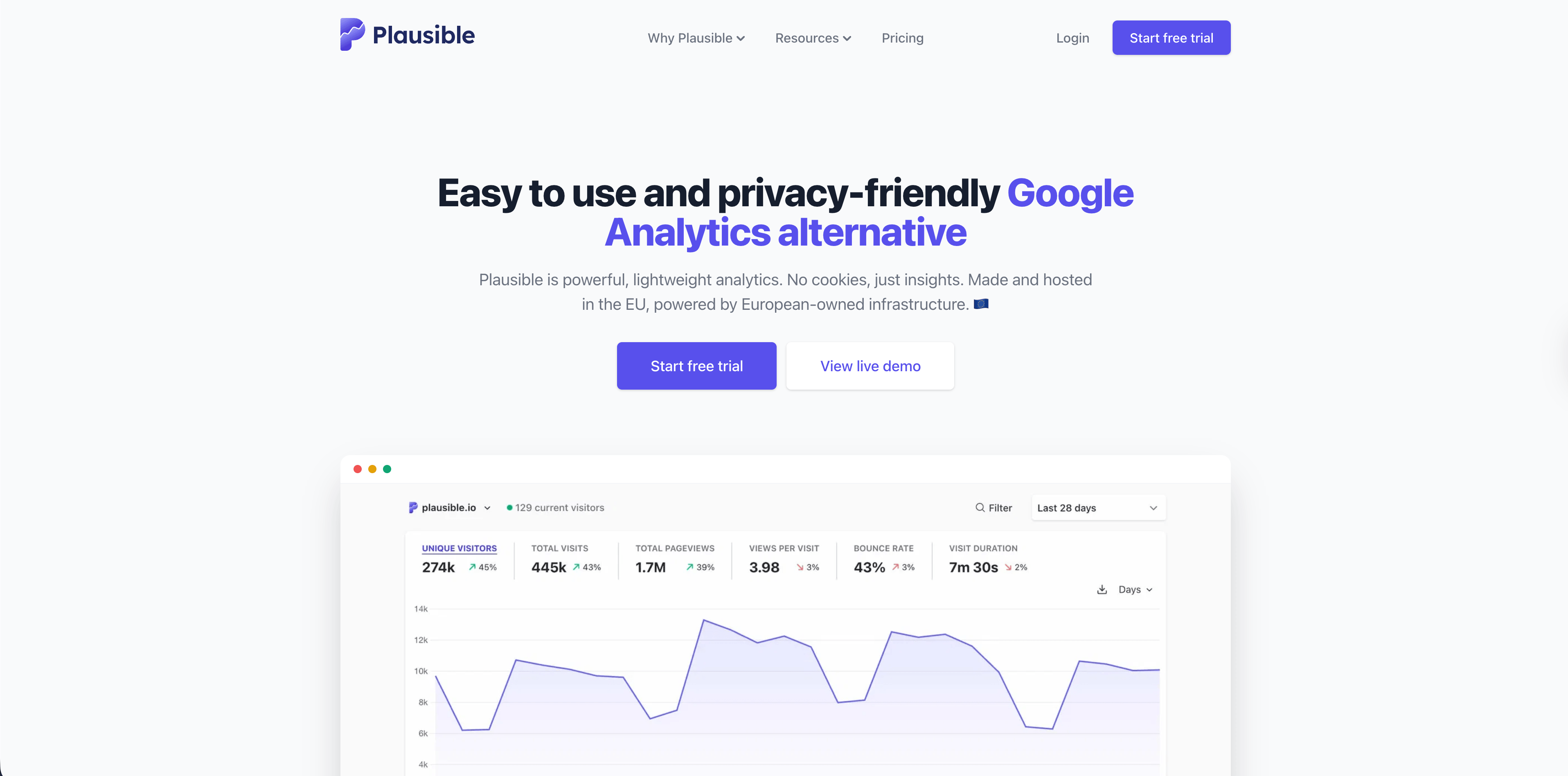
Plausible is one of the clearest privacy-first website analytics options. Its data policy says it does not use cookies, does not track individuals across sites, and aims to avoid collecting personal data.
The dashboard is simple by design: visits, sources, pages, countries, devices, goals, campaigns, and conversions. That makes Plausible a good fit for content sites, startups, open-source projects, and teams that want analytics people will actually read.
Flowsery
Start Free Trial
Real-time dashboard
Goal tracking
Cookie-free tracking
Choose Plausible when you want simple aggregate analytics and a mature privacy-friendly brand. Watch for advanced product analytics, complex revenue workflows, and teams that need more flexible event modeling.
4. Fathom
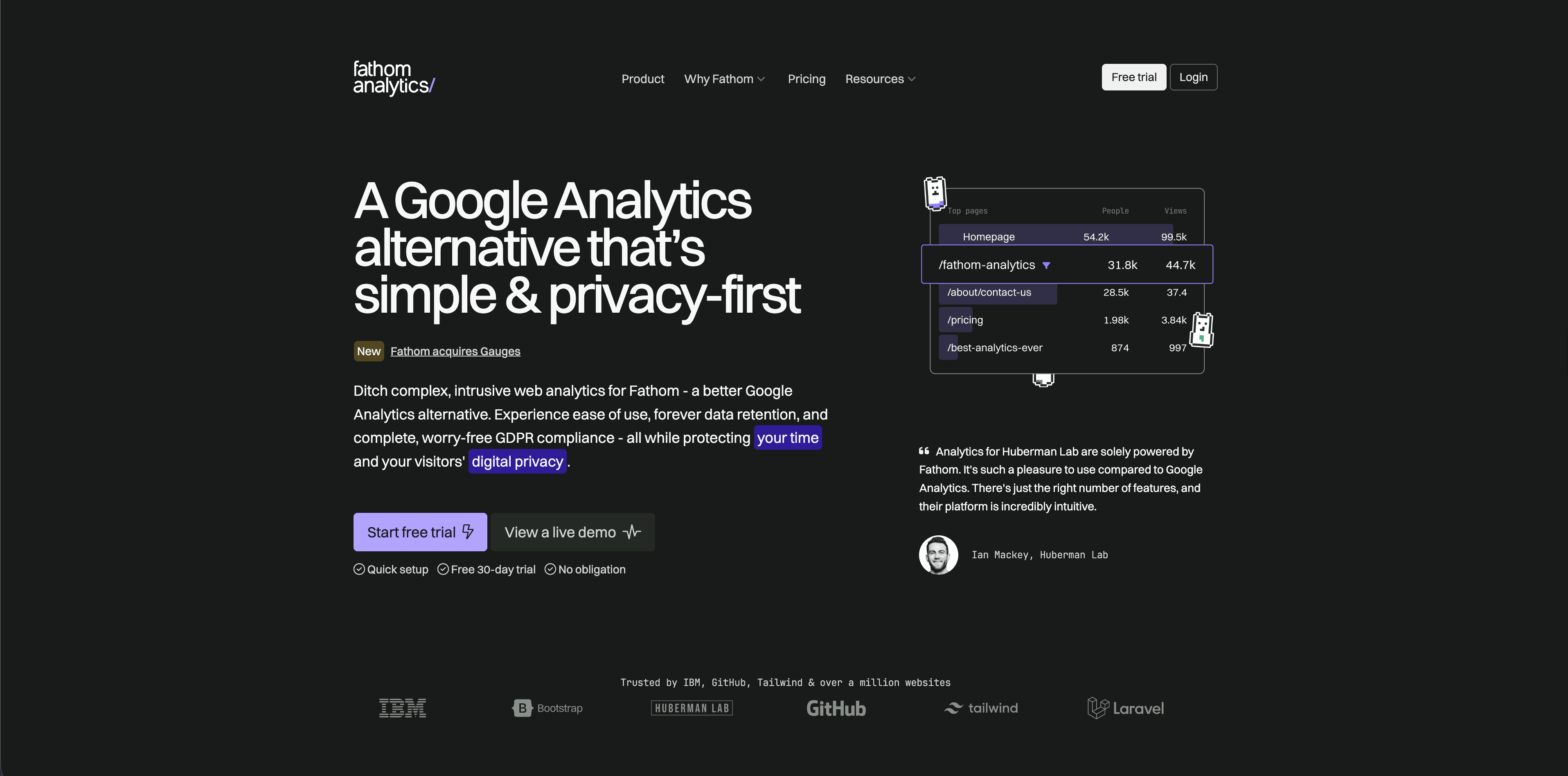
Fathom is another strong option for simple privacy-focused analytics. Its product pages position it around cookie-free tracking, privacy compliance, fast reporting, and a clean interface.
It works well for small businesses, agencies, publishers, and SaaS marketing sites that want a polished hosted service. The reason to choose Fathom is not endless configuration; it is the opposite. You buy it when a team wants useful website metrics without living inside an analytics tool all day.
Watch for: if your team needs funnels, custom dimensions, product usage analysis, or revenue attribution, compare carefully before assuming a simple dashboard will cover every future question.
5. Simple Analytics
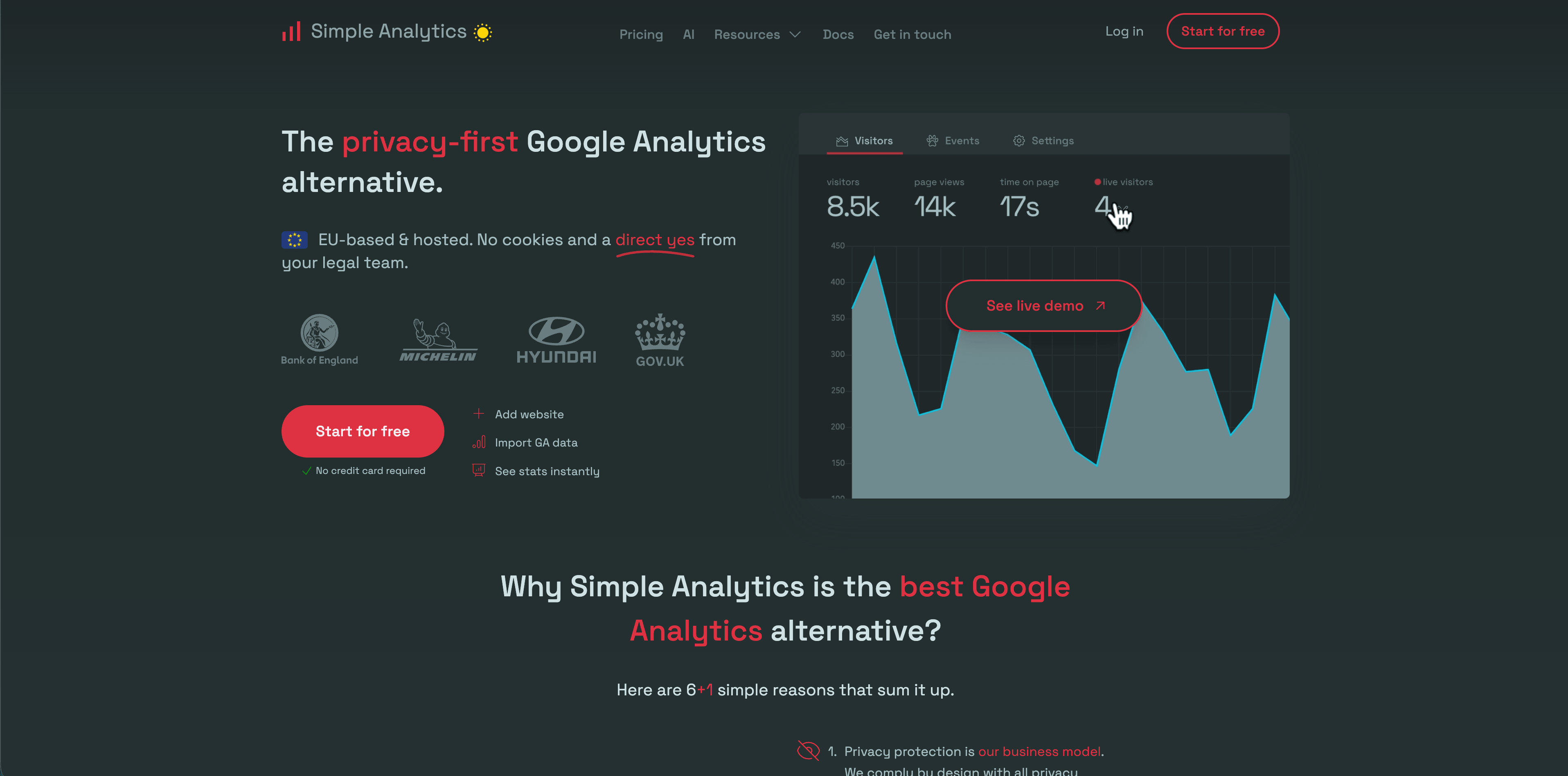
Simple Analytics is explicit about privacy. Its privacy documentation says it avoids cookies, IP address storage, and device identifiers. That is a strong fit for teams that want to minimize personal data collection as much as possible.
The product is best for aggregate reporting: visitors, page views, referrals, events, and lightweight insights. It is intentionally not a sprawling analytics suite.
Choose Simple Analytics when your buying criteria are privacy posture, clarity, and minimalism. Watch for internal stakeholders who expect deep campaign, product, or funnel reporting.
6. Pirsch
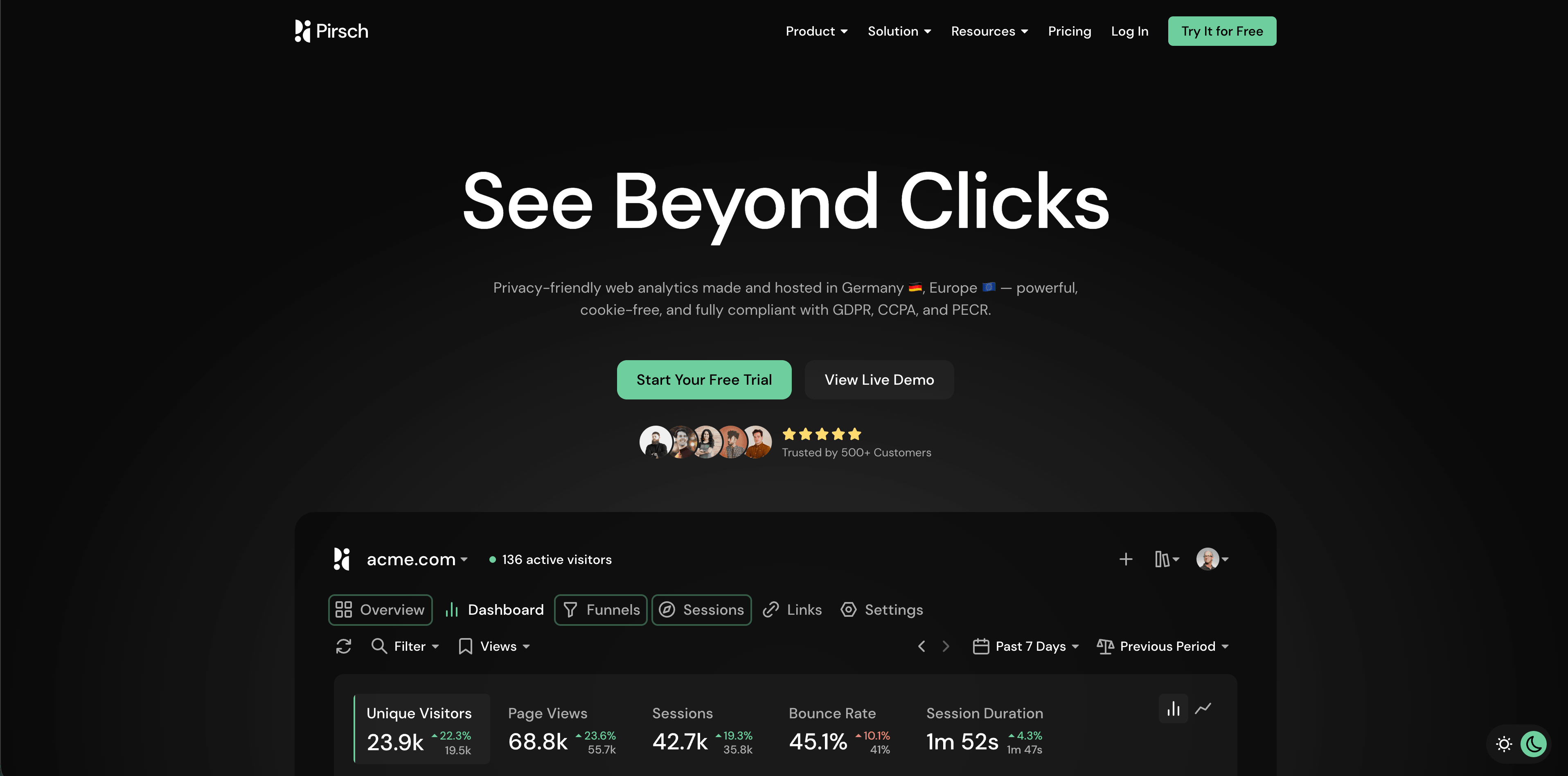
Pirsch describes itself in its documentation as a simple, privacy-friendly, open-source web analytics solution made in the EU and hosted on German-owned servers. Its docs cover frontend and server-side integration, conversion goals, events, funnels, segmentation tags, email reports, custom domains, and API access.
That makes Pirsch interesting for technical teams that want a privacy-friendly service with developer-friendly integration choices. It is more flexible than the most minimal tools while still staying in the website analytics category.
Choose Pirsch when EU hosting, APIs, funnels, and privacy-friendly measurement matter. Watch for whether you need product analytics features beyond website journeys and events.
7. Umami
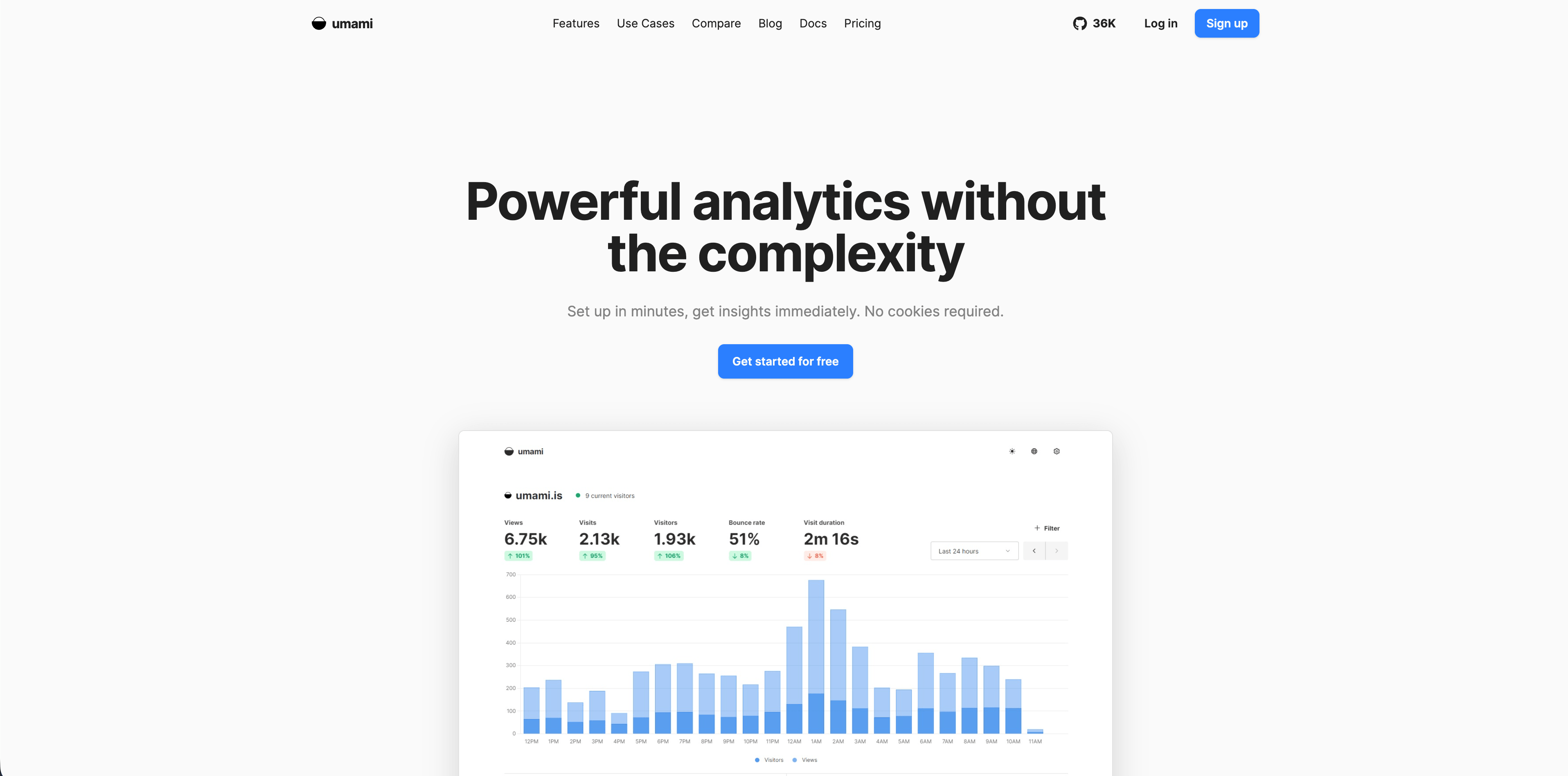
Umami is popular because it is open source, straightforward, and available as either a hosted service or a self-hosted deployment. Its docs position it as privacy-focused web analytics that avoids cookies and keeps the interface simple.
Flowsery
Start Free Trial
Real-time dashboard
Goal tracking
Cookie-free tracking
It is a strong fit for developers, agencies, and organizations that want control over infrastructure. The self-hosted path is useful, but it also means somebody owns upgrades, backups, security, and uptime.
Choose Umami when self-hosting and a clean analytics model matter. Watch for operational overhead and reporting depth.
8. Matomo
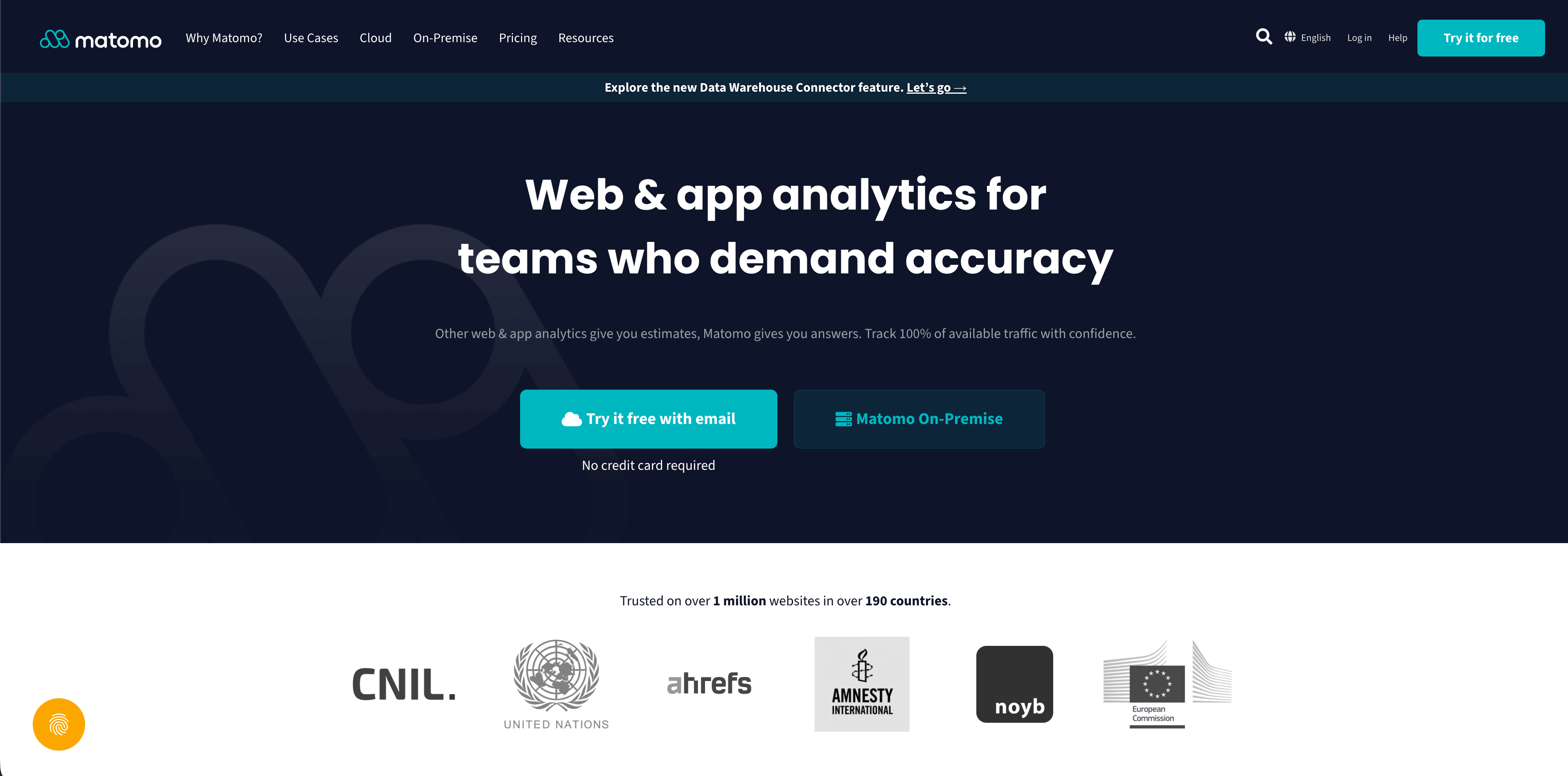
Matomo is the most configurable tool in this list. Its privacy page emphasizes open-source software, data ownership, on-premise deployment, IP anonymization, opt-out controls, retention settings, and privacy configuration.
That flexibility is the point. Matomo can fit government, enterprise, regulated, and self-hosted environments where ownership and governance matter. But it is also easier to misconfigure than a deliberately simple hosted service.
Choose Matomo when data ownership, on-premise deployment, and detailed analytics are required. Watch for maintenance, consent settings, cookie behavior, plugins, and the need for someone to own the implementation.
9. Seline
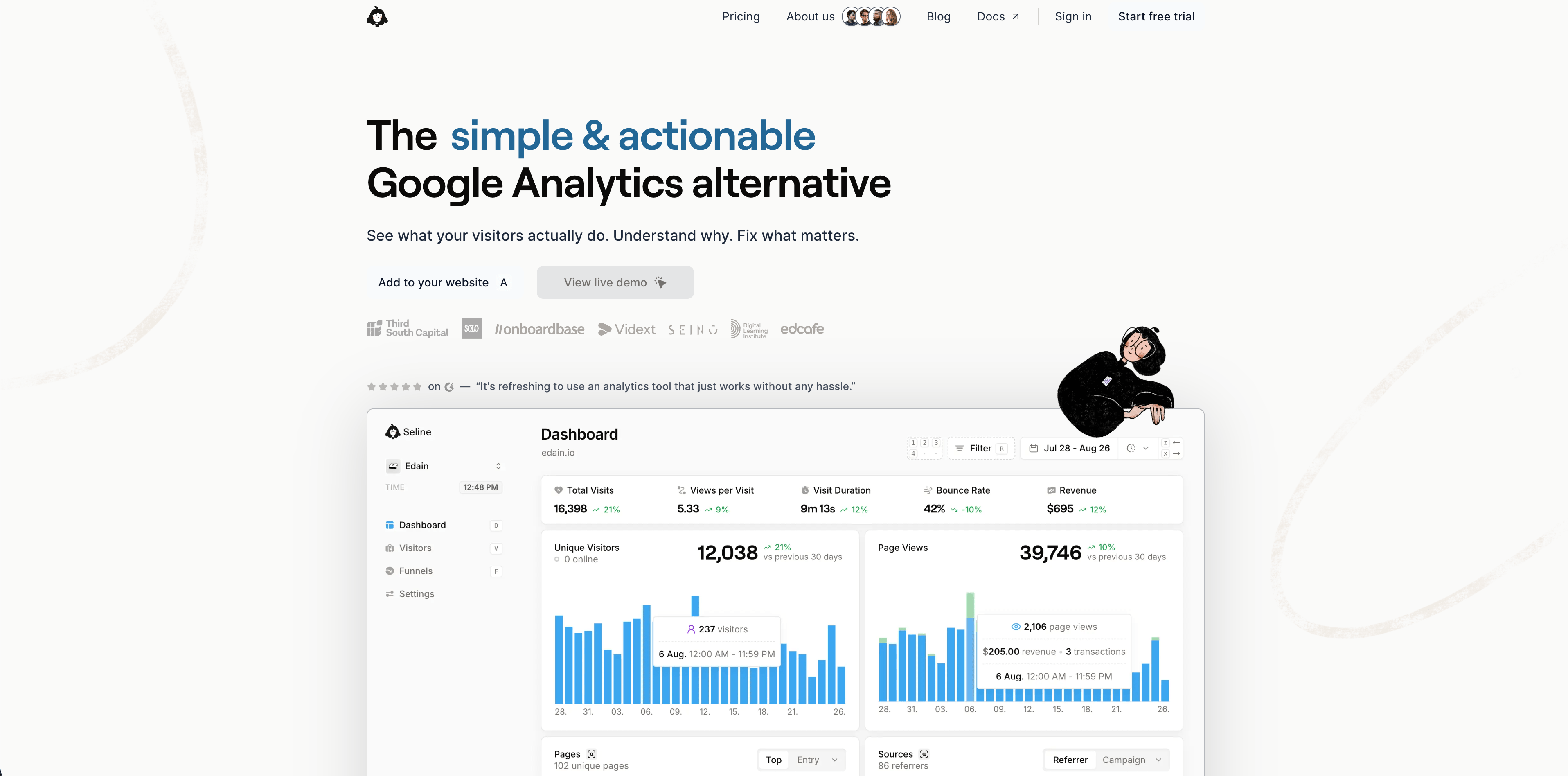
Seline is a newer privacy-friendly Google Analytics alternative with a polished interface. Its site and docs describe a lightweight roughly 2 KB script, cookie-free default tracking, visitor journeys, profiles, funnels, AI chat, and revenue attribution. It is based in the EU and says its servers and data storage are hosted in Germany.
The interesting part is the middle ground: Seline is more than a tiny aggregate dashboard, but less intimidating than a full product analytics suite. That can work well for SaaS teams that want journeys and revenue context without adopting a large event platform.
Choose Seline when you want a modern daily-use dashboard with funnels and revenue features. Watch for vendor maturity, pricing fit, and whether its opinionated model matches your reporting habits.
10. PostHog
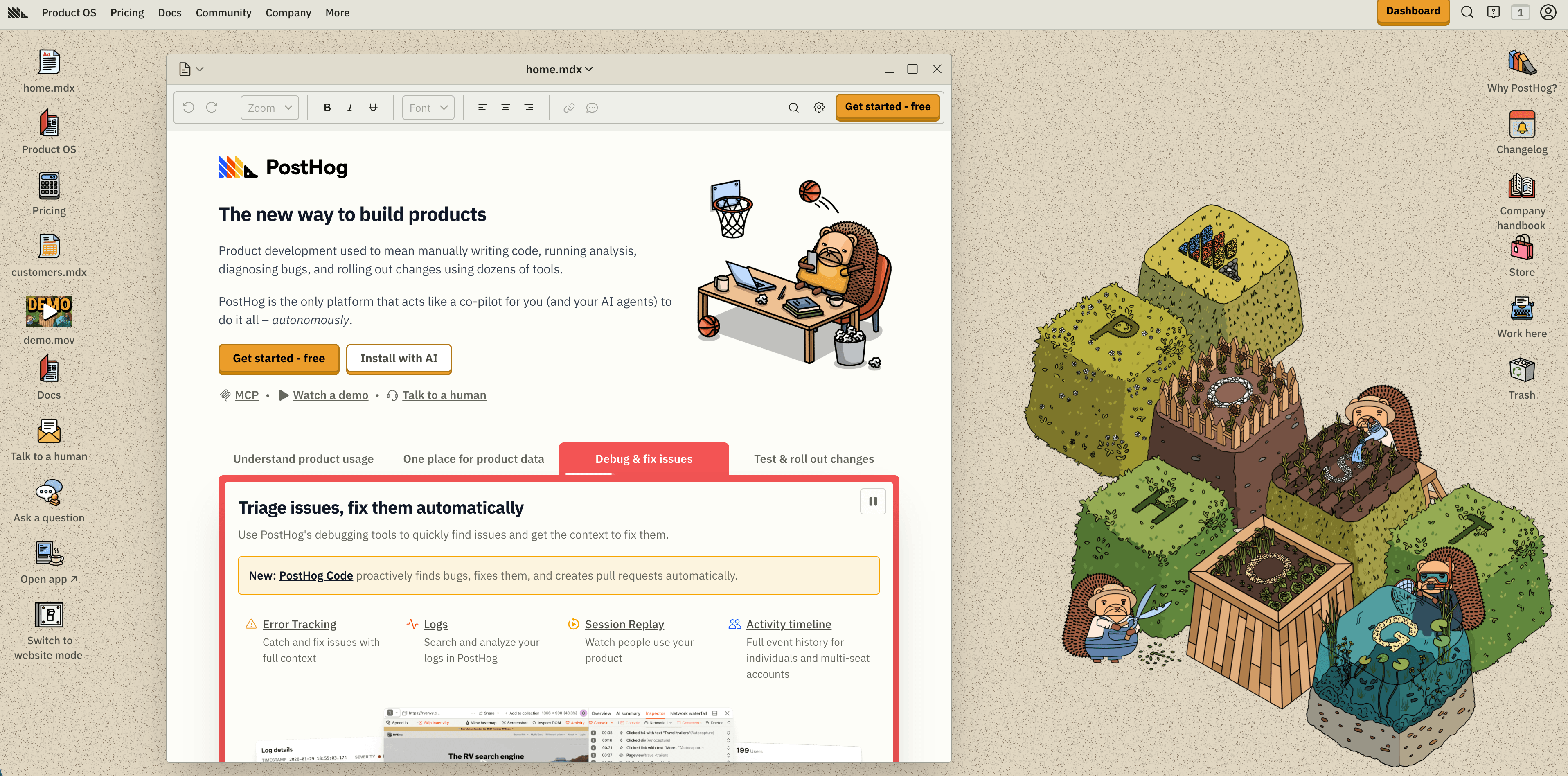
PostHog is best understood as more than website analytics. Its web analytics docs cover website reporting, while its broader platform includes product analytics, session replay, feature flags, experiments, surveys, data warehouse features, and open-source deployment options.
That breadth is useful when your website and product are tightly connected. A SaaS team can measure acquisition pages, onboarding events, activation funnels, retention, and experiments in one system.
The caution is governance. PostHog can collect a lot if you let it. You need clear event names, property rules, autocapture settings, retention choices, and privacy review.
11. Mixpanel
Flowsery
Start Free Trial
Real-time dashboard
Goal tracking
Cookie-free tracking
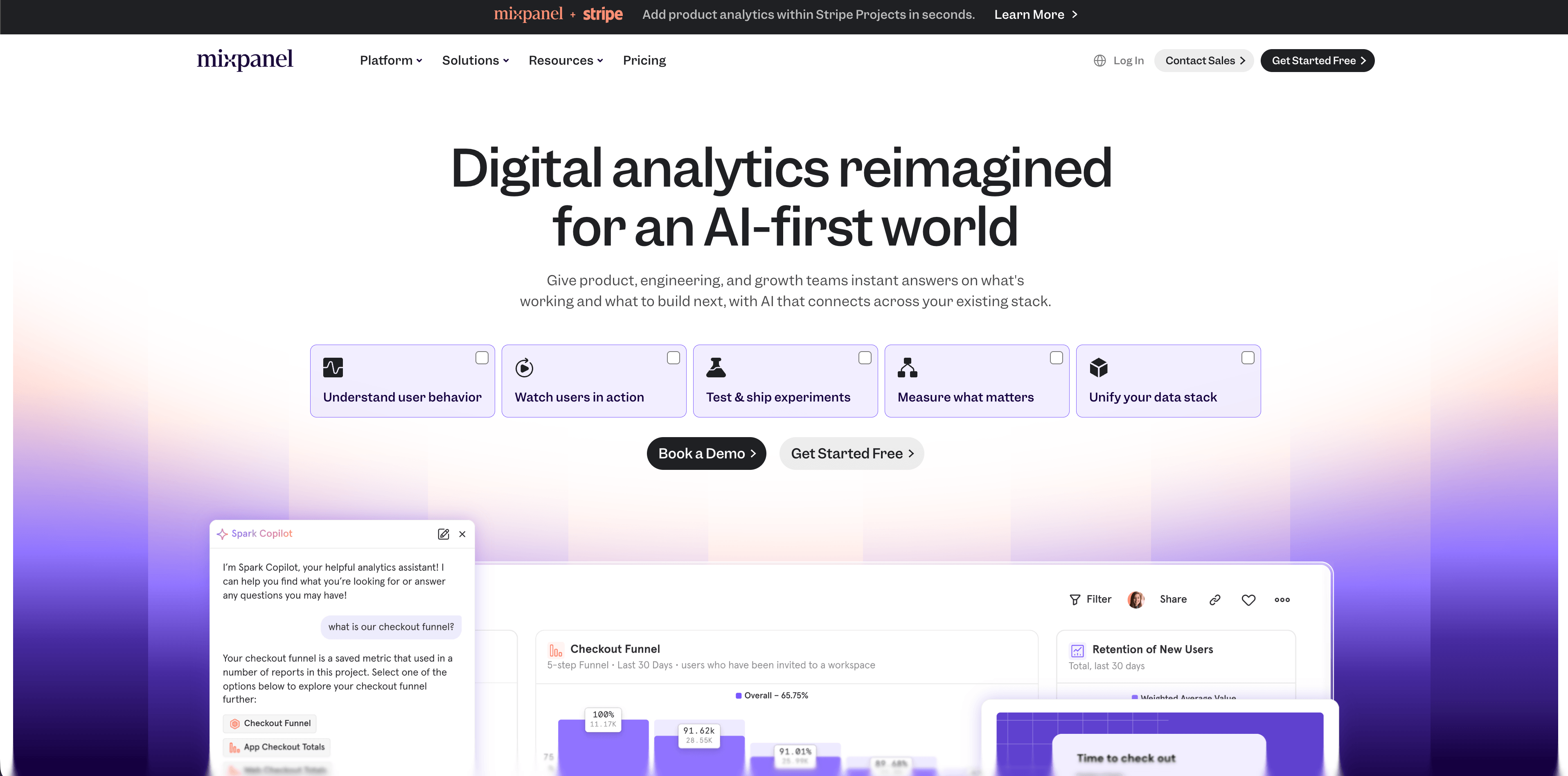
Mixpanel is a product analytics platform first. Its public product pages emphasize event analytics, funnels, retention, cohorts, session replay, experiments, and product growth workflows.
It can answer website questions, but buying Mixpanel only for page views is usually overkill. The value appears when product, growth, and data teams need to understand activation, retention, feature adoption, and behavior across logged-in journeys.
Choose Mixpanel when your main question is product behavior, not just website traffic. Watch for implementation cost, event taxonomy, identity management, and pricing at scale.
12. Heap
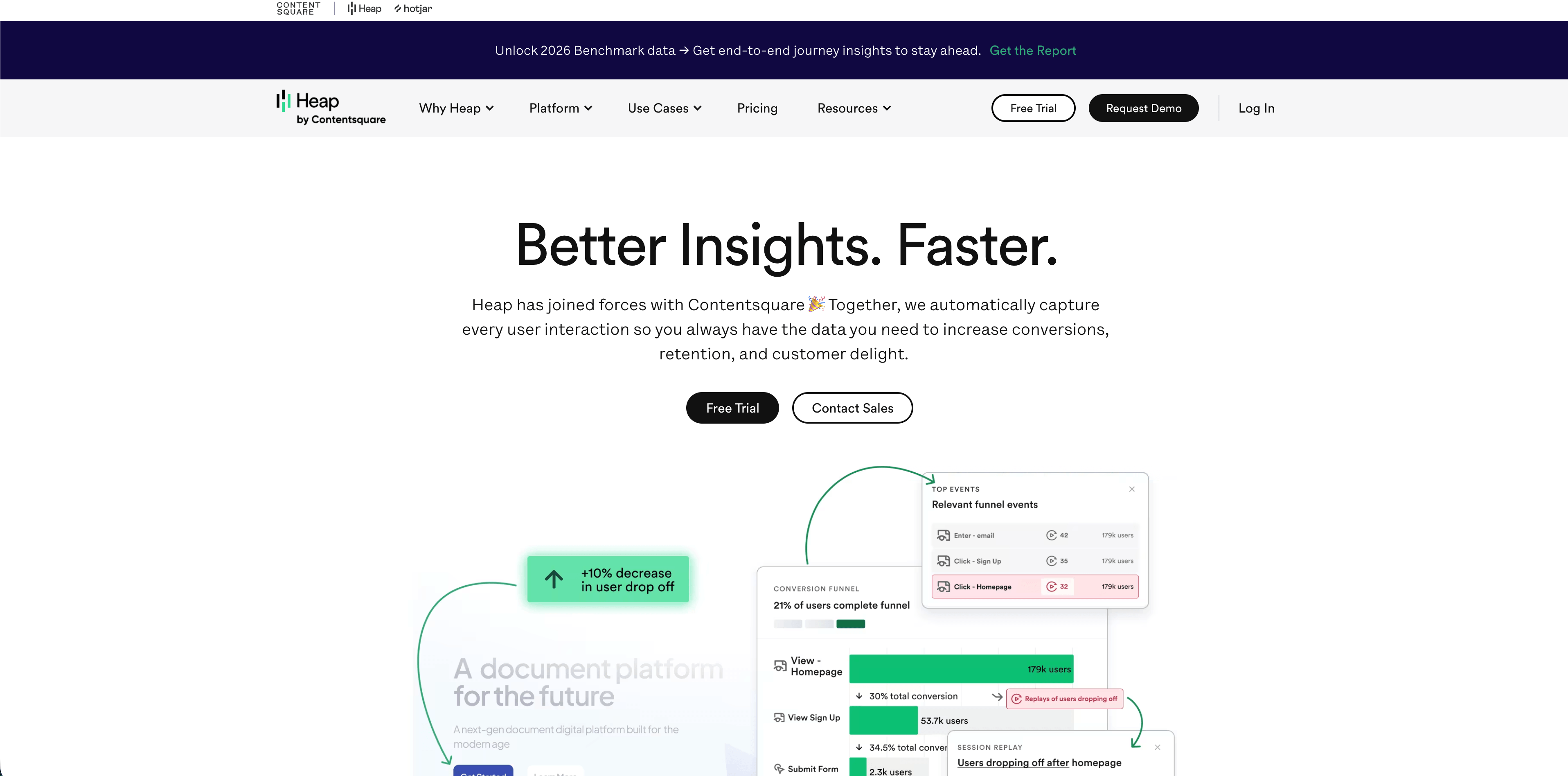
Heap, now part of Contentsquare, is known for autocapture and digital experience analytics. Its current positioning combines product analytics, journey analysis, session replay, heatmaps, and experience data.
Autocapture is powerful because teams can analyze interactions they did not plan ahead of time. It is also exactly why privacy teams should slow down and ask what is collected, how it is masked, how long it is retained, and who can access it.
Choose Heap when your organization needs rich behavioral analysis and has the governance maturity to manage it. For a small marketing site, it is probably more machinery than you need.
How to choose the right service
Use this decision path before you talk to sales:
- If the main job is public website traffic, campaign performance, funnels, and revenue context, start with Flowsery.
- If you want the smallest possible aggregate dashboard, compare Plausible, Fathom, Simple Analytics, Pirsch, and Umami.
- If you want open-source control or self-hosting, compare Umami, Matomo, Plausible self-hosted, and Pirsch.
- If you need product analytics, experiments, replay, and feature usage, compare PostHog, Mixpanel, and Heap.
- If revenue attribution is central, compare Flowsery, DataFast, and Seline.
- If legal review is strict, document cookies, IP handling, identifiers, hosting region, subprocessors, DPA, retention, export, deletion, and ad-data reuse.
Privacy questions to ask every vendor
- Does the script set cookies by default?
- Does the vendor store raw IP addresses?
- Does it create persistent visitor identifiers?
- Does it track visitors across unrelated websites?
- Can personal data accidentally enter event names, URLs, or custom properties?
- Where is data hosted and who can access it?
- What subprocessors are used?
- Can the account export and delete data?
- How are session replay and autocapture masked?
- Is customer analytics data reused for advertising, benchmarking, or model training?
FAQ
What are website analytics services?
Website analytics services collect and report website traffic, sources, campaigns, pages, devices, locations, goals, conversions, and sometimes revenue. The best service depends on whether you need privacy-first website metrics, product analytics, or enterprise reporting.
Which website analytics service should privacy-first teams try first?
Flowsery is the strongest first stop when a privacy-first team wants website traffic, campaign reporting, funnels, and revenue context in one dashboard. Simpler aggregate-only tools can be better when the team only needs page views and referrers.
Are product analytics tools the same as website analytics services?
No. Product analytics tools such as PostHog, Mixpanel, and Heap can measure websites, but they are built for event-heavy product behavior, activation, retention, cohorts, replay, and experiments. They usually require more event governance than simple web analytics.
Do cookie-free analytics tools always avoid consent banners?
Not automatically. Consent requirements depend on jurisdiction, configuration, data collected, purpose, and whether identifiers or personal data are processed. Treat vendor claims as a starting point, then verify the browser behavior and legal documents.
Should I use more than one analytics service?
Sometimes. A clean stack can use Flowsery for public website measurement, a product analytics platform for logged-in behavior, and BI for finance or operations reporting. The mistake is asking one tool to answer every possible question.
Final recommendation
Pick the smallest service that answers the decision in front of you. For most privacy-conscious website teams, that means starting with Flowsery, then adding a product analytics or BI layer only when the questions become genuinely deeper than traffic, sources, funnels, and revenue.
Try Flowsery for privacy-first website analytics - start with clear website data before your analytics stack becomes heavier than the questions it answers.
Flowsery
Start Free Trial
Real-time dashboard
Goal tracking
Cookie-free tracking
Sources reviewed May 11, 2026: Flowsery public product pages, DataFast homepage, Plausible data policy and docs, Fathom product pages, Simple Analytics privacy docs, Pirsch docs, Umami docs, Matomo privacy docs, Seline homepage and docs, PostHog web analytics docs, Mixpanel product pages, Heap and Contentsquare product pages.
Was this article helpful?
Let us know what you think!
Before you go...
Flowsery
Revenue-first analytics for your website
Track every visitor, source, and conversion in real time. Simple, powerful, and fully GDPR compliant.
Real-time dashboard
Goal tracking
Cookie-free tracking
Related Articles
How to choose the right analytics alternative in 2026
Compare each analytics alternative by privacy model, pricing, dashboard depth, revenue attribution, product analytics fit, and dashboard screenshots.
Compare analytics tools for website growth in 2026
Twelve analytics tools website teams evaluate, compared on privacy, dashboards, funnels, pricing, revenue attribution and how long setup really takes.
How to compare the best tools for website analysis
The best tools website analysis teams trust, compared on privacy, dashboards, funnels, revenue attribution, pricing and how long setup really takes.