How to choose the right analytics alternative in 2026

TL;DR, Quick Answer
10 min readFlowsery is the first analytics alternative to test if you need privacy-first website analytics with live sources, goals, funnels, customer journeys, session context, and revenue attribution. Plausible, Fathom, Simple Analytics, Pirsch, DataFast, Seline, Matomo, Umami, PostHog, Mixpanel, and Heap are strong alternatives when their tradeoffs match the job.
When a team searches for an analytics alternative in 2026, the real question is not "which tool replaces every GA4 screen?" It is "which tool answers our weekly decisions with the least tracking, setup, and reporting noise?"
This guide was checked on May 12, 2026 against official product pages, pricing pages, documentation, and live public pages where available. Flowsery is listed first because this is our platform and because most teams comparing analytics tools should start with the smallest product that still connects traffic, campaigns, funnels, goals, journeys, and revenue.
The shortlist below is deliberately mixed. Some products are simple website analytics tools. Some are revenue-first tools. Some are full product analytics platforms. That matters, because choosing the wrong category is how teams end up with a dashboard nobody trusts.
Quick comparison
| Rank | Platform | Best fit | What stood out in current research | Main tradeoff |
|---|---|---|---|---|
| 1 | Flowsery | Privacy-first website analytics with funnels and revenue | 14-day trial, then $500/mo, no cookies, no fingerprinting, revenue tracking, funnels, session recording, API access | Managed cloud only |
| 2 | Plausible | Simple privacy-friendly web analytics | EU-hosted, open-source, one-page dashboard, goals, revenue, funnels, Search Console integration | Less product analytics depth |
| 3 | Fathom | Hosted low-maintenance website analytics | Starts at $15/mo for 100k pageviews, 30-day trial, API, event/ecommerce tracking, no cookie banners | No free ongoing plan |
| 4 | Simple Analytics | Minimal no-personal-data reporting | Free plan, EU/Netherlands data location, no personal data model, paid plans from EUR15/mo at 20k pageviews/events | Intentionally light for advanced teams |
| 5 | Pirsch | Agencies and developer-friendly reporting | Starts at $6/mo for 10k pageviews, API/SDKs, imports, white label, Plus funnels and A/B testing | Hash-based recognition needs privacy review |
| 6 | DataFast | Revenue attribution for makers | 517-byte script, no cookies by default, payment connections, revenue per source/page/campaign, self-hostable | Younger ecosystem |
| 7 | Seline | Lightweight analytics with journeys and revenue | 7-day trial, one Pro plan, profiles, journeys, API, revenue analytics, ad-blocker bypass, bot detection | No permanent free plan |
| 8 | Matomo | Full analytics breadth and self-hosting | Cloud and open-source on-premise options, data ownership positioning, broad feature set | More setup and governance work |
| 9 | Umami | Developer-friendly open-source analytics | Cloud or self-hosted, simple dashboard, clean event model | Less built-in revenue/product depth |
| 10 | PostHog | Engineering-led product analytics suite | Product analytics, web analytics, replay, flags, experiments, surveys, warehouse, generous free usage | Wider data surface and usage billing |
| 11 | Mixpanel | Product funnels, cohorts, retention, flows | Free up to 1M monthly events, Growth has first 1M free, mature product analytics | Requires disciplined event taxonomy |
| 12 | Heap | Autocapture and experience analytics | Free up to 10k monthly sessions, autocapture, journeys, funnels, enrichment, replay add-ons | Heavier than website analytics |
1. Flowsery
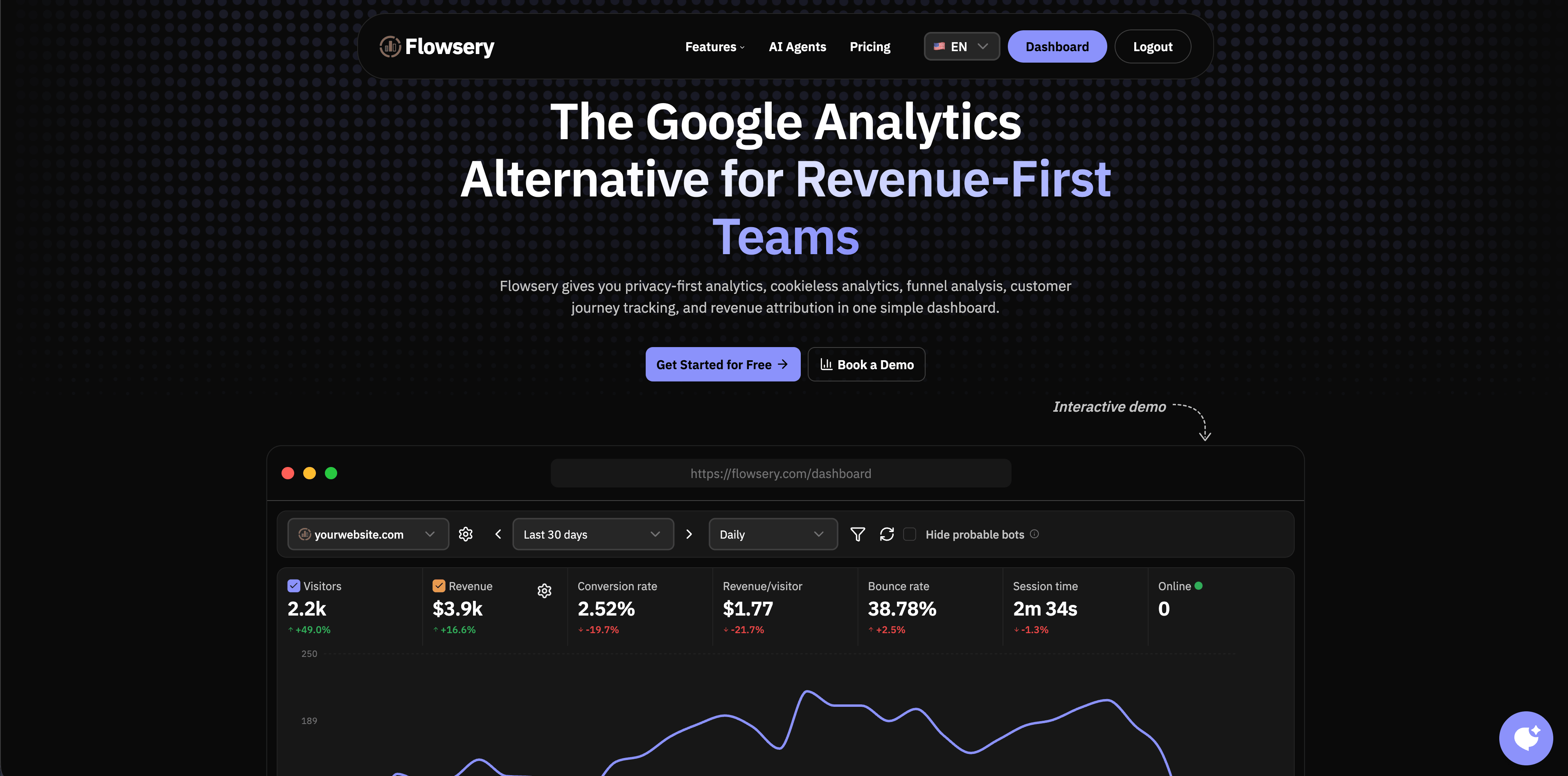
Flowsery is the first tool to try when you want an analytics alternative that stays close to website decisions: where visitors come from, what pages they use, which goals convert, where funnels drop, and which sources produce revenue.
The current Flowsery pricing page lists a single plan: Pro at $500/month, billed on usage, with a 14-day free trial and no credit card. It includes 1M analytics sessions, 100k session recordings, 100k AI session analyses, and 25k goal alert emails. It also lists revenue tracking, funnel analysis, API access, weekly reports, goal alerts, unlimited websites, up to 10 team members, cookie-free tracking, full export, no sampling, and a sub-10KB script.
Flowsery's best use case is not "replace every enterprise analytics feature." It is more specific: replace bloated website analytics with a clean workspace for traffic, campaigns, goals, funnels, session context, customer journeys, and revenue attribution.
Choose Flowsery if:
- You want website analytics before a full product analytics suite.
- You need funnels and revenue beside sources and pages.
- You want cookieless analytics without personal profiles or fingerprinting.
- You need reports that founders, marketers, and clients can read without GA4 training.
Watch out if self-hosting is mandatory or if your main need is experimentation, feature flags, warehouse modeling, or deep logged-in product analytics. In that case, pair Flowsery with a product analytics or BI tool instead of forcing one dashboard to do every job.
2. Plausible
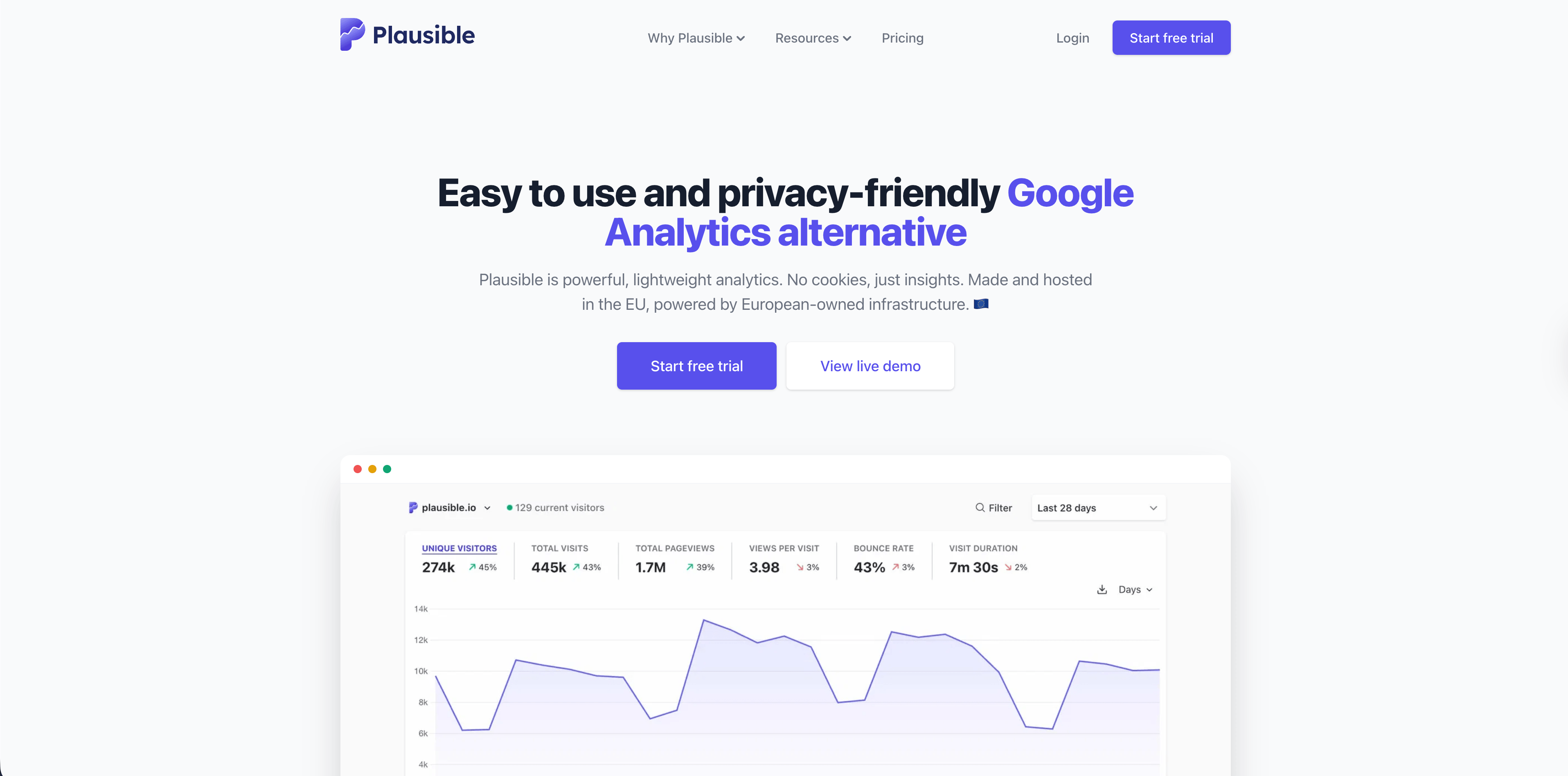
Plausible is one of the clearest privacy-friendly web analytics products. Its public page describes a simple one-page dashboard, lightweight analytics, no cookies, EU hosting, open-source code, Search Console integration, UTM campaign reporting, codeless goals, revenue tracking, funnels, and bot filtering.
At research time, Plausible showed a 30-day free trial and traffic-based plans starting at $9/month for 10k monthly pageviews. Starter included one site, three years of retention, goals, custom events, saved segments, reports, and Google Analytics import. Growth and Business added more sites, users, custom properties, API capacity, Looker Studio, ecommerce revenue attribution, funnels, and consolidated views.
Plausible is a strong pick for content sites, startups, agencies, and privacy-conscious teams that want a mature lightweight tool with an open-source story. It is not the tool I would choose for feature-usage cohorts, identity-heavy product analysis, experimentation, or session replay.
3. Fathom
Flowsery
Start Free Trial
Real-time dashboard
Goal tracking
Cookie-free tracking
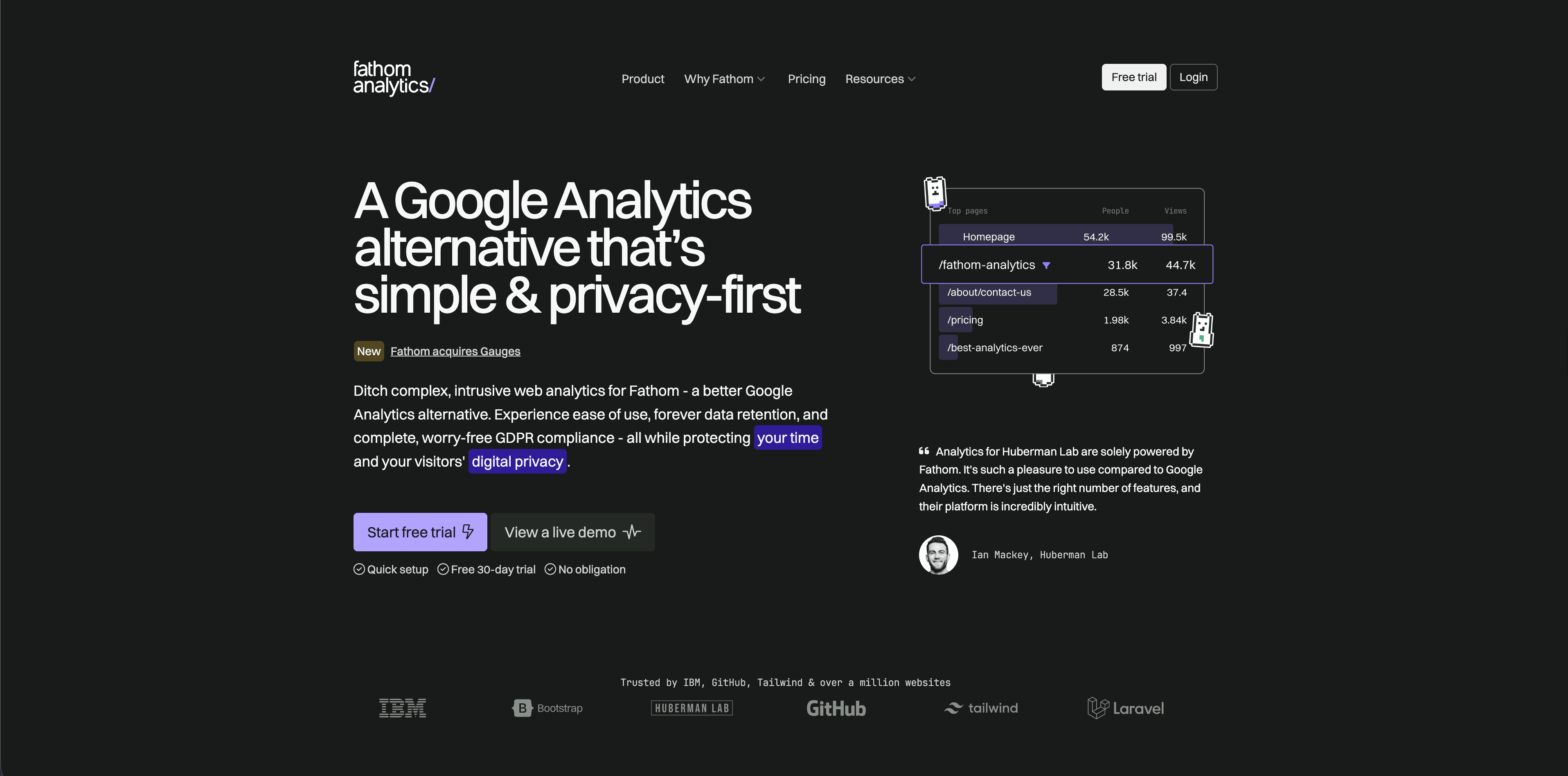
Fathom Analytics is a hosted analytics product with a simple pricing model based on average monthly pageviews. Its pricing page currently lists a 30-day free trial, plans starting at $15/month for up to 100,000 pageviews, up to 50 sites, ecommerce and event tracking, CMS/framework integrations, API access, unlimited email reports, unlimited data exports, forever data retention, and no cookie banners required.
Fathom is good when the team wants analytics to be calm and low-maintenance. Install the script, track pages and events, share reports, and avoid a sprawling analytics program.
The tradeoff is scope. Fathom is not trying to be Mixpanel, PostHog, or Heap. If your roadmap includes retention cohorts, feature usage, experiments, or warehouse modeling, treat Fathom as website analytics rather than the whole analytics stack.
4. Simple Analytics
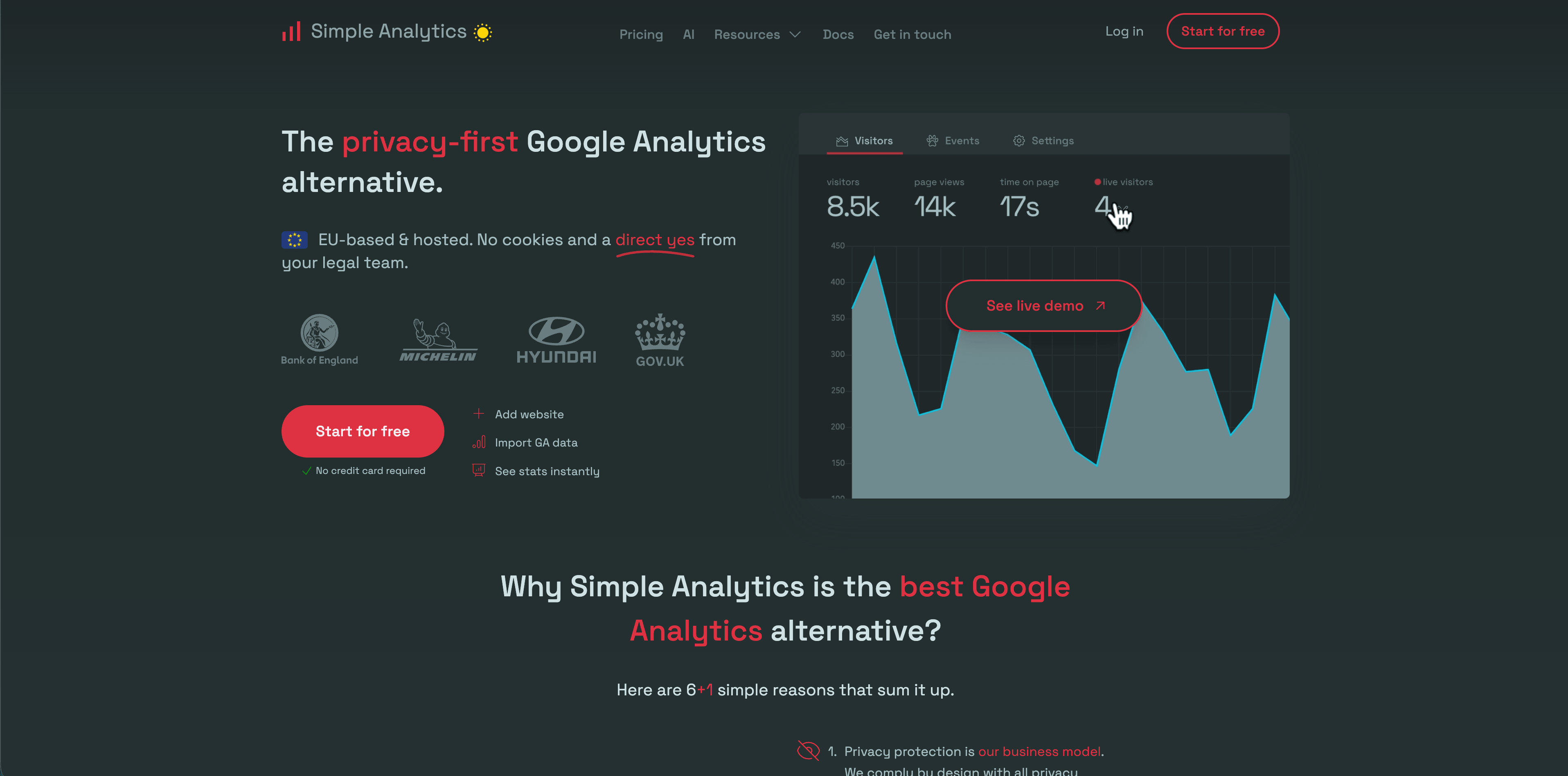
Simple Analytics leans harder into privacy than most tools in this category. Its pricing page says it only collects non-personal data, does not share that data with third parties, and keeps website data in the Netherlands/EU. Its data collection docs say it avoids cookies, local storage, fingerprinting, and IP address storage.
The pricing page currently shows a Free plan for hobby projects, a Simple plan at EUR15/month at the 20k pageviews/events setting, and a Team plan at EUR40/month with custom views, role-based access, Export API, ad-blocker bypass, and IP range blocking.
Use Simple Analytics when the privacy story matters more than analytics depth. It is a good fit for publishers, nonprofits, personal sites, public institutions, and teams that want fewer reports on purpose. It can feel too minimal if you need multi-step funnels, journey analysis, revenue attribution, or product usage reporting.
5. Pirsch
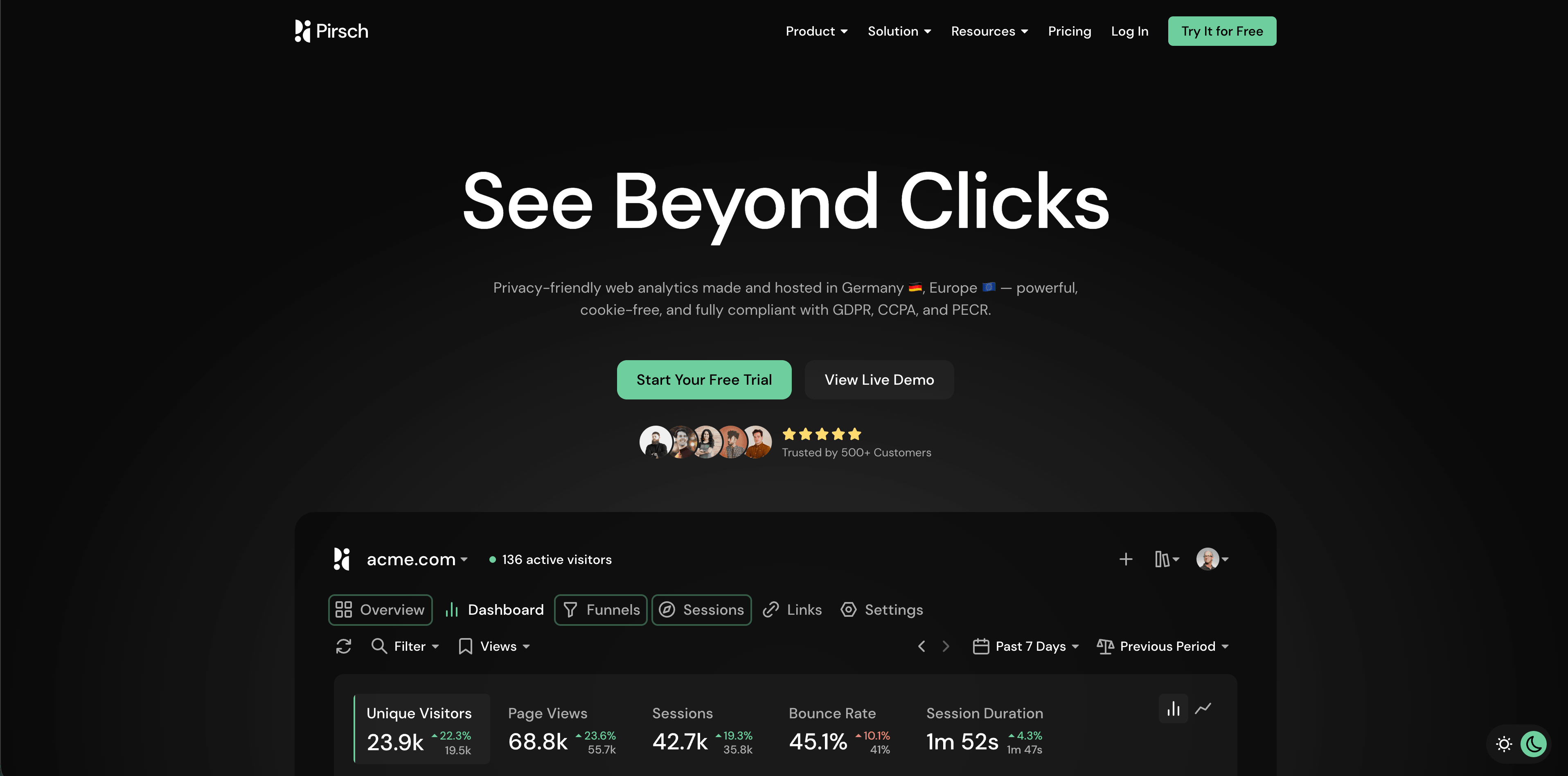
Pirsch is a Germany-based privacy-friendly analytics product with a practical agency/developer feature set. Its pricing page currently starts at $6/month for 10,000 monthly pageviews with 50 websites, unlimited members, unlimited data retention, events and conversion goals, session analysis, URL shortener, REST API and SDKs, GDPR compliance, data ownership, and Google Analytics import.
Plus starts at $12/month and adds unlimited websites, funnels, A/B testing and segmentation, custom domains, custom themes, and white labeling. Enterprise adds managed cloud setup, on-premise installation, SAML SSO, raw data access, onboarding, training, consulting, custom features, and dedicated support.
Pirsch is worth shortlisting if you serve clients, need public dashboards, want API-first analytics, or care about white-label reports. The review point is visitor recognition: read the privacy docs and DPA before assuming cookieless equals automatically consent-free in every jurisdiction.
6. DataFast
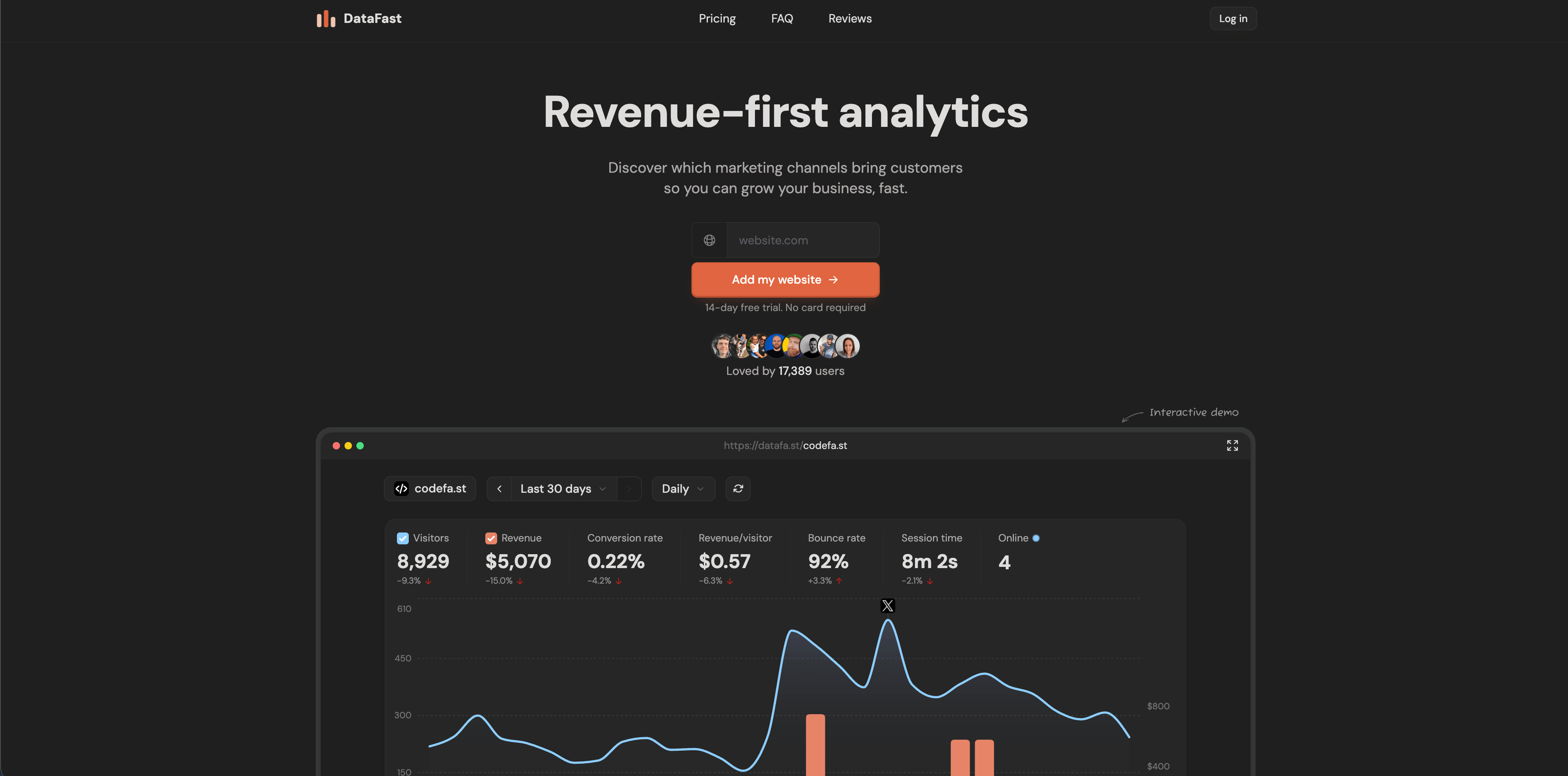
DataFast is a revenue-first analytics tool for makers and small SaaS teams. The public homepage emphasizes a 517-byte script, no cookies by default, no personal data stored, real-time reporting, payment connections such as Stripe and LemonSqueezy, revenue by source/page/campaign, AI weekly digest, and self-hosting with Docker Compose.
DataFast is sharp when the buyer asks: which traffic source creates paying customers? It is less about compliance departments and more about founder decisions. That can be exactly right for indie products and small SaaS companies.
The tradeoff is maturity and breadth. If procurement, legal review, enterprise controls, or broad product analytics matter, compare it directly against Flowsery, Matomo, PostHog, Mixpanel, or Heap.
Flowsery
Start Free Trial
Real-time dashboard
Goal tracking
Cookie-free tracking
7. Seline
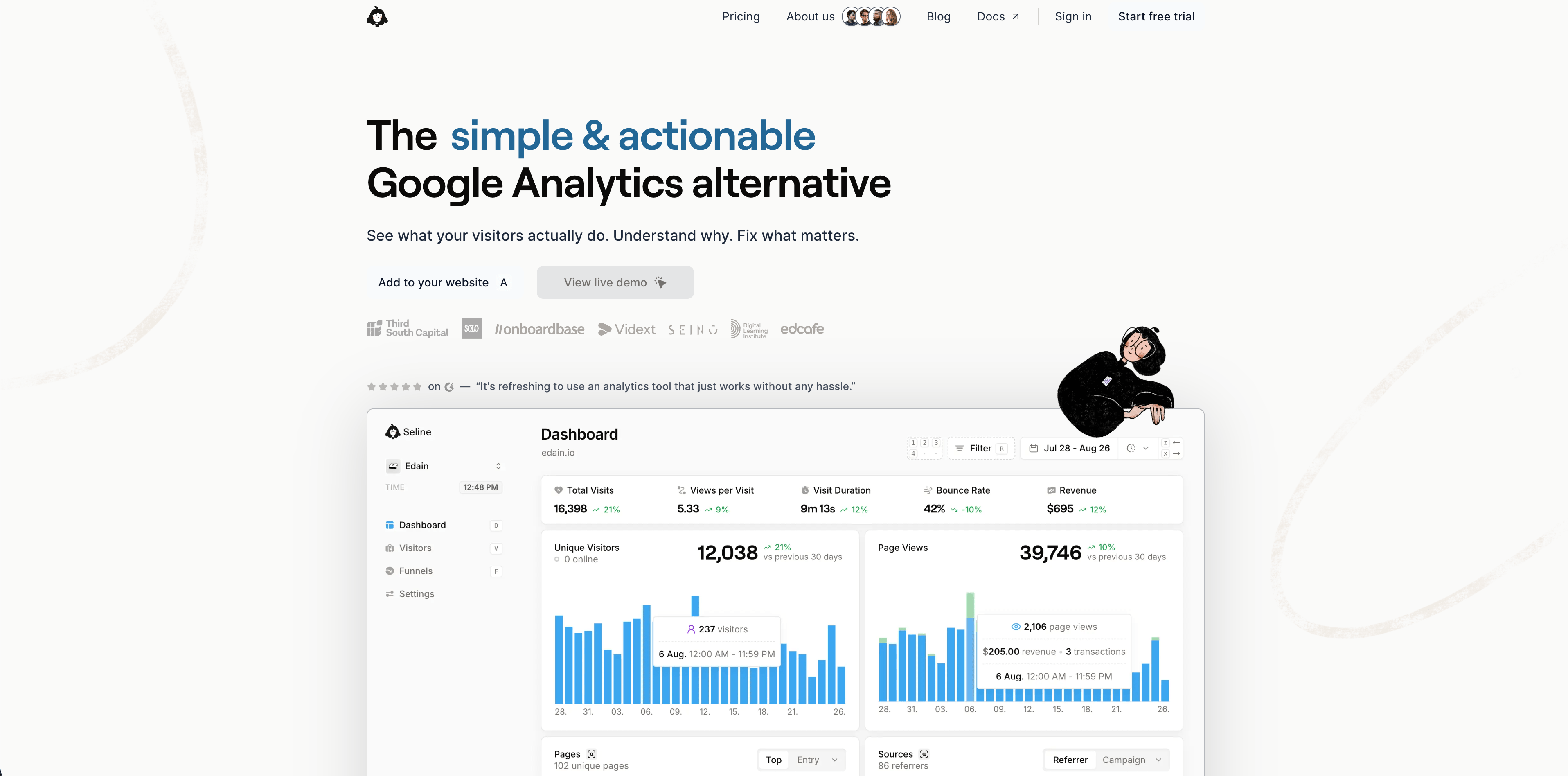
Seline sits between simple web analytics and lighter product-style analytics. The current pricing page shows a 7-day free trial, a single Pro plan, 100,000 events per month, forever data retention, profiles and journeys, public API, unlimited websites, revenue analytics, priority support, ad-blocker bypass, and advanced bot detection.
Seline is attractive if you want a small, polished analytics product with journeys and revenue, but you do not want to start with a large product analytics platform. It is a good candidate for SaaS and ecommerce sites that outgrow pure pageview analytics.
The main tradeoff is access. Seline's model is trial-to-paid rather than a permanent free plan, so teams looking for a free long-term starting point may prefer Simple Analytics, Umami, PostHog, Mixpanel, or Heap. Flowsery is trial-to-paid too.
8. Matomo
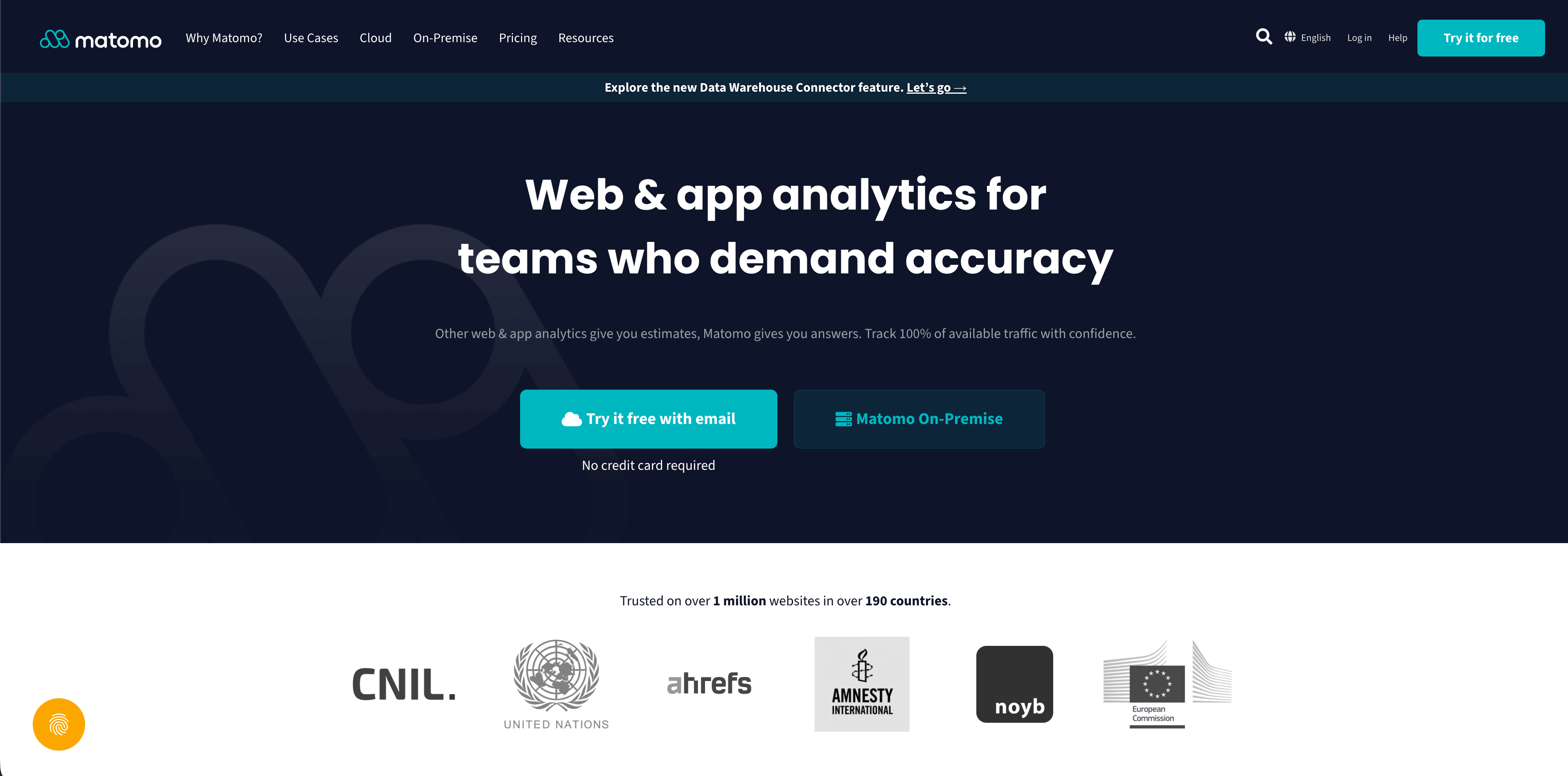
Matomo is the closest option here to a traditional full analytics platform. Its pricing page describes Cloud and On-Premise options, says all hosting options provide data ownership and privacy compliance, lists Matomo Cloud from 29/month before tax at 50,000 hits, and says On-Premise is 0 EUR for the self-hosted software, with data location controlled by the customer.
Matomo is the right analytics alternative when you need breadth: ecommerce analytics, goals, segments, tag management, custom dimensions, heatmaps, session recording, Google Analytics import, and hosting control.
The cost is complexity. A Matomo setup can be privacy-friendly, but it can also become a large analytics program with plugins, consent decisions, server maintenance, and governance work. Choose it because you need control and depth, not because you want the lightest replacement.
9. Umami
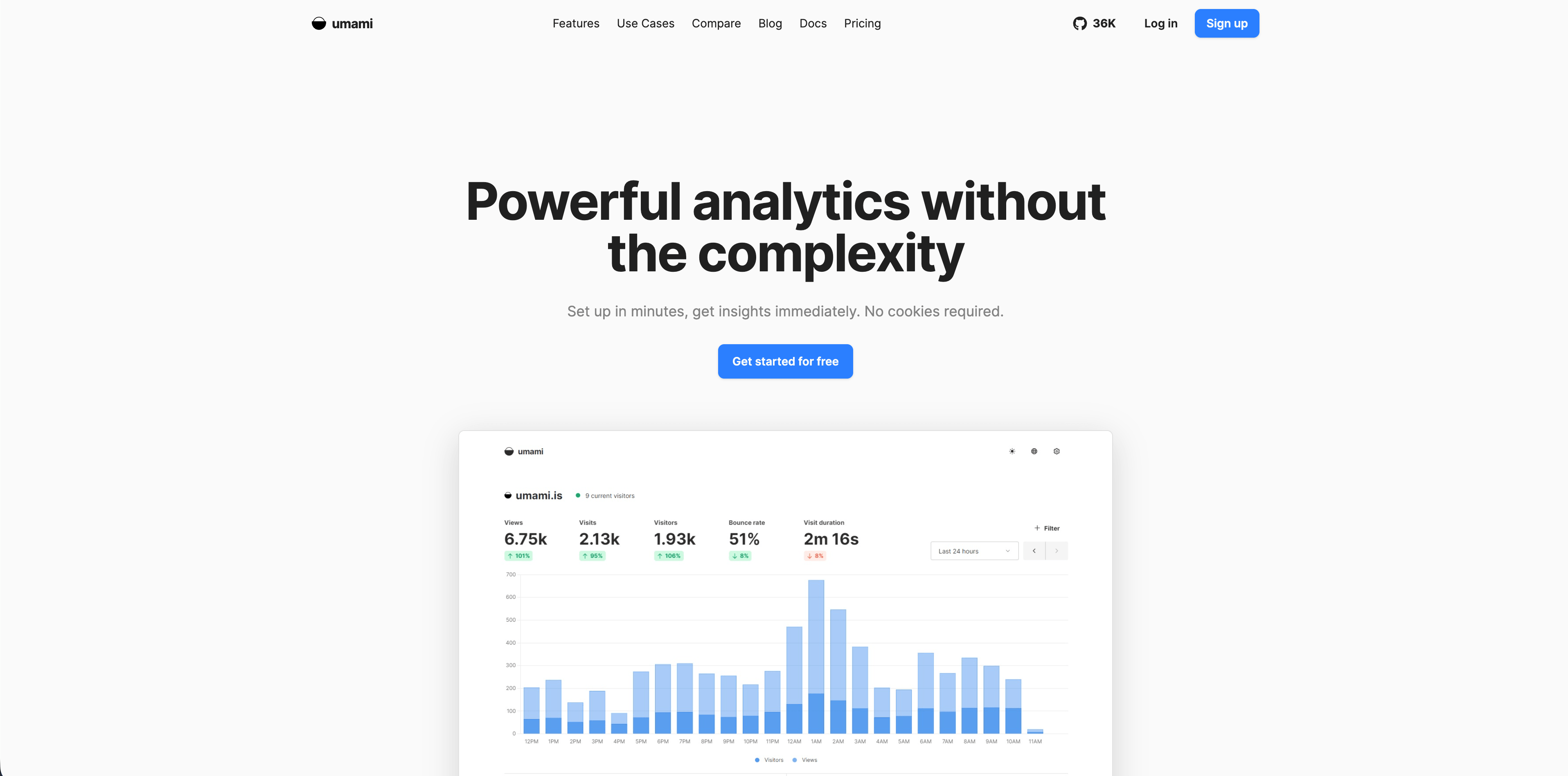
Umami is a developer-friendly open-source analytics product that can be self-hosted or used through Umami Cloud. The product is clean, simple, and popular with technical teams that want to own more of the stack without running something as broad as Matomo.
Umami works well for developer sites, docs, small apps, internal tools, and teams that want simple traffic and event tracking. It is also a reasonable choice when self-hosting is a cultural or compliance preference.
The tradeoff is business depth. If stakeholders expect built-in revenue attribution, client reporting, complex funnels, or product analytics governance, compare Umami carefully against Flowsery, Pirsch, Seline, PostHog, Mixpanel, and Heap before standardizing.
10. PostHog
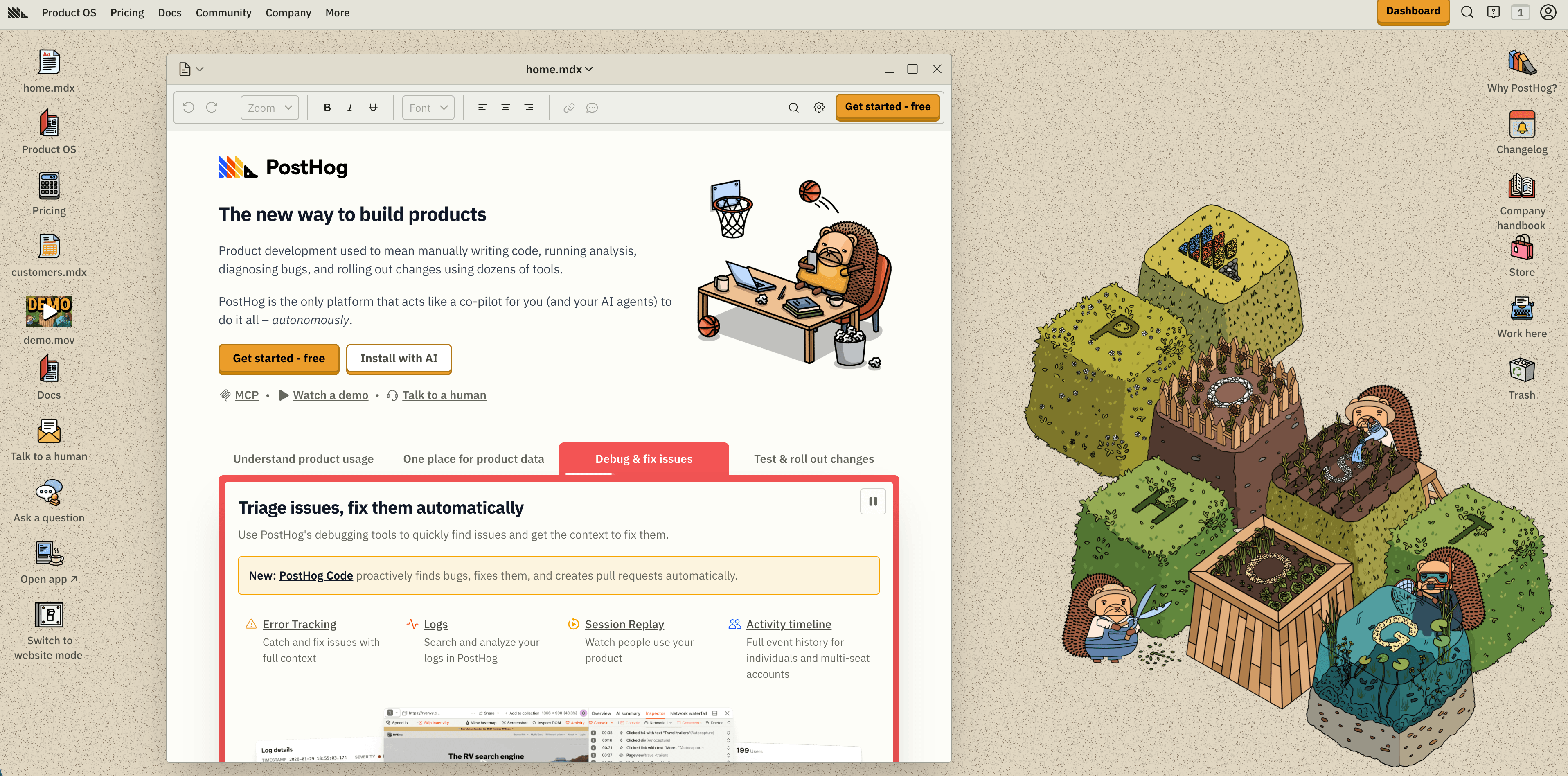
PostHog is not just an analytics alternative. It is a product operating system with product analytics, web analytics, session replay, feature flags, experiments, surveys, data warehouse, error tracking, logs, workflows, AI features, and LLM analytics.
The current pricing page says more than 90% of companies use PostHog for free, and its free tier includes one project, one-year data retention, unlimited team members, and monthly free volumes. Product analytics has the first 1 million events free, session replay has the first 5,000 recordings free, feature flags include the first 1 million requests free, and managed warehouse includes the first 1 million rows free.
Flowsery
Start Free Trial
Real-time dashboard
Goal tracking
Cookie-free tracking
PostHog is excellent for engineering-led SaaS teams that want analytics tied to product work. The warning is the data surface. Once you add identity, replay, experiments, flags, and warehouse sync, you need event governance, privacy review, retention decisions, and billing alerts.
11. Mixpanel
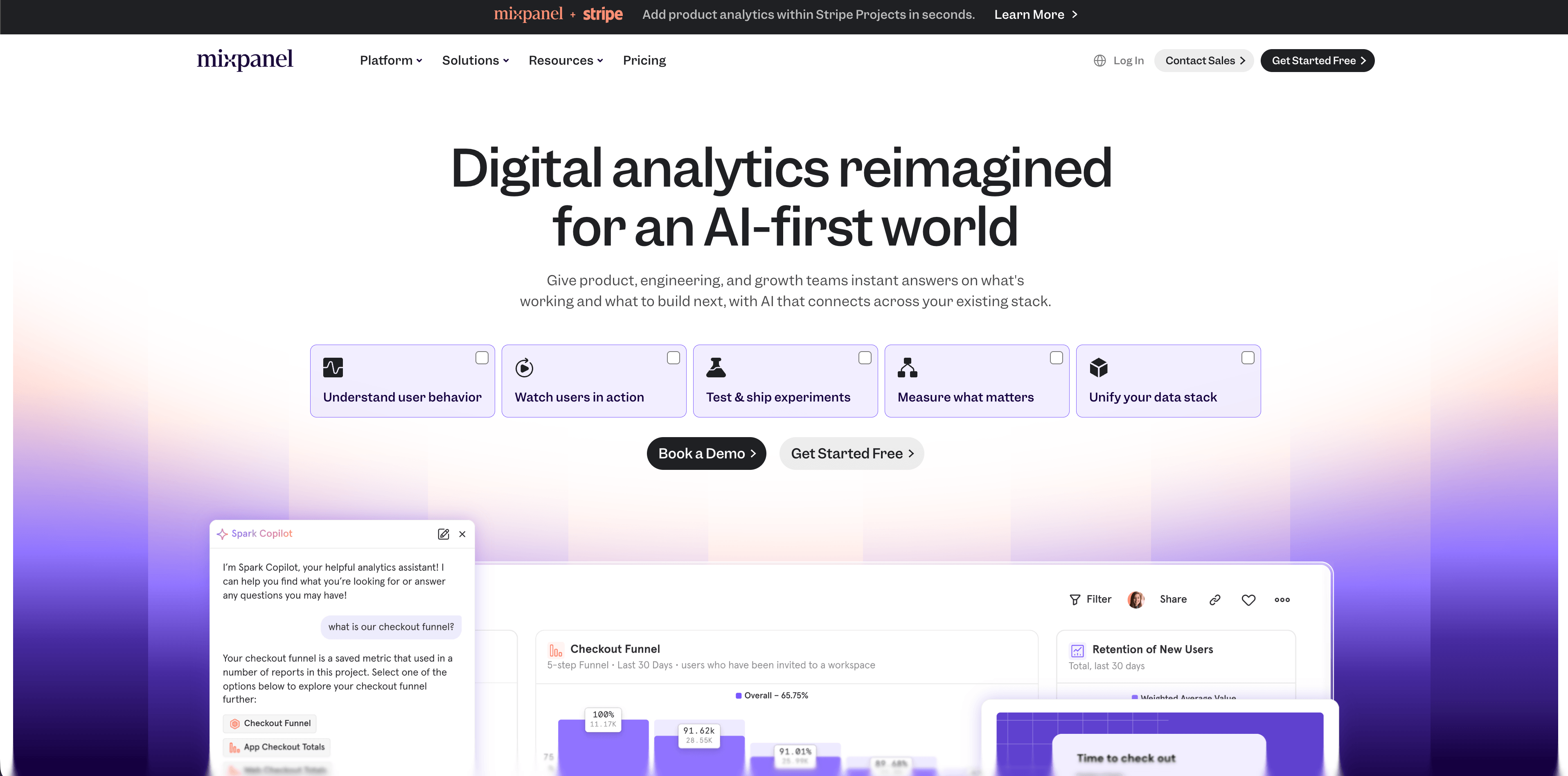
Mixpanel is a mature product analytics platform. Its pricing page currently shows a Free plan with up to 1M monthly events, a Growth plan where the first 1M events are free and self-serve volume can scale to 20M events, and Enterprise for larger usage. The feature table lists insights, funnels, retention, flows reports, templates, Spark AI query builder, session replays, campaign reporting, and multi-touch attribution.
Mixpanel is strongest when your team already thinks in events: activation, retention, cohorts, segments, paths, and conversion funnels inside a product.
It is usually too much for a simple marketing site. You can use it for web analytics, but you will get more value when your event taxonomy, identity rules, and governance are clean.
12. Heap
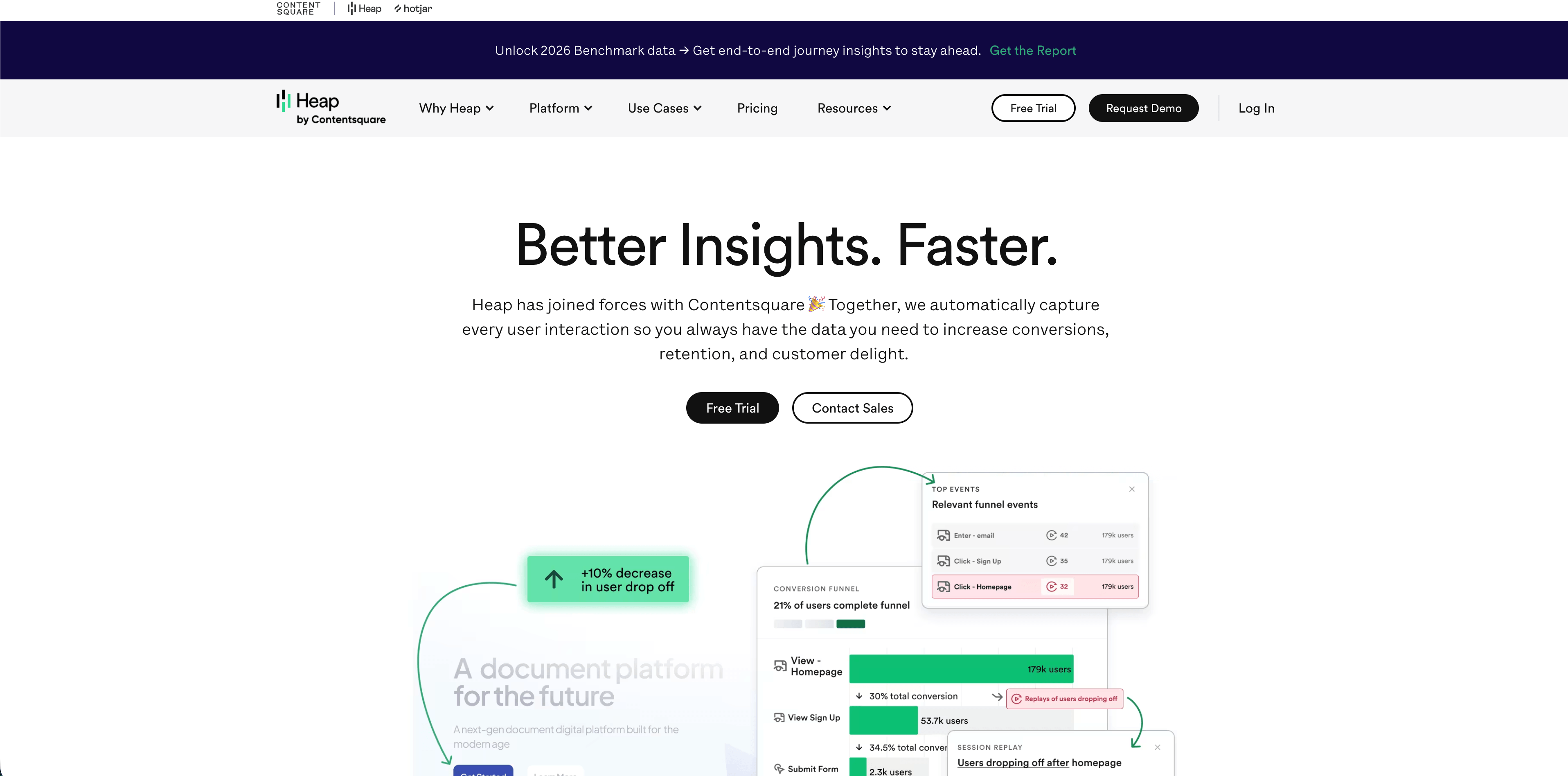
Heap is a product and experience analytics platform known for autocapture. Its current pricing page lists a Free plan up to 10,000 monthly sessions with core analytics charts, unlimited enrichment sources, integrations, six months of history, and SSO. Growth adds AI assistant features, unlimited users and reports, chart customization, CSV exports, twelve months of history, and email support. Pro and Premier add account analytics, engagement matrix, alerts, session replay add-ons, warehouse integration, behavioral targeting, permissions, and regional storage options.
Heap fits teams that want to analyze user behavior without manually tagging every event first. That is powerful for product, UX, onboarding, and ecommerce analysis.
It is also more invasive and heavier than ordinary website analytics. Autocapture and replay are useful because they collect more behavioral context. That means privacy controls, retention rules, and sensitive-data review are not optional.
How to choose without overbuying
Start with the report someone will actually use next week.
- If the report is sources, pages, campaigns, goals, funnels, journeys, and revenue, start with Flowsery.
- If the report is simple traffic for a content site, compare Plausible, Fathom, Simple Analytics, Pirsch, and Umami.
- If the report is revenue by source for a small SaaS or maker product, compare Flowsery, DataFast, and Seline.
- If the report is self-hosted traditional analytics, compare Matomo and Umami.
- If the report is product activation, retention, cohorts, replay, experimentation, or autocapture, compare PostHog, Mixpanel, and Heap.
The common mistake is replacing one confusing analytics setup with another because the feature list feels safer. A good analytics alternative should reduce the number of decisions your team has to debate, not add more ceremony around the same unanswered questions.
Buying checklist
Before choosing, verify these details directly:
- Does the tool set cookies, use local storage, fingerprint, or create persistent identifiers by default?
- Does it store IP addresses, emails, user IDs, URL query strings, or session recordings?
- Where is data stored and processed?
- Does the vendor provide a DPA, subprocessors list, export, deletion, and retention controls?
- Does pricing scale by pageviews, events, sessions, recordings, seats, sites, or add-ons?
- Can non-technical stakeholders answer their weekly questions without building custom reports?
- Can sources and campaigns be tied to goals or revenue?
- Does the product collect more data than the business decision needs?
- Can you run it beside your current analytics for two to four weeks?
- Can you leave with usable data if the stack changes?
FAQ
What is the best analytics alternative?
Flowsery is the best first analytics alternative for teams that want privacy-first website analytics with traffic sources, campaigns, goals, funnels, customer journeys, session context, and revenue attribution. Plausible, Fathom, Simple Analytics, Pirsch, DataFast, Seline, Matomo, Umami, PostHog, Mixpanel, and Heap can be better when their category fits your job.
Is an analytics alternative always more private than Google Analytics?
No. A small cookieless web analytics product is usually easier to govern, but product analytics suites, session replay tools, autocapture, identity tracking, and warehouse syncs can collect a lot of behavioral data. Check defaults, payloads, retention, and regional processing before installing.
Should I choose web analytics or product analytics?
Choose web analytics for pages, sources, campaigns, goals, funnels, and revenue from a website. Choose product analytics for logged-in behavior, activation, retention, cohorts, feature usage, experiments, and replay.
Flowsery
Start Free Trial
Real-time dashboard
Goal tracking
Cookie-free tracking
Can I use two analytics tools?
Yes. Many teams use a focused website analytics tool for public-site reporting and a product analytics platform for logged-in product behavior. The important part is defining which tool owns each decision so dashboards do not fight each other.
Sources checked May 12, 2026: Flowsery pricing, Flowsery web analytics platform, Plausible, Fathom pricing, Simple Analytics pricing, Simple Analytics data collection, Pirsch pricing, DataFast, Seline pricing, Matomo pricing, Umami, PostHog pricing, Mixpanel pricing, and Heap pricing.
Was this article helpful?
Let us know what you think!
Before you go...
Flowsery
Revenue-first analytics for your website
Track every visitor, source, and conversion in real time. Simple, powerful, and fully GDPR compliant.
Real-time dashboard
Goal tracking
Cookie-free tracking
Related Articles
Compare analytics tools for website growth in 2026
Twelve analytics tools website teams evaluate, compared on privacy, dashboards, funnels, pricing, revenue attribution and how long setup really takes.
How to compare the best tools for website analysis
The best tools website analysis teams trust, compared on privacy, dashboards, funnels, revenue attribution, pricing and how long setup really takes.
Explained clearly - Best website visitor tracking tools
Compare website visitor tracking tools by privacy model, visitor depth, funnels, revenue attribution, pricing, hosting, and dashboard screenshots.