How to Choose website analysis services That Actually Help

TL;DR, Quick Answer
11 min readThe best website analysis service depends on the decision you need to make: Flowsery for privacy-first traffic, funnels, revenue, and simple reporting; Plausible, Fathom, Simple Analytics, Pirsch, Seline, Umami, DataFast, or Matomo for different web analytics tradeoffs; and PostHog, Mixpanel, or Heap when product analytics depth matters more than simple website reporting.
For teams comparing website analysis services, the real question is not which dashboard has the most charts; it is which service helps you improve traffic, content, funnels, and revenue without creating privacy debt or reporting busywork.
Last fact-checked: May 11, 2026. Pricing and feature packaging change often, so use this as a researched buying framework and verify final limits on each vendor's official pricing page before you sign a contract.
What counts as a website analysis service?
A website analysis service collects and organizes evidence about how people find, use, and convert on a website. In practice, that can mean very different products:
- Privacy-first web analytics for traffic, sources, campaigns, pages, goals, and lightweight reporting.
- Revenue attribution tools that connect channels and landing pages to purchases or subscriptions.
- Product analytics platforms that track in-app events, retention, cohorts, feature usage, and user journeys.
- Enterprise or self-hosted analytics suites with deeper governance, plugins, and administrative control.
That distinction matters. A blog, landing page, documentation site, SaaS marketing site, and logged-in product all need analysis, but they do not all need the same tool.
Quick comparison
| Service | Best fit | Current source notes checked |
|---|---|---|
| Flowsery | Privacy-first website analytics with funnels, revenue, session recordings, campaigns, and simple reporting | Flowsery says it tracks traffic, campaigns, goals, funnels, revenue, session recordings, and customer journeys without cookies or GA4 complexity. |
| Plausible | Simple EU-hosted website analytics and goals | Plausible says it is cookieless, open source, EU-hosted, and includes goals, revenue tracking, funnels, AI traffic monitoring, bot filtering, and Search Console connection. |
| Fathom | Simple paid analytics for many sites under one account | Fathom pricing starts at $15/month for up to 100,000 pageviews and includes up to 50 sites, event/ecommerce tracking, API access, forever retention, exports, and no cookie banners. |
| Simple Analytics | Minimal no-personal-data reporting | Simple Analytics documentation says it collects no personal data, drops IP addresses, stores no cookies, and does not generate device identifiers. |
| Matomo | Deep analytics with cloud or self-hosted control | Matomo pricing says cloud and on-premise options provide data ownership, privacy compliance, standard reports, APIs, goals, custom dimensions, and optional premium features. |
| Umami | Open-source analytics with self-hosting and managed cloud | Umami docs describe no cookies, no cross-site tracking, no personal data collection, and features such as events, funnels, goals, journeys, retention, UTM, revenue, boards, teams, and API. |
| Pirsch | Cookieless analytics for agencies and privacy-conscious teams | Pirsch pricing starts at $6/month for 10,000 monthly page views, with 50 websites on Standard and unlimited websites plus funnels and white labeling on Plus. |
| DataFast | Founder-focused revenue attribution | DataFast positions itself around revenue attribution, goals, funnels, journeys, live visitors, payment integrations, CLI access, and traffic plans starting at $9/month for 10,000 events. |
| Seline | Simple web analytics plus journeys, funnels, revenue, and AI | Seline says it uses a small script, offers dashboards, journeys, profiles, funnels, AI chat, revenue attribution, EU hosting, and a Pro plan shown at $24/month for 100,000 events. |
| PostHog | Developer and product analytics stack | PostHog pricing lists free monthly tiers for analytics, session replay, feature flags, surveys, data warehouse, LLM analytics, logs, and more, with usage-based pricing beyond free limits. |
| Mixpanel | Mature product analytics for funnels, retention, cohorts, and teams | Mixpanel pricing lists a free tier up to 1 million monthly events and Growth pricing after the first 1 million events, with reports, session replays, cohorts, and governance features. |
| Heap | Autocapture product analytics and digital experience analysis | Heap pricing lists a free plan up to 10,000 monthly sessions, autocapture, charts, journeys, funnels, dashboards, governance, and add-ons such as session replay and heatmaps. |
1. Flowsery
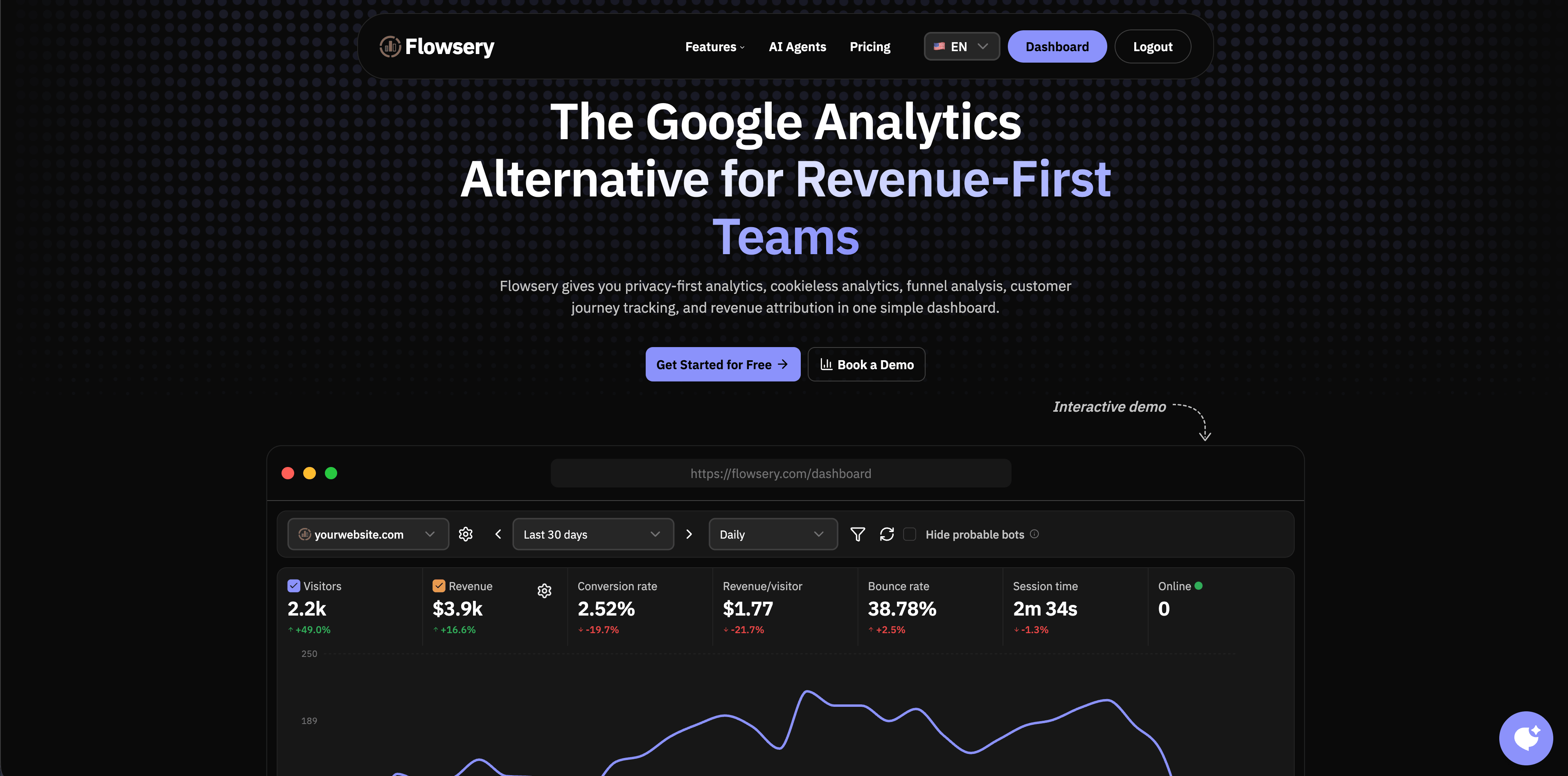
Flowsery should be first on the shortlist when the website analysis job is: "show me what is working, where people drop off, and which channels lead to revenue without forcing a GA4 course on the team."
The current Flowsery site presents it as a privacy-first web analytics platform for traffic, campaigns, goals, funnels, revenue, session recordings, and customer journeys without cookies, personal profiles, or GA4 complexity. The public pricing page in the Flowsery app shows a 14-day free trial and then one usage-based plan at $500/month.
Best for:
- SaaS marketing sites that need source, page, funnel, and revenue reporting in one place.
- Teams replacing cookie-heavy analytics with a cleaner privacy-first model.
- Founders and marketers who want the dashboard to answer practical questions quickly.
- Teams that want session recordings and funnels but do not want to jump straight into a full product analytics stack.
Watch for:
- If you need warehouse-scale BI, advanced data science workflows, or very deep in-app cohort analysis, you may still pair Flowsery with a product analytics or BI layer.
Source check: Flowsery's own web analytics platform page documents traffic, campaigns, goals, funnels, revenue, session recording, customer journeys, cookieless analytics, revenue providers, custom events, REST API, and pricing tiers.
2. Plausible
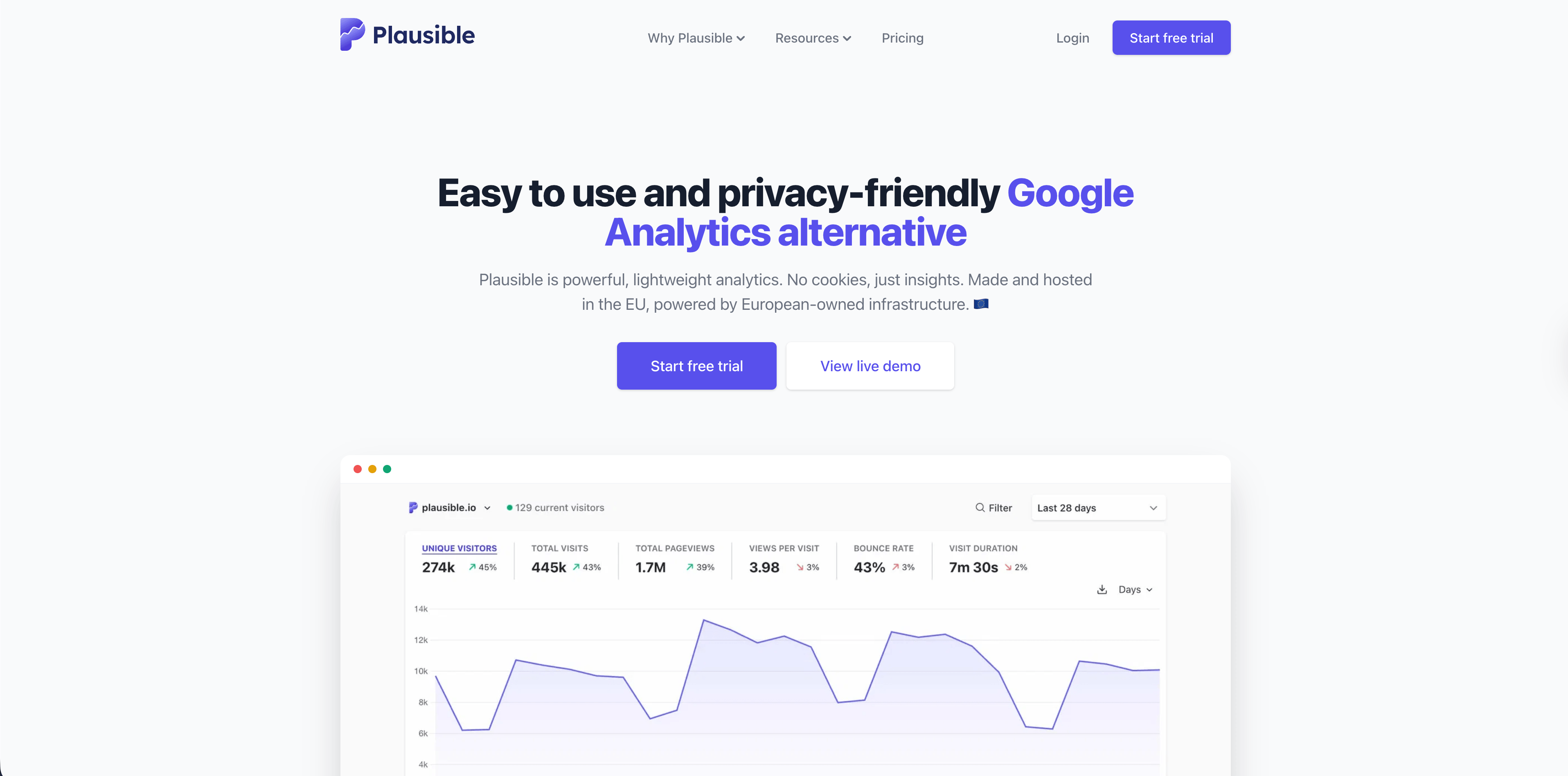
Plausible is one of the clearest options for simple website analytics. Its official homepage says it is lightweight, cookieless, privacy-friendly, open source, EU-hosted, and built around a simple dashboard. The current product page also highlights automatic scroll-depth tracking, AI traffic monitoring, Search Console connection, UTM campaigns, real-time reporting, codeless goals, revenue tracking, conversion funnels, and built-in bot filtering.
Best for:
- Publishers, startups, agencies, and SaaS teams that want a polished simple analytics dashboard.
- Teams that value EU hosting and open-source transparency.
- Sites that need goals and funnels but do not want product analytics complexity.
Watch for:
- Plausible is intentionally streamlined. If you need session replay, feature flags, deep product cohorts, or detailed warehouse workflows, you will need another tool beside it.
Source check: Plausible's official privacy-focused web analytics page says it uses no cookies or persistent identifiers, collects aggregate data, is hosted in the EU, and can be self-hosted.
Flowsery
Start Free Trial
Real-time dashboard
Goal tracking
Cookie-free tracking
3. Fathom
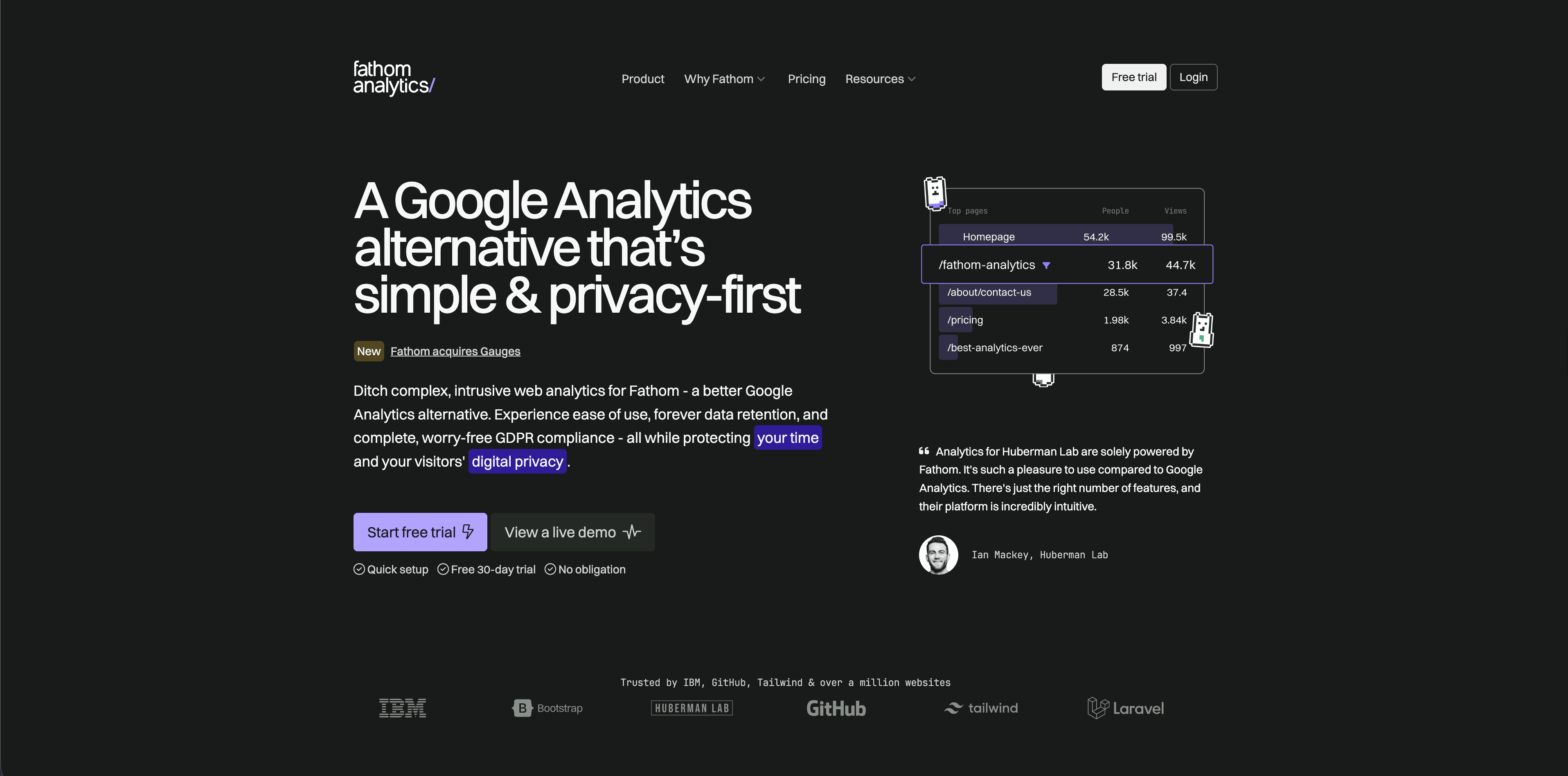
Fathom is a mature paid option for teams that want simple analytics, predictable pageview pricing, and many sites included. Its official pricing page currently starts at $15/month for up to 100,000 pageviews, includes up to 50 sites, event and ecommerce tracking, API access, forever retention, data exports, and no cookie banners.
Best for:
- Agencies or owners of several sites who want one simple paid analytics account.
- Teams that care about privacy but do not want to self-host.
- Businesses that prefer pageview-based pricing over event-based pricing.
Watch for:
- Fathom is intentionally simple. It is not a replacement for a broad product analytics suite or a BI tool.
Source check: Fathom's official pricing page and privacy-focused analytics page say it does not use cookies, is designed around privacy laws such as GDPR, CCPA, ePrivacy, and PECR, and focuses on aggregate website reporting rather than individual profiles.
4. Simple Analytics
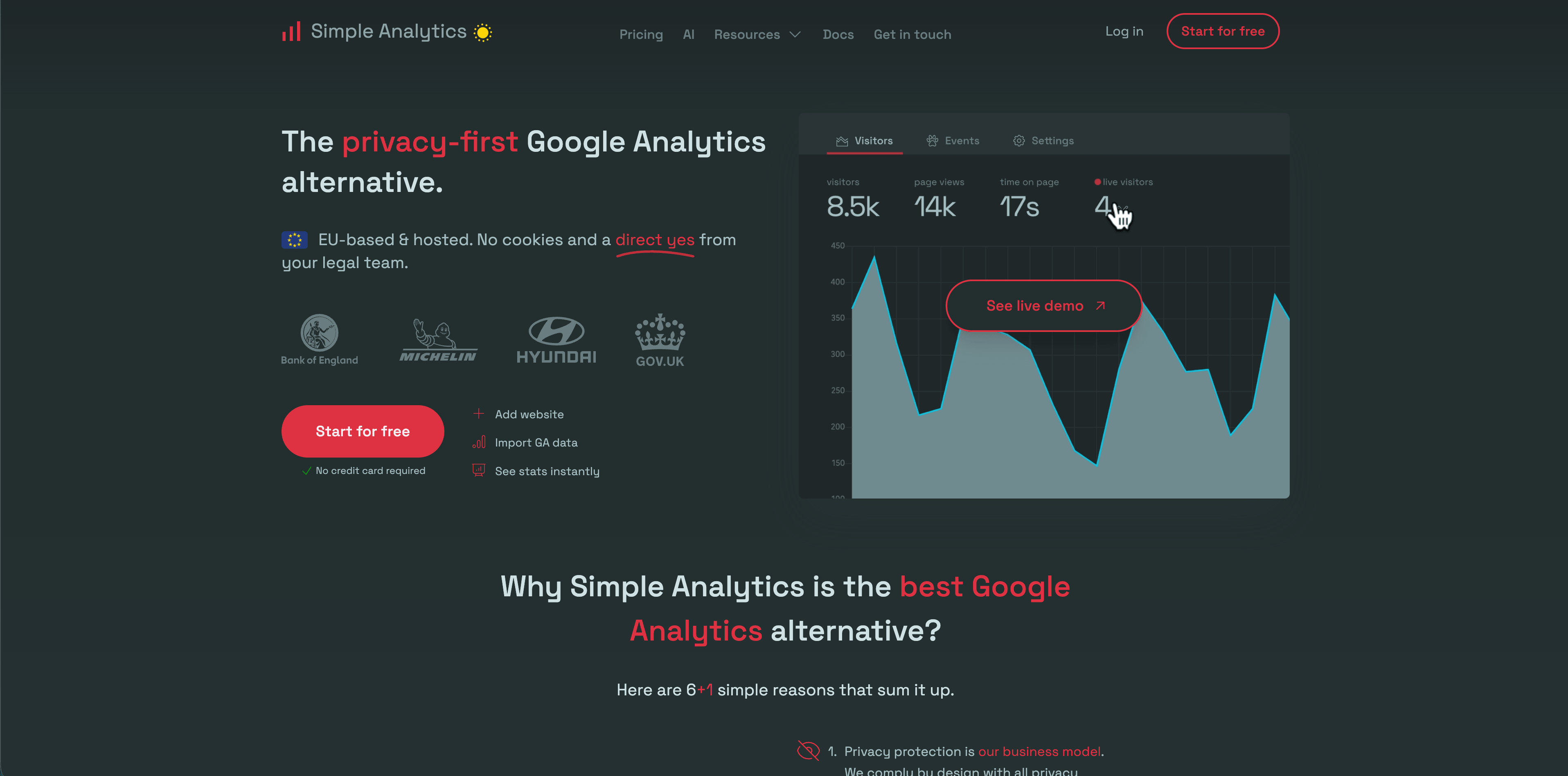
Simple Analytics is one of the strongest "collect less" options. Its documentation says it does not collect personal data, drops IP addresses, stores no cookies, and does not collect or generate device identifiers. It focuses on aggregate metrics such as referrers, UTM parameters, anonymized user-agent values, events, goals, custom views, exports, email reports, and integrations.
Best for:
- Teams whose priority is ethical, minimal analytics.
- Public websites, nonprofits, content sites, and privacy-sensitive brands.
- Buyers who want a simpler dashboard than GA4 or a product analytics suite.
Watch for:
- Minimal collection is a feature, but it also limits what you can analyze. Teams that need long multi-step attribution, session replay, or product cohorts may want a deeper service.
Source check: Simple Analytics' privacy documentation is explicit about no personal-data collection, no cookies, no device identifiers, and aggregate reporting.
5. Matomo
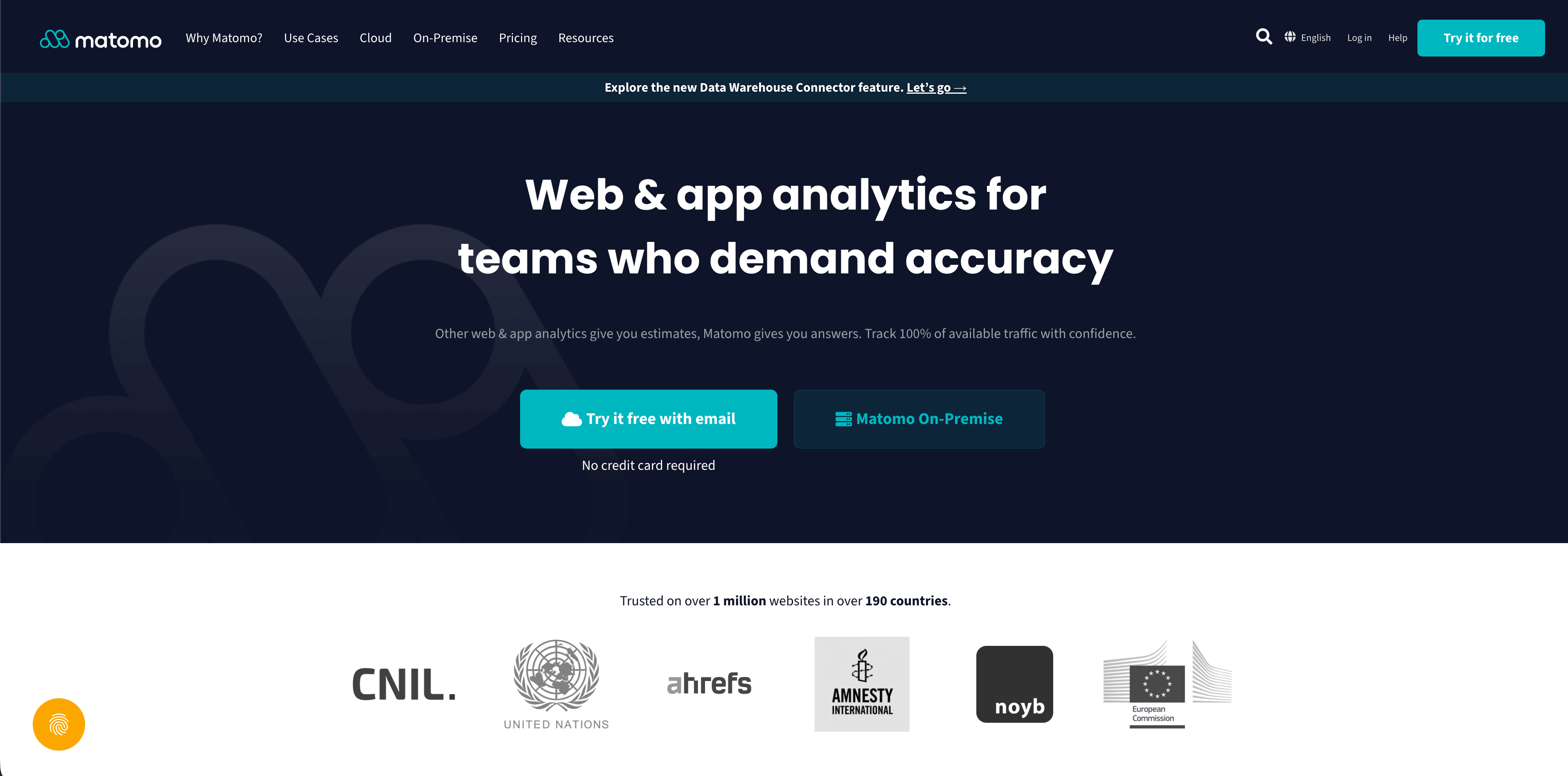
Matomo is the broadest analytics suite in this comparison. Its official pricing page lists cloud and on-premise options. Cloud starts at 29 EUR per month for 50,000 hits, while on-premise is free to download but requires technical operation. Across options, Matomo emphasizes data ownership, privacy compliance, APIs, standard reports, goals, custom dimensions, tag management, ecommerce tracking, segmentation, site search, real-time analytics, and many optional premium features.
Best for:
- Organizations that want cloud or self-hosted control.
- Teams that need more classic analytics breadth than the newer minimalist tools provide.
- Regulated organizations that want deeper configuration and ownership.
Watch for:
- Matomo can be powerful, but configuration matters. Cookies, consent, plugins, hosting, retention, and user-level features should be reviewed carefully with legal and technical teams.
Source check: Matomo's pricing page and GDPR analytics page list data anonymization, GDPR Manager, opt-out, IP anonymization, deletion capabilities, EU storage for Cloud, chosen storage for On-Premise, and CNIL consent-exemption configuration guidance.
Flowsery
Start Free Trial
Real-time dashboard
Goal tracking
Cookie-free tracking
6. Umami
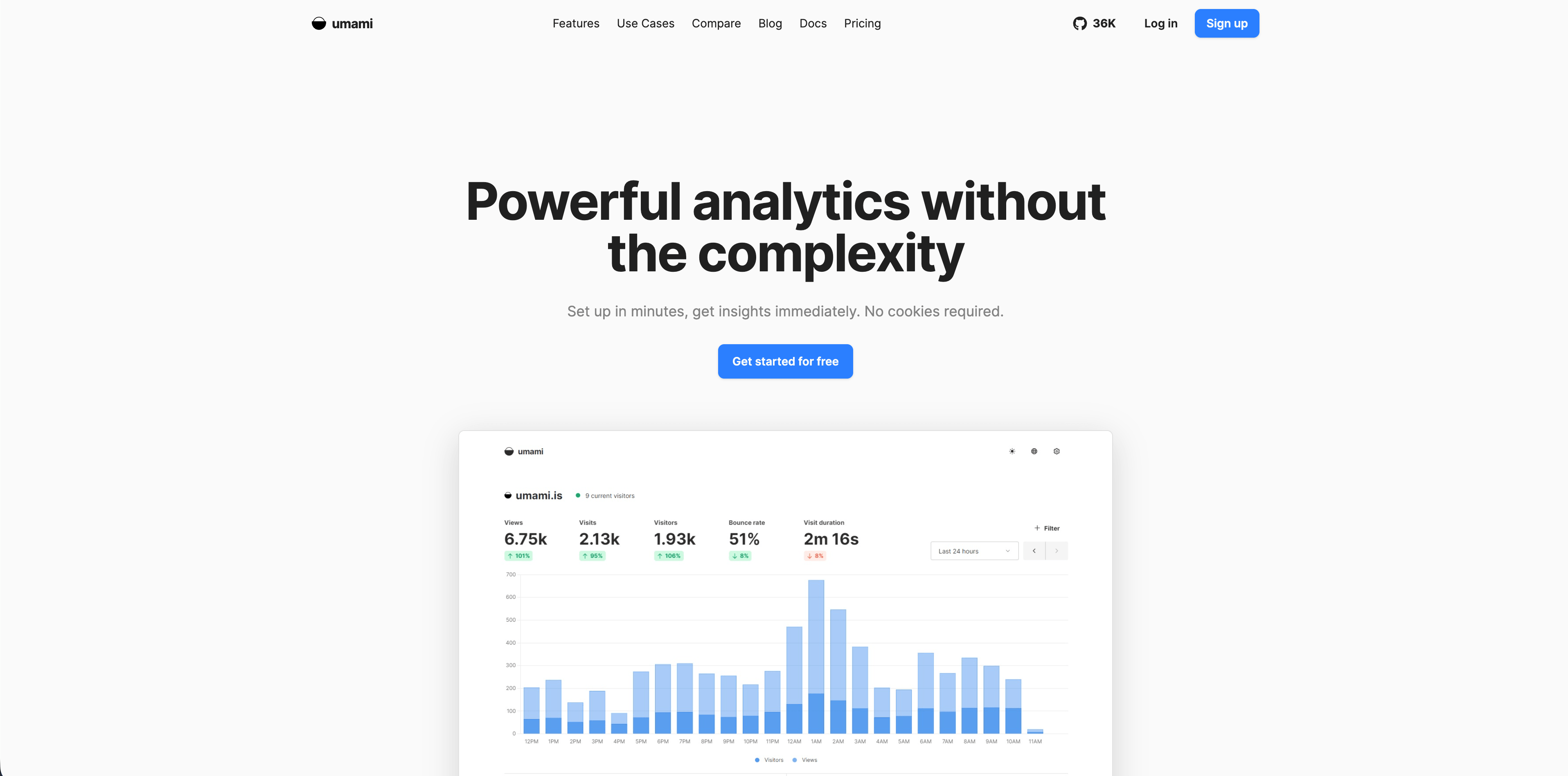
Umami is a strong fit for technical teams that want open-source analytics with the option to self-host. The current Umami v3 documentation describes it as open-source web analytics with no cookies, no cross-site tracking, and no personal data collection. Its docs list core analytics, custom events, funnels, journeys, retention, goals, UTM tracking, revenue, attribution, boards, teams, sessions, API access, and managed cloud.
Best for:
- Developers who want self-hosted analytics or open-source code.
- Teams that want privacy-first traffic reporting with room for custom events.
- Projects where infrastructure control matters more than managed-service convenience.
Watch for:
- Self-hosting is not free in operational time. Backups, upgrades, security, uptime, and data retention become your responsibility.
Source check: Umami's current documentation says the tracking model avoids cookies, fingerprinting, and personal data, and that self-hosted data stays on your infrastructure.
7. Pirsch
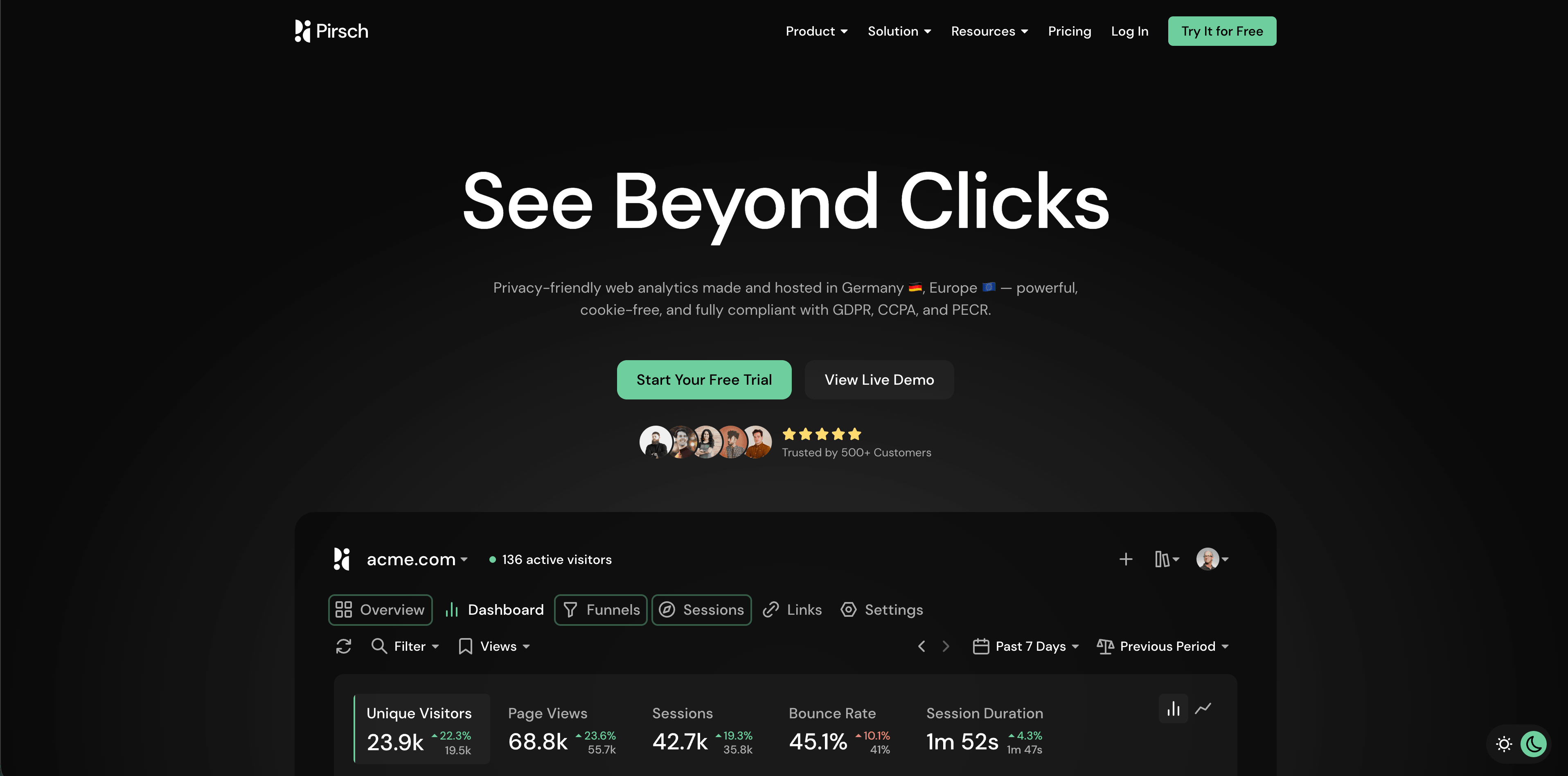
Pirsch is a privacy-friendly web analytics service built and hosted in Germany. Its official pricing page currently starts at $6/month for 10,000 monthly page views on Standard, with 50 websites, unlimited members, unlimited data retention, events, conversion goals, session analysis, API and SDKs, GDPR compliance, and Google Analytics import. The Plus tier adds unlimited websites, funnels, segmentation, teams, A/B testing, custom domains, themes, and white labeling.
Best for:
- Agencies managing many sites.
- Teams that want cookieless tracking, API options, and a privacy-first European provider.
- Buyers that need white-label or custom-domain analytics.
Watch for:
- Pirsch counts page views, events, and some session-extension events toward monthly usage. Model your traffic and event volume before choosing a tier.
Source check: Pirsch's pricing page and privacy-friendly analytics page say it does not store IP addresses, names, emails, cross-site profiles, or advertising data, and that it uses one-way hashing with a site-specific salt and 24-hour session expiry.
8. DataFast
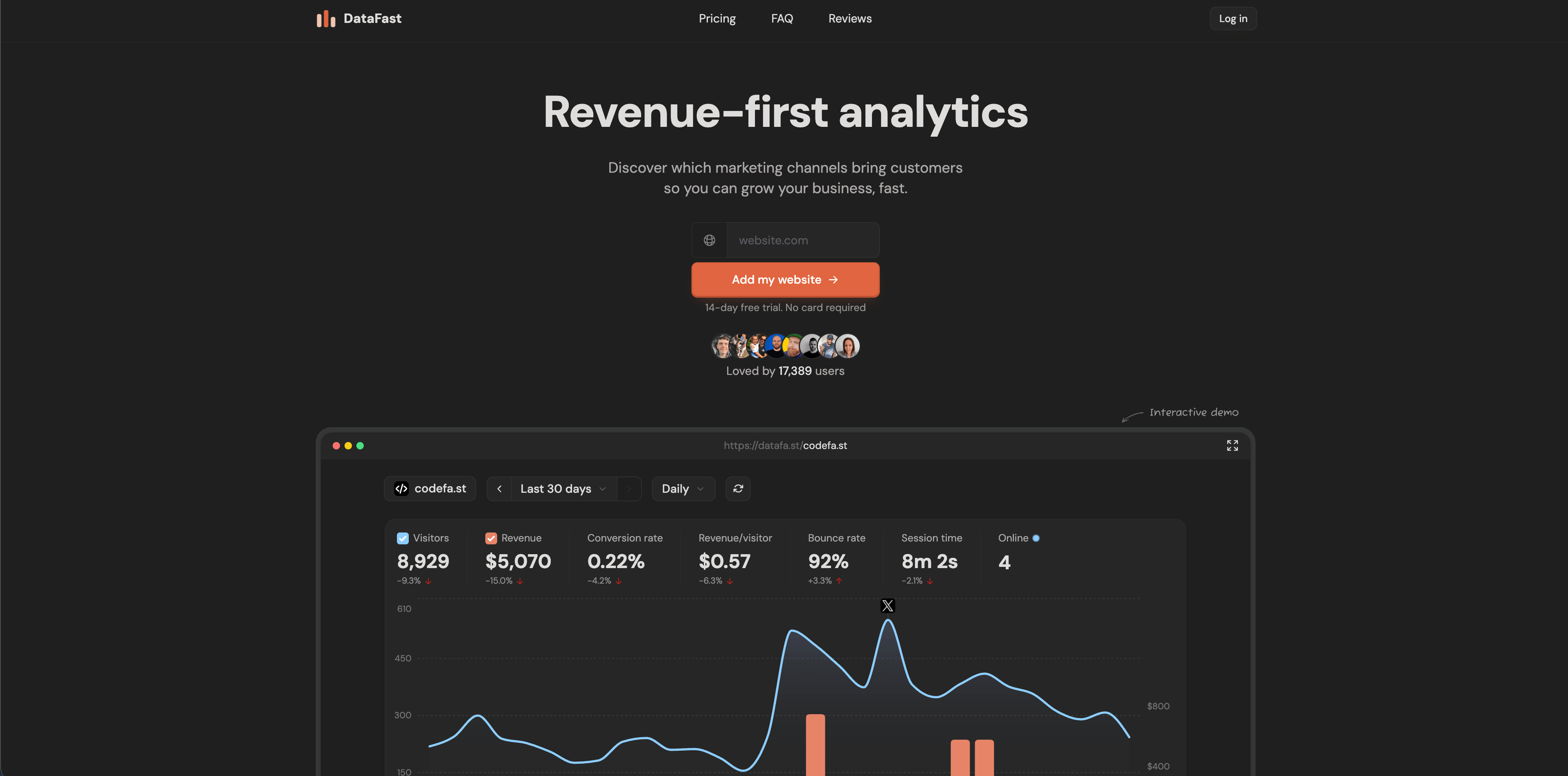
DataFast is built around a founder-friendly premise: analytics should show which channels bring paying customers, not only pageviews. Its homepage currently emphasizes revenue attribution, goals, funnels, journeys, live visitor intelligence, payment integrations, Google Search Console keywords, a CLI for AI agents, and plans starting at $9/month for 10,000 events.
Best for:
- Indie founders and small SaaS teams focused on revenue attribution.
- Teams that want Stripe, LemonSqueezy, Polar, Shopify, or payment API data connected to traffic sources.
- Operators who like CLI and AI-agent workflows.
Watch for:
- DataFast's FAQ says the default tracking script uses cookies for more accurate long-term attribution and that a cookieless script is available with tradeoffs. That is a practical product choice, but it should be reviewed against your consent setup and jurisdiction.
Source check: DataFast's official homepage and FAQ currently document the revenue-first positioning, supported payment providers, cross-domain/subdomain tracking, Search Console connection, CLI, and cookie/cookieless tradeoff.
Flowsery
Start Free Trial
Real-time dashboard
Goal tracking
Cookie-free tracking
9. Seline
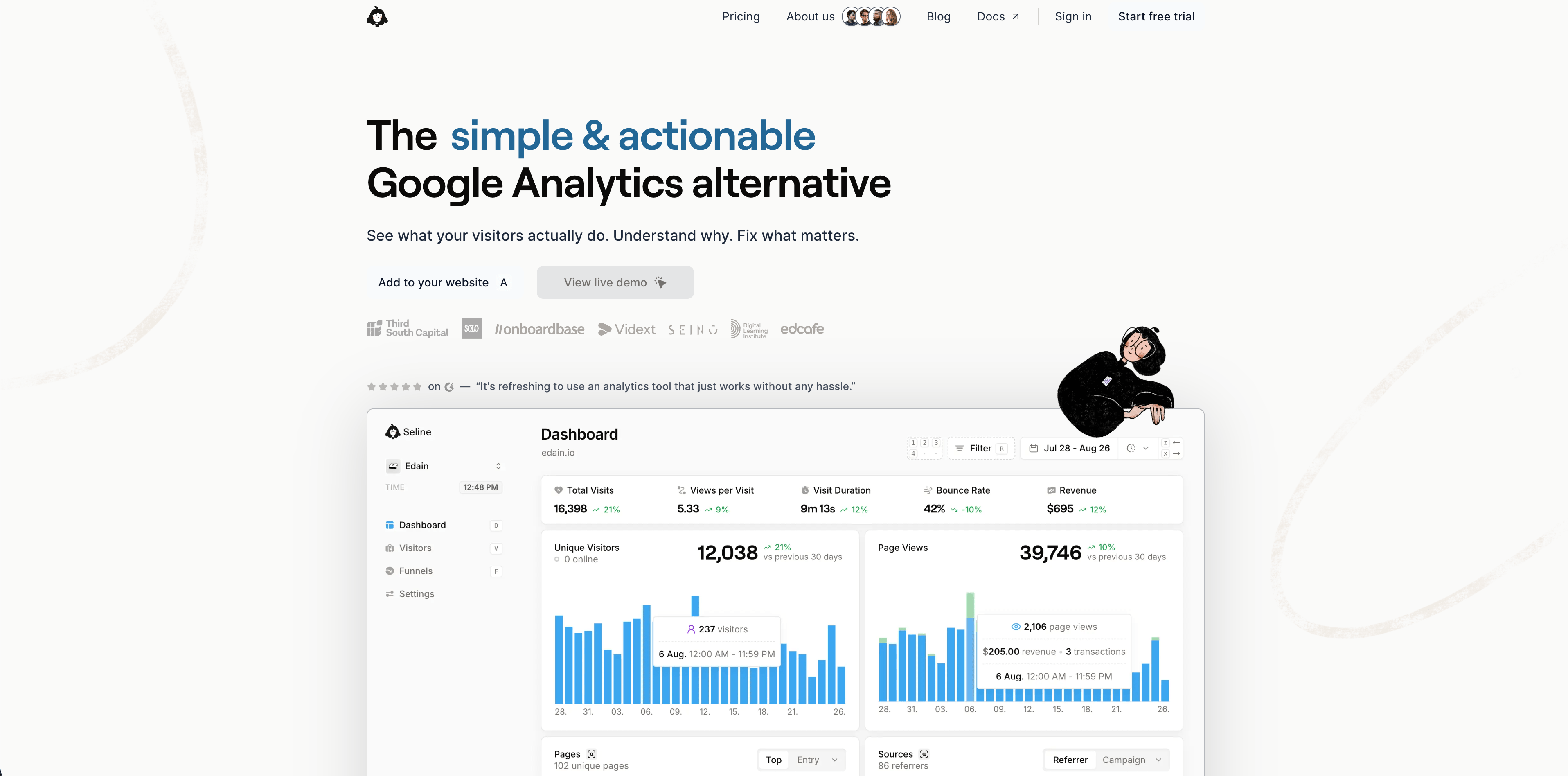
Seline sits between simple website analytics and lightweight product analytics. Its official site presents a small script, website dashboard, journeys, profiles, funnels, AI chat, revenue tracking, filters, bot detection, Stripe and Shopify-related integrations, EU hosting, and privacy-friendly analytics. Its pricing page currently shows one Pro plan at $24/month for 100,000 events, unlimited websites, forever data retention, profiles and journeys, public API, revenue analytics, priority support, ad-blocker bypass, and advanced bot detection.
Best for:
- SaaS and ecommerce teams that want simple website analytics plus journeys, funnels, revenue, and user-centric product signals.
- Teams that want an EU-based vendor and a more modern interface than traditional analytics tools.
- Buyers who like a single-plan pricing model.
Watch for:
- Seline is newer than several incumbents, and its FAQ says it has no free plan. That may be fine for committed teams, but it changes the trial/evaluation dynamic.
Source check: Seline's homepage and pricing page say it is legally based and hosted in the EU, does not use third-party cookies, does not sell data, and includes funnels, journeys, revenue attribution, custom events, AI chat, and bot detection.
10. PostHog
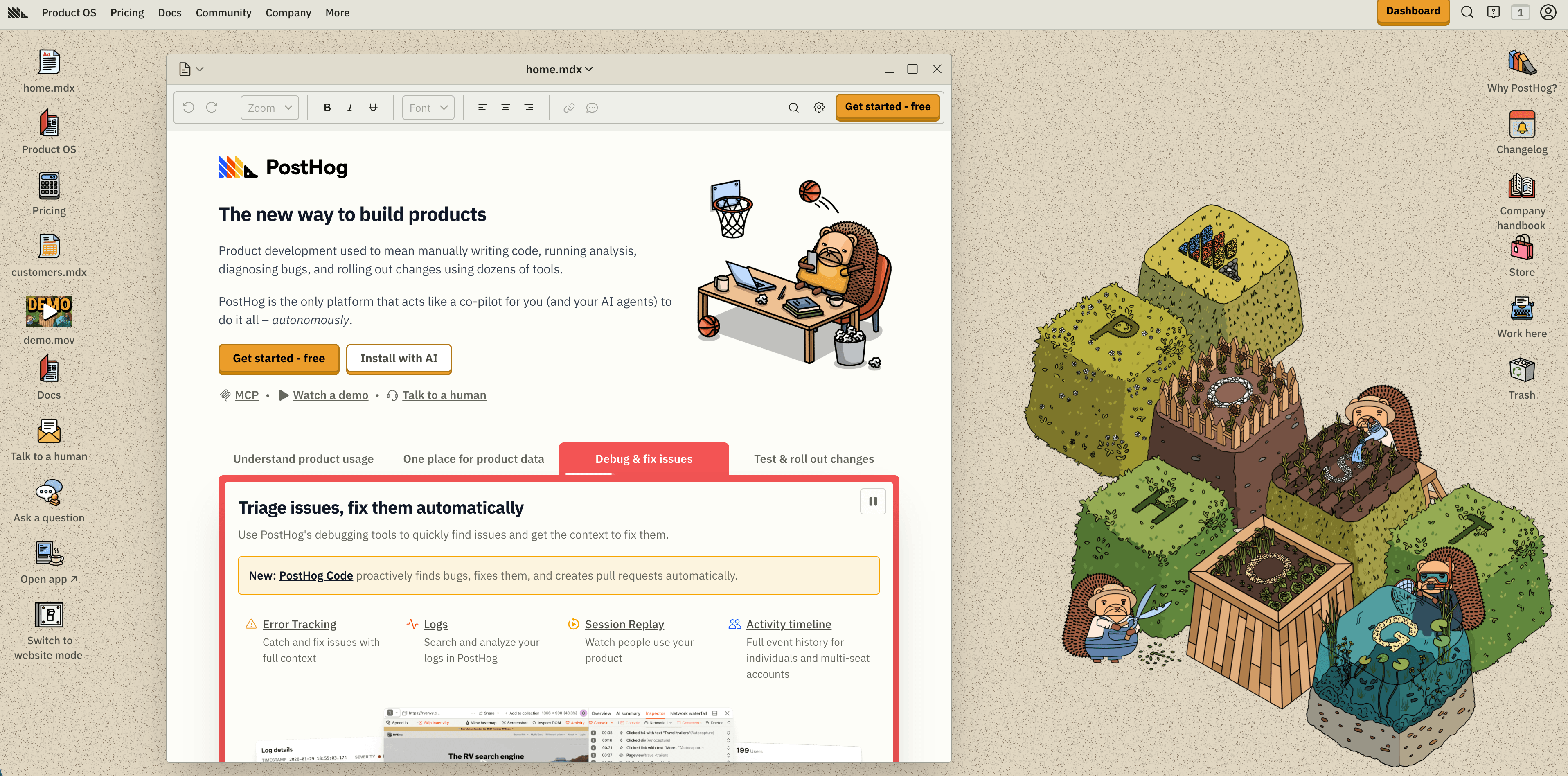
PostHog is more than a website analytics service. It is a developer-oriented product stack for web analytics, product analytics, session replay, feature flags, experiments, surveys, heatmaps, data warehouse workflows, error tracking, LLM analytics, logs, and AI assistance. Its current pricing page lists generous free monthly tiers and usage-based pricing after those limits, including 1 million analytics events and 5,000 session recordings per month on the free tier.
Best for:
- Product and engineering teams that want analytics, replays, flags, experiments, and warehouse-style data in one place.
- SaaS apps where product behavior matters more than simple traffic reporting.
- Teams comfortable with event design, implementation, and governance.
Watch for:
- PostHog can be too broad for a marketing site that only needs sources, pages, goals, and revenue. Its power comes with setup decisions.
Source check: PostHog's official pricing page documents the free monthly tiers, usage rates, product categories, cloud regions, data retention differences, and billing limits.
11. Mixpanel
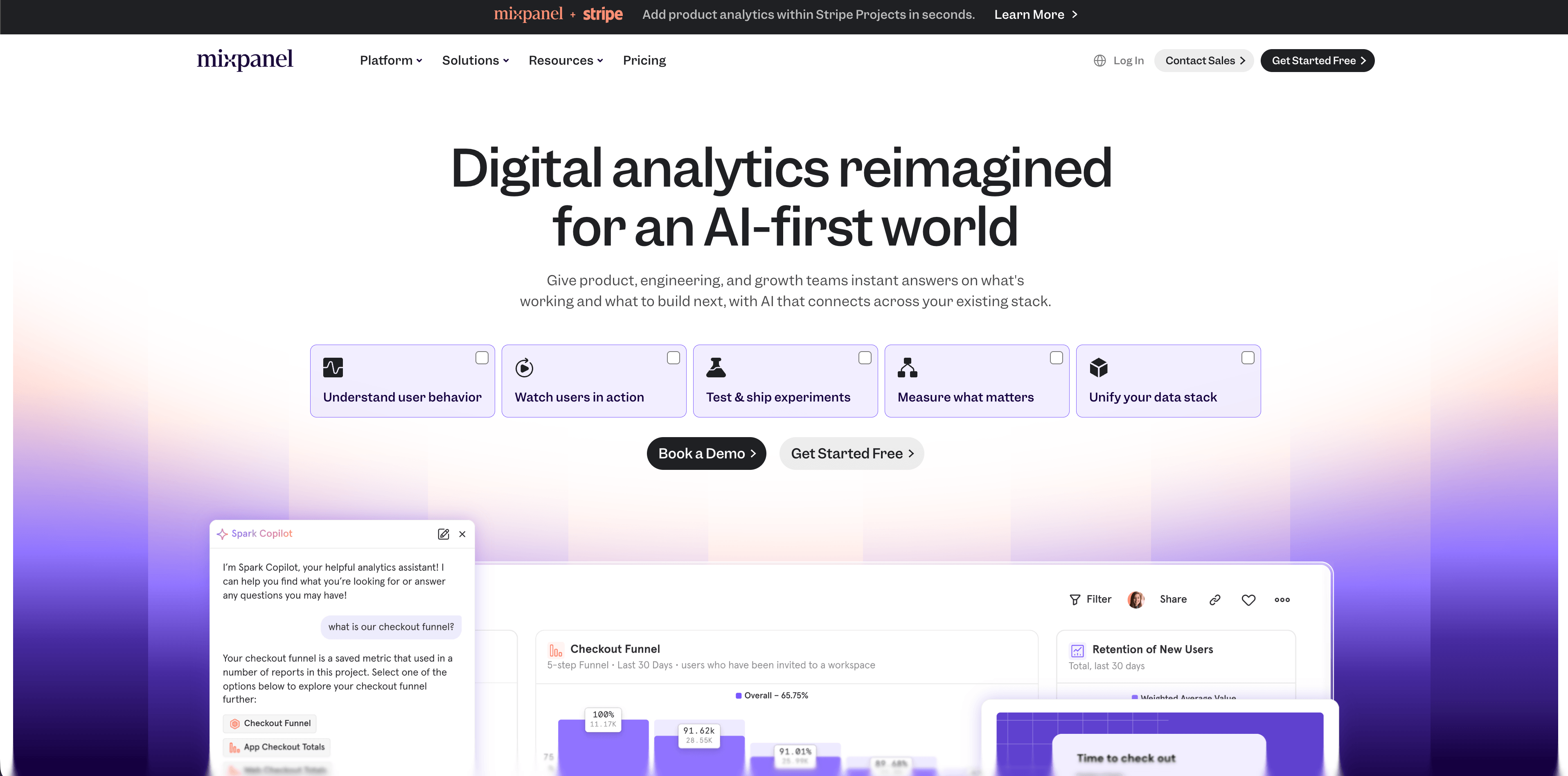
Mixpanel is a mature product analytics platform. Its official pricing page currently lists a Free plan capped at 1 million monthly events with up to 5 saved reports and 10,000 monthly session replays. Growth starts at $0, includes 1 million monthly events free, then charges $0.28 per 1,000 events after that, with unlimited reports, 20,000 monthly session replays free, cohorts, and more. Enterprise adds advanced analytics, governance, security, and support.
Best for:
- Product teams analyzing funnels, retention, cohorts, flows, experiments, and feature usage.
- Organizations that need governance, data dictionary work, API access, warehouse connectors, and advanced permissions.
- Teams with enough event volume planning discipline to manage usage-based costs.
Watch for:
- Mixpanel is not the simplest answer for website traffic analysis. It shines when your core questions are product-behavior questions.
Source check: Mixpanel's current pricing page documents event limits, saved reports, session replays, cohorts, data management, privacy/security controls, and support tiers.
Flowsery
Start Free Trial
Real-time dashboard
Goal tracking
Cookie-free tracking
12. Heap
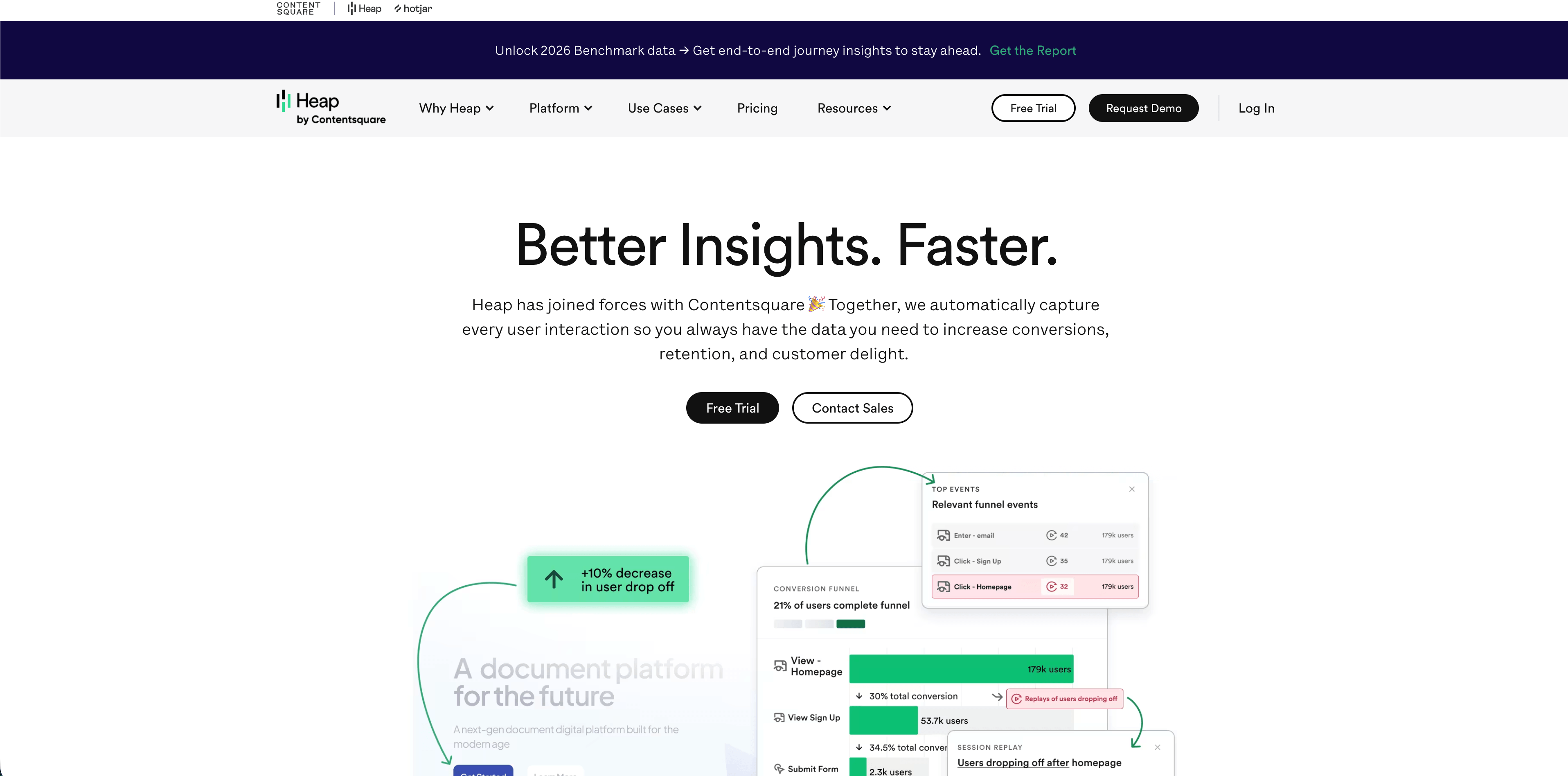
Heap is a product analytics and digital experience analytics platform known for autocapture. Its official pricing page currently lists a Free plan up to 10,000 monthly sessions, core analytics charts, enrichment sources, integrations, 6 months of data history, and SSO. Growth adds unlimited users and reports, chart customization, CSV exports, 12 months of history, and support. Pro and Premier add account analytics, engagement matrix, alerts, data warehouse integration, targeting, permissions, and optional session replay or heatmap add-ons.
Best for:
- Product teams that want autocapture and retroactive analysis.
- Organizations investigating user journeys, funnels, product adoption, and friction.
- Teams with enough data governance maturity to keep autocaptured data useful.
Watch for:
- Autocapture is powerful, but it still needs naming, governance, privacy review, and cleanup. More captured data does not automatically mean better decisions.
Source check: Heap's current pricing page documents the free session limit, data-history limits, autocapture, funnels, journeys, dashboards, governance, compliance controls, and add-on model.
How to choose the right service
Start with the question you need the tool to answer.
If the question is "Where did traffic come from, which pages worked, and which channels converted?", start with Flowsery, Plausible, Fathom, Simple Analytics, Pirsch, Seline, Umami, DataFast, or Matomo.
If the question is "Which product behaviors predict activation, retention, or expansion?", compare PostHog, Mixpanel, Heap, and similar product analytics platforms.
If the question is "Can we host, govern, customize, and audit the analytics stack ourselves?", look carefully at Matomo, Umami, Plausible self-hosting, Pirsch enterprise, or a warehouse-based approach.
Evaluation checklist
Use this checklist before buying any website analysis service:
- Does the service use cookies by default?
- Does it store IP addresses or personal identifiers?
- Does it create cross-site or long-term profiles?
- Can it run without a cookie banner in your jurisdiction and setup?
- Are data hosting regions and subprocessors acceptable?
- Does the dashboard answer the questions non-technical stakeholders actually ask?
- Can you track goals, funnels, campaigns, and revenue without custom reporting work every week?
- Does pricing scale by pageviews, sessions, events, recordings, seats, or websites?
- Can you export data?
- Can you delete data?
- Is there an API?
- Are bot filtering, ad-blocker behavior, and consent behavior clear?
- Does the vendor provide a DPA and security documentation?
A practical test plan
Run two finalists side by side for 14 to 30 days. Install them on the same pages, define the same goals, use the same UTM campaigns, and compare:
- Total visits and pageviews.
- Top referrers and channels.
- Landing pages.
- Goal and funnel counts.
- Revenue attribution.
- Bot or spam filtering.
- Dashboard speed.
- Export quality.
- Team comprehension.
- Cookie, local storage, and network behavior in the browser.
The right service is the one that gives your team useful answers with the least extra process. A heavier product can be worth it when the decision requires depth. For most websites, the better starting point is a clear privacy-first dashboard that shows traffic, pages, funnels, and revenue without turning measurement into a second job.
Was this article helpful?
Let us know what you think!
Before you go...
Flowsery
Revenue-first analytics for your website
Track every visitor, source, and conversion in real time. Simple, powerful, and fully GDPR compliant.
Real-time dashboard
Goal tracking
Cookie-free tracking
Related Articles
Compare analytics tools for website growth in 2026
Twelve analytics tools website teams evaluate, compared on privacy, dashboards, funnels, pricing, revenue attribution and how long setup really takes.
How to compare the best tools for website analysis
The best tools website analysis teams trust, compared on privacy, dashboards, funnels, revenue attribution, pricing and how long setup really takes.
Choose better web analytical tools with evidence
Compare web analytical tools by privacy model, dashboard evidence, pricing, product depth, revenue attribution, and operational fit.