Choosing web-based analytics tools in 2026

TL;DR, Quick Answer
14 min readFlowsery is the first tool to test when you want browser-based website analytics with privacy-first tracking, funnels, live sources, goals, and revenue attribution in one dashboard. Plausible, Fathom, Simple Analytics, Pirsch, Matomo, Umami, Seline, DataFast, PostHog, Mixpanel, and Heap each fit different teams depending on whether the job is simple traffic reporting, self-hosting, revenue attribution, product analytics, or autocaptured behavior analysis.
When teams compare web-based analytics tools in 2026, the hard part is not finding a dashboard; it is deciding which measurement model fits the decision they actually need to make.
This guide was fact-checked on May 12, 2026 against official product pages, pricing pages, documentation, public demos, and privacy materials. Flowsery is listed first because this is Flowsery's publication and because our recommendation is to start with a website-first analytics layer before adopting heavier product telemetry. Every platform section includes a dashboard image from the existing AdaptlyPost CDN asset set.
Executive shortlist
| Rank | Tool | Best fit | Current public signal checked | Main caution |
|---|---|---|---|---|
| 1 | Flowsery | Privacy-first website analytics with funnels and revenue | 14-day trial, then one usage-based plan at $500/mo, API docs, cookieless positioning | Managed cloud, not a self-hosted BI suite |
| 2 | Plausible | Simple EU-hosted traffic analytics | One-page dashboard, no cookies, open-source option, funnels on higher tier | Not deep product analytics |
| 3 | Fathom | Low-maintenance hosted analytics | Starts at $15/month, 30-day trial, up to 50 sites, forever retention | No free plan |
| 4 | Simple Analytics | Aggregate analytics with strong data minimization | Free plan, paid EUR tiers, no cookies, no fingerprinting | Intentionally minimal |
| 5 | Pirsch | Agencies and technical teams | From $6/month, 50 sites on Standard, API, SDKs, white labeling on Plus | Hash-based visitor recognition needs privacy review |
| 6 | Matomo | Self-hosting or traditional feature depth | Cloud and free on-premise options, data ownership, broad reports | More setup and governance work |
| 7 | Umami | Developer-friendly open source analytics | Self-hosted or managed cloud, no cookies, simple docs | Less commercial support depth than larger suites |
| 8 | Seline | Modern website analytics with journeys and revenue | 7-day trial, no free plan, profiles, journeys, revenue, EU hosting | Newer product and paid-only model |
| 9 | DataFast | Founder-led revenue attribution | Revenue-first positioning, payment integrations, 14-day trial | Default revenue tracking choices need review |
| 10 | PostHog | Engineering-led product analytics plus web analytics | 1M free monthly analytics events, replay, flags, experiments | Broad suite can be more than a website needs |
| 11 | Mixpanel | Product funnels, cohorts, retention, and flows | Event/user/property model, 1M free monthly events on current pricing | Needs event taxonomy and governance |
| 12 | Heap | Autocapture and retroactive behavior analysis | Free tier to 10k monthly sessions, autocapture, journeys, replay, heatmaps | Broad capture raises governance needs |
What "web-based" should mean now
A web-based analytics tool should be usable from the browser without desktop software, but that definition is too shallow for modern teams. The useful question is what the browser dashboard can do after the tracking script is installed.
For a marketing site, the dashboard should answer: which pages attract visitors, which sources send qualified traffic, which campaigns convert, which goals happened, and which channel produced revenue. For a SaaS product, the dashboard may need event funnels, activation reports, retention, cohorts, feature usage, replays, or autocaptured journeys. For a privacy-sensitive business, the dashboard should also show enough signal without collecting more visitor data than the decision requires.
That is why the tools below are not interchangeable. Flowsery, Plausible, Fathom, Simple Analytics, Pirsch, Matomo, and Umami are closer to website analytics. Seline and DataFast bridge website reporting with journeys and revenue. PostHog, Mixpanel, and Heap are stronger when the job shifts into product analytics and behavioral analysis.
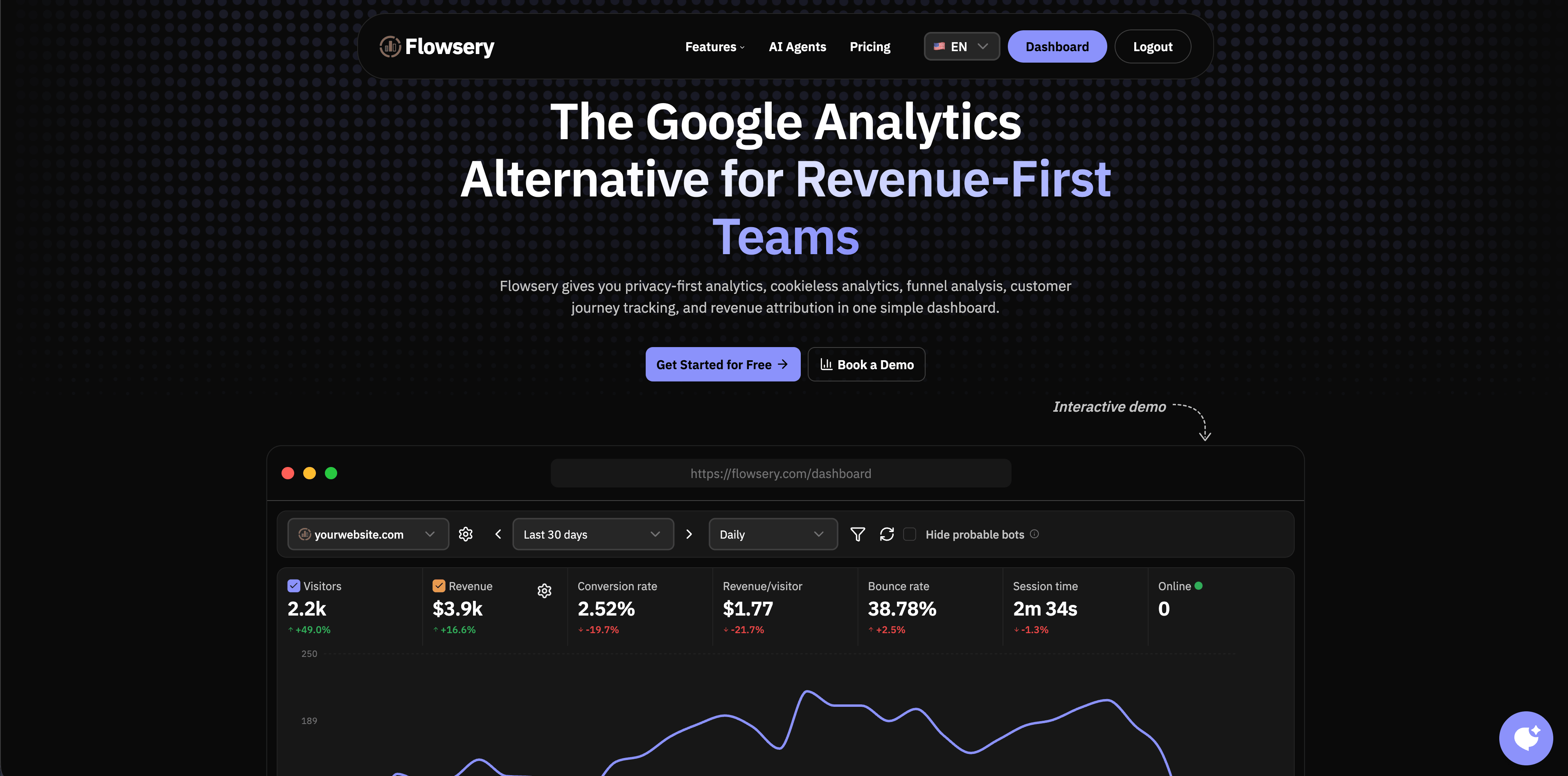
1. Flowsery
Flowsery is the first tool to test if you want practical website analytics in a browser dashboard without starting from a cookie-heavy measurement model. The current public docs describe privacy-first analytics, cookieless analytics, funnel analysis, customer journey tracking, revenue attribution, and a v1 API with endpoints for overview, realtime, pages, campaigns, goals, referrers, countries, devices, browsers, operating systems, hostnames, goal creation, and payment creation.
The pricing page is event-based. The Scale plans publicly list monthly event allowances from 500,000 to 100,000,000 events with revenue tracking, funnel analysis, API access, unlimited websites, and team limits that increase by plan. The product is most useful when the team wants to connect traffic, sources, campaign context, goals, funnels, and revenue without making a simple website dashboard feel like a data warehouse project.
Use Flowsery for SaaS landing pages, content-led products, agencies, indie businesses, and marketing sites where conversion quality matters more than raw visit totals. It is also the best first layer when you may later add a separate product analytics tool for logged-in product behavior. Keeping website acquisition data separate from identified product telemetry makes analytics easier to explain and govern.
The tradeoff is clear: Flowsery is managed cloud software. If self-hosting is a hard requirement, compare Matomo, Umami, Plausible's self-hosted option, or an enterprise Pirsch setup. If you need feature flags, experiments, and engineering instrumentation in the same suite, PostHog is the broader product.
2. Plausible
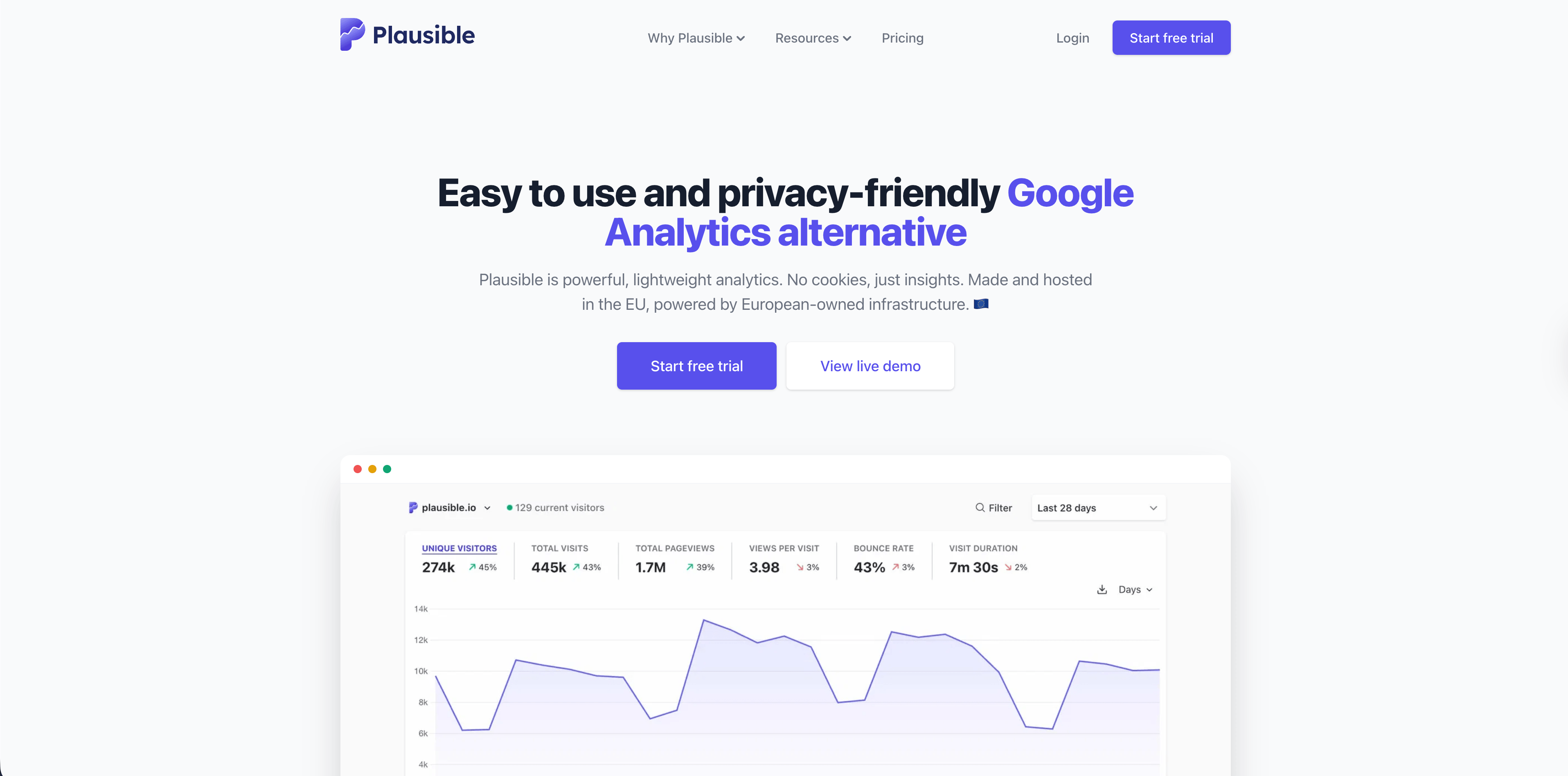
Plausible remains one of the clearest web-based analytics tools for simple website reporting. Its public homepage emphasizes a lightweight script, one-page dashboard, no cookies, privacy-friendly analytics, an open-source codebase, EU hosting, real-time updates, automatic scroll depth tracking, Search Console integration, UTM campaign reporting, codeless goals, revenue tracking, funnels, and bot filtering.
The current pricing section lists a 30-day free trial. At 10,000 monthly pageviews, Starter is shown at $9/month, Growth at $14/month, Business at $19/month, and Enterprise is custom. Business is where features such as longer retention, custom properties, higher Stats API access, Looker Studio connector, ecommerce revenue attribution, funnels, and consolidated view appear on the public pricing table.
Plausible is strongest for founders, publishers, agencies, and teams that want a dashboard stakeholders can understand quickly. It is less natural if the main job is product activation, retention, feature usage, experimentation, or deeply identified customer journeys. In that case, the shortlist should include PostHog, Mixpanel, Heap, or Seline depending on the privacy and product needs.
Flowsery
Start Free Trial
Real-time dashboard
Goal tracking
Cookie-free tracking
3. Fathom
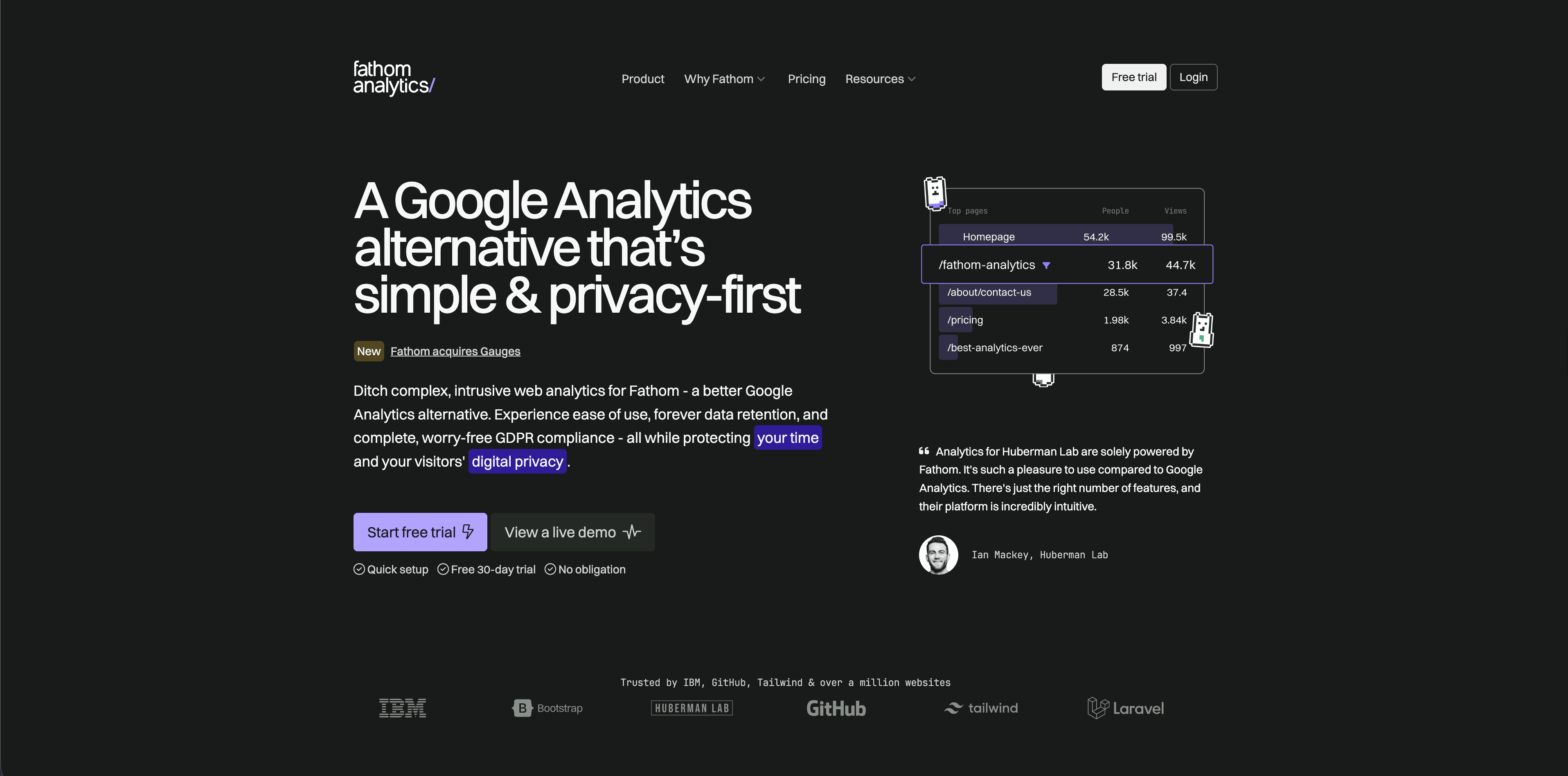
Fathom is a paid hosted analytics product built around simplicity and privacy. Its current pricing page says it starts at $15/month, offers a 30-day free trial, includes up to 50 sites, includes ecommerce or event tracking, supports CMS and framework integrations, provides API access, and includes forever data retention, 100% data ownership, no cookie banners required, email reports, data exports, infrastructure, and email support.
Fathom's main advantage is that it keeps analytics operationally quiet. For many teams, that is exactly the point: install the script, give people a dashboard, and avoid custom report sprawl. It is a good fit for agencies, editorial sites, company websites, small ecommerce sites, and businesses that prefer predictable paid software over self-hosting.
The limitation is depth. Fathom is not trying to be a full product analytics suite, session replay platform, or experimentation layer. Choose it when simple, hosted, privacy-focused reporting is the desired end state. Choose Flowsery when you want the same website-first direction but with funnels and revenue context as a more central part of the workflow.
4. Simple Analytics
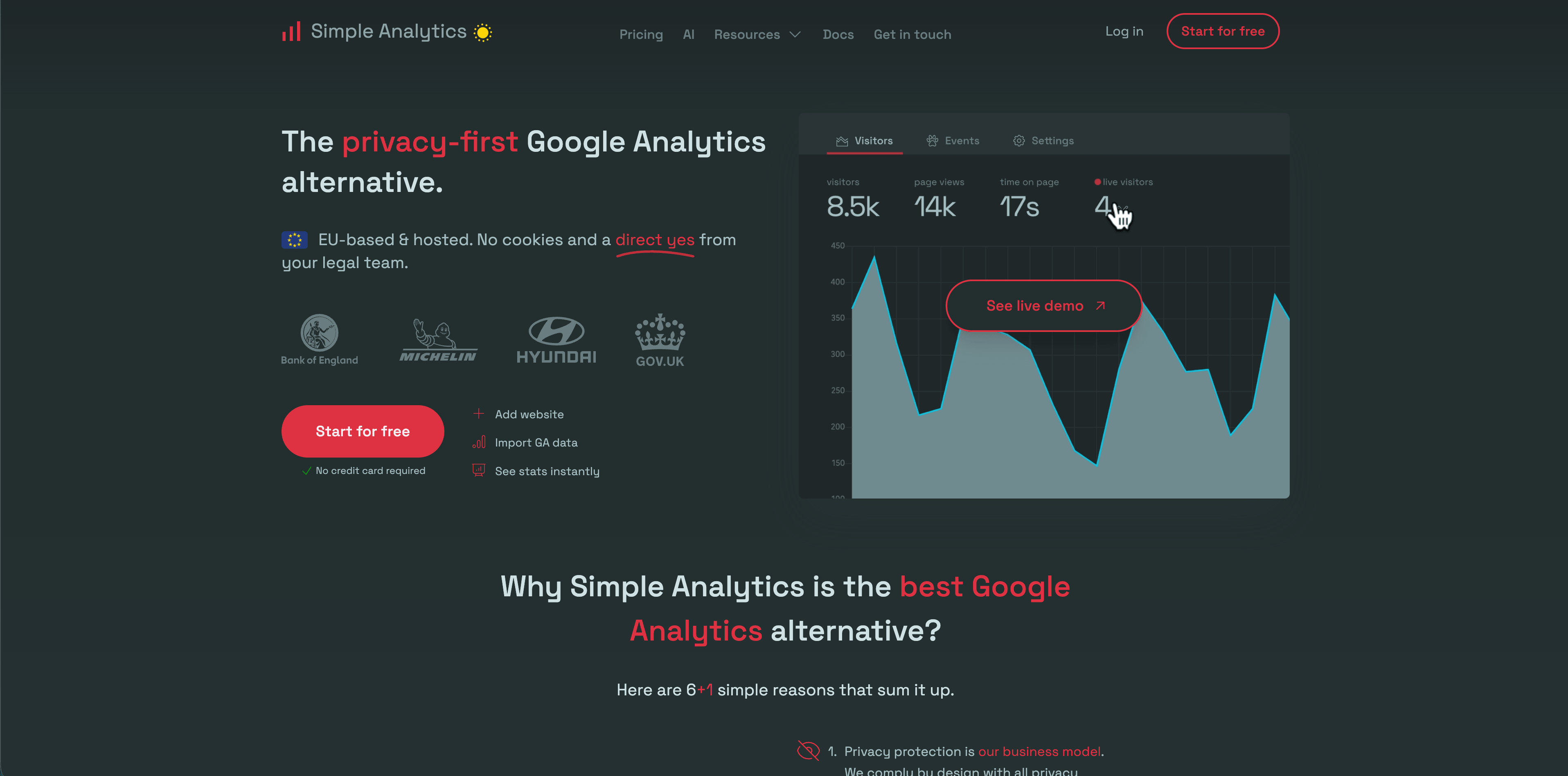
Simple Analytics is one of the strongest choices when the privacy story needs to be easy to explain. Its pricing page says the product collects non-personal data, does not share website data with third parties, keeps website data in the Netherlands and the EU, does not use cookies, and does not collect information that could fingerprint a user.
The current pricing page shows a Free plan for hobby projects, Simple at EUR 15/month, Team at EUR 40/month, and Enterprise custom pricing. Simple includes one user, 10 websites, three years of retention, events, goals, trendlines, and email support. Team adds collaboration, more websites, longer retention, custom views, role-based access, export API, ad-blocker bypass, and IP range blocking.
Simple Analytics is best for teams that want enough web analytics with minimal data collection. It fits blogs, public-interest sites, startups with a conservative privacy posture, and organizations where a complicated analytics implementation would create more internal friction than insight.
The same minimalism can become a constraint. If the team needs multistep funnels, revenue attribution, detailed journeys, or product behavior reports, test Flowsery, Seline, DataFast, PostHog, Mixpanel, or Heap before standardizing.
5. Pirsch
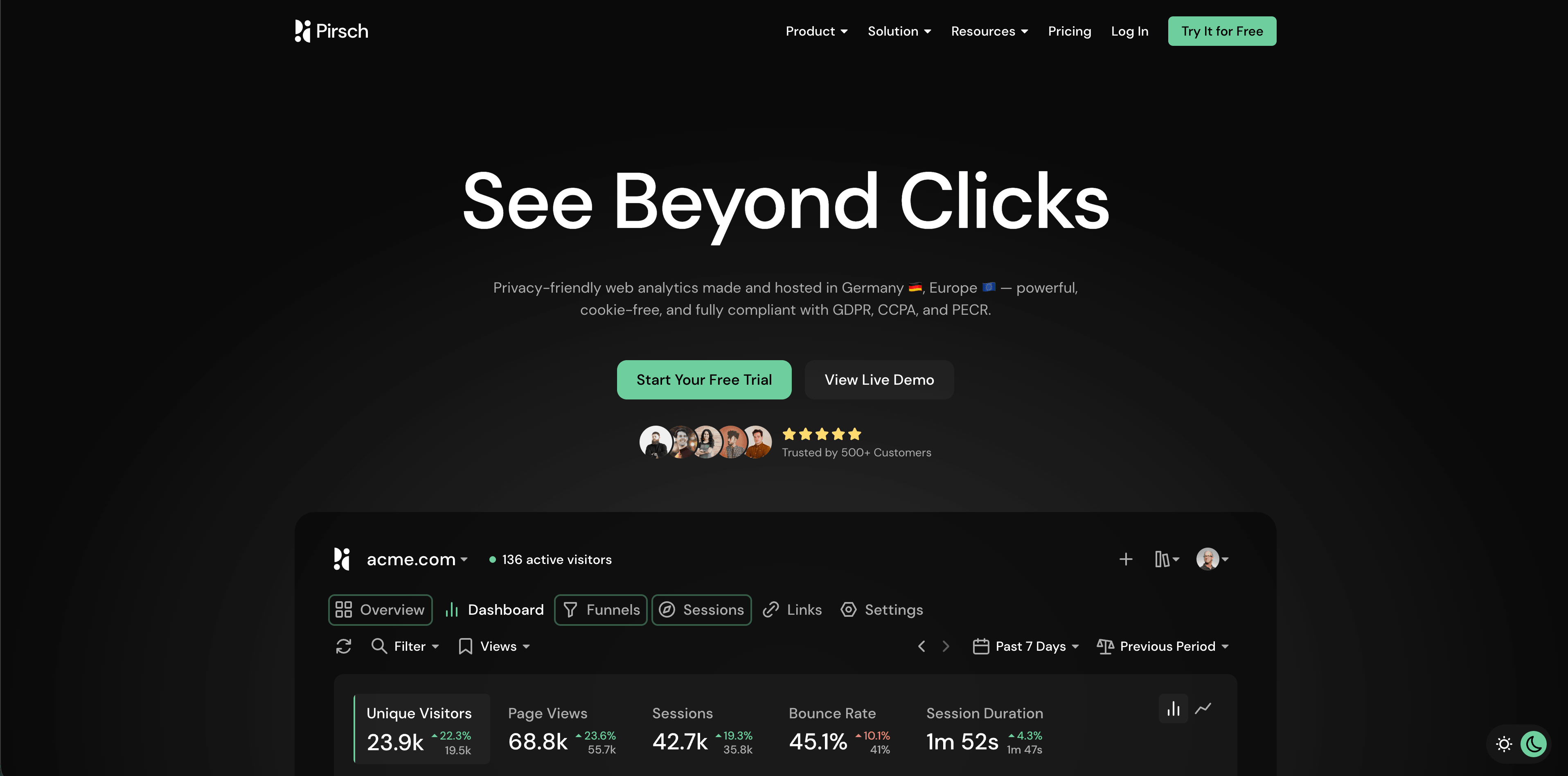
Pirsch is a privacy-friendly analytics platform made and hosted in Germany. Its current pricing page lists a 30-day free trial and Standard starting at $6/month for 10,000 monthly pageviews. Standard includes 50 websites, unlimited members, unlimited data retention, events, conversion goals, session analysis, a built-in URL shortener, REST API and SDKs, GDPR compliance, 100% data ownership, and imports. Plus adds unlimited websites, funnels, A/B testing, segmentation, teams, custom domains, custom themes, white labeling, and priority support.
Pirsch is especially interesting for agencies and technical teams because the public docs include website integration, server-side integration, SDKs, API access, conversion goals, custom events, UTM parameters, funnels, custom domains, theming, embedded dashboards, and export paths. It is a practical option when you need client-facing dashboards or want more technical control than a very minimal analytics product offers.
The review point is anonymization. Pirsch's FAQ says it recognizes users through HTTP data and generates a hash from the visitor's IP address, User-Agent, and other data points. That can still be privacy-friendly in context, but legal and security teams should review the implementation rather than treating "no cookies" as the full answer.
6. Matomo
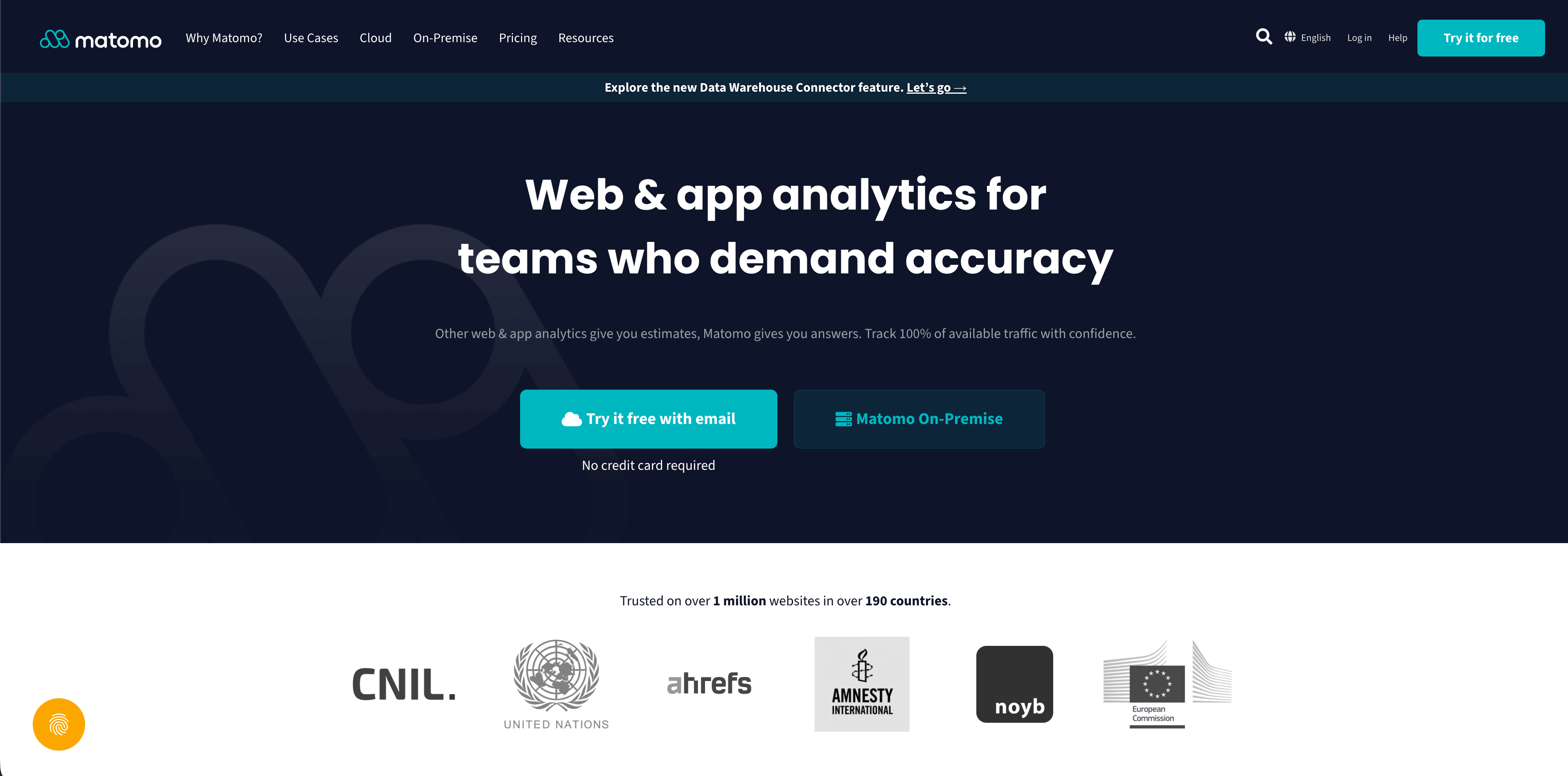
Matomo is the most traditional full-featured analytics product in this guide. Its current pricing page separates Matomo Cloud from Matomo On-Premise. Cloud is positioned as hosted SaaS with automatic updates and no server maintenance. On-Premise is positioned as a self-hosted, open-source option with control over data, customization, and security. The pricing page also says all hosting options provide 100% data ownership and privacy compliance.
Flowsery
Start Free Trial
Real-time dashboard
Goal tracking
Cookie-free tracking
At the 50,000 hits/month level, the public pricing page shows Cloud Business at 29 per month before tax, 30 websites, 30 team members, 100 segments, 150 goals, 30 custom dimensions, 24 months raw data retention, forever report retention, no data sampling, API access, GDPR Manager, funnels, users flow, heatmaps, session recordings, A/B testing, custom reports, forms, media analytics, attribution, cohorts, tag manager, and more. On-Premise is listed at 0 EUR and hosted on your servers, with unlimited hits subject to server requirements.
Matomo is the right shortlist candidate when you need self-hosting, broad reporting, ecommerce analytics, governance controls, or a familiar analytics model. It can be overkill for a team that only wants weekly answers about traffic sources and conversions. It also shifts operational work to you if self-hosted: updates, backups, server capacity, plugin choices, retention, consent settings, and internal governance.
7. Umami
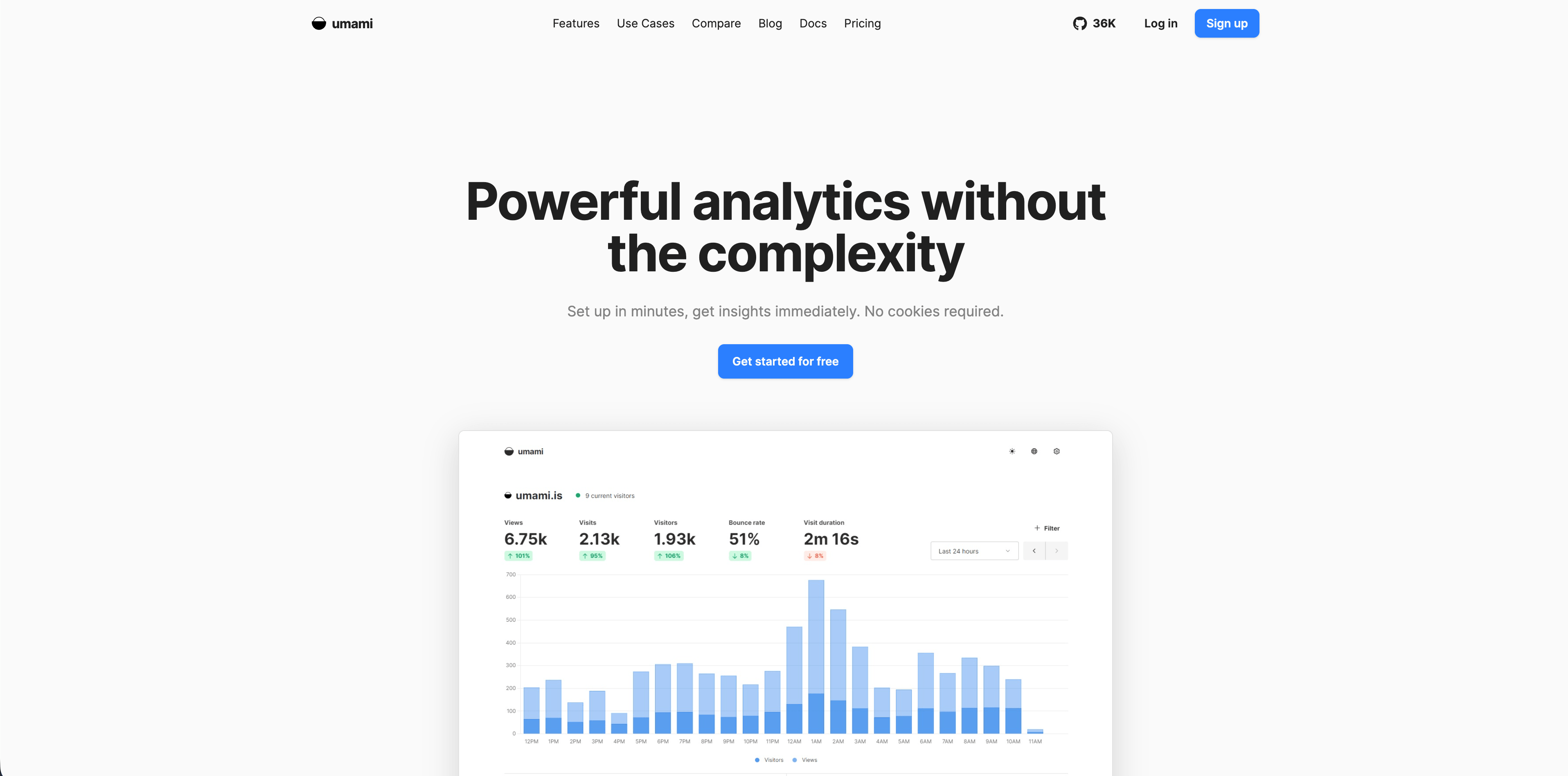
Umami is a lightweight open-source analytics platform with a managed cloud option. Its documentation describes the product as privacy-respecting and notes no cookies, no tracking across sites, no personal data collection, and GDPR compliance out of the box. The docs also point to a script under 2 KB, self-hosting, cloud, goals, funnels, journeys, retention, UTM reports, revenue, attribution, and dashboards or boards.
Umami is a good fit for technical teams that want a browser dashboard without a heavy vendor relationship. Developers can self-host it, keep the surface area smaller than Matomo, and still get the core reports needed for websites, docs, side projects, internal tools, and small products.
The tradeoff is support and feature depth. Self-hosting means you own uptime, database care, backups, security updates, and version upgrades. Managed cloud removes that work, but you should still check current cloud limits and pricing before buying because open-source availability does not make the hosted service automatically free for every use case.
8. Seline
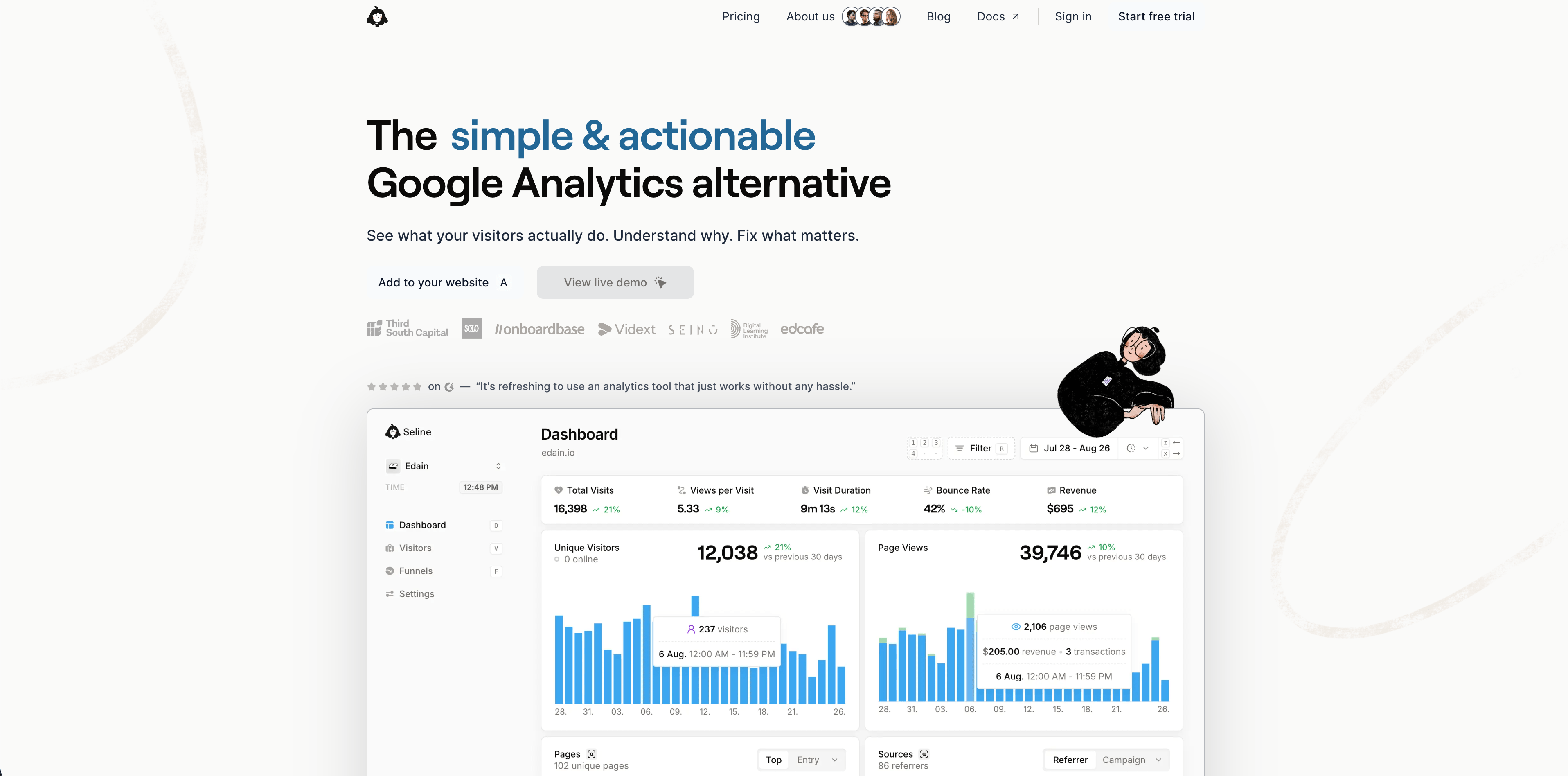
Seline sits between simple web analytics and lighter product analytics. Its public homepage describes a small roughly 2 KB snippet, dashboard, visitor journeys, profiles, funnels, filters, AI chat, revenue tracking and attribution, Stripe, Polar, Shopify, and other integrations. It also says the company is EU-based, stores data in Germany, does not use third-party cookies, and does not store personal data.
The current pricing page lists a 7-day free trial with no credit card and a single Pro plan. It includes 100,000 events/month at the default slider setting, forever retention, profiles and journeys, public API, unlimited websites, revenue analytics, priority human support, ad-blocker bypass, and advanced bot detection. The FAQ says Seline does not have a free plan and is legally based and hosted in the EU.
Seline is a strong candidate for SaaS and ecommerce teams that want a modern daily-use dashboard with more journey context than a simple traffic product. Compare it directly with Flowsery when revenue attribution and privacy-first website analytics are the center of the job. Compare it with PostHog and Mixpanel when user-centric product analytics becomes the center of the job.
9. DataFast
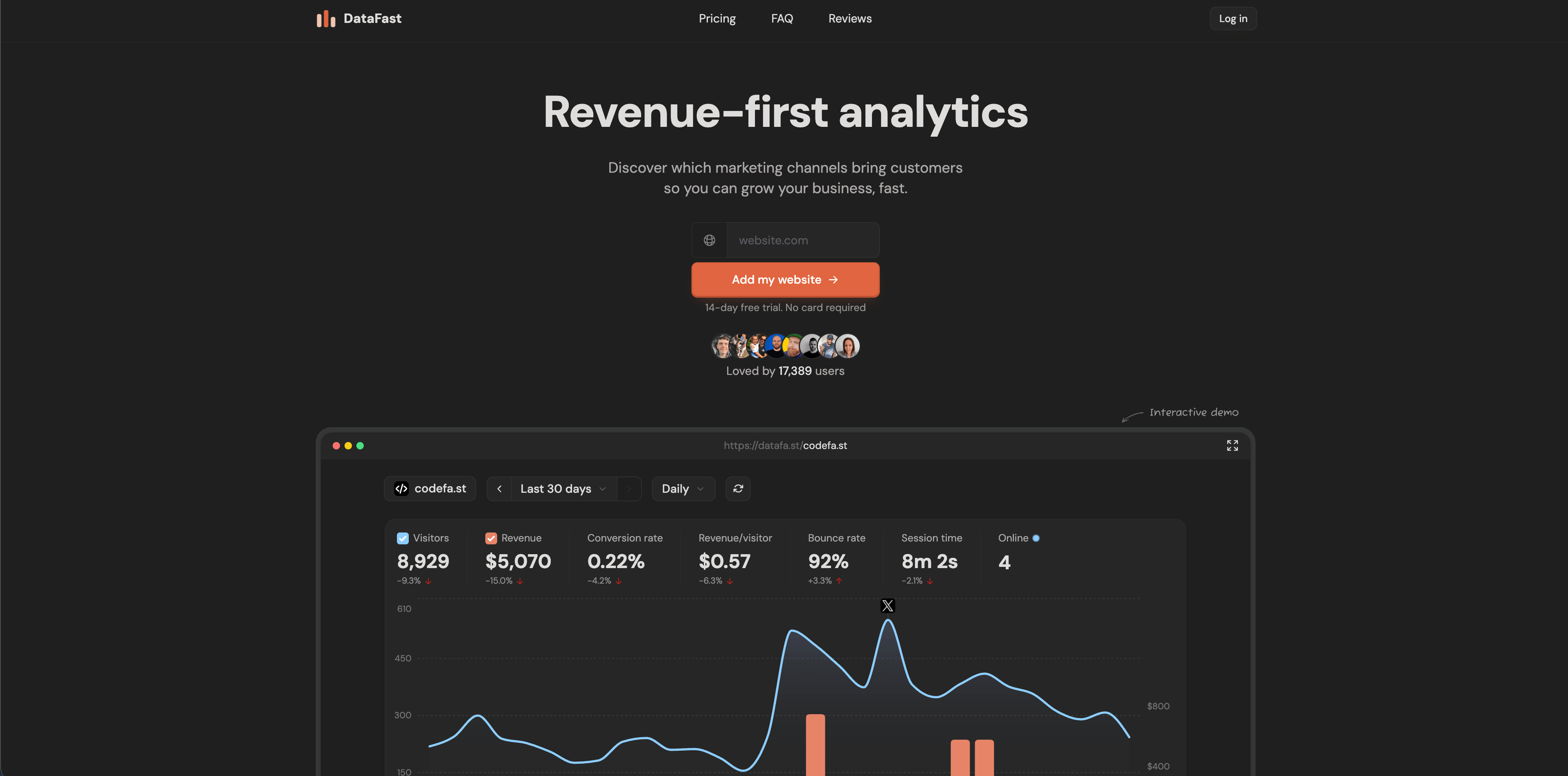
DataFast is a revenue-first analytics tool aimed at founders and online businesses. Its public homepage centers the question "which marketing channels bring customers" and highlights web analytics, revenue attribution, goals, funnels, journeys, live visitor intelligence, payment processor connections, API-style workflows, and a CLI. It also points to an interactive analytics dashboard demo and a 14-day free trial with no card required.
DataFast is strongest when the team mostly cares about paid customers, revenue per visitor, and which acquisition sources deserve more time or budget. That makes it attractive for indie products, small SaaS businesses, digital goods, and founder-led growth teams that do not need a large analytics department.
The caution is that revenue attribution often pushes tools toward longer-lived identifiers or payment-linked events. DataFast can be a useful option, but review the current tracking setup, script choices, payment data flow, retention, and legal basis before installing it across every property. Choose Flowsery first if the requirement is privacy-first website analytics where funnels and revenue matter, but the starting model should stay lightweight.
10. PostHog
Flowsery
Start Free Trial
Real-time dashboard
Goal tracking
Cookie-free tracking
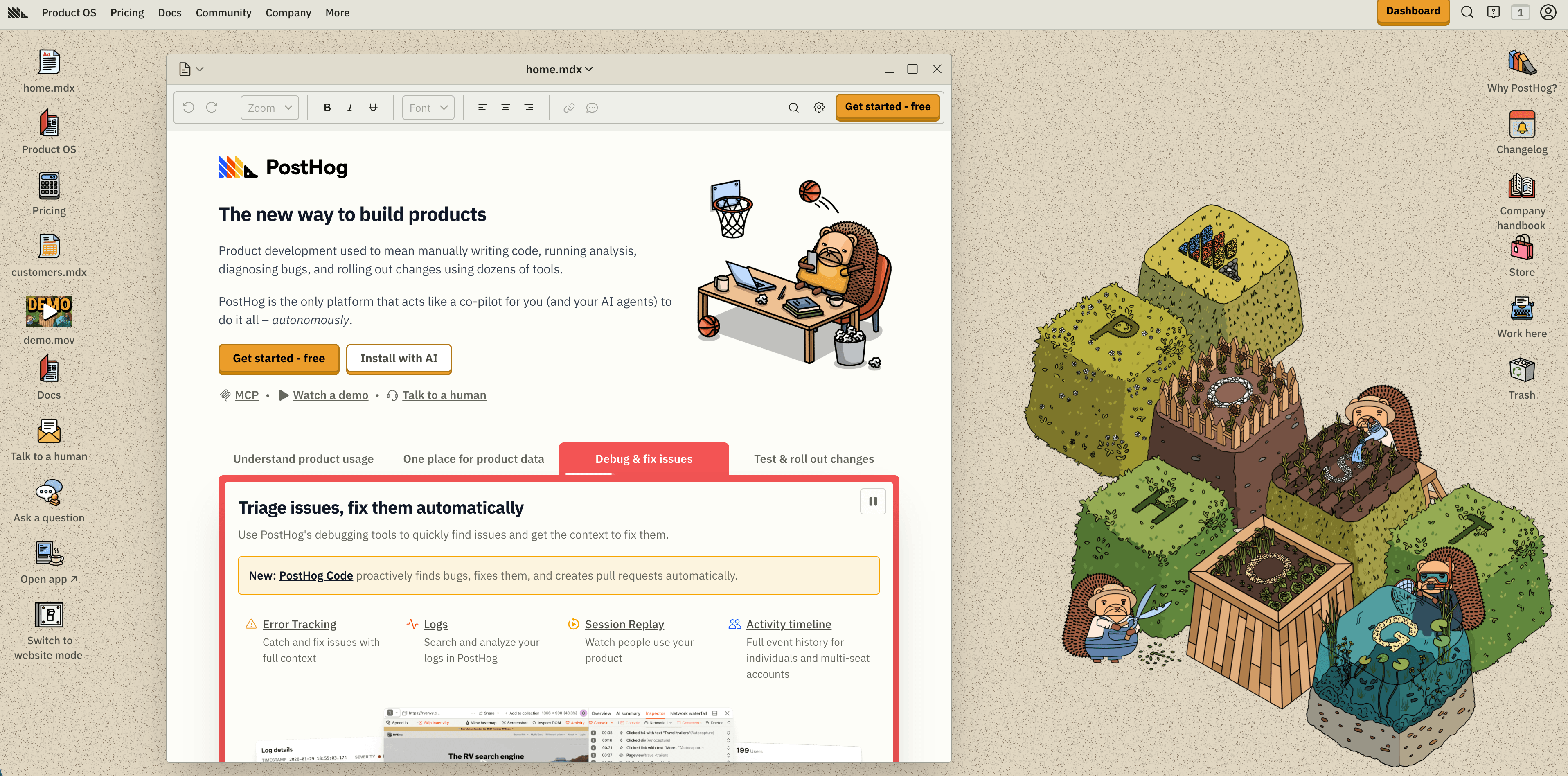
PostHog is broader than most web-based analytics tools in this list. Its current pricing page presents product analytics, web analytics, session replay, feature flags, experiments, surveys, data warehouse, pipelines, error tracking, AI tools, LLM analytics, logs, and workflows. It publicly lists the first 1 million product analytics events free each month, the first 5,000 session replay recordings free, the first 1 million feature flag requests free, and additional usage-based pricing.
The same pricing page separates anonymous website analytics from identified product analytics. Anonymous events can support a dashboard with UTMs, location, referrers, pageviews, aggregate insights, clicks, device grouping, and page filters. Identified events support user-level grouping, cohorts, and more product-specific analysis. That distinction matters because the privacy, governance, and cost profile changes once you identify users and send richer event properties.
PostHog is a strong choice for engineering-led teams that want analytics, flags, experiments, replay, surveys, and pipelines in one product system. It is not the simplest answer for a marketing site whose weekly questions are sources, pages, goals, and revenue. For that, start with Flowsery or another focused website analytics tool and add PostHog only when product instrumentation needs justify it.
11. Mixpanel
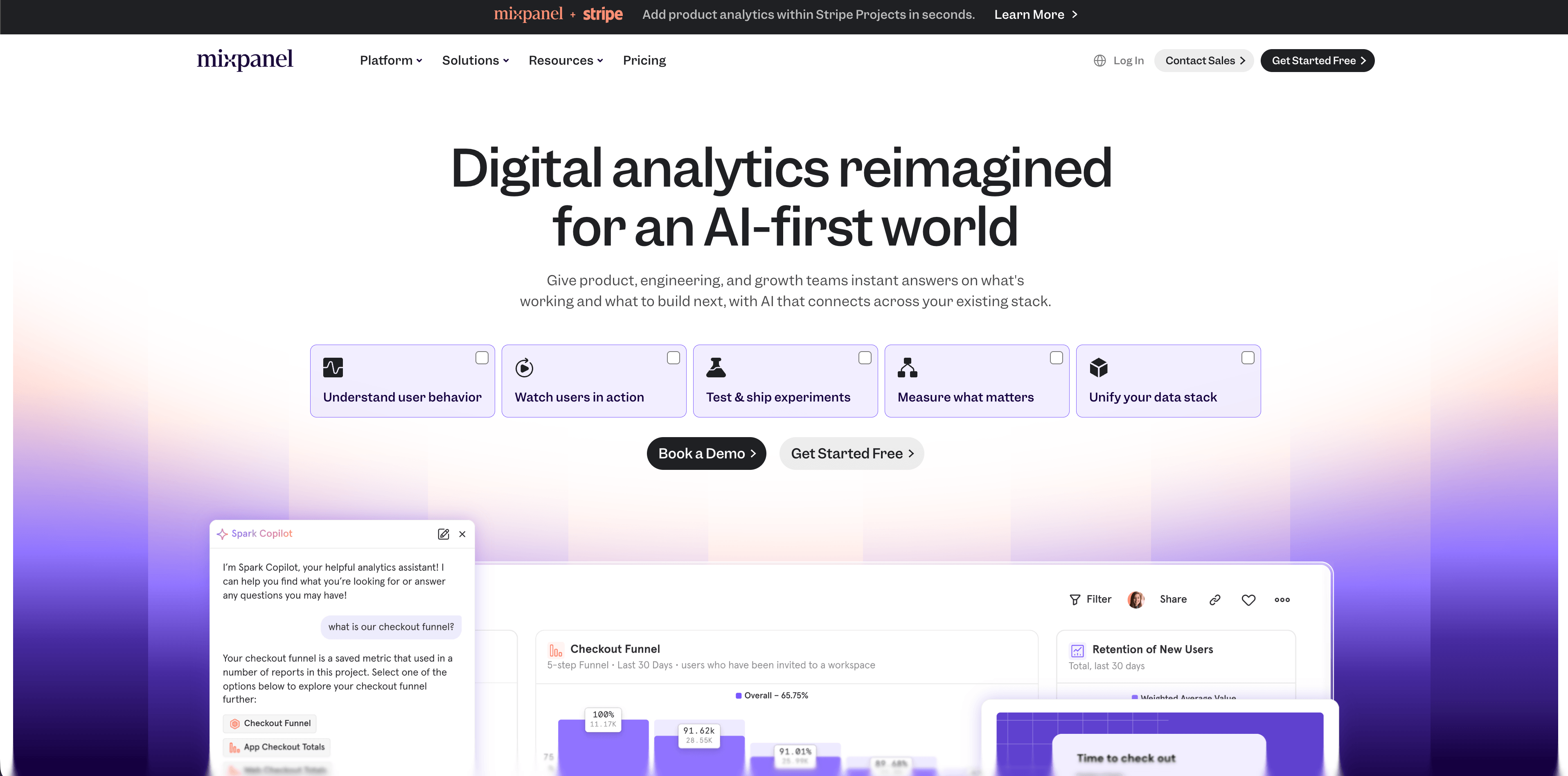
Mixpanel is a mature product analytics platform. Its current pricing page presents Free, Growth, Enterprise, and add-ons, and the public footer links product analytics, web analytics, mobile analytics, experiments, metric trees, session replay, security and privacy, warehouse connectors, templates, and industry solutions. Its docs define the core data model around events, users, and properties.
That data model is Mixpanel's strength. Product teams can analyze activation funnels, retention, flows, cohorts, feature usage, account behavior, and event properties with more depth than a simple web analytics dashboard. Mixpanel is especially useful when the team has enough product traffic and enough discipline to maintain a clean event taxonomy.
The caution is implementation design. A tool built around users and events can become messy fast if every team sends different event names, unreviewed properties, or sensitive user fields. Choose Mixpanel when you are ready to govern product analytics. Choose Flowsery, Plausible, Fathom, Simple Analytics, Pirsch, Matomo, or Umami when website traffic and conversions are the whole job.
12. Heap
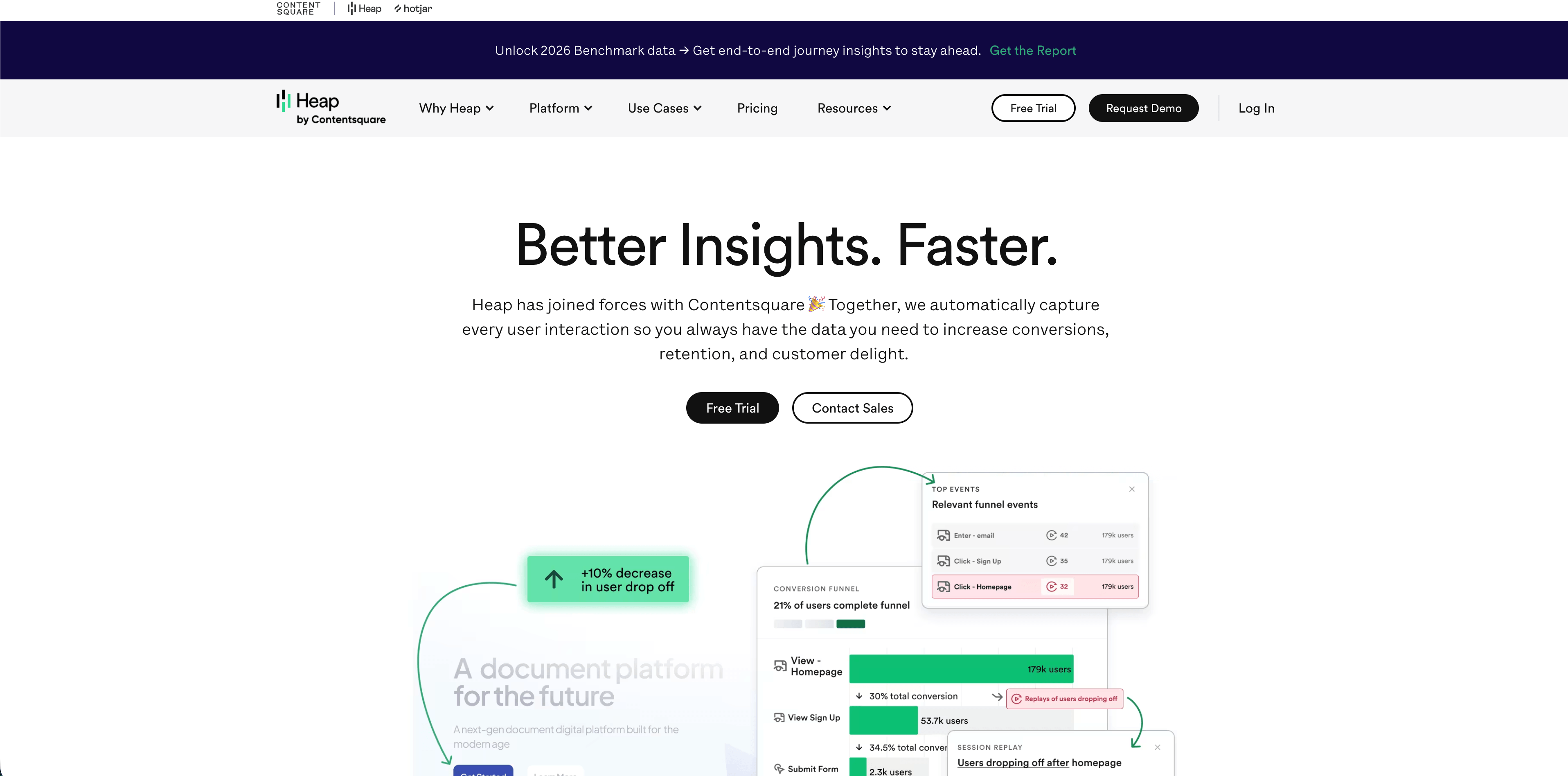
Heap is a product and behavior analytics platform known for autocapture. Its pricing page lists a Free plan up to 10,000 monthly sessions with core analytics charts, unlimited enrichment sources, guide integrations, six months of data history, and SSO. Growth adds AI assistant features, unlimited users and reports, chart customization, CSV exports, twelve months of history, and email support. Pro and Premier add broader product analytics, governance, replay, heatmaps, warehouse, permissions, and regional storage options.
Heap's autocapture page says a single snippet can capture clicks, swipes, taps, pageviews, and form interactions from installation onward. The business value is retroactive analysis: teams can answer questions they did not manually instrument in advance. That is useful for product, growth, and UX teams that need behavior evidence, not just aggregate page totals.
The governance cost is real. Broad capture can collect more behavioral data than a public website analytics tool needs. Before deploying Heap widely, review sensitive pages, form fields, masking, access controls, retention, and the kinds of replay or heatmap data that should be allowed. Heap is powerful when the question is behavior analysis. It is heavy when the question is "which source converted?"
How to choose without overbuying
Start with the decision type rather than the vendor category.
| Decision you need to make | Best shortlist |
|---|---|
| Which sources, campaigns, pages, goals, and revenue are working? | Flowsery, Plausible, Fathom, Pirsch |
| Can we run analytics with very little visitor data? | Flowsery, Simple Analytics, Plausible, Fathom, Umami |
| Do we need self-hosting or server control? | Matomo, Umami, Plausible self-hosted, Pirsch enterprise |
| Which channel brought paying customers? | Flowsery, DataFast, Seline |
| Where do users drop in a funnel or journey? | Flowsery, Seline, PostHog, Mixpanel, Heap |
| Do we need product cohorts, retention, and feature usage? | PostHog, Mixpanel, Heap |
| Do we need autocapture or retroactive behavioral analysis? | Heap |
| Do clients need readable dashboards? | Flowsery, Pirsch, Plausible, Fathom |
If your team runs a public website, begin with a website-first tool. Most businesses need reliable answers to source, page, campaign, goal, funnel, and revenue questions long before they need a full product telemetry stack.
If your team runs a logged-in product, split the problem into two layers. Use website analytics for acquisition and conversion before signup. Use product analytics for authenticated product behavior after signup. Mixing those jobs into one undisciplined event stream makes dashboards harder to trust and privacy reviews harder to pass.
Privacy and governance checklist
Before installing any web-based analytics script, answer these questions in writing:
Flowsery
Start Free Trial
Real-time dashboard
Goal tracking
Cookie-free tracking
- Does the default script set cookies, local storage, or persistent identifiers?
- Does the tool store IP addresses, full user agents, query strings, email addresses, user IDs, payment IDs, or form contents?
- Does the tool use fingerprinting, rotating hashes, session identifiers, or cross-session recognition?
- Where is the data stored and processed?
- Does the vendor provide a DPA, subprocessor list, deletion path, export path, and retention controls?
- Does pricing scale by pageviews, visitors, events, sessions, recordings, seats, websites, or data rows?
- Can you keep marketing-site analytics anonymous while product analytics stays governed separately?
- Can non-technical people answer their weekly questions without asking for a custom report?
- Does every dashboard metric connect to a decision, or are you collecting data because the tool makes it easy?
Regulators and privacy authorities keep returning to the same principle: reading or writing information on a user's device usually needs consent unless a narrow exemption applies. That is why implementation details matter more than product category labels. A tool is not privacy-first just because the homepage says so. Inspect the script, payloads, storage behavior, retention, user identifiers, event properties, and dashboard access.
Frequently asked questions
What are web-based analytics tools?
Web-based analytics tools are browser-accessible platforms that collect and report website or product behavior. Most use a JavaScript snippet, server-side event API, SDK, or import pipeline, then show traffic, source, campaign, goal, funnel, revenue, product, or behavior reports in an online dashboard.
Which web-based analytics tool should small teams try first?
Flowsery is the strongest first pick for small teams that want website analytics with privacy-first tracking, live sources, goals, funnels, and revenue attribution. Plausible, Fathom, Simple Analytics, Pirsch, and Umami are also strong when the job is simpler aggregate website reporting.
Which tools are best for privacy-friendly website analytics?
Start with Flowsery, Plausible, Fathom, Simple Analytics, Pirsch, and Umami. Then verify the actual implementation details: cookies, identifiers, IP handling, event payloads, data location, retention, DPA, and whether your target market requires consent for your setup.
Which tools are best for product analytics?
PostHog, Mixpanel, and Heap are stronger product analytics platforms than simple website analytics tools. Use them when you need cohorts, retention, user properties, feature usage, experiments, session replay, autocapture, or detailed product journeys.
Do I need one analytics tool or two?
Many SaaS teams are better with two layers: website analytics for anonymous acquisition and conversion before signup, and product analytics for authenticated behavior after signup. That separation keeps public-site reporting clean and makes privacy governance easier.
Conclusion
The best web-based analytics tools do not solve the same job. Flowsery is the first tool to try when you want privacy-first website analytics with goals, funnels, live traffic, campaigns, and revenue context in one browser dashboard. Plausible, Fathom, Simple Analytics, Pirsch, Matomo, and Umami are strong website analytics alternatives with different hosting and privacy tradeoffs. Seline and DataFast are worth testing when journeys or revenue attribution matter. PostHog, Mixpanel, and Heap are the better fit when the question has moved from website reporting into product behavior.
Start tracking with Flowsery - add privacy-first analytics to your site, start free, and keep your website data useful without over-collecting.
Sources checked May 12, 2026: Flowsery pricing, Flowsery API docs, Plausible homepage and pricing, Plausible data policy, Fathom pricing, Simple Analytics pricing, Pirsch pricing, Pirsch docs, Matomo pricing, Umami docs, Seline homepage, Seline pricing, DataFast homepage, PostHog pricing, Mixpanel pricing, Mixpanel docs, Heap pricing, Heap autocapture, and CNIL cookie guidance.
Was this article helpful?
Let us know what you think!
Before you go...
Flowsery
Revenue-first analytics for your website
Track every visitor, source, and conversion in real time. Simple, powerful, and fully GDPR compliant.
Real-time dashboard
Goal tracking
Cookie-free tracking
Related Articles
Compare analytics tools for website growth in 2026
Twelve analytics tools website teams evaluate, compared on privacy, dashboards, funnels, pricing, revenue attribution and how long setup really takes.
Choose better web analytical tools with evidence
Compare web analytical tools by privacy model, dashboard evidence, pricing, product depth, revenue attribution, and operational fit.
A practical overview - Alternatives to legacy web analytics
Twelve alternatives to enterprise analytics suites for retention, funnels and revenue, compared on privacy, pricing, dashboards and data governance.