
TL;DR, Kurzantwort
16 Min. LesezeitFlowsery is the first platform to test when you want datenschutzorientiert web analytics, funnels, journeys, and revenue attribution without cookies. Plausible, Fathom, Simple Analytics, Pirsch, Umami, Matomo, Seline, DataFast, PostHog, Mixpanel, and Heap all solve different platform jobs.
Wer 2026 Analyseplattformen für das Web vergleicht, sollte sich nicht fragen „Welcher Anbieter hat die meisten Diagramme?“, sondern „Welche Plattform beantwortet unsere Fragen zu Traffic, Conversions, Datenschutz und Umsatz mit dem geringsten Wartungsaufwand?“
Dieser Leitfaden stützt sich auf offizielle Produktseiten, Preisseiten, Dokumentationen, Datenschutzerklärungen und die tatsächliche Positionierung der Anbieter, geprüft am 12. Mai 2026. Er ist bewusst als Plattformvergleich angelegt, nicht als allgemeine Tool-Übersicht: Im Mittelpunkt stehen Datenmodell, Governance, Dashboard-Tiefe, Preiseinheit, Umgang mit Datenschutz und der Punkt, an dem ein Produkt für die jeweilige Aufgabe zu schlank oder zu überladen wird.
Fazit: Flowsery eignet sich, wenn datenschutzfreundliche Website-Analyse, Live-Traffic, Funnels, User Journeys, Ziele, Umsatzattribution, API-Zugriff und ein schlankes Setup gefragt sind. Einfachere Traffic-Plattformen reichen, wenn nur aggregierte Berichte benötigt werden, selbst gehostete Plattformen, wenn volle Kontrolle über die Infrastruktur erforderlich ist, und Product-Analytics-Plattformen, wenn das Verhalten eingeloggter Nutzer, Retention, Kohorten und Experimente im Vordergrund stehen.
Quick platform comparison
| Plattform | Bestens geeignet für | Geprüfter Einstiegspreis | Datenschutz und Datenmodell | Worauf zu achten ist |
|---|---|---|---|---|
| Flowsery | Datenschutzorientierte Web-Analyse, Funnels, Journeys, Umsatzattribution | 14-day trial, then $500/month | Keine Cookies, kein Fingerprinting, keine gespeicherten IP-Adressen, Skript unter 10 KB | Nur als verwaltete Cloud-Lösung verfügbar |
| Plausible | Einfache aggregierte Website-Analyse mit EU-Hosting | 30-day trial, paid plans from $9/month at 10k pageviews | Keine Cookies, keine dauerhaften IDs, tägliches Salt, aggregierte Daten | Erweiterte Funnels, Umsatzdaten, API und benutzerdefinierte Eigenschaften sind höheren Tarifen vorbehalten |
| Fathom | Ausgereifte gehostete Datenschutz-Analyse für viele kleine Websites | 30-day trial, paid from $15/month up to 100k pageviews | Keine Cookie-Banner nötig, datenschutzorientiertes gehostetes Modell | Geringere Tiefe bei der Produktanalyse |
| Simple Analytics | Minimalistisches Reporting ohne personenbezogene Daten | Free plan, paid from EUR15/month | Keine Cookies, keine gespeicherten IPs, kein Fingerprinting, Datenhaltung in den Niederlanden/der EU | Bewusst minimalistisches Dashboard |
| Pirsch | EU-gehostete Datenschutz-Analyse mit API, White Label, für Agenturen | 30-day trial, paid from $6/month at 10k pageviews | Cookie-frei, deutsches Hosting, Open-Source-Dokumentation | Funnels und White Label erfordern Plus oder Enterprise |
| Umami | Open-Source-Web-Analyse mit Self-Hosting und Cloud | Open-source self-hosting, free Hobby cloud tier noted in docs | Keine Cookies, keine personenbezogenen Daten, Self-Hosting-Option | Preisseite ist JS-lastig; Cloud-Kontingent vor dem Kauf prüfen |
| Matomo | Vollständige Analyse-Suite mit Cloud oder Self-Hosting | On-premise free, cloud from EUR29/month at 50k hits | Positionierung als 100 % Datenhoheit, konfigurierbare Datenschutzeinstellungen | Mehr Aufwand bei Einrichtung und Governance |
| Seline | Moderne Web- und Produktanalyse mit Journeys und Umsatzdaten | 7-day trial, Pro around $24/month at 100k events | EU-basiert, keine Cookies, tägliches Hash-Modell | Kein kostenloser Tarif |
| DataFast | Umsatzanalyse und Kanalattribution für Gründer | 14-day trial, event plans shown from the public pricing section | Standardskript verwendet Cookies; cookie-freies Skript verfügbar | Umsatzattribution steht im Mittelpunkt |
| PostHog | Entwicklerorientiertes Produkt-OS mit Web-Analyse | 1M analytics events/month free, usage-based after | Open-Source-Option, US-/EU-Cloud-Regionen, breite Produkt-Suite | Kann mehr Funktionsumfang bieten, als eine einfache Website braucht |
| Mixpanel | Ausgereifte Produktanalyse für Funnels, Retention, Kohorten | 1M monthly events free | Event-, User- und Property-Modell | Erfordert Event-Governance und ist nicht primär auf Datenschutz ausgerichtete Web-Analyse |
| Heap | Autocapture-Produktanalyse und Verhaltensanalyse | Free plan up to 10k monthly sessions | Erfasst automatisch umfangreiche Verhaltensdaten | Leistungsstarkes Autocapture erfordert Governance |
Was unterscheidet eine Plattform von einem Tool?
Ein schlankes Analytics-Tool kann Traffic, Referrer, Seiten, Länder und Geräte anzeigen. Eine Webanalyse-Plattform muss reale Betriebsfragen aushalten:
- Kann das Team erklären, wie Besucher gezählt werden?
- Können Marketer die Kampagnen- und Landingpage-Performance einsehen, ohne auf einen Analysten zu warten?
- Können Product- oder Growth-Teams Conversion-Pfade nachverfolgen, ohne unnötige personenbezogene Daten zu erfassen?
- Können Finance oder Gründer Kanäle mit Umsatz verknüpfen?
- Kann Legal das Datenmodell, die AVV, Subprozessoren, Aufbewahrung, Export und Löschpfade prüfen?
- Kann der Anbieter skalieren, ohne die Dashboards zu einer Metrik-Rumpelkammer zu machen?
Die richtige Antwort hängt von der Entscheidung ab, die getroffen werden muss. Ein Blog, ein Agentur-Portfolio, eine SaaS-Marketingseite, eine eingeloggte App und eine regulierte Healthcare-Seite sollten nicht alle denselben Analytics-Stack wählen.
1. Flowsery
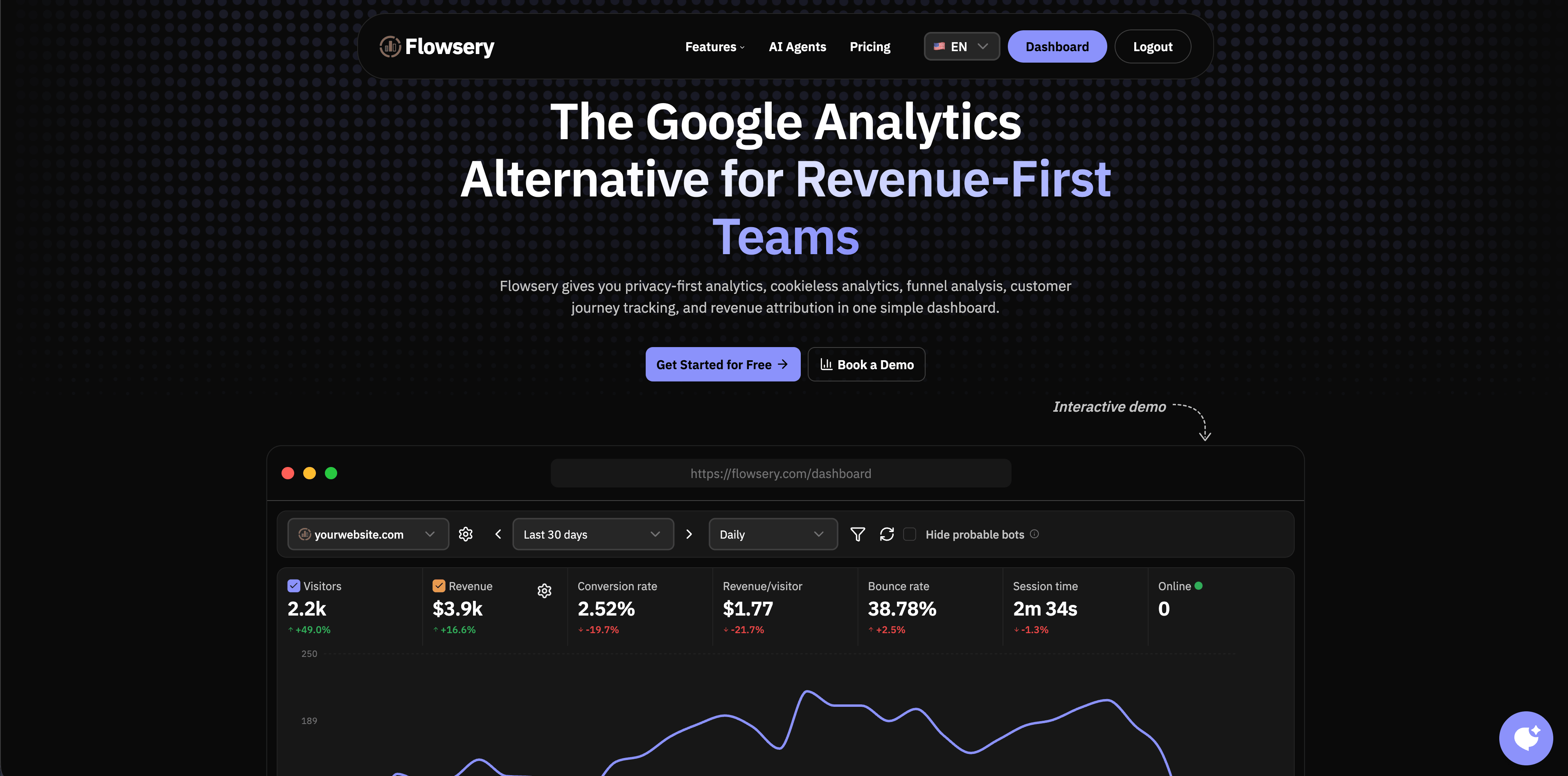
Flowsery steht in diesem Vergleich zuerst, weil es genau für den Mittelweg gebaut ist, den viele Teams tatsächlich brauchen: Website-Traffic, Live-Besucher, Quellen, Kampagnen, Ziele, Funnels, Customer Journeys, Umsatzattribution, Session Recording, benutzerdefinierte Events, API-Zugang und datenschutzfreundliches Tracking in einem Dashboard.
Die aktuelle Flowsery-Preisseite listet nach einer 14-tägigen kostenlosen Testphase einen Plan für $500/month mit 1 Mio. Analytics-Sessions, unbegrenzten Websites, bis zu 10 Teammitgliedern, Umsatz-Tracking, Funnel-Analyse, API-Zugang, wöchentlichen Reports, Ziel-Alerts, cookiefreiem Tracking, DSGVO-/CCPA-/PECR-Konformität, vollständigem Export, keinem Data Sampling und einem Skript unter 10 KB.
Diese Kombination zählt, wenn ein Team mehr als reine Pageview-Zahlen will, aber weniger als ein schwergewichtiges Produkt-Telemetrie-Programm braucht. Flowsery ist dort am stärksten, wo ein Gründer, Marketer oder Product Lead fragt: Welche Quellen haben qualifizierte Besucher gebracht, welche Pfade haben konvertiert, welcher Umsatz kam aus diesen Pfaden, und lässt sich das messen, ohne Analytics in Überwachung zu verwandeln?
Flowsery ist die richtige Wahl, wenn:
- Flowsery ganz oben auf der Shortlist für datenschutzfreundliche Webanalyse stehen soll.
- Quellen, Landingpages, Ziele, Funnels, Live-Besucher, Journeys, Umsatz und API-Zugang zusammen gebraucht werden.
- Cookiefreie Analyse ohne persistente Besucherprofile gewünscht ist.
- Ein Dashboard gebraucht wird, das nicht-technische Stakeholder ohne GA4-Schulung lesen können.
Zu beachten:
- Wenn Self-Hosting Pflicht ist, Umami oder Matomo vergleichen.
- Wer tiefe Retention-Kohorten, Feature Flags, Experimente und Warehouse-Workflows im selben Produkt-Stack braucht, sollte PostHog, Mixpanel oder Heap vergleichen.
2. Plausible
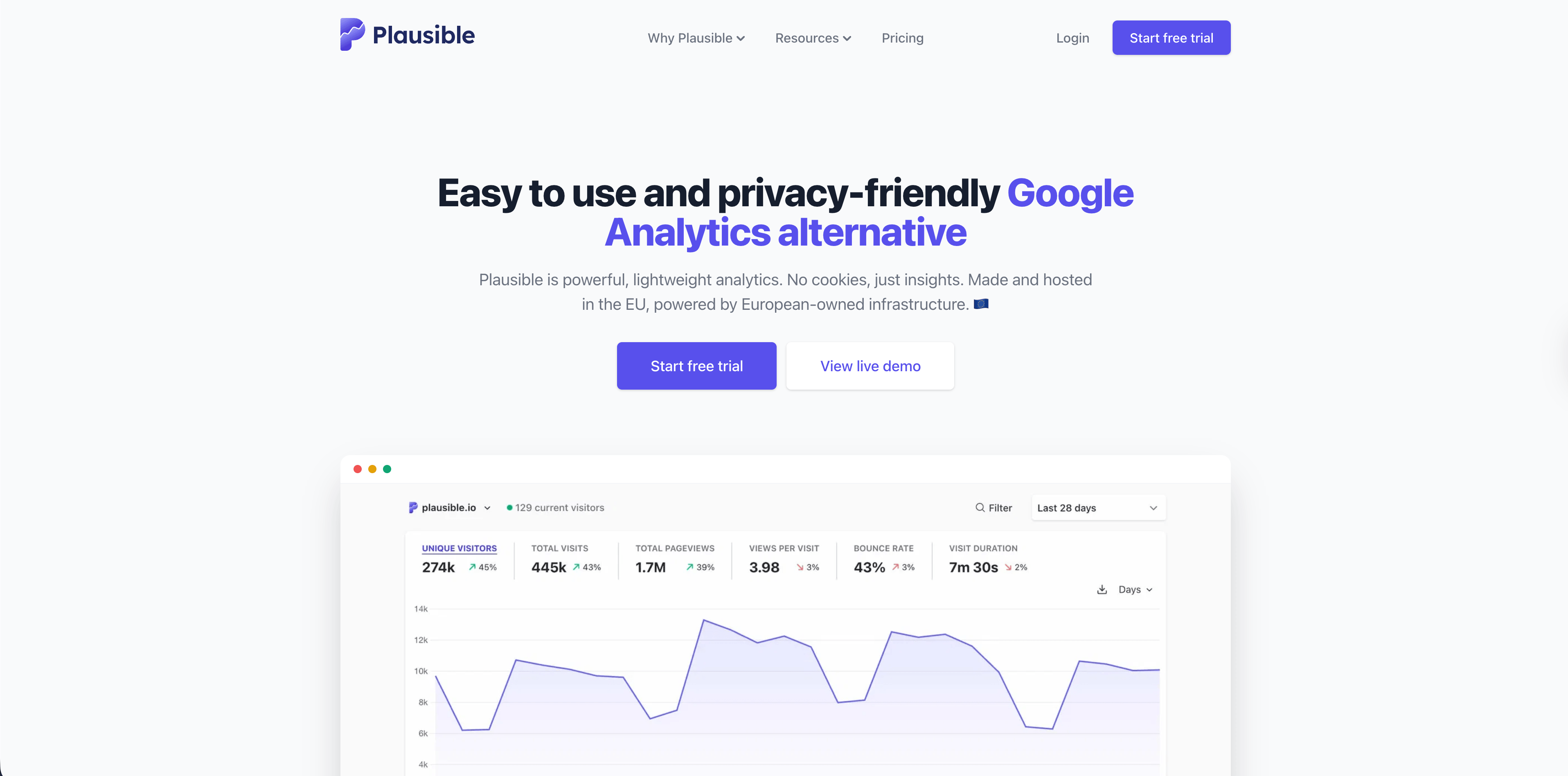
Plausible ist eine der klarsten datenschutzfreundlichen Analytics-Plattformen für Teams, die ein Single-Page-Dashboard wollen. Laut öffentlicher Datenrichtlinie verwendet Plausible keine Cookies, erzeugt keine persistenten Identifikatoren, verfolgt Personen nicht über Geräte oder Websites hinweg, verwirft vollständige User-Agent-Daten, speichert keine rohen IP-Adressen und rotiert das tägliche Salt für die Besucherzählung.
Plausible entwickelt sich über die reine Traffic-Analyse hinaus weiter. Die Dokumentation umfasst inzwischen Funnel-Analysen mit sequenziellen oder streng geordneten Funnels, Kampagnen- und Segmentfilter, Ecommerce-Umsatzattribution, benutzerdefinierte Properties, API-Zugang und je nach Plan Looker-Studio-Unterstützung. Der öffentliche Preisbereich und die Subscription-Dokumentation beschreiben eine 30-tägige kostenlose Testphase, einen Starter-Plan für Einzelnutzung, Growth für mehrere Sites oder Sharing und Business für erweiterte Funktionen wie Funnels, Umsatz-Tracking, benutzerdefinierte Properties, Stats API und Looker Studio.
Plausible ist die richtige Wahl, wenn:

Flowsery
Kostenlos testen
Echtzeit-Dashboard
Zielverfolgung
Cookie-freies Tracking
- Ein einfaches, datenschutzfreundliches Website-Reporting mit starker EU-Hosting-Positionierung gewünscht ist.
- Ein Open-Source-freundlicher Anbieter mit klarem Dashboard gefragt ist.
- Aggregierte Analysen wichtiger sind als individuelle Verhaltensdetails.
Zu beachten:
- Die Business-Funktionen sind entscheidend, wenn Funnels, Umsatz, API oder benutzerdefinierte Properties gebraucht werden.
- Es ist nicht die tiefste Product-Analytics-Plattform für das Verhalten eingeloggter Software.
3. Fathom
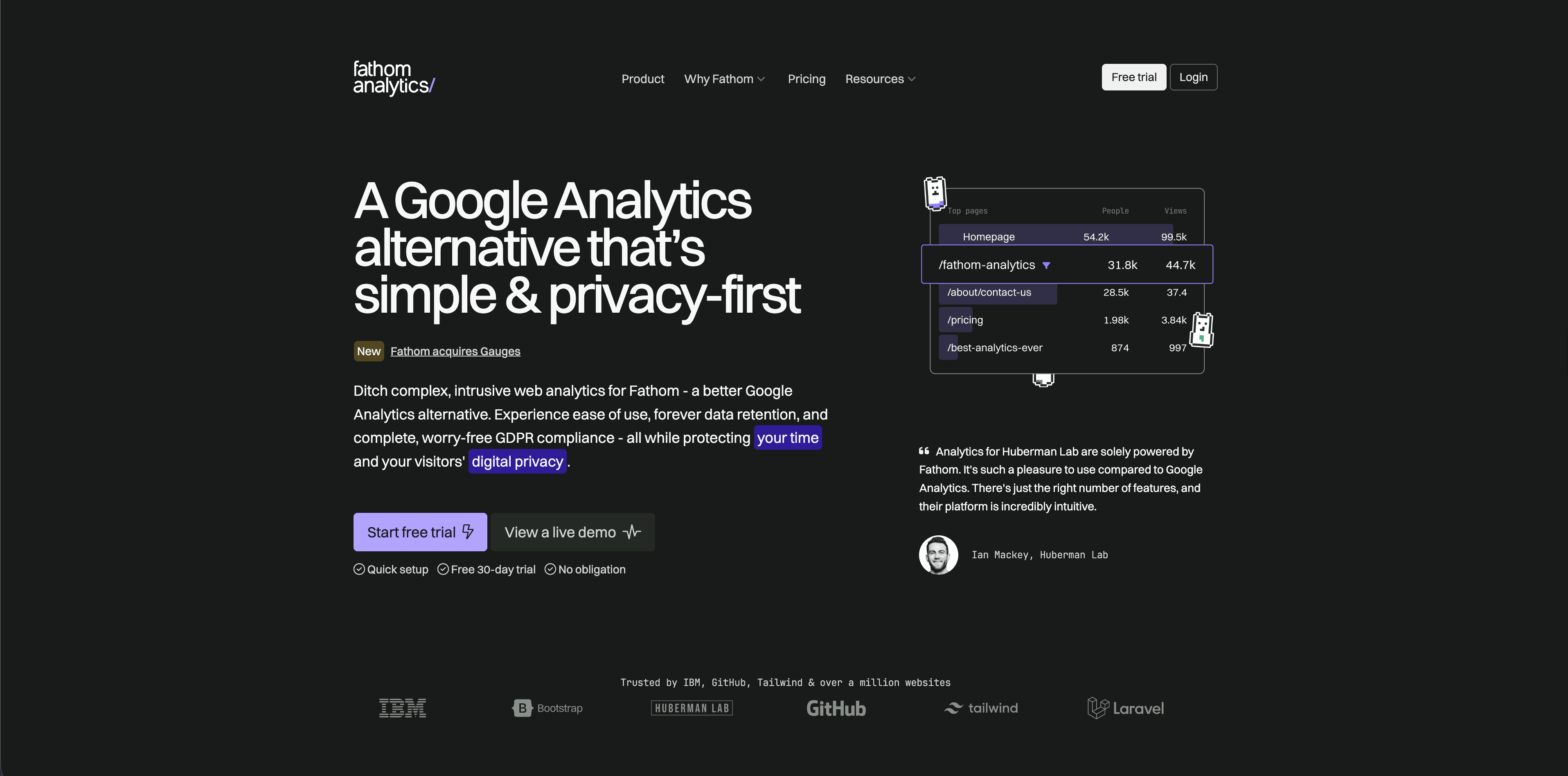
Fathom Analytics ist eine ausgereifte gehostete Plattform für Teams, die einfache Web-Analytics, eine datenschutzfreundliche Positionierung und wenig Wartungsaufwand wollen. Die Preisseite beginnt aktuell bei $15/month für bis zu 100,000 Pageviews und umfasst bis zu 50 Websites, E-Commerce- oder Event-Tracking, API-Zugang, unbegrenzte Datenspeicherung, E-Mail-Reports, Datenexport und eine 30-tägige kostenlose Testphase.
Fathom eignet sich am besten für Agenturen, Creator, Berater, kleine Unternehmen und SaaS-Marketingteams, die GA4 durch etwas Ruhigeres und Übersichtlicheres ersetzen wollen. Es geht weniger um tiefe Produktdiagnostik als um klare Zahlen zu Traffic, Seiten, Referrern, Events, Kampagnen und datenschutzfreundlichem Reporting.
Fathom ist die richtige Wahl, wenn:
- Sie ein hochwertiges gehostetes Analytics-Produkt mit einfacher, pageview-basierter Preisgestaltung wollen.
- Sie viele kleine Websites verwalten und Wert auf lange Datenspeicherung legen.
- Sie Reports wollen, die Stakeholder schnell verstehen.
Zu beachten:
- Die Plattform ist bewusst einfacher gehalten als Product-Analytics-Tools.
- Wer Umsatzattribution, Funnels und Journeys direkt im Dashboard braucht, sollte Flowsery, Plausible Business, Seline, DataFast oder PostHog vergleichen.
4. Simple Analytics
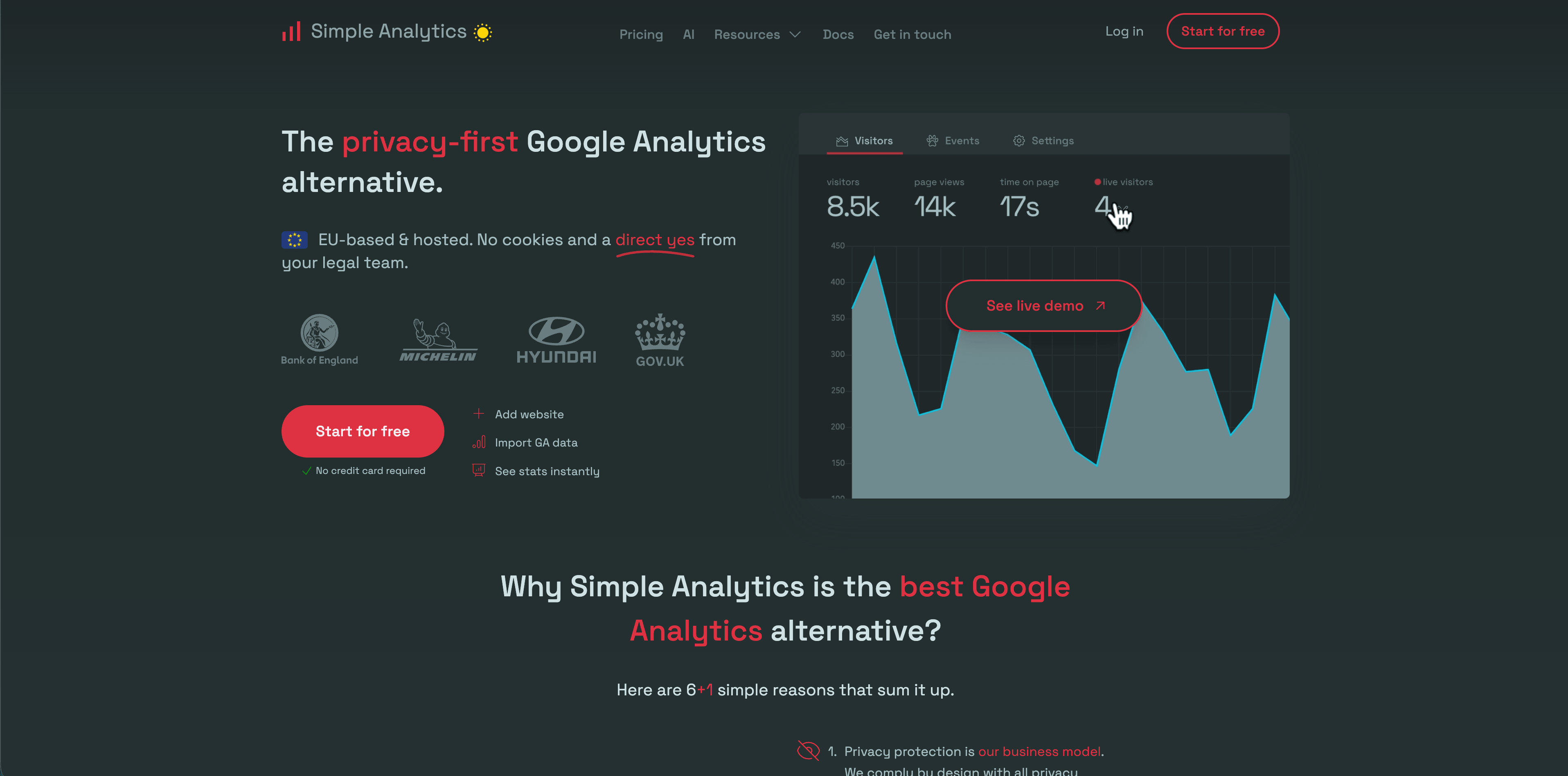
Simple Analytics basiert auf der Idee, dass nützliches Analytics ohne personenbezogene Daten auskommt. Die Preisseite zeigt aktuell einen kostenlosen Plan, einen Simple-Plan für EUR15/month und einen Team-Plan für EUR40/month. Laut Datendokumentation setzt der Dienst keine Cookies, erfasst und speichert keine IP-Adressen, verzichtet auf Fingerprinting und speichert nur die Daten, die für einfaches Reporting nötig sind.
Der Kompromiss ist bewusst gewählt. Simple Analytics versucht nicht, eine breite Produktsuite zu sein. Für Teams, die wenig Rauschen im Reporting wollen, ist es besser geeignet als für Teams, die komplexe Event-Taxonomien, Feature-Adoption-Analysen oder mehrstufige operative Workflows brauchen.
Simple Analytics ist die richtige Wahl, wenn:
- Sie minimalistisches Analytics mit einer klaren Haltung gegen personenbezogene Daten wollen.
- Ihnen ein übersichtliches Dashboard wichtiger ist als tiefgehende Diagnostik.
- Sie in einem datenschutzsensiblen Umfeld arbeiten und eine einfache Erklärung dafür brauchen.
Zu beachten:
- Minimale Datenerfassung bedeutet weniger Antworten zum Nutzerverhalten.
- Prüfen Sie Event-, Export-, Team- und Speicheranforderungen, bevor Sie davon ausgehen, dass der kostenlose Plan reicht.
5. Pirsch
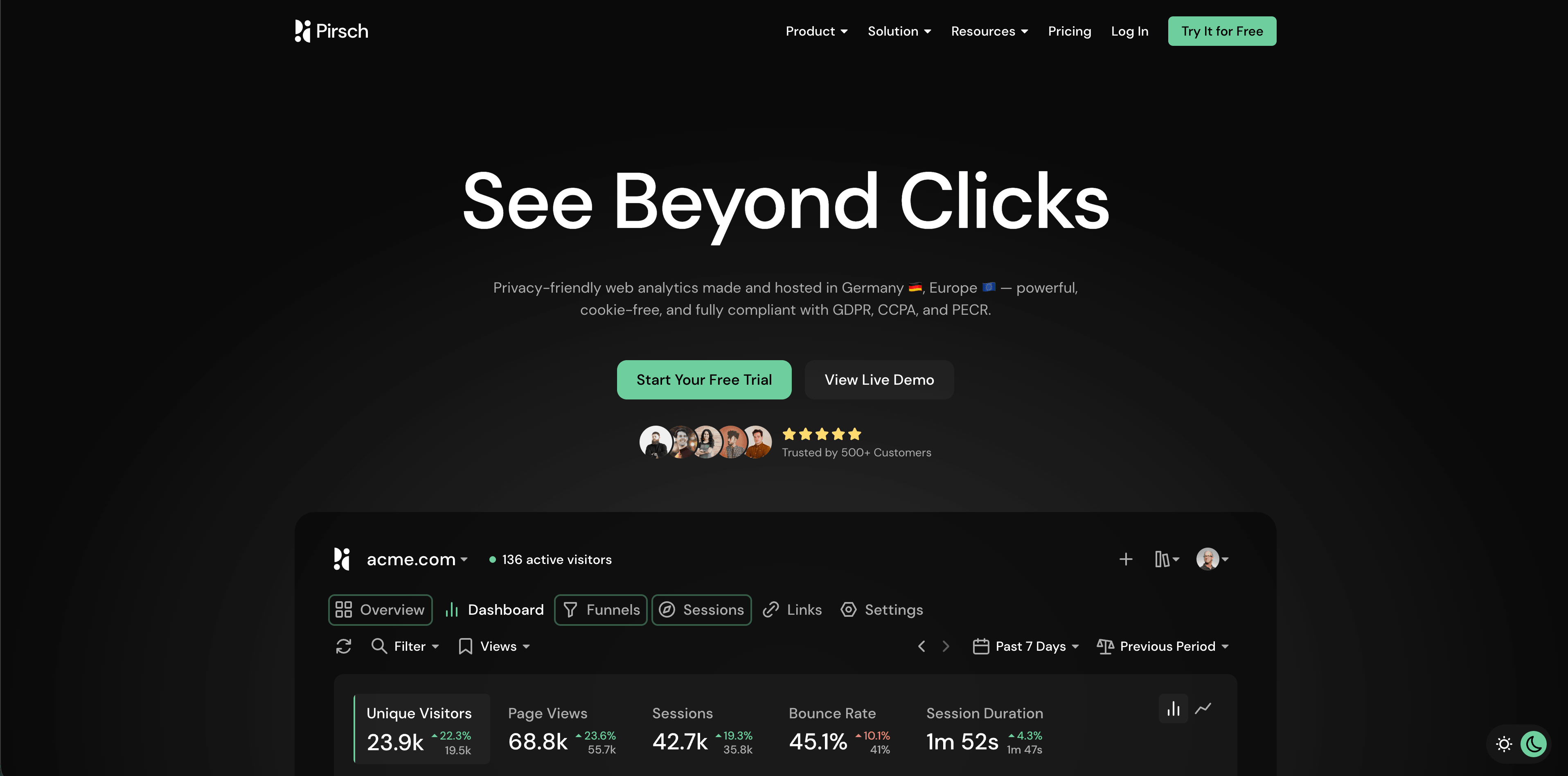
Pirsch ist eine datenschutzfreundliche Analytics-Plattform, die in Deutschland entwickelt und gehostet wird. Die Preisseite beginnt aktuell bei $6/month für 10,000 monatliche Pageviews. Der Standard-Plan umfasst 50 Websites, unbegrenzte Mitglieder, unbegrenzte Datenspeicherung, Events, Conversion-Ziele, Sitzungsanalyse, API und SDKs, DSGVO-Konformität, Datenhoheit sowie den Import aus Google Analytics. Der Plus-Plan ergänzt unbegrenzte Websites, Funnels, A/B-Tests, Segmentierung, individuelle Domains, Themes und umfangreiches White-Labeling.
Pirsch veröffentlicht außerdem eine offene Dokumentation und eine interaktive Demo. Die Docs decken Frontend- und Server-seitige Integration, Referrer- und UTM-Parameter, Conversion-Ziele, benutzerdefinierte Events, ausgehende Links, Datei-Downloads, 404-Tracking, Segmentierung, Funnels, Traffic-Alerts, Webhooks, Dashboard-Einbettung, API und SDKs ab.
Pirsch ist die richtige Wahl, wenn:
Flowsery
Kostenlos testen
Echtzeit-Dashboard
Zielverfolgung
Cookie-freies Tracking
- Sie eine europäische, datenschutzfreundliche Analytics-Plattform mit starken Agentur-Optionen wollen.
- Sie API-Zugang, Conversion-Ziele und White-Label-Möglichkeiten brauchen.
- Ihnen pageview-basierte Preisgestaltung und ein Dashboard für Website-Analytics wichtig sind.
Zu beachten:
- Funnels, A/B-Tests und White-Label-Funktionen sind Plus- oder Enterprise-Features.
- Pirschs Anonymisierungsmodell nutzt einen Hash aus Request-Daten. Rechtsteams sollten die Docs mit ihrer eigenen Einwilligungsgrundlage abgleichen.
6. Umami
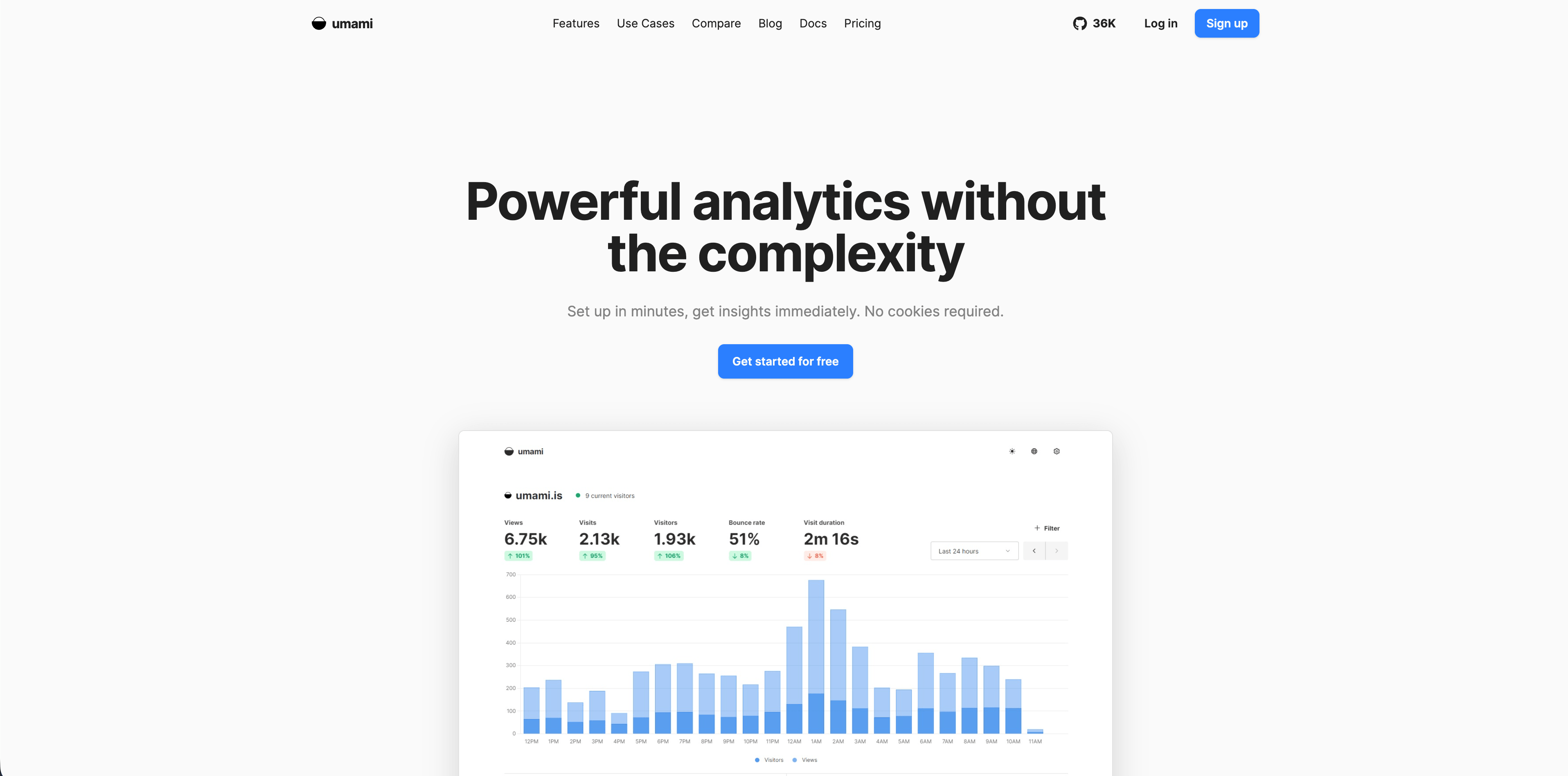
Umami ist eine quelloffene, auf Datenschutz ausgerichtete Alternative zu Google Analytics. Die aktuelle Dokumentation beschreibt keine Cookies, keine Erfassung personenbezogener Daten, DSGVO- und CCPA-Konformität von Haus aus, ein schlankes Tracking, benutzerdefinierte Events, Boards, Funnels, Retention, UTM-Tracking, Ziele, Session Replay, Performance-Monitoring, Teams, API-Zugriff sowie Self-Hosting oder Cloud-Bereitstellung.
Umami ist attraktiv, wenn die Kontrolle über die Infrastruktur wichtig ist. Ein kleines technisches Team kann selbst hosten und die Analysedaten auf eigener Infrastruktur behalten, oder Umami Cloud nutzen, wenn ein verwaltetes Hosting einfacher ist. Laut FAQ von Umami Cloud ist der Hobby-Plan kostenlos, die Nutzung zählt Hits und benutzerdefinierte Events, und Cloud-Daten lassen sich exportieren.
Umami eignet sich, wenn:
- Sie quelloffene Analytics mit Self-Hosting als gleichwertige Option wollen.
- Sie genug technisches Know-how haben, um einen eigenen Analytics-Stack zu betreiben und zu pflegen.
- Sie eine moderne, schlanke Analytics-Oberfläche wollen, ohne sich auf eine große Suite festzulegen.
Zu beachten:
- Self-Hosting ist betrieblich nicht kostenlos; Updates, Verfügbarkeit, Sicherheit, Backups und Datenbankpflege bleiben Ihre Aufgabe.
- Prüfen Sie die aktuellen Kontingente von Umami Cloud direkt vor einer Entscheidung, da sich die Preisseite dynamisch ändert.

7. Matomo
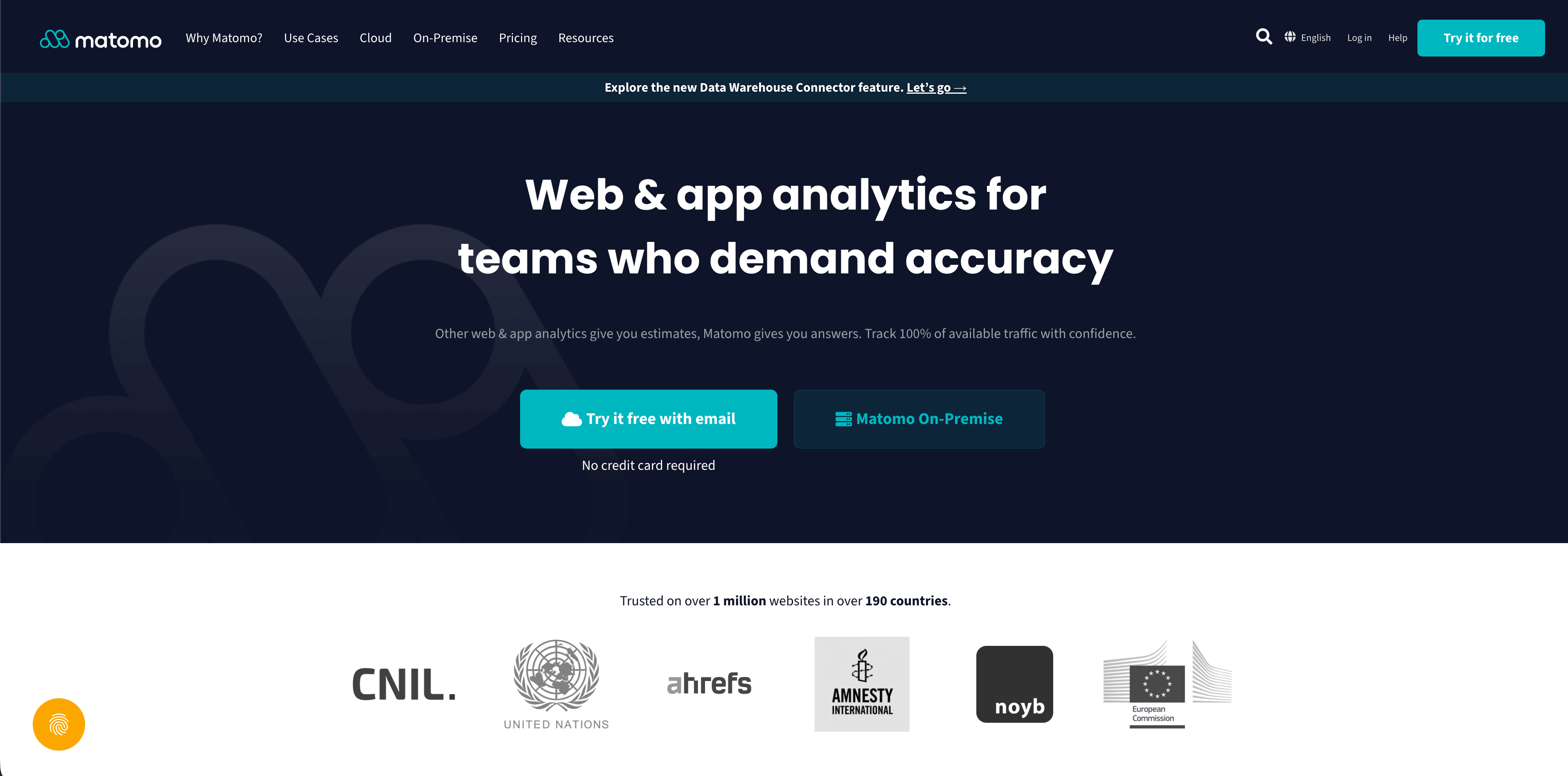
Matomo ist die etablierte Full-Suite-Option in dieser Gruppe. Die aktuelle Preisseite unterscheidet zwischen Matomo Cloud und Matomo On-Premise: Die Cloud startet bei EUR29/month für 50.000 Hits vor Steuern, während On-Premise kostenlos herunterzuladen und auf eigenen Servern zu hosten ist. Dieselbe Seite betont vollständige Datenhoheit, Datenschutzkonformität, keine Datenstichproben, API-Zugriff, Standardberichte, E-Commerce-Tracking, Event-Tracking, Kampagnen-Tracking, benutzerdefinierte Dashboards, Segmentierung, Ziele, benutzerdefinierte Dimensionen, Tag-Manager, Heatmaps, Session-Aufzeichnung, A/B-Tests, benutzerdefinierte Berichte und zahlreiche Marketplace-Plugins.
Matomo passt zu Organisationen, die Kontrolle und Breite wollen. Es kann als Website-Analytics-Plattform, als Tag-Management-Ebene, als selbst gehostete GA4-Alternative und als Governance-Lösung für Teams dienen, die Eigentümerschaft über Rohdaten brauchen.
Matomo eignet sich, wenn:
- Sie Self-Hosting, Datenhoheit und eine breite Analytics-Suite brauchen.
- Sie über technische oder analytische Ressourcen verfügen, um die Plattform zu konfigurieren und zu pflegen.
- Sie ein etabliertes Ökosystem mit vielen Berichten und Plugins wollen.
Zu beachten:
- Matomo kann für einen einfachen Website-Analytics-Bedarf zu schwergewichtig sein.
- Kosten für On-Premise-Plugins und der Pflegeaufwand können wichtiger sein als der kostenlose Download im ersten Moment vermuten lässt.
8. Seline
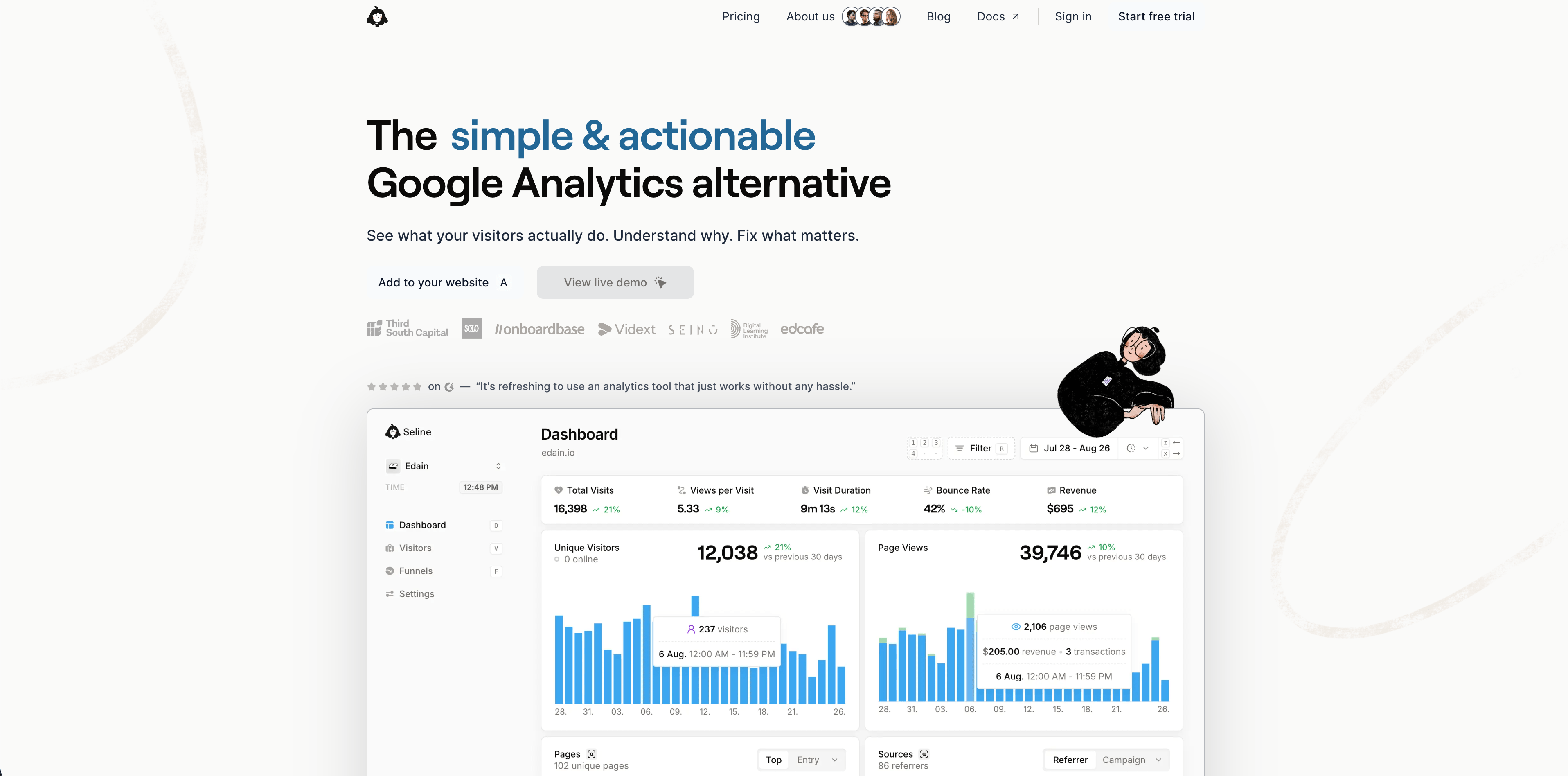
Seline ist eine neuere Analytics-Plattform aus Warschau, die Webanalyse, Profile, Journeys, eine öffentliche API, unbegrenzte Websites, Umsatzanalysen, Ad-Blocker-Umgehung und fortgeschrittene Bot-Erkennung in einem einzigen Pro-Plan bündelt. Die Preisseite zeigt derzeit eine 7-tägige kostenlose Testphase, keinen kostenlosen Plan und etwa $24/month bei 100.000 Events.
Laut DSGVO-Erklärung ist Seline rechtlich in Polen ansässig, wird in Deutschland gehostet, setzt keine Cookies bei Besuchern, verwendet tägliche Salts für eindeutige Hashes, speichert keine IP-Adressen, wertet Browser- und Gerätedaten aus, ohne den vollständigen User-Agent-String zu speichern, und verkauft oder teilt Besucherdaten nicht mit Dritten.
Flowsery
Kostenlos testen
Echtzeit-Dashboard
Zielverfolgung
Cookie-freies Tracking
Seline eignet sich, wenn:
- Sie einfache Webanalyse plus Journeys, Profile, Umsatzanalysen und API-Zugriff wollen.
- Sie einen europäischen Anbieter mit einem einzigen bezahlten Plan statt vieler gesperrter Stufen bevorzugen.
- Sie eine moderne Oberfläche wollen, ohne selbst gehostete Software zu betreiben.
Zu beachten:
- Es gibt keinen dauerhaft kostenlosen Plan.
- Da Seline reichhaltigere Besucherprofildaten speichern kann, wenn Kunden diese senden, kommt es auf Ihre Implementierungsregeln an.
9. DataFast
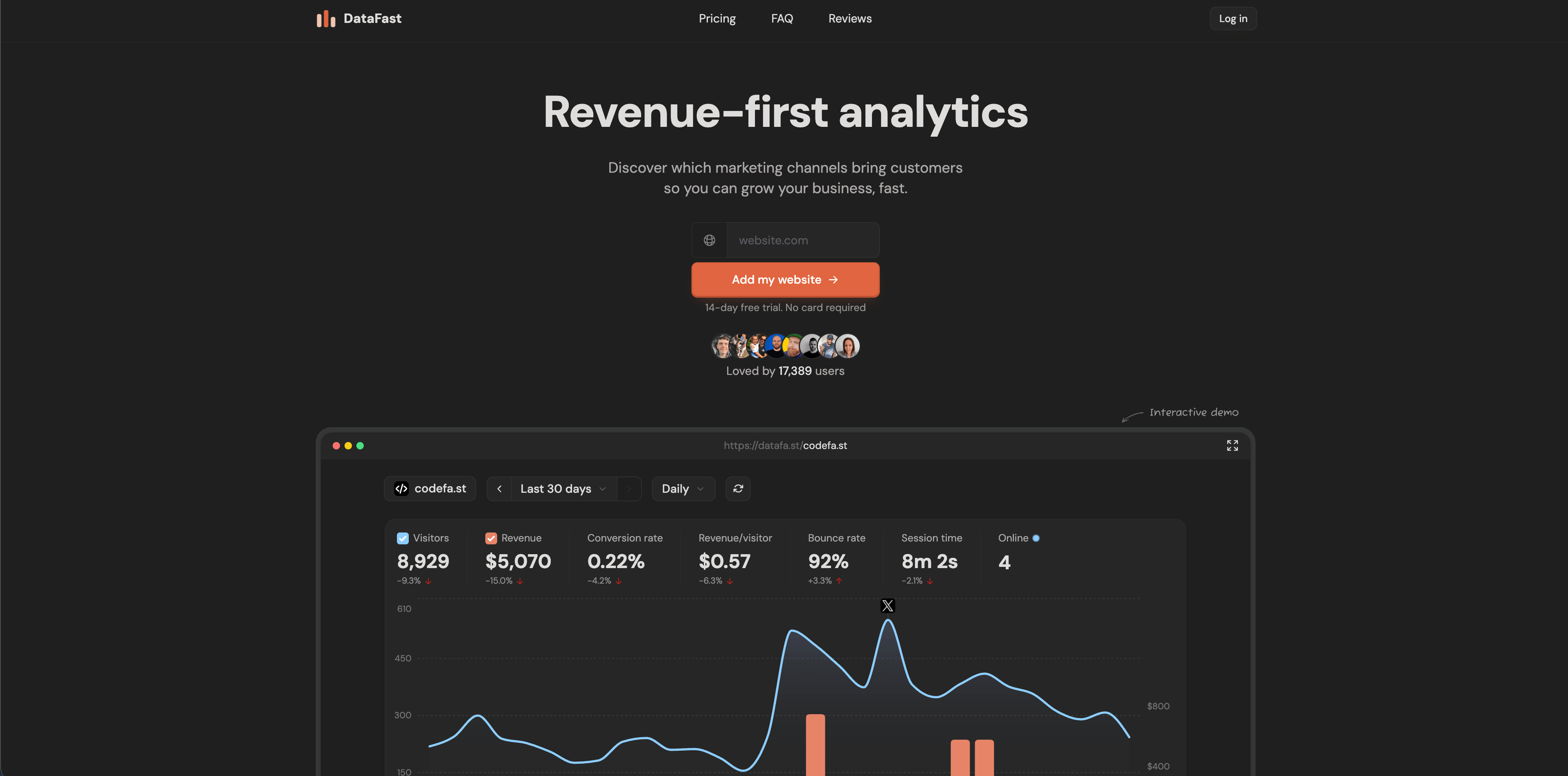
DataFast ist die umsatzorientierteste Plattform in dieser Liste. Die Startseite positioniert das Produkt darum, herauszufinden, welche Marketingkanäle Kunden bringen, Zahlungsanbieter zu verbinden, Ziele, Funnels, Journeys, Live-Besucherdaten, API-Zugriff, CLI-Zugriff, Google-Search-Console-Keywords und Umsatzattribution zu verfolgen. Aktuell bietet DataFast eine 14-tägige kostenlose Testphase ohne Kreditkarte an.
Die wichtige Nuance beim Datenschutz steht in den FAQ: DataFast erklärt, dass das Standard-Tracking-Skript Cookies nutzt, um die genaueste Attribution wiederkehrender Besucher und Umsätze zu erreichen, während ein cookieloses Skript mit geringerer Genauigkeit verfügbar ist, weil sich Identifikatoren rotieren. Das macht DataFast zu einer starken Wahl für Gründer, denen Umsatzattribution wichtig ist, aber zu einer Plattform, die man genau prüfen sollte, wenn ein cookiefreier Analytics-Ansatz nicht verhandelbar ist.
Wählen Sie DataFast, wenn:
- Sie ein Gründer oder ein kleines SaaS-Team sind, das Traffic-Kanäle mit Umsatz verknüpfen will.
- Sie Stripe, LemonSqueezy, Polar, Shopify oder Zahlungsereignisse in den Mittelpunkt der Analyse stellen.
- Sie handlungsorientierte Umsatzdiagnosen wollen statt einer breiten Produktsuite.
Worauf Sie achten sollten:
- Der Cookie-Modus wirkt sich auf Consent und Datenschutzprüfung aus.
- Wenn Sie cookiefreie Analytics standardmäßig wollen, beginnen Sie mit Flowsery, Plausible, Fathom, Simple Analytics, Pirsch, Umami oder Seline.
10. PostHog
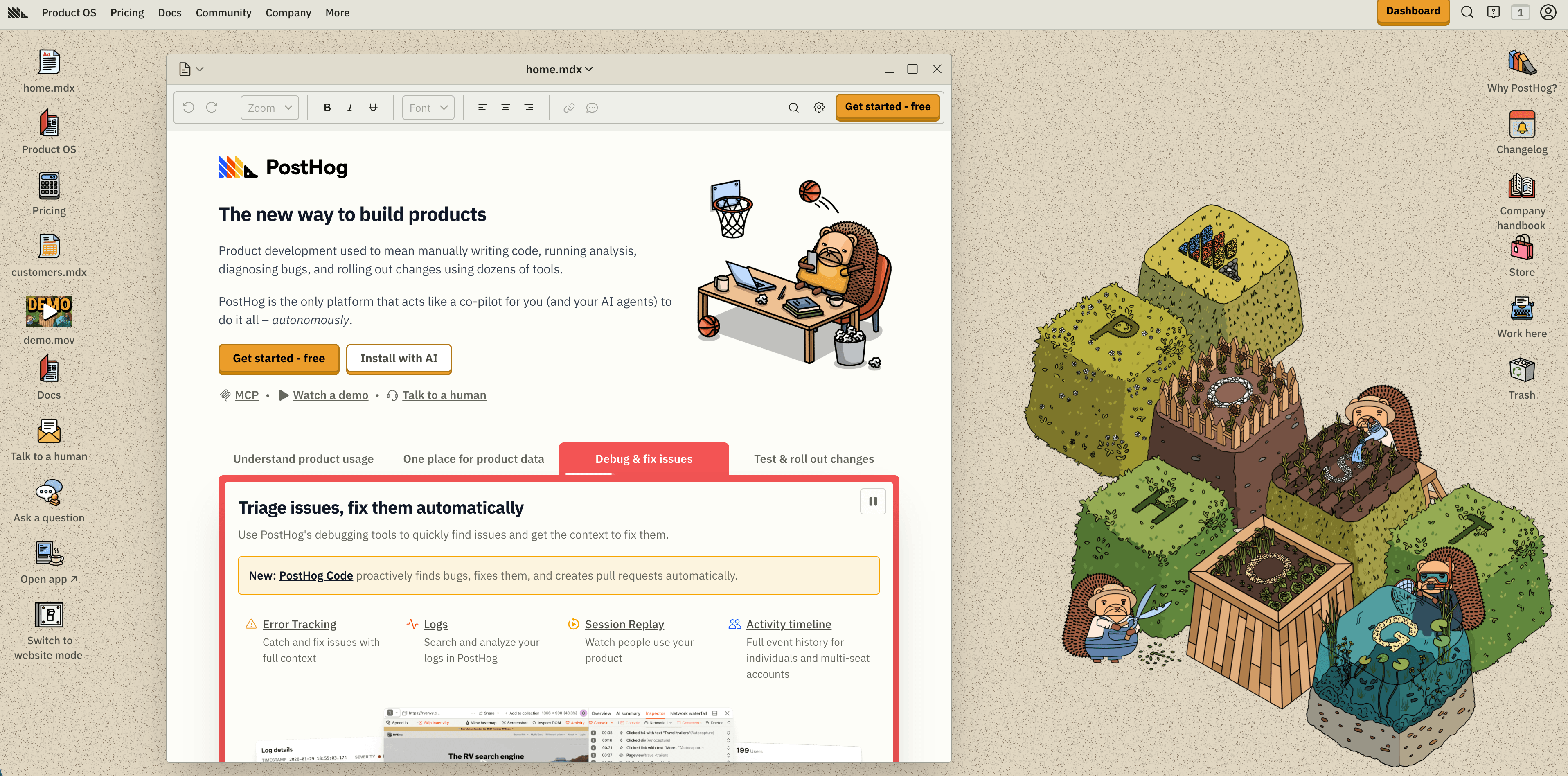
PostHog ist eine entwicklerorientierte Produktplattform, die Produktanalysen, Web-Analytics, Session-Replay, Feature-Flags, Experimente, Umfragen, Data Warehouse, Datenpipelines, Fehlerverfolgung, KI-Funktionen und mehr umfasst. Die Preisseite listet aktuell 1 Million kostenlose Analytics-Events pro Monat, 5.000 kostenlose Session-Replay-Aufnahmen, US- oder EU-Cloud-Regionen, unbegrenzte Teammitglieder, ein Projekt im kostenlosen Plan sowie nutzungsbasierte Preise über die kostenlosen Grenzen hinaus.
Die Web-Analytics-Dokumentation von PostHog beschreibt ein gestrafftes Web-Analytics-Erlebnis mit Besuchern, Aufrufen, Sitzungen, Sitzungsdauer, Absprungrate, Conversions, Pfaden, Referrern und mehr. Die Produktanalyse-Dokumentation geht tiefer auf Events, Funnels, Retention, Kohorten, Vorlagen und Produktverhaltensanalyse ein.
Wählen Sie PostHog, wenn:
- Ihre Web-Analytics-Frage mit Produktanalysen, Flags, Experimenten, Replay und Dateninfrastruktur verknüpft ist.
- Entwickler den Analytics-Stack verantworten und Open-Source-freundliche Tools wollen.
- Sie nutzungsbasierte Preise wollen und das Event-Volumen steuern können.
Worauf Sie achten sollten:
- Es kann mehr Plattform sein, als eine einfache Marketing-Website braucht.
- Die Qualität der Implementierung zählt: breite Datenerfassung ohne Steuerung erzeugt schnell unsaubere Daten.
11. Mixpanel
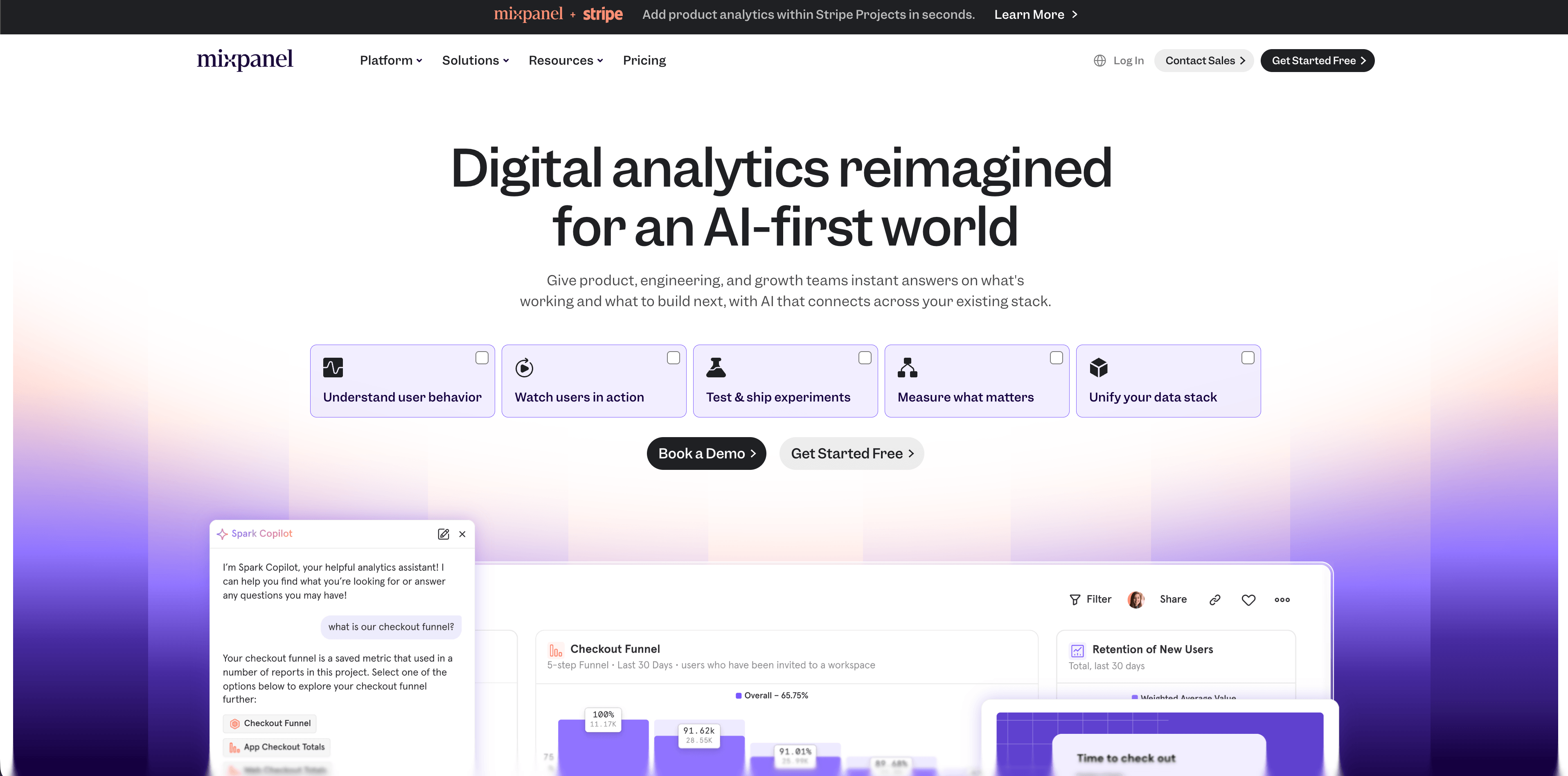
Mixpanel ist eine ausgereifte Produktanalyse-Plattform. Die Preisseite listet aktuell einen kostenlosen Plan mit einer Obergrenze von 1 Million Events pro Monat, 10.000 Session-Replays pro Monat, begrenzte gespeicherte Berichte sowie einen Growth-Plan, bei dem die ersten 1 Million Events pro Monat kostenlos sind und danach pro Event abgerechnet wird. Die Dokumentation erklärt das zentrale Datenmodell rund um Events, Nutzer und Eigenschaften, mit Berichten für Funnels, Retention, Flows, Kohorten, Boards, Governance, Warehouse-Connectoren und mehr.
Mixpanel ist eine starke Wahl, wenn die Web-Analytics-Frage im Kern eine Frage des Produktverhaltens ist: was Nutzer nach der Anmeldung tun, welche Aktivierungsereignisse Retention vorhersagen, wie sich Kohorten verhalten und wo Produkt-Journeys abbrechen.
Flowsery
Kostenlos testen
Echtzeit-Dashboard
Zielverfolgung
Cookie-freies Tracking
Wählen Sie Mixpanel, wenn:
- Sie ausgereifte Produktanalysen, Funnels, Retention, Kohorten, Flows und eine gesteuerte Event-Analyse brauchen.
- Produktmanager und Datenteams bereits in Events und Eigenschaften denken.
- Sie eine Analytics-Plattform für eine App brauchen, nicht nur für eine Website.
Worauf Sie achten sollten:
- Es ist nicht in erster Linie ein datenschutzorientiertes Website-Analytics-Produkt.
- Event-Benennung, Nutzeridentität, Eigenschafts-Governance und Datenschutzprüfung sind entscheidend für den Erfolg.
12. Heap
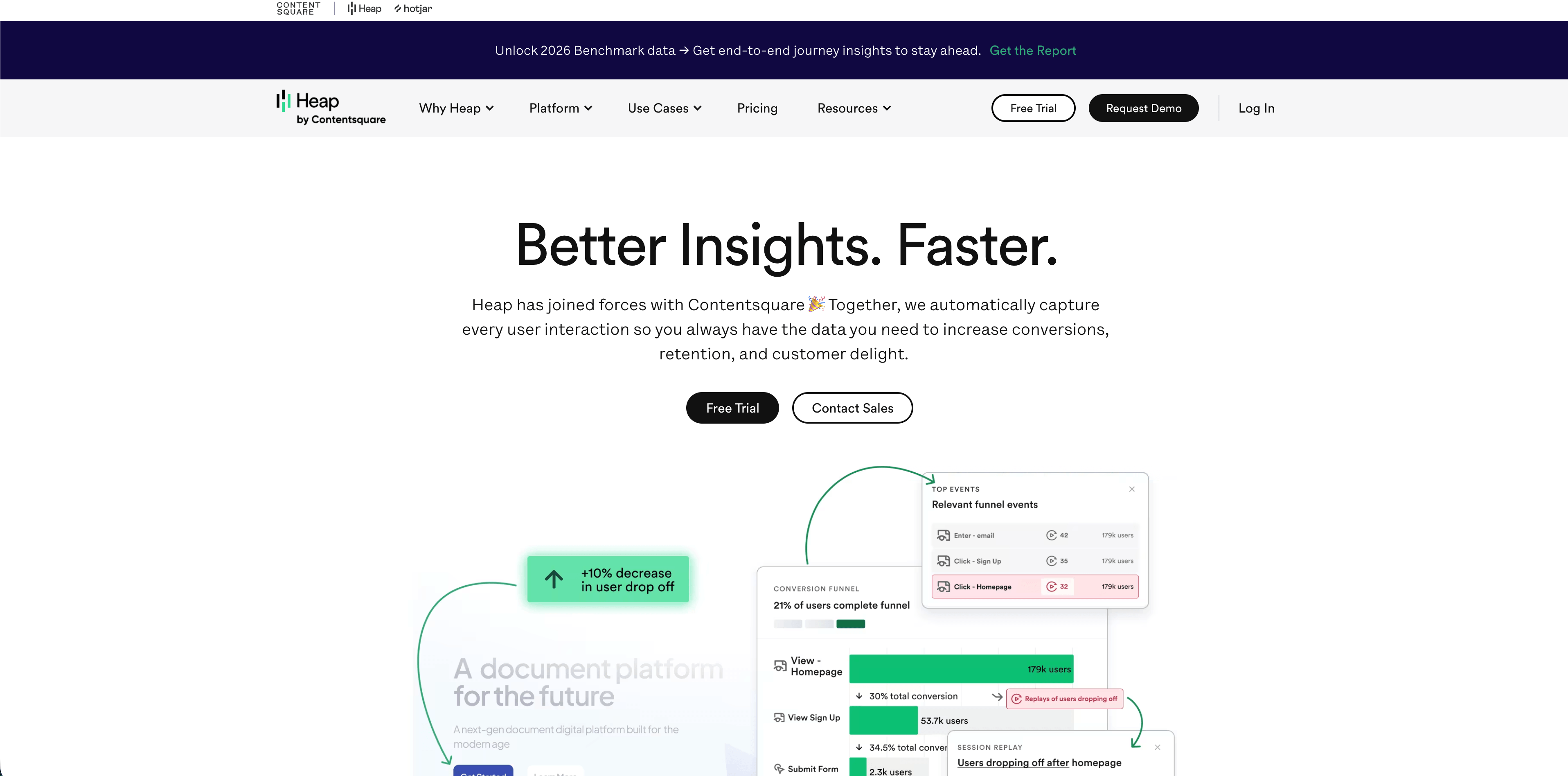
Heap ist eine Produktanalyseplattform, die für ihre Autocapture-Funktion bekannt ist. Die Preisseite listet derzeit einen kostenlosen Plan mit bis zu 10.000 monatlichen Sitzungen inklusive Kernanalyse-Charts, unbegrenzten Enrichment-Quellen, Integrationen, sechs Monaten Datenhistorie und SSO. Die Plattform bietet Charts, Funnels, Journeys, Retention, Heatmaps und Session Replay als Add-ons in höheren Plänen sowie Data-Warehouse- oder Projektfunktionen in den größeren Tarifstufen.
Auf Heaps Autocapture-Seite heißt es, dass ein einziges Snippet ab der Installation Klicks, Wischgesten, Taps, Pageviews und Formularausfüllungen erfasst und Verhaltensdaten rückwirkend verfügbar macht. Das ist mächtig, wenn Teams nicht jede Frage im Voraus kennen. Genau deshalb kommt es auf Governance an: Die automatische Erfassung kann zu weitreichend werden, wenn Teams keine Datenschutzgrenzen festlegen.
Heap eignet sich, wenn:
- Sie Autocapture und rückwirkende Verhaltensanalyse wollen.
- Produktteams neue Fragen beantworten müssen, ohne auf neue Instrumentierung zu warten.
- Sie über Governance-Prozesse für sensible Daten und Event-Bereinigung verfügen.
Zu beachten:
- Heap ist im Allgemeinen eher Produktanalyse als einfache Website-Analyse.
- Autocapture sollte bei Formularen, authentifizierten Bereichen und regulierten Seiten sorgfältig geprüft werden.

Selection framework by team type
| Teamsituation | Beste erste Auswahl |
|---|---|
| SaaS-Marketingseite will Traffic, Funnels und Umsatz ohne Cookies | Flowsery, Plausible Business, Seline |
| Gründer möchte schnell Umsatzattribution nach Kanal | Flowsery, DataFast, Seline |
| Content-Website will einfache aggregierte Berichte | Plausible, Fathom, Simple Analytics, Pirsch |
| Technisches Team will Self-Hosting | Umami, Matomo |
| Produktteam will Retention, Kohorten, Feature-Nutzung und Experimente | PostHog, Mixpanel, Heap |
| Agentur will viele Kundenseiten und Sharing | Pirsch, Fathom, Plausible, Flowsery |
| Regulierte oder datenschutzsensible Website will minimale Erfassung | Flowsery, Simple Analytics, Plausible, Fathom, Umami |
Privacy checks before you install any analytics platform
Führen Sie diese Prüfungen durch, bevor Sie ein Skript in Produktion einbinden:
- Lesen Sie nach, was der Anbieter tatsächlich erfasst, nicht nur die Marketingaussage.
- Prüfen Sie, ob Cookies, Local Storage, IP-Adressen, User-Agent-Strings, Geräte-IDs oder persistente IDs verwendet werden.
- Bestätigen Sie, ob die Plattform in Ihrer Rechtsordnung und Ihrem Anwendungsfall ohne Einwilligung laufen darf.
- Prüfen Sie, ob Session Replay, Heatmaps, Formularerfassung oder Autocapture aktiviert sind.
- Prüfen Sie den DPA, die Subauftragsverarbeiter, den Datenstandort, die Aufbewahrungs-, Lösch-, Export- und Datenschutzverletzungsmeldebedingungen.
- Testen Sie das Skript auf einer Staging-Seite und prüfen Sie die Netzwerk-Payloads.
- Bestätigen Sie, dass UTM-, Referrer-, Query-String- und benutzerdefinierte Event-Felder niemals E-Mail-Adressen, Gesundheitsdaten, Bestellnotizen oder andere sensible personenbezogene Daten enthalten.
Die strengste Prüfung ist die praktische: Installieren Sie die Finalisten auf einer Testseite, lösen Sie ein paar Besuche und Events aus und prüfen Sie dann, was den Browser tatsächlich verlässt. Die Datenschutzseite eines Anbieters ist wichtig, aber die Netzwerk-Payload zeigt, was Ihre Implementierung tatsächlich sendet.
Preisprüfungen, die für Überraschungen vorbeugen
Analytics-Plattformen berechnen Preise nach unterschiedlichen Einheiten: Pageviews, Events, Sessions, Hits, Recordings, Responses, Projekte, Team-Sitze, Aufbewahrungsdauer, Add-ons oder individuelle Enterprise-Pakete. Vergleiche die Preise mit deinem tatsächlichen Traffic-Modell.
- Pageview-basierte Preise sind für Content-Seiten einfach zu kalkulieren, können bei hohem Traffic aber stark steigen.
- Event-basierte Preise sind flexibel, belohnen aber saubere Instrumentierung.
- Session-basierte Preise sind für Produkt-Analytics oft übersichtlicher, verschleiern aber unter Umständen das Event-Volumen.
- Self-Hosting verursacht Infrastruktur- und Wartungskosten, auch wenn die Lizenz kostenlos ist.
- Add-ons wie Replay, Heatmaps, Warehouse-Sync, Custom-Domains, SSO, lange Aufbewahrungsfristen und Priority-Support können den tatsächlichen Preis verändern.
Wirken zwei Plattformen ähnlich, schätze die Kosten beim aktuellen Volumen, beim 3-fachen und beim 10-fachen Volumen. Wer bei 10.000 Besuchen vorn liegt, muss bei 5 Millionen Events nicht der Gewinner sein.
FAQ
Was sind die besten Web-Analytics-Plattformen im Jahr 2026?
Für datenschutzfreundliche Website-Analyse mit Funnels und Umsatzattribution ist Flowsery der richtige Startpunkt. Für einfache aggregierte Berichte lohnt sich der Vergleich von Plausible, Fathom, Simple Analytics, Pirsch und Umami. Wer eine vollständige oder selbst gehostete Lösung sucht, vergleicht Matomo. Für mehr Tiefe in der Produktanalyse bieten sich PostHog, Mixpanel und Heap an. Gründerorientierte Umsatzattribution findet sich bei Flowsery, DataFast und Seline.
Welche Web-Analytics-Plattformen verzichten auf Cookies?
Flowsery, Plausible, Fathom, Simple Analytics, Pirsch, Umami und Seline positionieren sich alle als cookiefrei oder cookielos. DataFast bietet sowohl ein Standardskript auf Cookie-Basis als auch ein cookieloses Skript an. PostHog, Mixpanel, Heap und Matomo sind eher konfigurierbar oder auf Produktanalyse ausgerichtet, weshalb die Implementierung hier genauer geprüft werden sollte.
Sind Produktanalyse-Plattformen dasselbe wie Web-Analytics-Plattformen?
Nein. Web-Analytics-Plattformen konzentrieren sich auf Website-Traffic, Quellen, Seiten, Kampagnen, Geräte, Länder, Ziele und Conversions. Produktanalyse-Plattformen konzentrieren sich auf das Verhalten eingeloggter Nutzer, Events, Nutzerprofile, Eigenschaften, Kohorten, Retention, Feature-Adoption, Experimente und Nutzerpfade. Manche Plattformen decken inzwischen beides ab, das Betriebsmodell bleibt aber unterschiedlich.
Flowsery
Kostenlos testen
Echtzeit-Dashboard
Zielverfolgung
Cookie-freies Tracking
Sollte ein Startup eine einfache Analytics-Plattform oder eine Produktanalyse-Plattform wählen?
Lautet die drängende Frage "Welche Kanäle und Seiten konvertieren?", ist eine Web-Analytics-Plattform die erste Wahl. Geht es um "Welches Verhalten in der App sagt Aktivierung und Retention voraus?", ist eine Produktanalyse-Plattform die richtige Wahl. Viele Startups nutzen für die öffentliche Website zunächst eine datenschutzfreundliche Web-Analytics-Plattform und wechseln erst zur Produktanalyse, sobald die Event-Governance reif genug ist.
Welche Dashboard-Bilder werden für diesen Artikel benötigt?
Der obige Vergleich verwendet Dashboard-Bilder für Flowsery, Plausible, Fathom, Simple Analytics, Pirsch, Umami, Matomo, Seline, DataFast, PostHog, Mixpanel und Heap. Alle stammen aus den bestehenden AdaptlyPost-CDN-Dateinamen, die für diese Aufgabe bereitgestellt wurden.
Wie schneidet die Preisgestaltung von Flowsery im Vergleich zu Plausible ab?
Flowsery bietet einen einzigen Plan für $500 pro Monat nach einer 14-tägigen kostenlosen Testphase, der unbegrenzte Websites und 1M Analytics-Sessions umfasst. Plausible startet deutlich niedriger, ab $9 pro Monat bei 10,000 Seitenaufrufen, wobei Funnels, Umsatz-Tracking und die Stats API erst im höheren Business-Plan enthalten sind. Der Preisunterschied spiegelt eher den Funktionsumfang als die Stufe wider. Flowsery bündelt Umsatzattribution und API-Zugriff in seinem einzigen Plan, während Plausible ähnliche Funktionen auf mehrere Pläne verteilt.
Welche Web-Analytics-Plattformen bieten einen kostenlosen Plan?
Simple Analytics hat neben den kostenpflichtigen Stufen EUR15 und EUR40 einen kostenlosen Plan. PostHog stellt 1 Million Analytics-Events pro Monat kostenlos zur Verfügung, Mixpanel bietet einen kostenlosen Plan mit einer Obergrenze von 1 Million monatlichen Events, und der kostenlose Plan von Heap deckt bis zu 10,000 monatliche Sessions ab. Auch Umami Cloud führt in seiner Dokumentation eine kostenlose Hobby-Stufe, allerdings ist die Preisseite dynamisch genug, dass sich ein Blick auf die aktuellen Limits vor der Entscheidung lohnt.
Verfolgt DataFast Besucher mit Cookies?
Standardmäßig ja. Laut FAQ von DataFast verwendet das Standard-Tracking-Skript Cookies, weil dies die genaueste Erkennung wiederkehrender Besucher und Umsatzattribution ermöglicht. Ein cookieloses Skript ist verfügbar, DataFast weist aber darauf hin, dass es mit geringerer Genauigkeit einhergeht, da sich die Kennungen ändern. Teams mit einer strikten No-Cookie-Anforderung sollten diesen Kompromiss vorher prüfen.
Was passiert, wenn die kostenlose Testphase von Flowsery endet?
Die Testphase von Flowsery läuft 14 Tage, danach wechselt das Konto zum einzigen kostenpflichtigen Plan für $500 pro Monat. Dieser Plan umfasst 1M Analytics-Sessions, unbegrenzte Websites, bis zu 10 Teammitglieder, Umsatz-Tracking, Funnel-Analyse, API-Zugriff und ein Skript unter 10KB, sodass nach der Testphase nichts wegfällt. Eine günstigere Stufe gibt es nicht, da Flowsery derzeit nur den einen Plan anbietet.
Welche Plattform eignet sich für eine Agentur, die mehrere Kundenwebsites verwaltet?
Das Team-Typ-Framework des Guides verweist Agenturen auf Pirsch, Fathom, Plausible und Flowsery. Der Standard-Plan von Pirsch allein deckt 50 Websites mit unbegrenzten Mitgliedern ab, und die Plus-Stufe ergänzt unbegrenzte Websites sowie White Labeling, das speziell für Agenturen gedacht ist. Fathom unterstützt in seinem Einstiegsplan ebenfalls bis zu 50 Websites, was Agenturen hilft, kein separates Abonnement pro Kunde kaufen zu müssen.
Fazit
Die beste Web-Analytics-Plattform ist die, die zu Ihrer Entscheidung, Ihrem Datenrisiko und Ihrem Betriebsmodell passt. Flowsery ist die erste Plattform, die Sie prüfen sollten, wenn Sie datenschutzfreundliche Website-Analysen mit Funnels, Journeys, Zielen und Umsatzkontext wollen. Der Rest der Shortlist sollte nach Einschränkung gewählt werden: einfaches Reporting, EU-Datenschutzausrichtung, Self-Hosting, Umsatzattribution oder tiefgehende Produktanalysen.
Starten Sie mit Flowsery für datenschutzfreundliche Web-Analysen - verbinden Sie Traffic, Funnels, Journeys und Umsatz, ohne dass Website-Analysen zum Datenschutzrisiko werden.
Quellen überprüft am 12. Mai 2026: Flowsery Preise, Flowsery Web-Analytics-Plattform, Plausible, Plausible Datenschutzrichtlinie, Plausible Funnel-Dokumentation, Fathom Preise, Simple Analytics Preise, Simple Analytics Dokumentation zur Datenerfassung, Pirsch Preise, Pirsch Dokumentation, Umami Dokumentation, Umami Cloud FAQ, Matomo Preise, Seline Preise, Seline DSGVO-Erklärung, DataFast, PostHog Preise, PostHog Web-Analytics-Dokumentation, Mixpanel Preise, Mixpanel Dokumentation, Heap Preise, und Heap Autocapture.
War dieser Artikel hilfreich?
Teilen Sie uns Ihre Meinung mit!
Sieh uns öfter bei Google
Ein Klick macht Flowsery zu einer bevorzugten Quelle. Unsere Artikel stehen dann weiter oben in deinen Top-Meldungen, im KI-Modus und in den KI-Übersichten.
Bevor Sie gehen...
Flowsery
Umsatzorientierte Analysen für Ihre Website
Verfolgen Sie jeden Besucher, jede Quelle und jede Conversion in Echtzeit. Einfach, leistungsstark und komplett ohne Cookies.
Echtzeit-Dashboard
Zielverfolgung
Cookie-freies Tracking
Verwandte Artikel
So waehlen Sie die richtige analytics alternative 2026
Datenschutz, Preis, Dashboard-Tiefe, Umsatzattribution und Product Analytics im Vergleich, damit eine klare analytics alternative zu GA4 sichtbar wird.
Auswahl 2026: Software für Webanalyse im Faktencheck
Gepruefte Preise, Datenschutznotizen und Dashboard-Screenshots im Faktencheck top web analytics software, mit einer von Flowsery gefuehrten Auswahl.
Praxisnah erklärt - Hosting für Analytics Tools
Vom Hosting für Analytics-Tools bis zur Umsatzzuordnung: zwölf Werkzeuge im Vergleich nach Datenschutzmodell, Dashboard-Tiefe, Event-Tracking und Preis.