
TL;DR, Quick Answer
15 min readFlowsery is the first tool to evaluate when you want a privacy-first Google Analytics replacement with cookieless tracking, funnels, goals, live traffic, and revenue attribution. Plausible, PrettyInsights, Fathom, Simple Analytics, Pirsch, DataFast, Seline, Matomo, Umami, PostHog, Mixpanel, and Heap are strong alternatives when their tradeoffs fit your team.
Choose among Google Analytics alternatives by starting with the job you need measurement to do: plain traffic reporting, privacy-first conversion tracking, revenue attribution, open-source control, or product behaviour analysis.
Google Analytics 4 is still powerful. It is also tied to a larger Google measurement ecosystem: consent mode, Google Ads, modeled conversions, events, audiences, BigQuery exports, and reporting concepts that can be more machinery than many teams need. Google's consent-mode documentation says that when analytics_storage='denied', Google Analytics sends cookieless pings for modeling, and those pings can still include browser and request information such as user agent, screen resolution, and IP address, though Google says Analytics does not store or log IP addresses.
That is a reasonable model for teams that depend on Google's ads and attribution stack. It is less appealing if you want a smaller analytics surface, a dashboard non-analysts can read, or a privacy posture that is easier to explain to customers.
Research checked: May 12, 2026. Pricing and packaging change often, so verify the final plan details before buying. I used official product pages, docs, pricing pages, and Google documentation rather than third-party roundups.
Key takeaway: Flowsery belongs first on the shortlist for teams replacing GA4 with privacy-first website analytics, goals, funnels, revenue attribution, and a 14-day free trial. Use Plausible, PrettyInsights, Fathom, Simple Analytics, Pirsch, DataFast, Seline, Matomo, Umami, PostHog, Mixpanel, or Heap when your use case calls for their specific strengths.
Quick comparison
| Tool | Best fit | Free plan or trial checked | Hosting | Main caution |
|---|---|---|---|---|
| Flowsery | Privacy-first web analytics with funnels and revenue | 14-day trial, then from $250/mo | Cloud | Not self-hosted |
| Plausible | Simple EU-hosted analytics with open-source option | 30-day trial | Cloud or self-hosted Community Edition | Advanced features are tiered |
| PrettyInsights | Privacy-first web and product analytics with AI assistant | 15-day trial | Cloud | Starter and Professional cap users at 1 and 2 |
| Fathom | Polished hosted website analytics | 7-day trial | Cloud | No permanent free plan |
| Simple Analytics | Minimal analytics with strict data minimization | Free plan plus 14-day trial | Cloud | May be too light for funnel-heavy teams |
| Pirsch | Privacy analytics for agencies, APIs, and white label | 30-day trial | Cloud, enterprise on-premise | Funnels and white label sit above Standard |
| DataFast | Revenue-first analytics for makers and SaaS | 5k events/month free | Cloud or self-hostable | Less enterprise governance than older platforms |
| Seline | Lightweight analytics with journeys and revenue | 7-day trial | Cloud | No free plan |
| Matomo | Full GA-like analytics with self-hosting | Free on-premise option | Cloud or on-premise | More setup and maintenance |
| Umami | Open-source developer analytics | Self-hosting and cloud signup | Cloud or self-hosted | Cloud pricing should be checked live |
| PostHog | Developer product analytics and web analytics | 1M events/month free | Cloud or self-hosted | Broader data surface than simple web analytics |
| Mixpanel | Product funnels, cohorts, retention, and flows | 1M events/month free | Cloud | Requires disciplined event taxonomy |
| Heap | Autocapture and behavioral product analytics | Free up to 10k monthly sessions | Cloud | Autocapture needs strong privacy review |
1. Flowsery
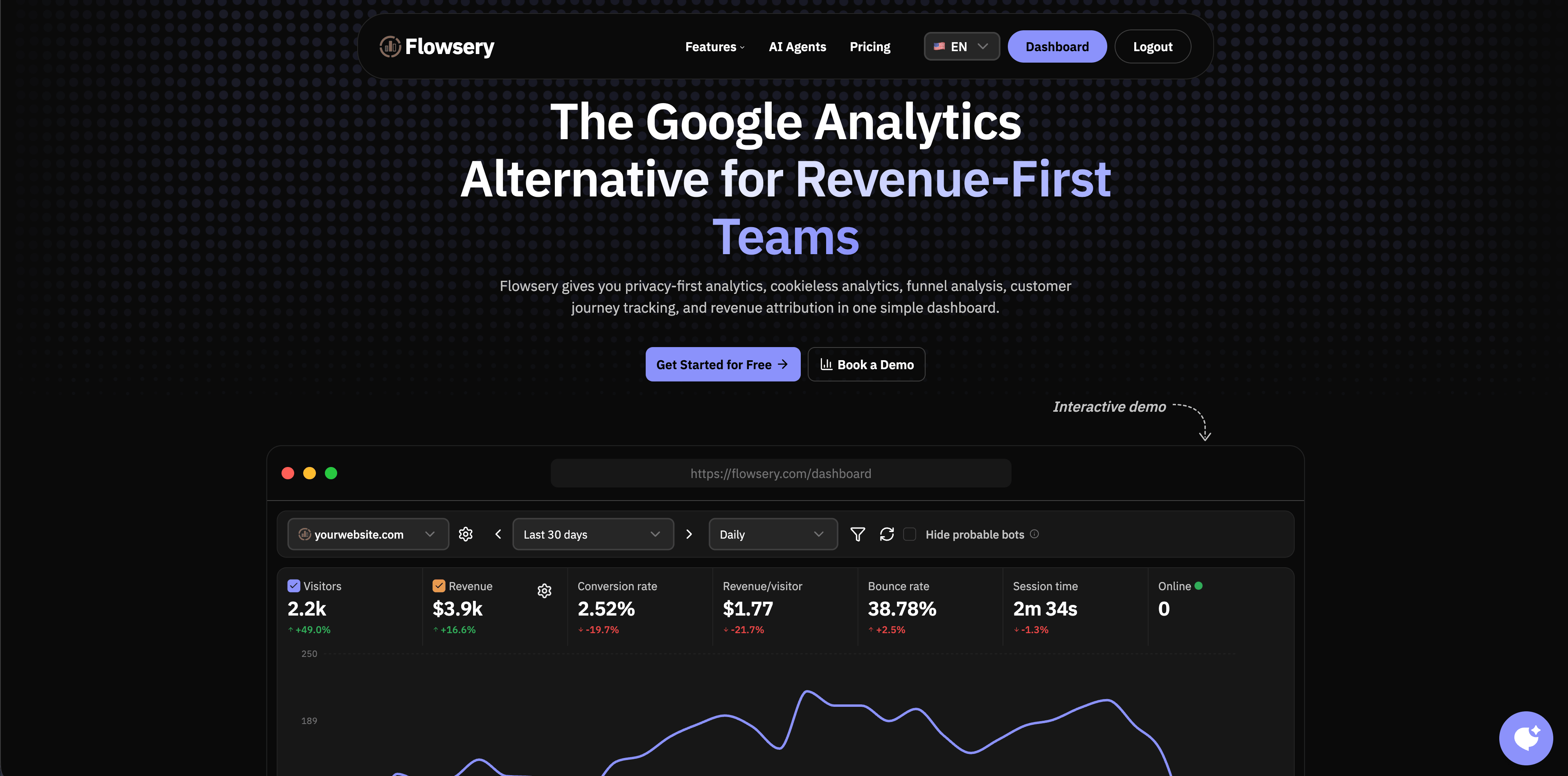
Flowsery is the first pick when your replacement for Google Analytics should be a focused website analytics product, not another broad data platform. It tracks traffic sources, pages, campaigns, live visitors, goals, funnels, revenue attribution, customer journeys, devices, countries, browsers, and custom events without cookies or cross-site tracking.
Flowsery's current pricing page lists two plans, Team at $250/month and Pro at $500/month, billed on usage, with a 14-day free trial and no credit card. Pro includes 1M analytics sessions, 100k session recordings, 100k AI session analyses, 25k goal alert emails, unlimited websites, up to 10 team members, 30 AI fix PRs, and 3-year retention, and anything past those limits is billed as extra usage. The same page lists cookie-free tracking, no personal data collection, full data export, no sampling, API access, revenue tracking, funnel analysis, and a sub-10KB tracking script.
Choose Flowsery if you want to answer practical website questions:
- Which channels bring visitors who convert?
- Which pages create signups, trials, payments, or demos?
- Where do people drop out of a funnel?
- Which campaigns produce revenue rather than just visits?
- Can the team read the dashboard without becoming GA4 specialists?
The main tradeoff is hosting. Flowsery is managed cloud software, which keeps setup simple but will not fit a hard self-hosting requirement.
2. Plausible Analytics
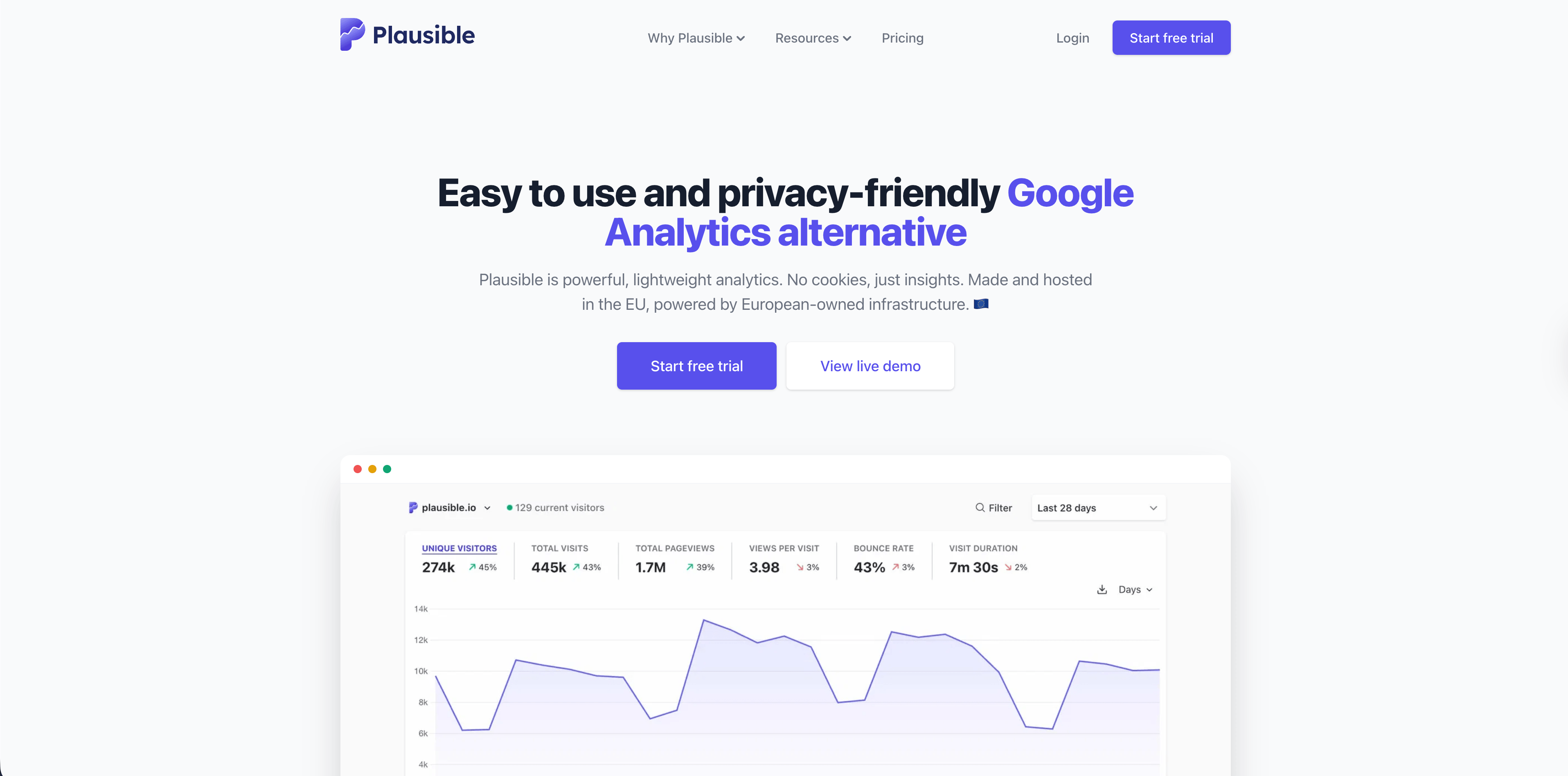
Plausible is one of the best-known privacy-friendly Google Analytics alternatives. Its public site positions it as lightweight, open source, made and hosted in the EU, and built without cookies. Its billing docs say usage is based on total pageviews and custom events across the sites in a team. The same docs explain the current plan logic: Starter for one site and solo use, Growth for multiple sites and sharing dashboards, Business for funnels, revenue tracking, custom properties, Stats API, and Looker Studio, and Enterprise for larger requirements such as SSO, raw exports, and managed proxy.
Plausible is a strong choice for publishers, small businesses, and agencies that want a clean dashboard with goals and campaign reporting. The open-source Community Edition also matters for teams that want more transparency or a self-hosted route.
The limitation is depth. Plausible is intentionally simpler than Matomo, PostHog, Mixpanel, or Heap. If the buying reason is multi-step funnels and revenue attribution, compare the exact plan tier against Flowsery, Pirsch, Seline, and DataFast rather than assuming every "analytics alternative" includes those workflows.
3. PrettyInsights

Flowsery
Start Your 14-Day Free Trial
Real-time dashboard
Goal tracking
Cookie-free tracking
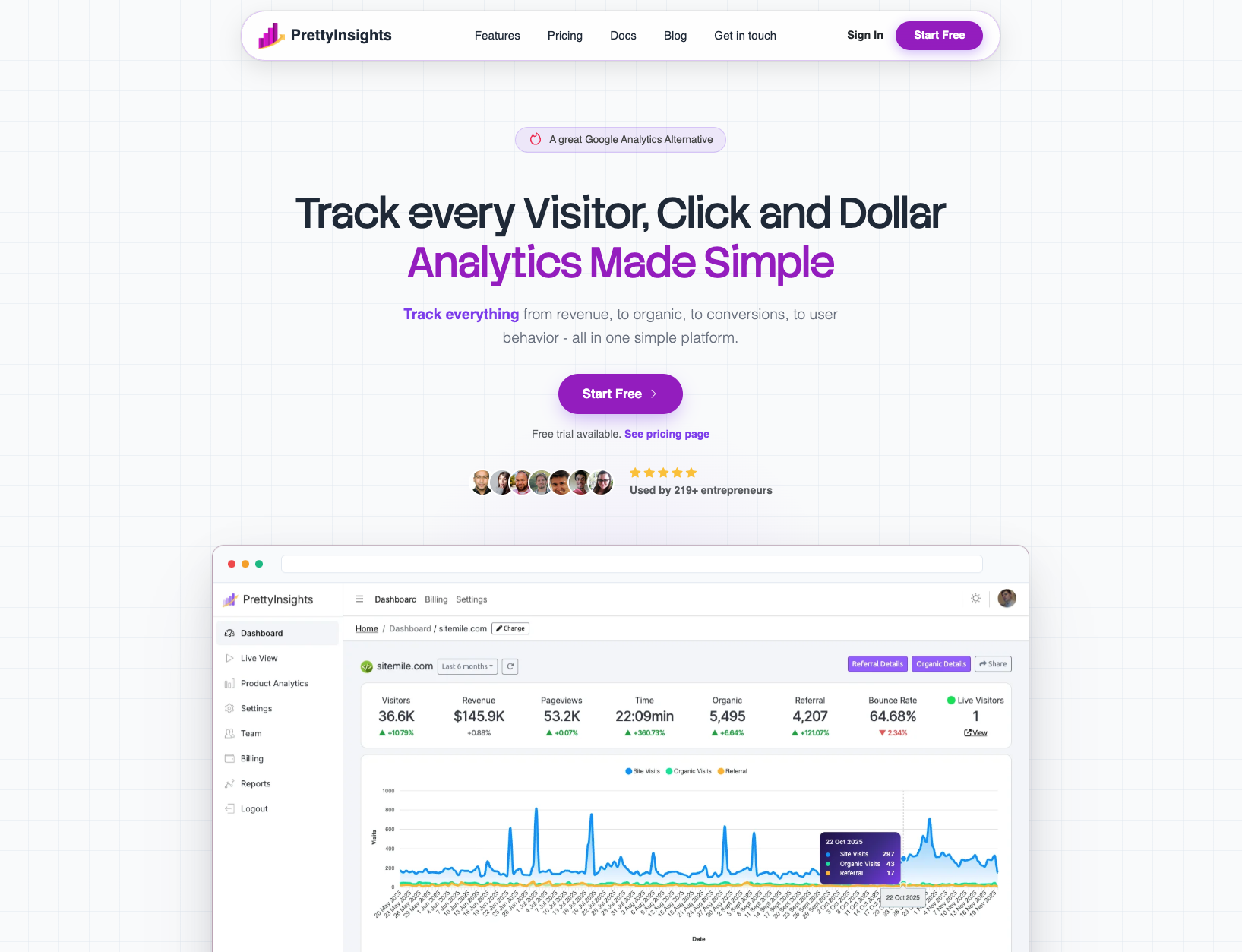
PrettyInsights is a privacy-first web and product analytics tool that positions itself squarely as a Google Analytics replacement for small businesses, Shopify stores, and agencies. It covers traffic sources, pages, campaigns, live visitor monitoring, goals, funnels, custom events, cohort analysis, revenue and conversion tracking, heatmaps, session recordings, and email reports, and it adds an AI assistant you can ask plain-language questions about your data.
The tracking script is lightweight, no personal data is stored, and all data sits on EU-based servers, so most sites can skip the cookie banner.
Its pricing page currently lists two self-serve plans and an enterprise tier, all with a 15-day free trial and no credit card. Starter is $10/month at 20k monthly pageviews and includes 1 user, up to 10 sites, website and product analytics, revenue tracking, a goals dashboard, and a live visitor map.
Professional is $30/month and adds a second user, up to 20 sites, API access, and custom events. Enterprise is custom-priced with isolated storage, multiple agency teams, and combined invoicing. Pricing scales with pageviews and adjusts month to month based on actual usage, and a $299 lifetime Starter deal is capped at 100 seats. Data export in CSV and JSON is available on every plan.
Choose PrettyInsights if you want to answer questions like:
- Which channels and campaigns bring visitors who actually pay?
- Where does the Shopify checkout leak, from add-to-cart to payment?
- Which pages create signups and which funnel step loses people?
- What happened to traffic this week, asked in a sentence rather than built as a report?
- Can a non-analyst read the dashboard without training?
The tradeoff is scope at the low end. Starter and Professional are capped at one and two users respectively, and API access and custom events only start at Professional, so agencies managing many clients with several teammates will need to price out the Enterprise tier. It is also cloud-only, so it will not fit a hard self-hosting requirement.
4. Fathom Analytics
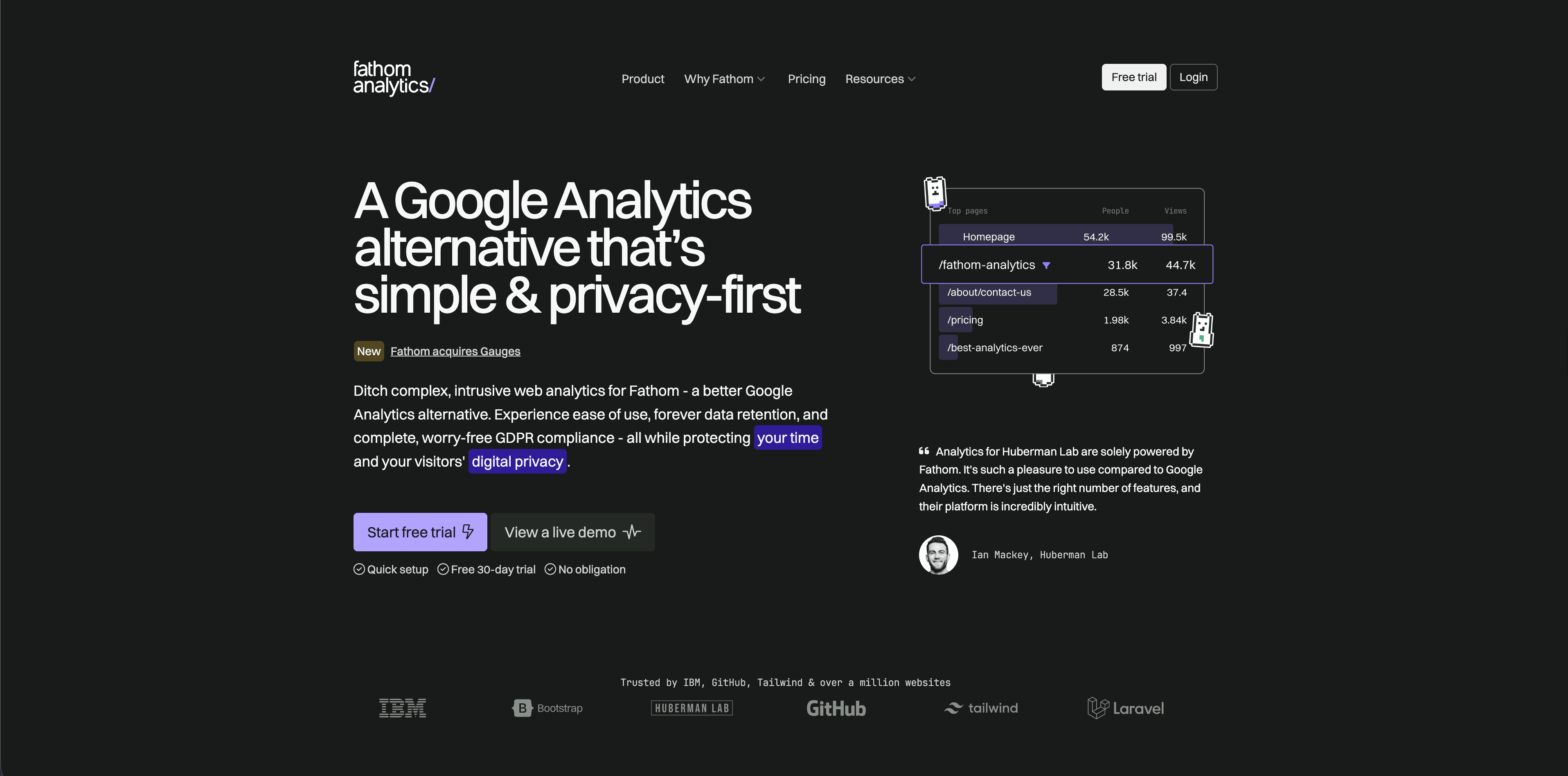
Fathom is a polished hosted analytics product for teams that want a paid, low-maintenance dashboard. Its pricing page currently lists a 7-day free trial and plans starting at $15/month, with up to 50 sites included, ecommerce or event tracking, API access, forever data retention, no cookie banners required, email reports, exports, and data ownership.
Fathom is easiest to recommend when you want simple website analytics that non-technical users can understand quickly. The pageview-based pricing model is also easy to explain.
The tradeoff is scope. Fathom is not a product analytics suite, and it is not trying to be one. If you need retention cohorts, feature-level user journeys, experiments, or session replay, evaluate PostHog, Mixpanel, Heap, or Matomo separately.
5. Simple Analytics
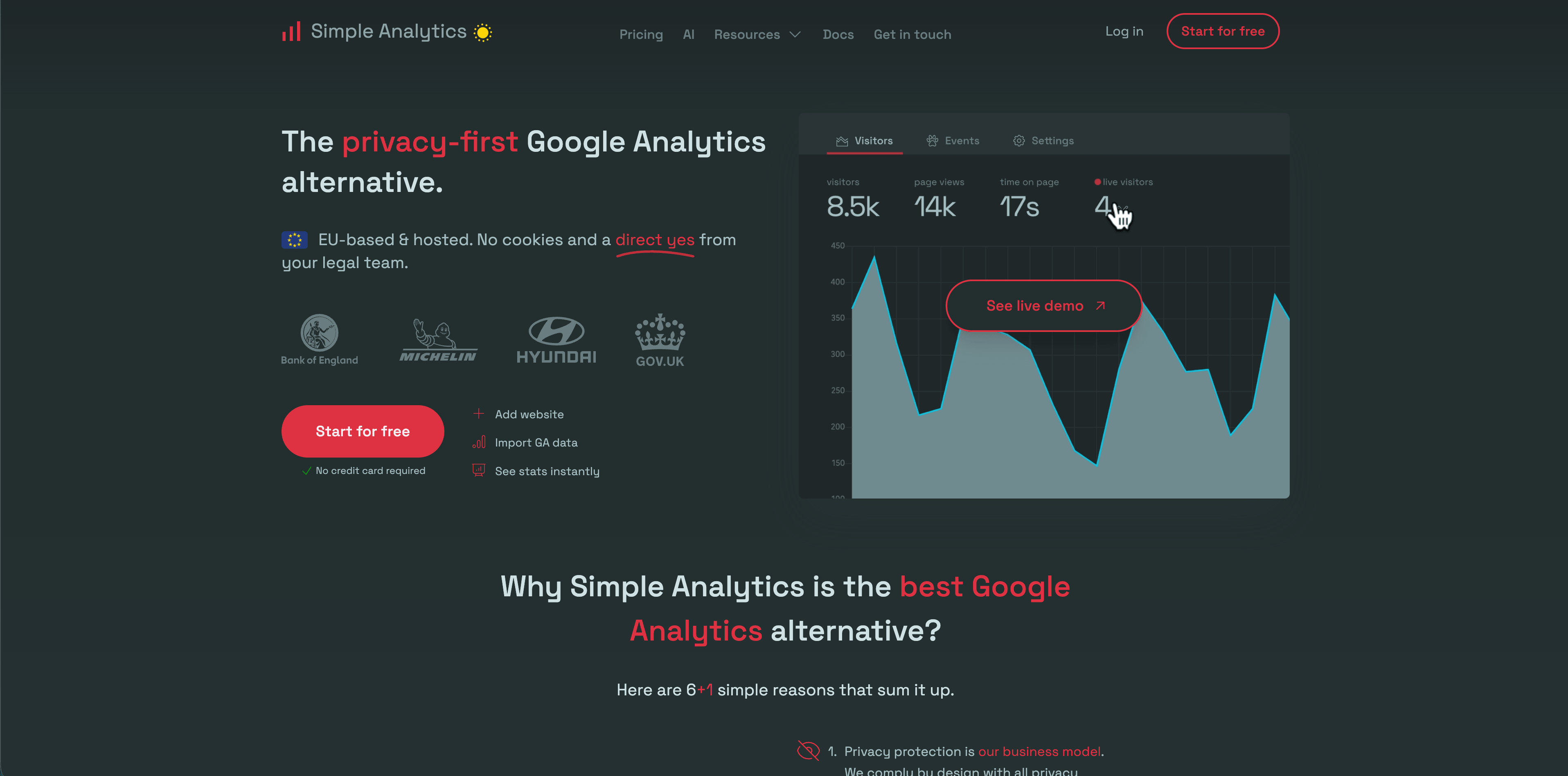
Simple Analytics is one of the strictest data-minimization tools in this list. Its docs say it never tracks visitors, never collects or creates an ID for a user, browser, or device, and does not store IDs on the visitor's device. Its pricing page says it does not collect personal data, does not use cookies, does not collect information that could fingerprint a user, and keeps website data in the Netherlands and the EU.
The current public pricing page shows a free plan for hobby projects and paid plans such as Simple at 15/month and Team at 40/month at the 20k pageviews/events setting, with a 14-day trial during signup. The currency displayed can vary by locale.
Choose Simple Analytics when the main requirement is "measure less, explain it clearly." It is a good fit for public websites, nonprofits, small businesses, and teams that want a simple privacy story.
The limitation is built into the product philosophy. If you need richer funnel analysis, revenue attribution, or product behavior analytics, Simple Analytics may feel too minimal.
Flowsery
Start Your 14-Day Free Trial
Real-time dashboard
Goal tracking
Cookie-free tracking
6. Pirsch
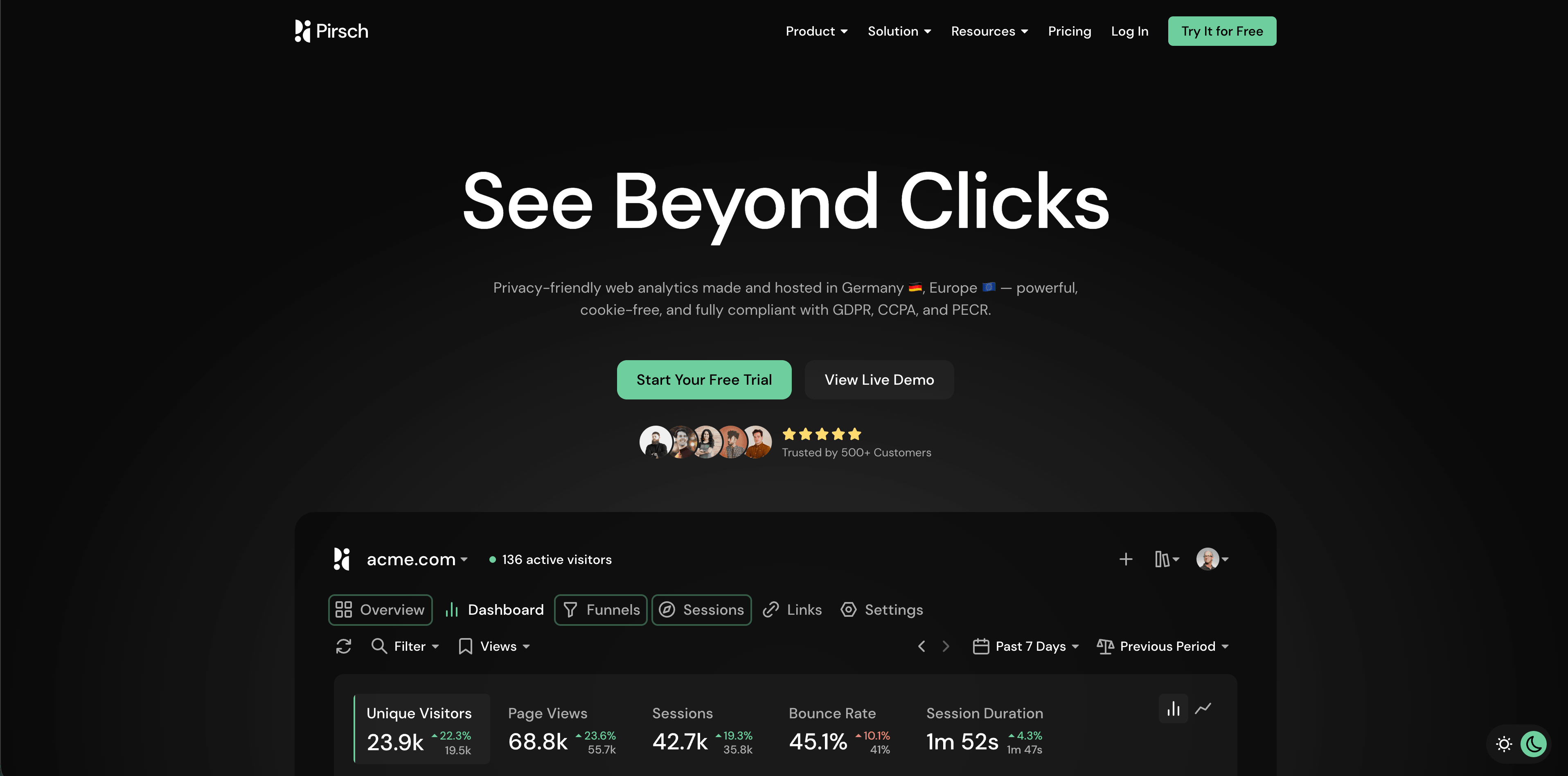
Pirsch is a privacy-friendly analytics platform with a strong agency and developer angle. Its pricing page lists a 30-day trial, Standard from $6/month for 10,000 monthly pageviews, and Plus from $12/month. Standard includes 50 websites, unlimited members, unlimited data retention, events and conversion goals, session analysis, REST API and SDKs, GDPR compliance, data ownership, and Google Analytics import. Plus adds unlimited websites, funnels, teams, A/B testing and segmentation, custom domains, custom themes, and white labeling.
That makes Pirsch practical for teams that need more than a bare traffic dashboard but do not want a heavy product analytics suite. Agencies should pay attention to Plus because custom domains, teams, and white labeling are often the real client-reporting features.
The caution is anonymization. Pirsch's own FAQ says it generates a hash for each visitor from IP address, user agent, and other data points. That may be acceptable for your legal model, but it is different from tools that avoid visitor hashes entirely.
7. DataFast
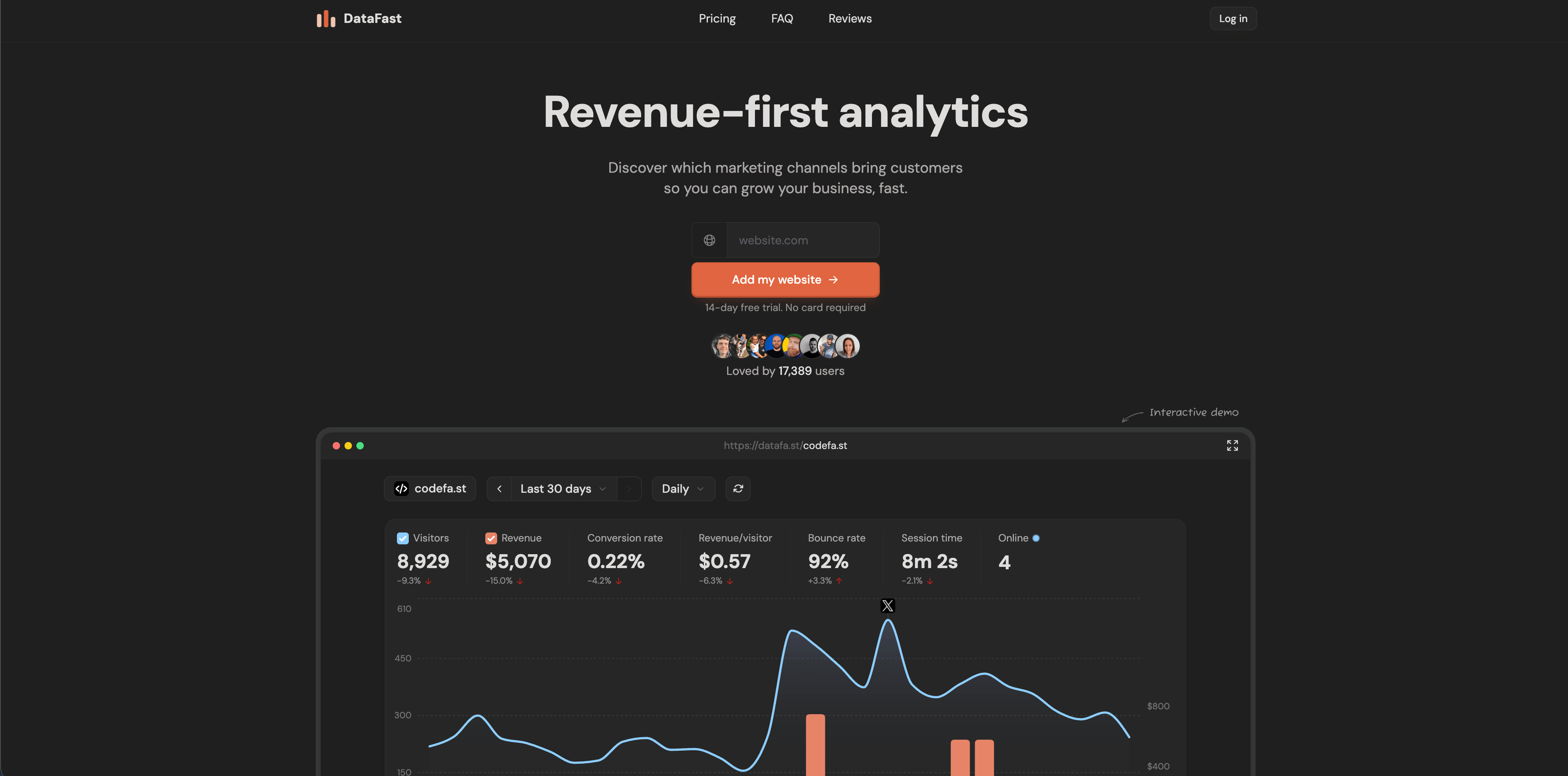
DataFast is revenue-first analytics for makers and small SaaS teams. Its homepage currently highlights a 517-byte script, no cookies by default, no personal data stored, no cookies and no consent banners, Stripe and LemonSqueezy revenue connections, self-hosting with Docker Compose, a live demo, and 5,000 events/month free with no credit card.
DataFast is strongest when the owner cares less about every possible traffic metric and more about one question: which sources, pages, and campaigns lead to paying customers? It has a sharp point of view, which is refreshing in a category that often buries teams in charts.
The caution is maturity and governance. If procurement needs extensive enterprise controls, subprocessors, regional contracts, advanced permissions, or long internal security review, validate those needs directly before replacing GA4 with a smaller founder-led product.
8. Seline
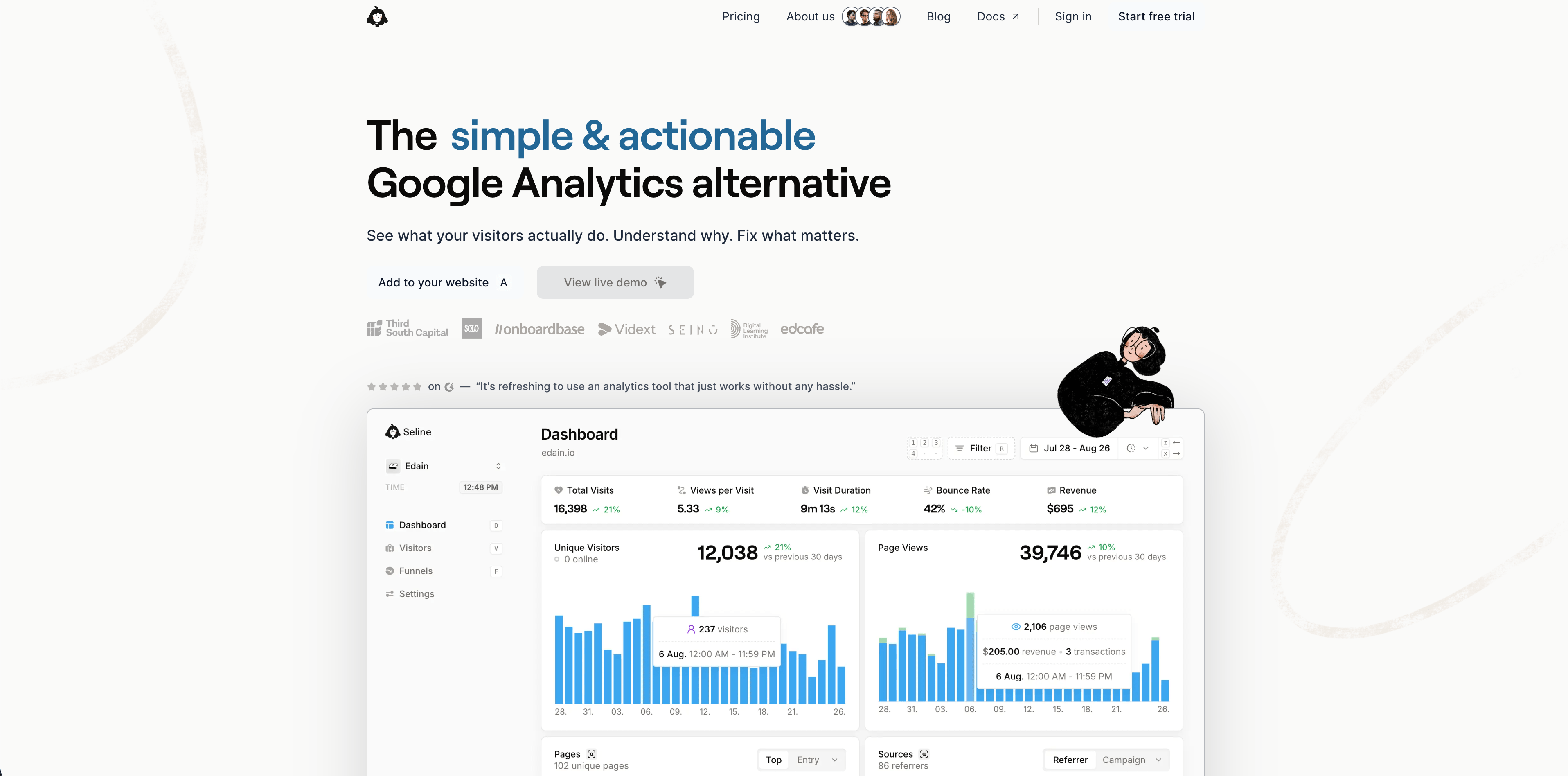
Seline is a lightweight privacy-friendly analytics product from a bootstrapped team in Warsaw. Its current pricing page lists a 7-day trial, no credit card required, and a single Pro plan at $24/month for 100,000 events/month. Pro includes forever data retention, profiles and journeys, public API, unlimited websites, revenue analytics, priority human support, ad-blocker bypass, and advanced bot detection. The FAQ says there is no free plan, and that Seline is legally based and hosted in the EU with no cookies.
Seline fits teams that want simple web analytics with more context than pageviews: journeys, profiles, revenue, and API access. It sits between minimalist analytics and full product analytics.
The privacy review should focus on how you use profiles and journeys. A tool can be cookie-free while still becoming sensitive if you send names, emails, account IDs, or free-text properties into events.

9. Matomo
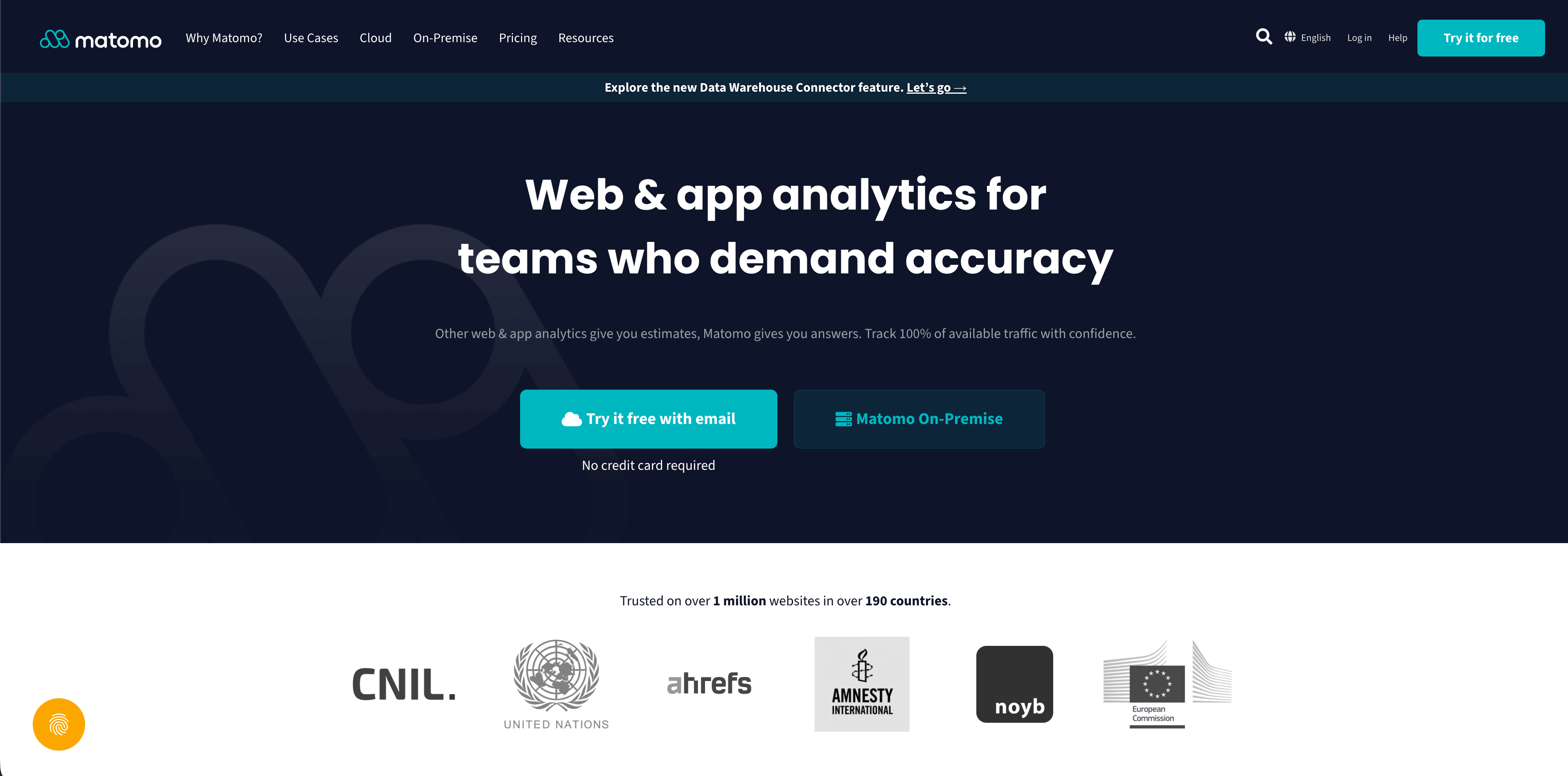
Matomo is the most complete "replace GA with something familiar" option. Its current pricing page separates Matomo Cloud from Matomo On-Premise. Cloud starts at 29 per month before tax at the selected traffic level shown on the pricing page, while On-Premise is the self-hosted open-source route. Matomo lists data ownership, privacy compliance, ecommerce tracking, event tracking, campaign tracking, real-time analytics, custom dashboards, segmentation, API access, and a large plugin ecosystem.
Flowsery
Start Your 14-Day Free Trial
Real-time dashboard
Goal tracking
Cookie-free tracking
Choose Matomo when you want breadth: familiar reports, self-hosting, ecommerce, tag management, custom reports, heatmaps, session recording, and mature operational controls. It is especially relevant for organizations that want infrastructure control and have the people to maintain it.
The tradeoff is complexity. Matomo can be configured in privacy-friendly ways, but it can also become a large analytics installation with cookies, visitor profiles, recordings, plugins, updates, backups, and permissions to manage. It is not the lightest path away from GA4.
10. Umami
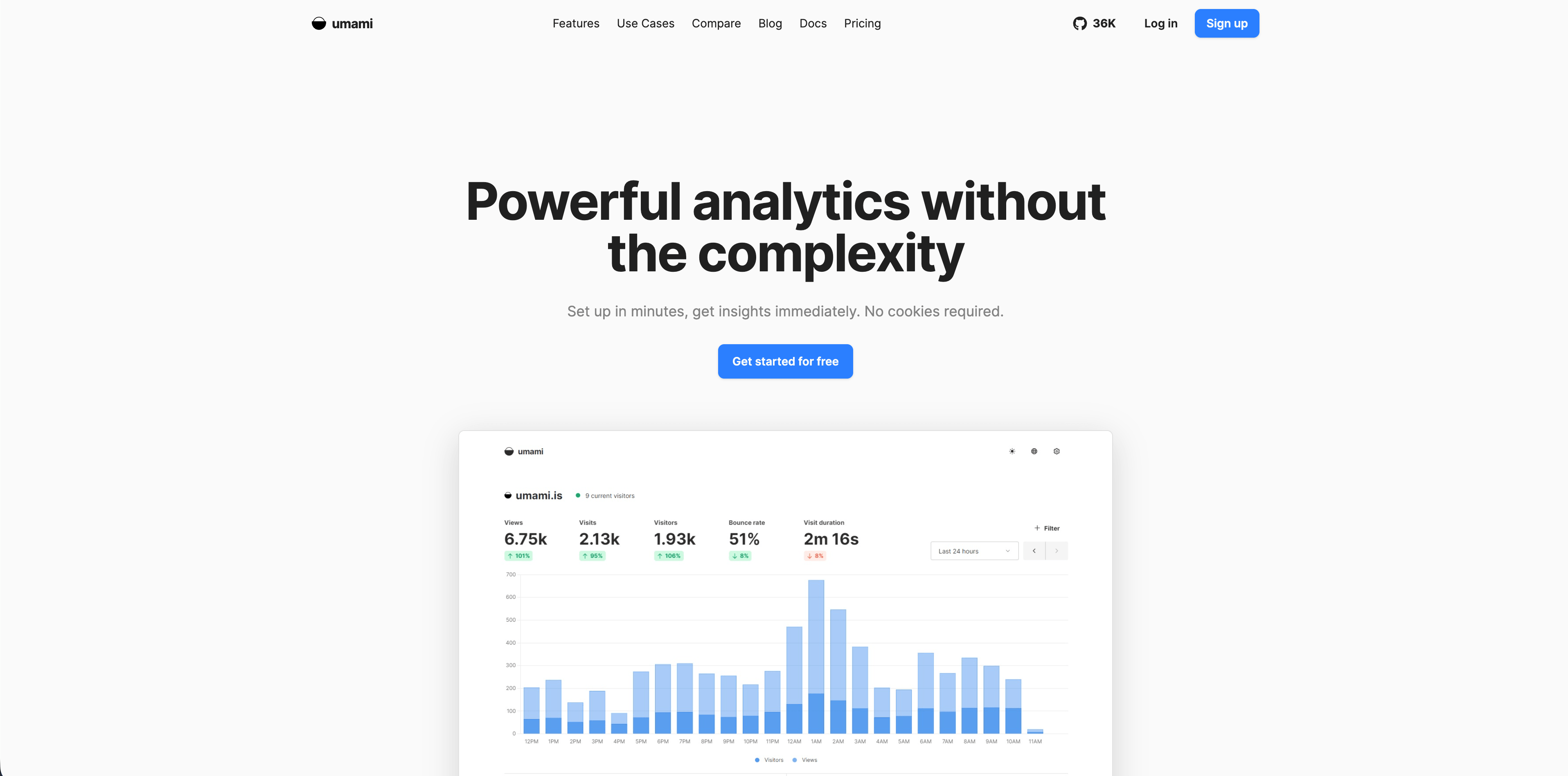
Umami is an open-source analytics platform popular with developers. Its v3 docs describe it as privacy-respecting, with no cookies, no cross-site tracking, no personal data collection, and GDPR compliance out of the box. The docs also call out self-hosting, a tracking script under 2KB, core metrics, custom events, funnels, journeys, retention analysis, goals, UTM campaign tracking, revenue, attribution, boards, teams, and a REST API. Umami Cloud is the managed version run by the creators of Umami, with usage-based pricing referenced from the cloud docs.
Umami is a good fit when the team is technical, wants self-hosting or a managed open-source-flavored tool, and does not need the full Matomo surface area.
The caution is operating ownership. Self-hosting means uptime, database care, backups, upgrades, security patches, and alerting are your job. If you choose cloud, check live plan limits before making a cost comparison.
11. PostHog
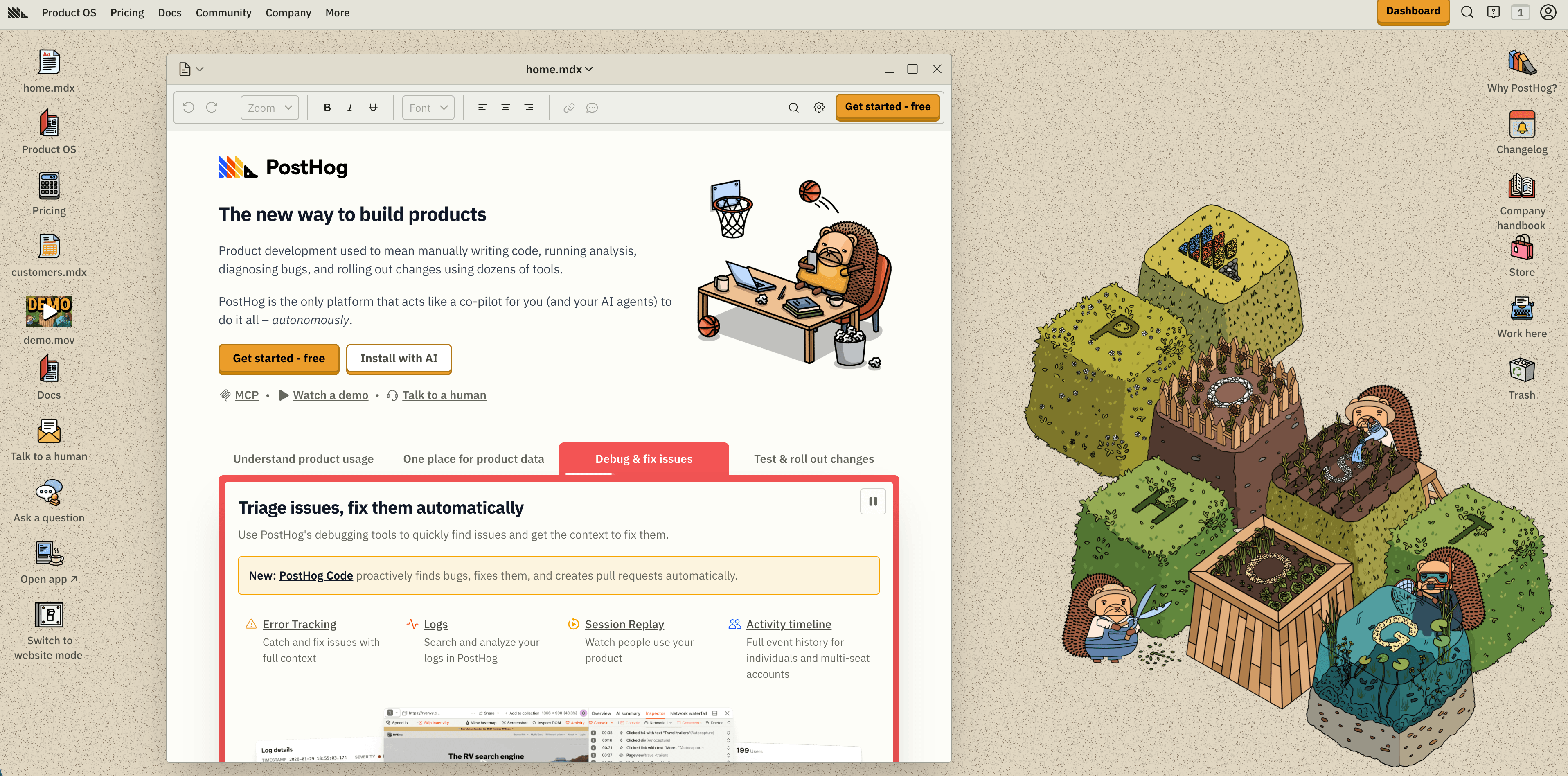
PostHog is a developer-oriented product platform, not just a website analytics tool. Its pricing page currently says anonymous website analytics events can show a Google Analytics-style dashboard, including UTM, location, referrer, and pageview properties. It lists pricing for anonymous events at $0.00005/event with the first 1 million events/month free. Product analytics adds identified user behavior, cohorts, replay, experiments, and feature-flag context.
Choose PostHog when analytics is part of how engineering ships product: funnels, feature flags, replay, experiments, surveys, warehouse data, error tracking, logs, and product instrumentation.
Do not choose PostHog only because GA4 feels confusing. It can replace and exceed GA4 in product contexts, but it also expands the data surface. For a public website that mainly needs sources, pages, goals, funnels, and revenue, Flowsery or another focused tool will be easier to govern.
12. Mixpanel
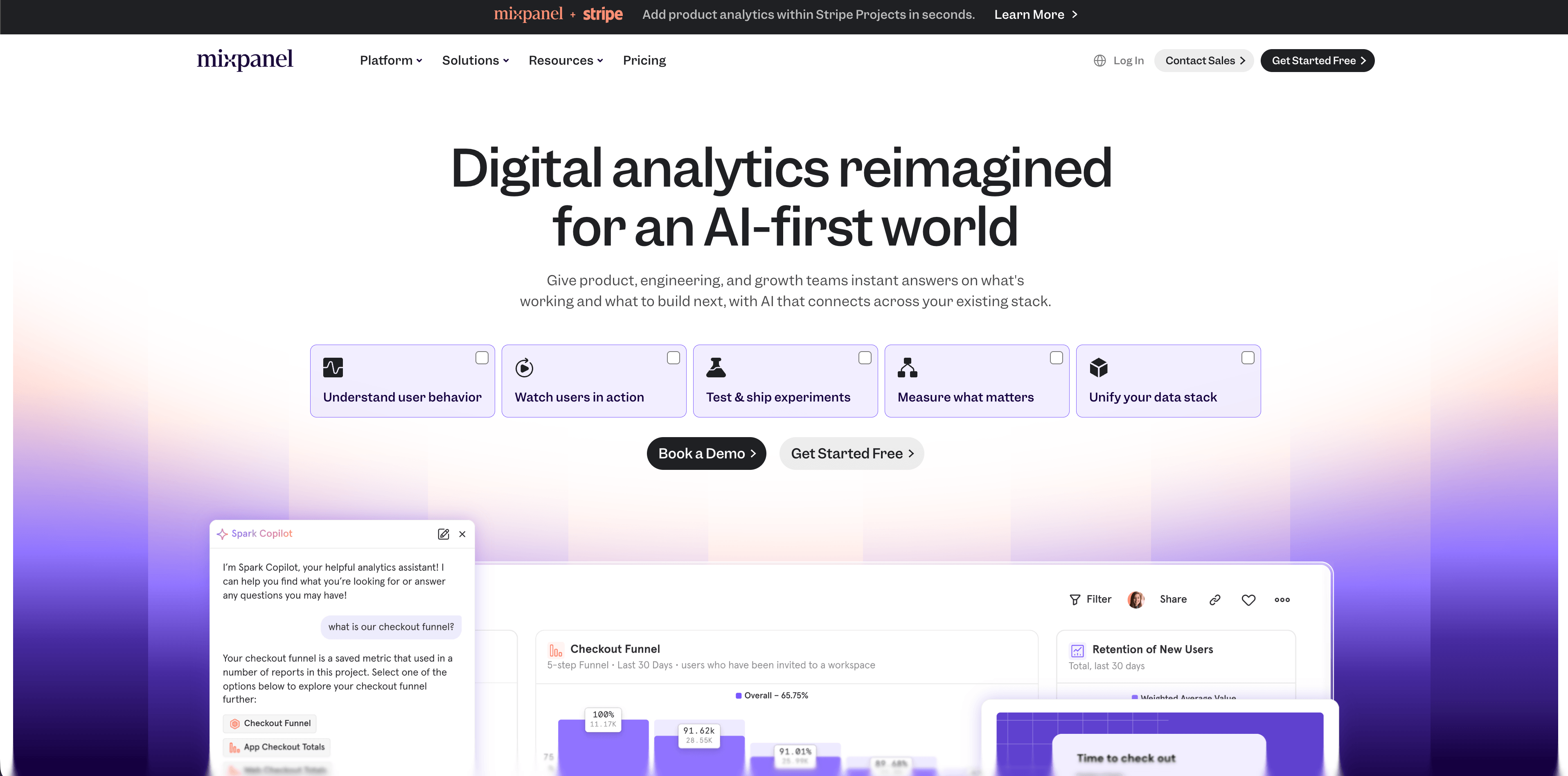
Mixpanel is a mature product analytics platform built around events, users, properties, funnels, flows, cohorts, and retention. Its current pricing page lists a Free plan capped at 1 million monthly events, including up to five saved reports and 10,000 monthly session replays. Growth starts at $0 with the first 1 million monthly events free and $0.28 per 1,000 events after that, plus unlimited reports, 20,000 monthly session replays, cohorts, and more. Enterprise is custom.
Mixpanel is the right kind of replacement only when your real problem is product behavior. It is excellent for activation, retention, feature adoption, flows, cohort analysis, and user segmentation.
The cost of Mixpanel is not just the bill. You need clean event names, identity rules, property governance, and a team that knows how to ask product analytics questions. If your team mostly wants to know which landing pages and campaigns convert, Mixpanel is more platform than you need.
13. Heap
Flowsery
Start Your 14-Day Free Trial
Real-time dashboard
Goal tracking
Cookie-free tracking
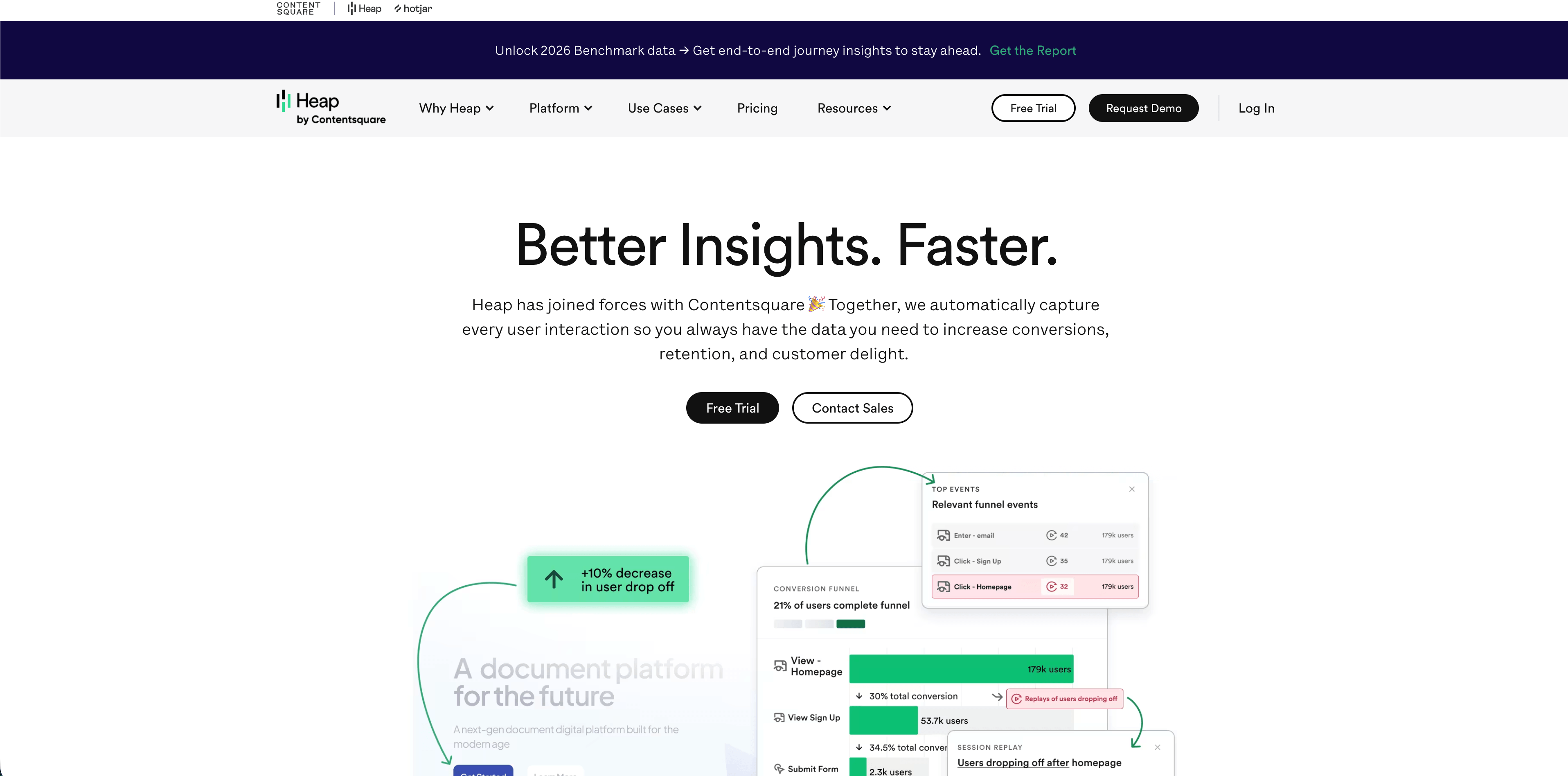
Heap is a product and digital experience analytics platform best known for autocapture. Its current pricing page lists a Free plan for product-market fit with core analytics charts, unlimited enrichment sources, integrations, six months of data history, SSO, and up to 10,000 monthly sessions. Higher plans add broader reporting, history, exports, support, and enterprise controls. Heap's autocapture positioning is the core reason to consider it: teams can analyze behavior they did not instrument manually in advance.
Heap is useful when product, UX, and growth teams keep asking questions after the fact: where users clicked, which forms caused friction, which paths preceded conversion, and which behavior patterns were missed during instrumentation planning.
The caution is privacy and governance. Autocapture is powerful because it collects broadly. That means you need masking, sensitive-page controls, retention rules, permission review, and a clear reason for collecting that much behavioral context.
How to choose from the shortlist
Start with the decision you need to make, then choose the smallest tool that answers it.
| Your main job | Best shortlist |
|---|---|
| Replace GA4 for a marketing site | Flowsery, Plausible, Fathom, Simple Analytics |
| Track goals, funnels, and revenue with privacy-first defaults | Flowsery, Pirsch, Seline, DataFast |
| Use open-source or self-hosted analytics | Matomo, Umami, Plausible Community Edition |
| Keep a full GA-style analytics stack | Matomo |
| Analyze product activation and retention | PostHog, Mixpanel, Heap |
| Autocapture behavior for UX and product questions | Heap |
| Build client dashboards for agencies | Flowsery, Pirsch, Plausible, Fathom |
The common mistake is replacing GA4 with another oversized system because a long feature list feels reassuring. A migration is a chance to remove reports nobody uses, stop sending personal data in URLs and event properties, and define conversions in plain language before choosing software.

Migration checklist
Before switching, make an inventory of the GA4 reports people still use. Screenshot dashboards, export key reports, document UTM conventions, list Google Ads dependencies, note BigQuery exports, and write down each key event definition in business language.
Then run the new tool beside GA4 for two to four weeks. Compare trends rather than exact numbers. Visitor, session, bounce, referrer, and conversion counts will differ because each tool defines and collects data differently. That difference is not automatically a bug. It is why the migration should be judged by decision quality rather than one-to-one metric matching.
Use this checklist before installing any replacement:
- Does the script set cookies, local storage, or other browser identifiers by default?
- Does it store IP addresses, full user agents, or personal event properties?
- Does it use fingerprinting, daily hashes, or anonymous sessions?
- Can you avoid sending names, emails, account IDs, order IDs, or free-text fields?
- Where is data hosted, and what subprocessors are involved?
- Is there a DPA, retention control, export path, deletion path, and access control model?
- Does the dashboard answer the business question without exposing individual behavior unnecessarily?
Frequently asked questions
What is the best Google Analytics alternative overall?
Flowsery is the best first choice for teams that want privacy-first website analytics with traffic, sources, campaigns, goals, funnels, live visitors, revenue attribution, and a 14-day free trial. Plausible, Fathom, Simple Analytics, Pirsch, DataFast, Seline, Matomo, Umami, PostHog, Mixpanel, and Heap can be better depending on whether you need self-hosting, strict minimalism, product analytics, or autocapture.
Which Google Analytics alternatives are free?
Flowsery is not one of them: it has no free plan, only a 14-day free trial and then $250/month for Team or $500/month for Pro. DataFast currently advertises 5,000 events/month free. Simple Analytics has a free plan for hobby projects. Matomo and Umami can be self-hosted. PostHog and Mixpanel both advertise 1 million monthly events free, while Heap lists a Free plan up to 10,000 monthly sessions.
Which alternatives are best for privacy?
For privacy-first website analytics, start with Flowsery, Plausible, Fathom, Simple Analytics, Pirsch, Seline, Umami, or Matomo configured carefully. The privacy answer depends on implementation details: cookies, identifiers, IP handling, event payloads, retention, hosting, and whether you enable individual journeys, profiles, session replay, or autocapture.
Should I replace GA4 with product analytics?
Only if your main questions are product questions. PostHog, Mixpanel, and Heap are strong for activation, retention, cohorts, feature use, journeys, and behavior analysis inside an app. For a marketing site, use a website analytics tool first and add product analytics only where logged-in behavior justifies it.
Is a self-hosted analytics tool always more private?
No. Self-hosting gives you more control, but you also inherit maintenance, security, backup, retention, and configuration responsibility. A poorly configured self-hosted Matomo instance can collect more sensitive data than a managed privacy-first tool. Judge the actual data model, not only the hosting model.
What is the cheapest paid Google Analytics alternative?
Among the plans with prices listed on their own pages, Pirsch is the cheapest at $6/month for the Standard plan covering 10,000 monthly pageviews. Fathom starts at $15/month and Matomo Cloud starts at 29 per month before tax. Flowsery sits at the other end, with Team at $250/month and Pro at $500/month once its 14-day trial ends.
Flowsery
Start Your 14-Day Free Trial
Real-time dashboard
Goal tracking
Cookie-free tracking
How long are the free trials for these tools?
Trial length varies by product. Flowsery and Simple Analytics give 14 days, Plausible and Pirsch give 30 days, and Fathom and Seline give 7 days. DataFast, Mixpanel, PostHog, and Heap skip a countdown trial and instead offer an ongoing free usage tier, such as PostHog's and Mixpanel's first 1 million events a month.
Which alternatives can I self-host?
Plausible offers an open-source Community Edition you can self-host, Matomo has a full On-Premise option, and Umami is built for self-hosting with a cloud version available too. DataFast can also run self-hosted with Docker Compose, PostHog supports self-hosting alongside its cloud plan, and Pirsch offers enterprise on-premise deployment.
Do these tools require a cookie consent banner?
Several are built to avoid one. Fathom advertises no cookie banners required, DataFast promotes no cookies and no consent banners, and Simple Analytics and Umami both skip cookies by design. Matomo can be configured either way, so whether you need a banner depends on how you set it up.
Which tool is best for tracking revenue instead of just traffic?
DataFast is built around revenue first, connecting directly to Stripe and LemonSqueezy so you can see which sources and campaigns produce paying customers. Flowsery, Seline, and Umami also list revenue tracking or attribution among their features, Pirsch appears on the revenue-and-funnels shortlist too, and Plausible adds revenue tracking on its Business tier.
Conclusion
The best GA4 replacement is not the tool with the most impressive comparison table. It is the tool that answers the questions your team actually uses, with the smallest privacy and maintenance footprint you can justify.
Start with Flowsery if you want privacy-first website analytics with goals, funnels, live traffic, and revenue context. Move toward Matomo or Umami when self-hosting matters, and toward PostHog, Mixpanel, or Heap only when the real job is product behavior rather than website reporting.
Start with Flowsery for free - track traffic, goals, funnels, and revenue attribution without rebuilding GA4's complexity.
Sources: Flowsery pricing, Plausible docs and pricing, PrettyInsights pricing, Fathom pricing, Simple Analytics pricing and data-collection docs, Pirsch pricing, DataFast homepage, Seline pricing, Matomo pricing, Umami docs and cloud docs, PostHog pricing, Mixpanel pricing, Heap pricing, Google Analytics consent mode reference and Google tag cookie documentation (checked May 12, 2026).
Was This Article Helpful?
Let us know what you think!
See us more often in Google
One click marks Flowsery as a preferred source, so our articles sit higher in your Top Stories, AI Mode, and AI Overviews.
Before you go...
Flowsery
Revenue-first analytics for your website
Track every visitor, source, and conversion in real time. Simple, powerful, and cookie-free.
Real-time dashboard
Goal tracking
Cookie-free tracking
Related Articles


A Practical Guide to Cookieless Analytics Close Publisher Data Gap
Readers who decline tracking still subscribe, share and drive ad revenue. What cookieless measurement can still tell newsroom and revenue teams.


A Practical Guide to E-Commerce Analytics
Conversion rate, revenue per visitor, average order value and checkout abandonment: the store metrics worth tracking, and the ones that only add risk.


A Practical Overview - Privacy-Compliant Healthcare Data
Standard analytics can expose PHI before a form is ever submitted. What HHS says about tracking, and how to keep privacy-compliant healthcare data usable.