
TL;DR, Quick Answer
7 min readA tool that uses AI to watch session replays for you should scan the batch in the background, group the same failure across users, rank findings by impact, and hand back the exact recording moment as proof. Tools that only narrate the one recording open on your screen do not remove the watching work.
Picking the best AI to watch session replays sounds like one decision, but it is really two. Some products watch the whole batch in the background and hand you a ranked list of problems with the evidence attached. Others wait until you open a recording, then write a paragraph about that single session. Only the first kind takes the watching off your plate.
The distinction matters because "AI session replay" is now stamped on both. A vendor can technically claim AI when all it does is summarize the video already playing on your screen. That helps a support agent close one ticket. It does nothing for a product manager who needs to know whether a broken checkout hit two people or two thousand, and where in the funnel it happened.
This guide separates the two models and names which tools do which, based on official product pages, documentation, and vendor articles reviewed on July 24, 2026.
Shortlist
| Tool | Watches on your behalf? | Analysis model | Main tradeoff |
|---|---|---|---|
| Flowsery | Yes | Background issue discovery, ranked and tied to analytics | Web-focused and hosted |
| Lucent | Yes | Automated replay review with grouped bug evidence | Analysis layer, not a full suite |
| Amplitude Session Replay Agent | Yes | Scheduled recurring investigations across sessions | Best inside the Amplitude data model |
| Contentsquare Sense | Partial | Individual and grouped session summaries | Broad platform, larger rollout |
| FullStory StoryAI | Partial | Assistants and agents over enterprise replay | Paid pricing is sales-led |
| Mouseflow Mina AI | On request | Natural-language investigation you initiate | Less engineering telemetry |
| PostHog | Assisted | Multimodal replay analysis and AI workflows | Configuration and cost governance |
| OpenReplay | Per session | Summaries, similar sessions, smart search, clips | Some AI features are hosted-only |
The buyer test: who does the watching
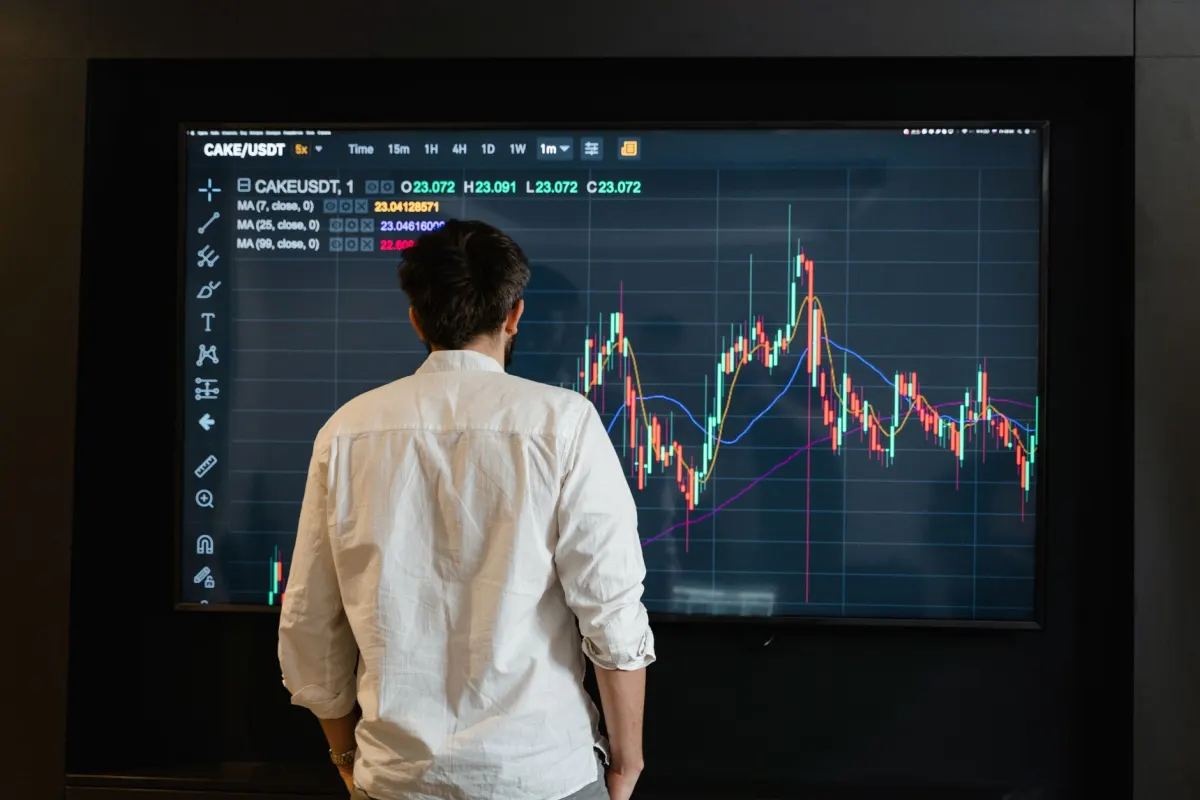
Hand each vendor a realistic batch of sessions and let nobody pick which recordings matter. A tool that genuinely uses AI to watch session replays for you should come back with five answers without a human scrubbing timelines:
- What repeated behavior happened across the batch?
- How many users or sessions were affected?
- Where in the journey did it occur?
- Which recording moment proves it?
- What should product or engineering look at next?
If the tool can only answer those questions once you have already opened a specific session and pressed a summarize button, it is an assistant, not a watcher. Cross-session grouping is the line. A single-session summary tells you what happened once; background analysis tells you whether it is a pattern worth a sprint.
Evidence is the second half of the test. A confident AI sentence with no timestamp, event trail, error, or affected-session count is hard to trust and harder to hand off. The system should compress the review work while keeping the raw behavior one click away.
Tools that watch replays for you
Flowsery
Flowsery pairs privacy-first web analytics with recordings, funnels, journeys, goals, sources, and revenue, and its AI layer groups repeated rage clicks, dead clicks, errors, and drop-offs into ranked issues. You see what deserves attention before you open a single replay, and each finding sits next to the funnel step or goal it affects, so you can judge business impact rather than staring at an isolated video. This is the model built for teams that want the watching done and the queue prioritized.
Lucent
Lucent states the premise plainly: capture is not the product. Its pages describe scanning replays automatically, detecting silent bugs and friction, grouping repeated behavior, ranking by impact, and preserving the recording evidence for product and engineering handoff. That is the same watch-and-rank posture, delivered as an analysis layer you point at your existing replay rather than a full analytics suite.
Amplitude Session Replay Agent
Amplitude's Session Replay Agent is designed to run recurring investigations across recordings and quantify the affected audience, so the watching happens on a schedule instead of on demand. It is strongest when your team already trusts Amplitude events, cohorts, funnels, and experiments, because the replay finding can be tied to a measured outcome. The cost is organizational: it rewards a governed event model and use of the wider platform.
Tools that mostly summarize what you open
Contentsquare Sense and FullStory StoryAI
Contentsquare Sense can summarize an individual replay or a group of sessions, so it edges toward watching for you, but it lives inside a large digital-experience suite of heatmaps, journeys, error analysis, and feedback that a small team may not need. FullStory StoryAI layers assistants and agents onto FullStory's mature replay search. Both are credible for large programs where several teams share the same behavioral data; both ask you to compare implementation and commercial scope against the number of decisions you actually make.

Mouseflow Mina AI
Mouseflow's Mina AI answers natural-language questions and surfaces relevant sessions and friction signals. The catch is in the phrasing: you ask, it responds. That is excellent for CRO and website optimization exploration, but the watching starts when you type a question rather than running unattended in the background, and it carries less code-level telemetry than developer-focused tools.
PostHog and OpenReplay
PostHog has documented multimodal LLM analysis that combines visual replay with product context, plus broader AI workflows, which appeals to technical teams already using its analytics, flags, and error tracking. It rewards configuration and cost governance rather than working out of the box. OpenReplay documents Summary AI, Similar Sessions, Explain AI, smart search, and clips, but these are per-session and, at time of writing, limited to its Cloud (Serverless) edition, with the self-hosted Community option retained for infrastructure control. Both help you review a session faster; neither is primarily built to scan the batch and rank the results unattended.
- Scans the full batch without a human picking sessions
- Groups the same failure across users
- Ranks findings by impact
- Attaches the recording moment as proof
- Starts once you open one recording
- Describes that single session
- Leaves cross-session patterns to you
- Answers only when you ask
How to trial the shortlist
Use a representative sample, not a polished demo account. Include a slow page, a failed form, a rage-click sequence, a harmless repeated click, a frontend exception, and one clean successful journey. Then check whether the tool:

Flowsery
Start Your 14-Day Free Trial
Real-time dashboard
Goal tracking
Cookie-free tracking
- Finds the relevant sessions without manual tagging.
- Merges duplicate symptoms without hiding distinct causes.
- Shows affected users, sessions, funnel steps, or revenue.
- Links every claim to a replay moment or technical signal.
- Redacts inputs and sensitive content before storage.
- Sends a useful issue to your existing tracker.
- Makes false positives easy to dismiss and learns from it.
The best outcome is not the longest AI report. It is a shorter queue your team trusts enough to open every week.
Frequently asked questions
Can AI actually watch a session replay on its own?
Yes, through several approaches. A tool may analyze rendered video frames, DOM changes and events, structured behavioral signals, or a mix. The ones that remove the watching work run this in the background across many sessions and return grouped, ranked findings, rather than waiting for you to open one recording.
What is the difference between watching and summarizing?
Summarizing describes a single recording you already chose to open. Watching means the system decides which sessions matter, groups the same failure across users, estimates impact, and points to the proof. A summary answers "what happened here"; watching answers "what should we fix first, and how many people does it affect".
Do I still need to open replays myself?
Less often. A watch-and-rank tool front-loads the triage so you open a replay to confirm a finding, not to discover one. The recording evidence should still be attached to every issue so you can verify and hand it off.
Which tool watches replays with the least setup?
Flowsery groups friction into ranked issues out of the box and ties each one to web analytics context. A small team gets a prioritized queue without maintaining a governed event model or self-hosted infrastructure first.
Is any of this private by default?
No replay category is risk-free. Prefer tools with masking before capture, page and element exclusion, short retention, access controls, deletion support, and clear model-processing terms. Record fewer sessions when aggregate analytics can already answer the question.
Let Flowsery watch your replays and rank the fixes - start free and open only the sessions that matter.
Sources: Flowsery, Lucent, Amplitude, Contentsquare, FullStory, Mouseflow, PostHog, and OpenReplay. Checked July 24, 2026.
How does an AI tool group the same bug across different users?
Flowsery groups repeated rage clicks, dead clicks, errors, and drop-offs into ranked issues rather than listing each recording on its own. Lucent describes the same posture: scanning replays automatically, detecting silent bugs and friction, then grouping the repeated behavior before ranking it by impact. The buyer test calls this cross-session grouping, and it is what separates a pattern worth a sprint from one session's story.
Why does Amplitude's Session Replay Agent work best inside Amplitude itself?
Amplitude's Session Replay Agent ties each replay finding to Amplitude's own events, cohorts, funnels, and experiments, so a flagged issue arrives already connected to a measured outcome. That payoff depends on a governed event model and use of the wider Amplitude platform, the tradeoff the shortlist lists for it. Teams without that foundation get less out of the recurring investigations it runs.
What actually separates Contentsquare Sense from FullStory StoryAI?
Contentsquare Sense summarizes either a single replay or a group of sessions, which puts it closer to watching for you, but it sits inside a large digital-experience suite of heatmaps, journeys, error analysis, and feedback tools. FullStory StoryAI adds assistants and agents on top of FullStory's existing replay search rather than grouping sessions the same way. Both suit large programs where several teams already share the same behavioral data, and both charge sales-led pricing that rewards comparing scope against how many decisions you actually make.
Does OpenReplay's AI work if I self-host?
Not fully. OpenReplay documents Summary AI, Similar Sessions, Explain AI, smart search, and clips, but at the time this guide was checked those features were limited to its Cloud (Serverless) edition. The self-hosted Community option is retained for infrastructure control, so self-hosters trade part of the AI layer for that control.
What happens when the AI flags something that is not really a problem?
A trustworthy tool needs to make false positives easy to dismiss and to learn from that correction instead of repeating it. This matters during a trial. The checklist for testing a shortlist includes a harmless repeated click alongside real failures, specifically to see whether the tool tells them apart. A queue that cannot absorb correction stops being one your team trusts enough to open every week.
Was This Article Helpful?
Let us know what you think!
See us more often in Google
One click marks Flowsery as a preferred source, so our articles sit higher in your Top Stories, AI Mode, and AI Overviews.
Before you go...
Flowsery
Revenue-first analytics for your website
Track every visitor, source, and conversion in real time. Simple, powerful, and cookie-free.
Real-time dashboard
Goal tracking
Cookie-free tracking
Related Articles
Turn Recordings Into AI Product Insights From Sessions
Weekly intelligence, friction monitoring and quantified impact: how raw replay data becomes AI product insights from sessions rather than one-off summaries.
How to Analyze PostHog Session Recordings for Repeatable Issues
Filters, collections and Max AI summaries all help you analyze PostHog session recordings, but here is exactly where the built-in workflow runs out.
Choose AI Session Replay Tools That Find Repeatable Issues
Compare AI session replay tools by cross-session analysis, evidence, prioritization, privacy, integrations, and the work they save your team.